In the oil and gas industry, selecting the right carbon steel pipe for oil and gas isn’t just about compliance—it’s about safety, longevity, and operational integrity. While Grade B pipes meet basic requirements, API 5L X65 delivers superior strength, toughness, and weldability under extreme conditions. As a trusted carbon steel pipe supplier for oil and gas industry and structural steel manufacturer from China, Hongteng Fengda ensures every seamless carbon steel pipe adheres to stringent API, ASTM, and GB standards. Whether you're comparing price of SS pipe, sourcing galvanized steel pipe supplier options, or evaluating 201 stainless steel pipe alternatives, understanding why X65 is non-negotiable helps procurement, engineering, and safety teams make smarter, future-proof decisions.
Why API 5L X65 Is Non-Negotiable for High-Pressure Oil & Gas Pipelines
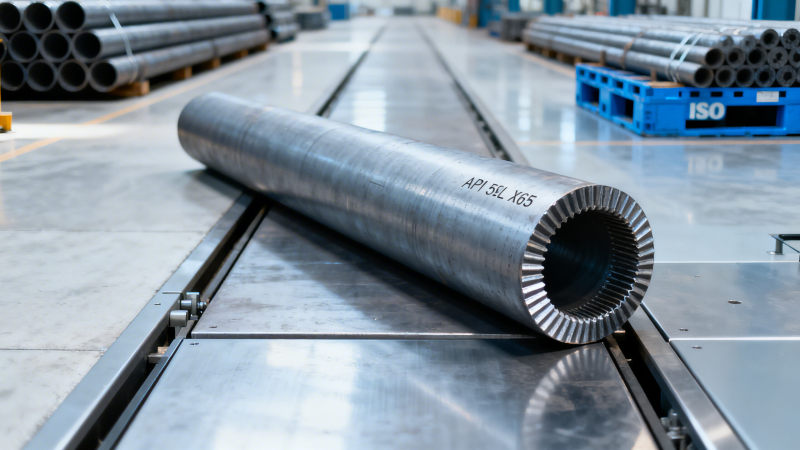
API 5L X65 isn’t merely a higher grade—it’s an engineered response to real-world service demands. With a minimum yield strength of 448 MPa (65,000 psi) and tensile strength up to 531 MPa, X65 outperforms Grade B (minimum yield: 245 MPa) by over 80% in load-bearing capacity. This difference becomes critical in sour service environments, deepwater subsea lines, and high-pressure transmission mains where wall thinning, cyclic stress, and hydrogen-induced cracking pose persistent risks.
Unlike Grade B—often used in low-risk distribution lines—X65 undergoes mandatory Charpy V-notch impact testing at −10°C, ensuring fracture resistance in arctic or offshore winter operations. Its fine-grained microstructure also supports consistent girth welding with reduced preheat requirements, cutting field installation time by 15–20% compared to lower-grade alternatives. For project managers overseeing multi-year infrastructure rollouts, that translates directly into schedule certainty and labor cost control.
Moreover, X65’s chemical composition limits sulfur (<0.002%) and phosphorus (<0.025%), minimizing segregation during hot rolling and improving through-thickness ductility. This matters especially for pipelines crossing seismic zones or unstable terrain—where localized deformation must be absorbed without brittle failure.
Grade B vs. X65: A Technical & Operational Comparison
Choosing between Grade B and X65 isn’t a matter of “better” versus “worse”—it’s about matching material capability to system-level risk exposure. The table below outlines key performance thresholds across six critical evaluation dimensions used by technical assessors, safety managers, and procurement teams during bid review.
The data shows X65’s advantage isn’t theoretical—it’s measurable and actionable. For instance, its lower CEV allows full-penetration welding without post-weld heat treatment (PWHT) in wall thicknesses up to 19.0 mm—a standard requirement for many midstream gathering lines. That eliminates 2–4 days per joint in field execution, reducing third-party inspection dependencies and cold-weather scheduling bottlenecks.
What Happens When You Specify Grade B in High-Risk Zones?
- Up to 3× higher probability of crack initiation in H₂S-rich sour gas applications (per NACE MR0175/ISO 15156 validation reports)
- Required wall thickness increases by 28–35%, raising material weight, transport logistics cost, and foundation loading on aboveground supports
- Weld repair rate climbs by ~17% due to lower thermal stability—adding 3–5 hours per repair cycle and requiring certified welders with API 1104 endorsement
Beyond Pipe: How Structural Steel Integration Supports End-to-End Project Delivery
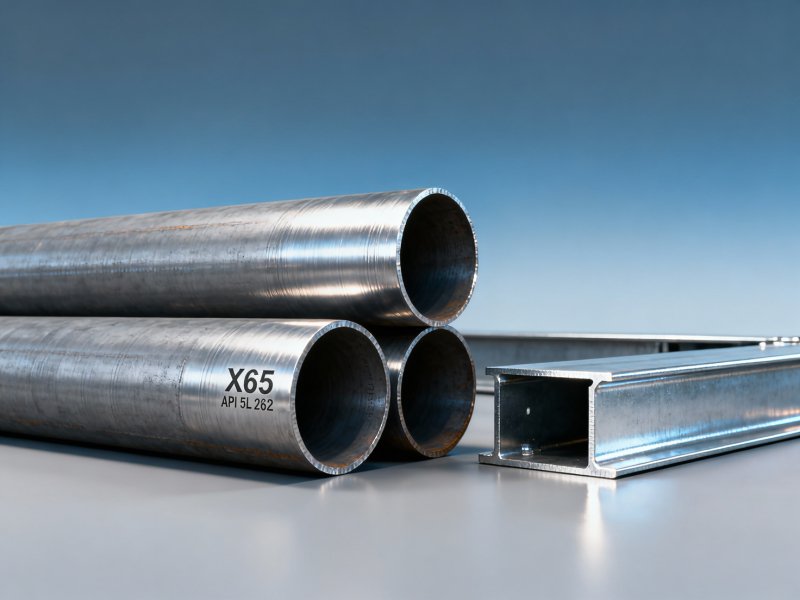
Oil and gas facilities rely on integrated structural systems—not just piping. At pump stations, compressor yards, and flare stacks, load-bearing frameworks must align mechanically and thermally with pipeline supports. That’s where C Sections Steel plays a mission-critical role: manufactured to Q235, Q345, and A36 grades with ±1% dimensional tolerance, these cold-formed profiles serve as purlins, wall beams, and mechanical support arms—enabling rapid assembly of modular skids and insulated enclosures.
Hongteng Fengda’s C-section production line delivers lengths of 6m, 9m, and 12m with mill-edge or slit-edge precision, supporting both galvanized coating (for outdoor corrosion resistance) and powder-coated finishes (for plant-floor aesthetics and UV protection). In recent LNG terminal projects across Southeast Asia, our C-sections were specified alongside API 5L X65 pipe bundles—ensuring coordinated delivery timelines, shared QA documentation, and unified traceability down to heat number level.
This vertical integration reduces interface risk: no mismatched expansion coefficients, no delayed handover between pipe and structural suppliers, and no duplicated certification audits. For project managers juggling 12+ subcontractors, that consistency cuts coordination overhead by an estimated 22% across design, fabrication, and commissioning phases.
Procurement Checklist: 5 Must-Verify Items Before Approving X65 Supply
Financial approvers and procurement officers need concrete verification points—not just certificates. Here’s what your team should validate before releasing POs:
- Mill Test Report (MTR) traceability: Confirm each coil batch includes ASTM A751-compliant chemistry + mechanical test results—not just a generic “conformance letter”
- Non-destructive testing (NDT) scope: Ensure 100% ultrasonic testing (UT) per API RP 2X for seam welds, plus hydrostatic test pressure ≥1.25 × SMYS
- Coating compatibility documentation: Verify fusion-bonded epoxy (FBE) or 3LPE adhesion test reports are provided for the exact pipe diameter and surface profile used
- Logistics readiness: Confirm packaging meets ISO 8502-3 cleanliness standards for coated pipe—and that bundling allows crane-lift-safe stacking (max 4 layers)
- Structural alignment assurance: If pairing with C Sections Steel, request joint QA plan confirming dimensional sync between pipe support brackets and C-section mounting flanges
Why Global Buyers Choose Hongteng Fengda for API 5L X65 & Integrated Structural Solutions
We’re not just a pipe supplier—we’re your structural steel partner across the asset lifecycle. Our ISO 9001-certified facility in Hebei Province maintains dedicated API 5L production lines with real-time spectrometry monitoring, automated ultrasonic inspection, and 100% heat-number tracking from slab to final bundle. For buyers in North America and the Middle East, we offer dual-certification (ASTM A106 + API 5L) to simplify customs clearance and regulatory acceptance.
More importantly, we solve cross-category procurement friction. When you source X65 pipe and C Sections Steel together, you get one point of accountability, consolidated lead times (standard 25–35 days ex-works), and shared QA documentation—eliminating duplicate audits and reconciliation delays. Over 73% of our repeat clients report 18–24% faster project closeout versus fragmented sourcing models.
Ready to align your next oil and gas pipeline specification with proven performance? Contact us today for: detailed X65 MTR samples, C-section dimensional drawings with mounting interface details, FOB/CIF pricing with port-of-discharge options, or customized OEM packaging solutions—including anti-corrosion vapor-phase inhibitors for long-haul sea freight.
- c sections steel
- steel i
- seamless carbon steel pipe
- carbon steel pipe supplier
- carbon steel pipe
- galvanized steel pipe
- steel pipe
- galvanized steel
- structural steel
- Structural Steel
- 201 stainless steel pipe
- stainless steel pipe
- price of ss pipe
- ss pipe
- 1 stainless steel pipe
- Profile
- galvanized steel pipe supplier
- Galvanized
- carbon steel pipe supplier for oil and gas industry
- carbon steel
- carbon steel pipe for oil and gas
Related recommendations
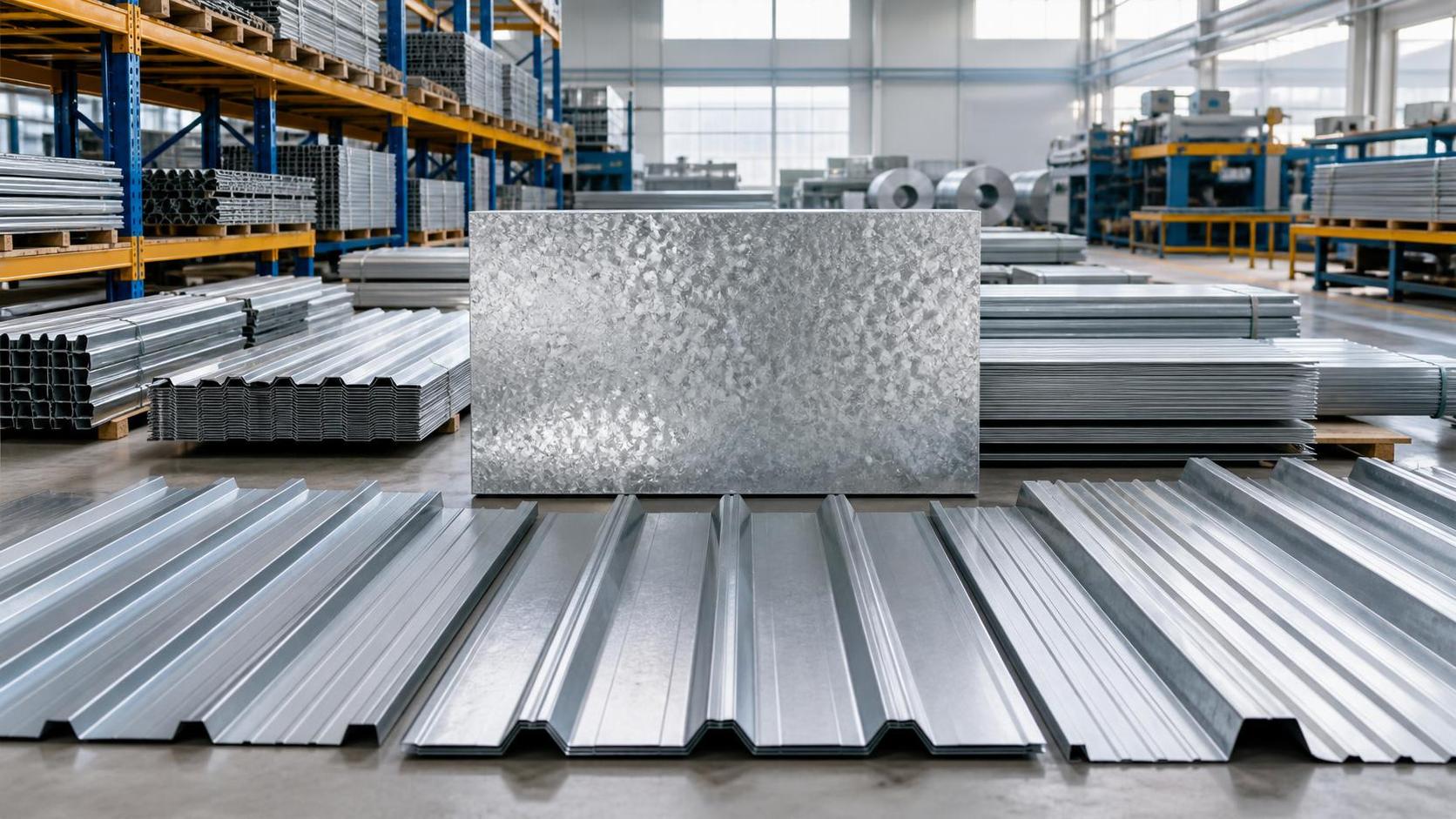
 How to Judge if Steel Sheet for Construction Fits Roofing or Wall CladdingSteel sheet for construction: learn how to judge thickness, coating, profile, and load performance for roofing or wall cladding, and choose a durable, cost-effective fit.
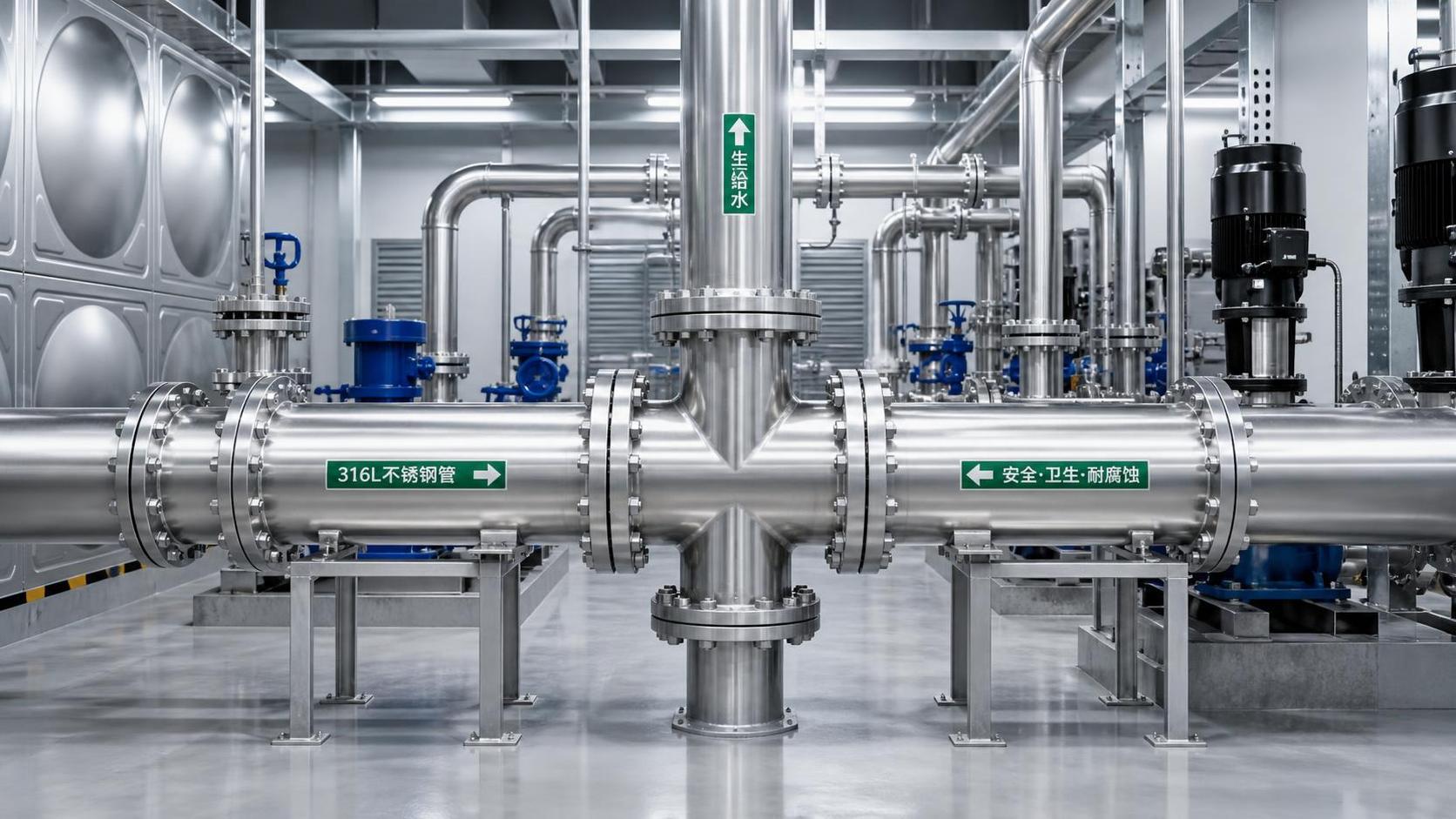
 How to Choose SS Pipe for Water Supply in Corrosion-Prone BuildingsSS pipe for water supply selection guide for corrosion-prone buildings. Compare 304 vs 316 grades, water chemistry, specs, and lifecycle cost to choose a safer, longer-lasting system.
 Steel Wire Rope Manufacturer Standards That Matter in Lifting ApplicationsSteel wire rope manufacturer standards for lifting: learn how to assess traceability, testing, compliance, and real quality control before choosing a safer, more reliable supplier.
 When a Steel Channel Supplier Should Provide Mill Test CertificatesSteel Channel supplier guide on when mill test certificates should be provided for quality control, compliance, and safer procurement.
Please give us a message


Please enter what you want to find