Steel Sheet Size Standards: why do they matter so much?
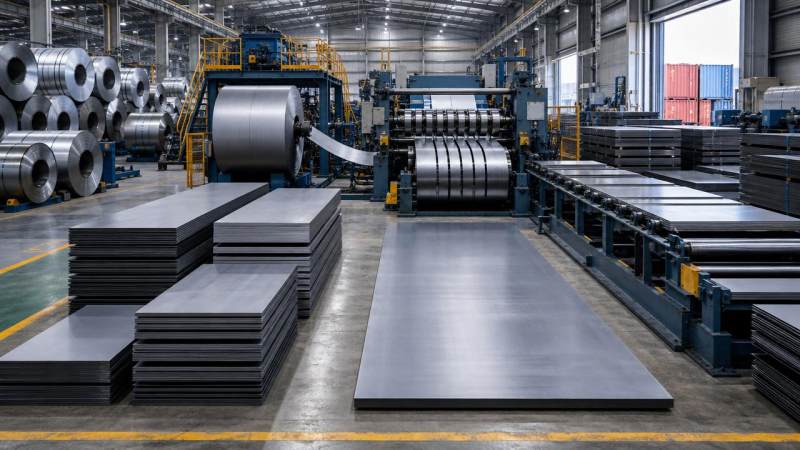
Steel sheet size is not just a catalog detail. It affects quoting, freight, cutting loss, stock turnover, and project compliance.
When sheet dimensions are misunderstood, the result is usually simple but expensive: wrong orders, delayed fabrication, or rejected material on site.
That is why steel sheet size standards stay central in construction, machinery, manufacturing, and export trade.
In practical sourcing, the question is rarely only “What size is available?” More often, it is “Which size standard fits the drawing, market, and delivery plan?”
For global orders, buyers also need to connect sheet size with ASTM, EN, JIS, or GB requirements, because nominal size alone does not guarantee interchangeability.
A reliable structural steel supplier should therefore help clarify dimensions, tolerances, grades, and processing options before production begins.
This is especially relevant when working with exporters from China, where standard stock, customized cutting, and OEM fabrication are often combined in one order.
What does steel sheet size actually include?
Many people use steel sheet size to mean length and width only. In reality, the standard size definition is broader.
A complete size description usually includes thickness, width, length, flatness, edge condition, and dimensional tolerance.
For example, a sheet may be listed as 3 mm × 1250 mm × 2500 mm. That still does not answer every technical question.
You may still need to confirm whether the width is mill edge or trimmed edge, and whether thickness tolerance follows a certain standard.
In export business, another common point is the difference between sheet and plate. The market sometimes uses them loosely, but standards may not.
Simple classification often works like this:
- Thin material is often described as sheet.
- Heavier material is more often called plate.
- Coil-based products may later be cut into sheets.
- Patterned or checkered products add surface profile requirements.
So, when discussing steel sheet size, always ask for the full dimensional package, not only the nominal figures printed in a quotation.
Which steel sheet size standards are most common in international trade?
There is no single global size system. Different markets prefer different standards, and mills often align stock dimensions with regional demand.
Common reference systems include ASTM, EN, JIS, and GB. These standards may cover grade, tolerance, testing, and delivery condition.
However, actual steel sheet size availability still depends on the mill’s production range and cutting capability.
In many projects, you will see popular stock widths such as 1000 mm, 1219 mm, 1250 mm, 1500 mm, and 1800 mm.
Lengths may be standard sheets, coil-cut lengths, or customized lengths to reduce waste in fabrication.
The table below helps organize what should be checked before confirming a steel sheet size order.
This kind of check is often what separates a smooth shipment from a difficult one.
How do you choose the right steel sheet size for real applications?
The right size depends on more than availability. It should match the end use, processing route, and handling conditions.
For structural and industrial work, the common approach is to start from the drawing, then check standard stock sizes that minimize cutting and freight waste.
If anti-slip flooring or machine platform use is involved, patterned products may be more suitable than plain sheet.
A practical example is A36 Patterned steel plate, often used in transportation, construction, decoration, machinery areas, and shipbuilding access floors.
Its common thickness range is 2-8 mm, width 600-1800 mm, and length 2-12 m or custom cut, which shows how steel sheet size selection changes with function.
For such applications, surface pattern height, width tolerance, and thickness tolerance matter as much as nominal dimensions.
It is also useful when one material needs anti-skid performance, decorative appearance, and reasonable steel saving at the same time.
In actual sourcing, these points help narrow the choice:
- Check whether standard stock sizes already fit the fabrication layout.
- Compare custom cutting cost with material waste from stock sheets.
- Confirm loading limits for containers or project site handling.
- Review whether the material needs special surface, coating, or testing.
Why do similar steel sheet sizes still create order problems?
Because similar dimensions do not always mean equivalent material. The confusion usually comes from assumptions hidden inside the size description.
One order may specify 1250 mm width, but the drawing may actually require effective finished width after trimming.
Another order may request A36 grade, while the project approval list expects an EN or JIS equivalent with separate documentation.
There is also the issue of tolerance. A size that looks correct on paper may still be unsuitable for laser cutting, bending, or welding preparation.
More common problem areas include:
- Nominal size quoted without allowable tolerance.
- Weight estimated from theoretical thickness only.
- Custom lengths agreed verbally but not shown on the contract.
- Mixing sheet, plate, and coil-cut terms in the same inquiry.
- Ignoring packing and container loading limits for long sheets.
The safer method is to review the size sheet together with grade, standard, tolerance, and intended processing.
Suppliers with export experience usually manage this better because they already work across ASTM, EN, JIS, and GB documentation systems.
What should be checked before placing a steel sheet size order?
Before confirming an order, it helps to treat size review as a short technical checklist rather than a price-only step.
This is where experienced structural steel exporters can add value, especially when the order includes several product categories and mixed standards.
Companies such as Hongteng Fengda typically support global projects with standard steel sections, custom structural components, and stable quality control under international standards.
That background matters because steel sheet size decisions are often linked with the rest of the steel package, not handled in isolation.
A useful pre-order review should cover:
- Exact grade and governing standard.
- Thickness, width, length, and permitted deviations.
- Surface condition, such as plain, pickled, galvanized, or patterned.
- Required test certificates and inspection points.
- Cutting, drilling, bending, or welding to be done before shipment.
- Packing method, loading plan, and target delivery schedule.
If even one of these items is unclear, the steel sheet size listed on a quotation may still be incomplete for project use.
So, what is the smartest way to work with steel sheet size standards?
The smartest approach is to see steel sheet size as a decision system, not a simple number set.
Start with application needs. Then connect those needs to standard, tolerance, stock availability, and processing plan.
That sequence usually improves quotation accuracy and reduces avoidable waste.
It also helps when comparing offers from different mills, because lower unit price may hide extra cutting loss, slower lead time, or non-matching tolerances.
If the project involves international delivery, confirm early whether the steel sheet size should follow stock standards or customized production.
A short review of dimensions, grade equivalency, and transport limits can prevent much larger issues later.
In the end, the best steel sheet size choice is the one that fits the drawing, the fabrication process, and the supply chain at the same time.
For the next step, organize required sizes by application, compare them with standard mill ranges, and verify tolerance and certification before final confirmation.
Please give us a message


Please enter what you want to find