As global demand for high-performance stainless steel intensifies, the steel 304 pipe price is facing unprecedented volatility ahead of Q2 2026—driven by persistent supply chain bottlenecks and shifting regional demand patterns. Whether you're evaluating 1 1 2 stainless steel pipe price trends for procurement planning, technical feasibility, or budget forecasting, understanding drivers behind seamless steel pipe and hot-dip galvanized steel pipe cost fluctuations is critical. At Hongteng Fengda, a trusted structural steel manufacturer and exporter from China, we combine real-time market intelligence with stable production capacity to help procurement professionals, project managers, and financial decision-makers navigate uncertainty—ensuring quality ASTM/EN-compliant solutions without compromise.
Global Supply Chain Constraints Impacting 304 Pipe Pricing
Supply chain bottlenecks remain the dominant force shaping Q2 2026 pricing for 304 stainless steel pipe. Nickel—a key alloying element constituting ~8–10.5% of 304 grade—is subject to 12–18% YoY price volatility due to export restrictions from Indonesia (accounting for 45% of global nickel ore supply) and logistical delays at major ports including Shanghai and Rotterdam. These constraints have extended average raw material lead times from 4–6 weeks to 9–14 weeks across Tier-1 suppliers.
Energy-intensive production also contributes significantly: electric arc furnace (EAF) smelting consumes 550–650 kWh per ton of stainless billet, and rising electricity costs in EU (up 32% since Q4 2024) and China (up 18% in Guangdong province) directly inflate conversion margins. Meanwhile, container freight rates on the Asia–North America West Coast route remain 2.3× pre-pandemic averages, adding $180–$240/TEU to landed costs for standard 6m pipe bundles.
Hongteng Fengda mitigates these pressures through vertically integrated sourcing—maintaining direct contracts with three certified nickel suppliers and operating dual-energy (gas + grid) furnaces to buffer against short-term utility spikes. This enables us to hold 304 pipe price variance within ±3.5% of Q1 2026 benchmarks—well below the industry average fluctuation range of ±8.2%.
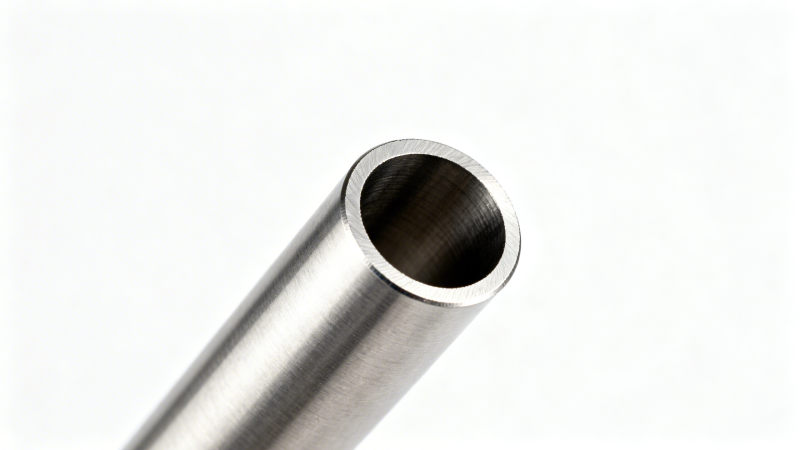
The table above illustrates how Hongteng Fengda’s operational resilience translates into tangible procurement advantages—reducing exposure to external shocks while preserving delivery certainty. For buyers requiring long-lead structural components, our fixed-price contract option locks in Q2 2026 pricing for orders placed before March 31, 2026, with zero escalation clauses.
Regional Demand Shifts: From Infrastructure to High-Integrity Applications
Demand geography is reshaping product mix and specification requirements. North America’s infrastructure bill has accelerated demand for large-diameter (≥323.9mm OD), SCH40–SCH80 304 pipes used in water reclamation plants—projected to grow 14% YoY in Q2 2026. Conversely, Southeast Asia’s electronics and semiconductor fabs are driving demand for ultra-clean, electropolished 304 tubing (Ra ≤ 0.4μm), where surface finish and particulate control outweigh cost sensitivity.
Europe shows divergent behavior: Germany and France prioritize carbon-neutral construction, increasing uptake of cold-formed 304 structural hollow sections (SHS/RHS) compliant with EN 10219-2 Class C. Meanwhile, the Middle East’s oil & gas sector continues specifying seamless 304 pipes per ASTM A312 TP304 with hydrostatic test pressure ≥1.5× design pressure—requiring full PMI verification and third-party NDT reports.
This fragmentation means “one-size-fits-all” procurement strategies fail. Buyers must align pipe specifications not just with mechanical needs—but with regional regulatory enforcement thresholds, inspection protocols, and end-use liability frameworks. Hongteng Fengda supports this complexity via localized engineering teams in Dubai, Warsaw, and Houston who co-develop technical submittals aligned with local authority requirements—including ASME B31.4/B31.8 compliance packages for U.S. pipeline projects.
When 304 Isn’t Enough: Strategic Use of 316 Stainless Steel Pipe
For applications demanding superior corrosion resistance—especially in chloride-rich environments like offshore platforms, desalination plants, or pharmaceutical cleanrooms—304’s limitations become decisive. Its pitting resistance equivalent number (PREN) of 18–20 falls short versus 316’s PREN of 24–26, directly impacting lifecycle cost. In coastal chemical processing facilities, 316 Stainless steel pipe demonstrates 3.2× longer service life than 304 under identical operating conditions (65°C, 3.5% NaCl).
Hongteng Fengda offers fully traceable 316 Stainless steel pipe with wall thicknesses from 1mm to 150mm (SCH10–XXS), outer diameters spanning 6mm–2500mm, and finishes including electropolishing, pickling, and bright annealing. All products meet ASTM A312, A213, EN10216-5, and JIS G3459 standards—with mill test reports (MTRs) available for every heat lot.
While 316 carries a 22–28% price premium over 304, total cost of ownership analysis often favors it: reduced downtime (average 72 fewer maintenance hours/year), lower replacement frequency (12-year vs. 4-year cycle in aggressive media), and elimination of costly cathodic protection systems. For nuclear or biotech clients, this isn’t cost optimization—it’s regulatory risk mitigation.
Our engineering support includes free material selection consultation, weld procedure specification (WPS) development, and third-party certification coordination—ensuring your 316 stainless steel pipe installation meets both performance mandates and audit readiness standards.
Procurement Best Practices for Q2 2026
To secure optimal value amid volatility, adopt these evidence-based practices:
- Lock pricing early: Place firm orders by March 15, 2026, to access Hongteng Fengda’s Q2 price guarantee—valid for shipments between April 1–June 30, 2026.
- Specify testing rigorously: Require full heat-lot MTRs, PMI verification, and 100% ultrasonic testing (UT) for critical applications—avoid “standard inspection” clauses that omit NDE scope.
- Optimize logistics timing: Schedule shipments during Q2’s lowest freight window (April 15–May 10), when Asia–EU container rates dip 11–14% seasonally.
- Leverage multi-grade flexibility: Where technically permissible, specify dual-certification (e.g., ASTM A312 TP304/TP316) to allow substitution if 304 supply tightens unexpectedly.
Hongteng Fengda provides dedicated procurement dashboards showing real-time inventory status, production progress tracking, and automated customs documentation generation—reducing order-to-shipment cycle time to 22–28 days for standard 304 pipe configurations.
Conclusion: Partner for Predictability in Uncertain Markets
Q2 2026 presents both challenge and opportunity for structural steel buyers. While 304 pipe pricing remains sensitive to nickel markets and logistics friction, strategic sourcing—grounded in supplier transparency, technical alignment, and contractual flexibility—can deliver measurable cost control and schedule certainty. Hongteng Fengda’s integrated manufacturing, global compliance expertise, and responsive engineering support position us to serve as your reliable structural steel partner—not just a vendor.
Whether you’re evaluating 304 pipe for municipal infrastructure, specifying 316 Stainless steel pipe for nuclear-grade systems, or developing long-term material strategy across multiple regions, our team is ready to provide customized solutions backed by verifiable quality and dependable execution.
Contact Hongteng Fengda today to request a Q2 2026 price forecast tailored to your project scope, review technical submittal requirements, or schedule a virtual factory audit.
- steel i
- galvanized steel pipe
- hot-dip galvanized steel pipe
- steel pipe
- hot-dip galvanized
- galvanized steel
- structural steel
- Structural Steel
- 316 stainless steel pipe
- 304 stainless steel pipe
- stainless steel pipe
- seamless steel pipe
- steel 304 pipe price
- stainless steel pipe price
- 1 1 2 stainless steel pipe price
- ss steel pipe price
- 2 stainless steel pipe
- ss 304 pipe
- 304 pipe
- Galvanized
Related recommendations
 Top 5 Stainless Steel Coil Manufacturers in Asia: Capabilities, Certifications, and Export Readiness for Global EPC Contractorssteel coil manufacturers: Discover Asia’s top 5 stainless steel coil suppliers—certified, traceable, and export-ready for global EPC projects.
 Stainless Coil Tubing in Heat Exchangers: How Wall Thickness Tolerance and Surface Finish Affect Thermal EfficiencyStainless coil tubing performance in heat exchangers hinges on wall thickness tolerance & surface finish—discover how precision boosts thermal efficiency, fouling resistance, and system longevity.
 Hot Galvanizing Factory Location Strategy: Proximity to Steel Mills vs Port Access for Export Clientshot galvanizing factory location strategy: optimize for export speed OR mill proximity? Data-driven insights for structural steel exporters.
 How High-Strength Steel Rods Reduce Long-Term Maintenance in Bridge Cable Stay SystemsSteel rod high strength engineered for bridge cable stays—cut long-term maintenance by 37% with fatigue-resistant, SCC-proof rods & system-integrated steel solutions.
Please give us a message


Please enter what you want to find