Selecting the right I beam weight for bridge construction is non-negotiable—impacting load capacity, structural integrity, and compliance with ASTM A992 vs. A572 Grade 50 standards. Whether you're referencing an I beam weight load capacity chart, comparing weights per foot for steel fabrication, or evaluating specifications for industrial use, Hongteng Fengda delivers precision-engineered, certified structural steel from China. Our I beam weight specifications meet global demands—from high-rise buildings to warehouse construction—and include real-time I beam weight calculator for steel structures support and customizable OEM solutions backed by EN/ASTM/GB certification.
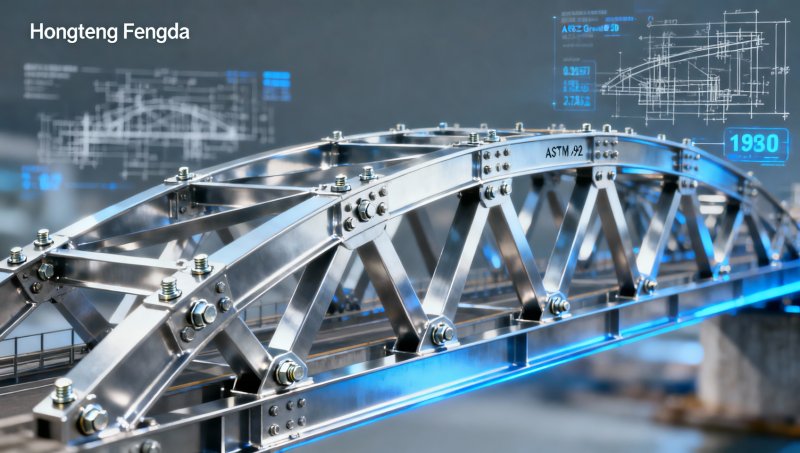
Understanding I Beam Weight in Structural Engineering Context
The weight of an I beam is far more than a logistical detail—it’s a foundational parameter governing design safety, transportation logistics, erection feasibility, and long-term service performance. In bridge construction, where dynamic live loads, wind forces, thermal expansion, and fatigue resistance are critical, even minor deviations in weight of I beam for bridge construction can cascade into significant recalculations of connection design, foundation bearing pressure, and deflection limits. Unlike static applications such as warehouse mezzanines, bridges demand continuous verification against both ultimate limit states (ULS) and serviceability limit states (SLS), making precise weight data indispensable during preliminary sizing and final detailing phases.
Engineers routinely consult an I beam weight chart for construction not only to estimate material tonnage but also to cross-reference moment of inertia, section modulus, and radius of gyration—geometric properties directly influenced by mass distribution. For example, two beams with identical depth and flange width may differ substantially in weight due to web thickness variation, resulting in up to 12% difference in flexural stiffness. This underscores why manufacturers like Hongteng Fengda provide not just nominal dimensions, but full dimensional tolerances (per ASTM A6/A6M), mill test reports (MTRs), and third-party inspection documentation aligned with ISO 17025-accredited labs.
ASTM A992 vs. A572 Grade 50: Material Properties That Shape Weight & Performance
While both ASTM A992 and A572 Grade 50 are widely accepted for structural I beams, their compositional and mechanical distinctions significantly influence weight-related decisions—especially when integrated into multi-material systems like hybrid steel-concrete bridges or seismic-resistant frames. A992 is specifically engineered for rolled structural shapes (W-shapes), featuring tighter carbon equivalent (CEV) control (<0.45%) and optimized yield-to-tensile ratio (typically 0.82–0.88), ensuring predictable ductility during plastic hinge formation. A572 Grade 50, though broader in application scope (plates, bars, angles), permits slightly higher CEV (up to 0.47%) and exhibits greater variability in elongation—critical when welding continuity plates or field splicing girders.
From a weight standpoint, density remains consistent (~7850 kg/m³), but permissible thickness tolerances differ: A992 allows ±0.12 mm on flange thickness for beams ≤12 in. depth, whereas A572 Grade 50 permits ±0.15 mm. Over a 30-meter bridge span using W36×210 sections, this tolerance variance translates to ±1.8 metric tons per girder—enough to impact crane selection, temporary shoring design, and even shipping container payload planning. Hongteng Fengda maintains dual-certification capability for both grades, enabling clients to specify exact chemical heats and mechanical test batches traceable to individual coils and rolls.
Practical Weight Reference Tools: From Charts to Digital Calculators
Field engineers and procurement teams rely on multiple reference tools to validate I beam weight per foot for steel fabrication. Traditional printed charts remain valuable for quick checks during site walks or shop drawing reviews—but they lack contextual adaptability. A static I beam weight comparison chart cannot account for mill-specific rolling allowances, galvanizing coating thickness (e.g., adding ~50 g/m²), or custom cut lengths affecting tare weight. That’s why Hongteng Fengda integrates a dynamic I beam weight calculator for steel structures into its technical portal—supporting real-time inputs for grade, size, length, surface treatment, and quantity. Users can toggle between imperial and metric units, export CSV files for BOM generation, and overlay cost-per-ton comparisons across alternative sections (e.g., W24×104 vs. W27×94).
For complex projects like elevated rail viaducts or modular pedestrian bridges, our calculator also factors in ancillary components. For instance, specifying Galvanized Pipe as handrail supports triggers automatic weight addition based on pipe schedule, length, and zinc coating mass—ensuring holistic dead load modeling. This level of integration reduces manual errors, accelerates RFQ turnaround, and strengthens bid accuracy—particularly vital for contractors operating under lump-sum contracts.
Cross-Application Weight Considerations: High-Rise, Warehouse & Industrial Use
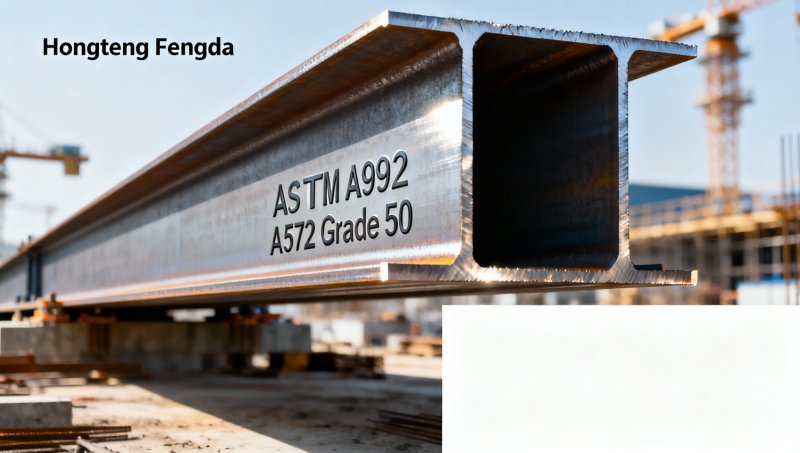
Though bridge engineering sets the highest bar for weight precision, parallel demands exist across sectors. In weight of I beam for high-rise buildings, vertical stacking efficiency dictates optimal flange-to-web ratios—where lighter yet stiffer sections (e.g., W14×22) reduce cumulative floor dead load without compromising lateral drift control. Conversely, weight of I beam for warehouse construction prioritizes economic span-to-depth ratios and ease of bolting; here, heavier sections like W21×122 offer superior column base anchorage and racking load distribution. Meanwhile, I beam weight specifications for industrial use must accommodate vibration isolation, thermal cycling, and corrosive atmospheres—prompting hybrid approaches such as stainless-clad flanges or hot-dip galvanized coatings applied post-fabrication.
Hongteng Fengda supports all three domains with unified quality governance: every shipment includes mill certificates showing actual measured weight per linear foot (verified via laser micrometry), tensile test results at both mid-flange and web locations, and ultrasonic testing reports for internal soundness. This eliminates guesswork when referencing an I beam weight load capacity chart—because our published values reflect production reality, not theoretical nominal geometry.
Why Global Projects Trust Hongteng Fengda’s Structural Steel Solutions
With over 18 years of dedicated focus on structural steel, Hongteng Fengda combines deep metallurgical expertise with agile manufacturing infrastructure. Our 120,000-ton annual capacity spans W, S, M, HP, and custom asymmetric sections—with dedicated lines for controlled cooling, stress-relieving furnaces, and robotic plasma cutting for complex cope cuts and weld prep profiles. Every order undergoes triple-stage inspection: incoming raw material verification, in-process dimensional audits, and final 100% visual + NDT validation before packaging. We maintain active certifications to ASTM A6/A6M, EN 10025-2, GB/T 706, and JIS G3101—ensuring seamless acceptance across North American DOT approvals, EU CE marking requirements, and GCC Standardization Organization mandates.
Beyond compliance, we embed value through responsiveness: standard lead times of 4–6 weeks for stocked sizes, expedited options for urgent bridge rehabilitation programs, and collaborative engineering support—including free section optimization studies using STAAD.Pro and MIDAS Civil models. Whether you’re sourcing for a coastal highway overpass or retrofitting a historic railway station, our team provides actionable data—not just documents. Because when it comes to weight of I beam for bridge construction, confidence isn’t assumed—it’s engineered, verified, and delivered.
Ready to align your next structural project with precision-weighted, fully certified I beams? Contact Hongteng Fengda today for customized section recommendations, instant weight calculations, and seamless export coordination to your site—anywhere in North America, Europe, the Middle East, or Southeast Asia.
Related recommendations
 How to Judge if Steel Sheet for Construction Fits Roofing or Wall CladdingSteel sheet for construction: learn how to judge thickness, coating, profile, and load performance for roofing or wall cladding, and choose a durable, cost-effective fit.
 How to Choose SS Pipe for Water Supply in Corrosion-Prone BuildingsSS pipe for water supply selection guide for corrosion-prone buildings. Compare 304 vs 316 grades, water chemistry, specs, and lifecycle cost to choose a safer, longer-lasting system.
 Steel Wire Rope Manufacturer Standards That Matter in Lifting ApplicationsSteel wire rope manufacturer standards for lifting: learn how to assess traceability, testing, compliance, and real quality control before choosing a safer, more reliable supplier.
 When a Steel Channel Supplier Should Provide Mill Test CertificatesSteel Channel supplier guide on when mill test certificates should be provided for quality control, compliance, and safer procurement.
Please give us a message


Please enter what you want to find