Selecting the right I beam is critical for high-rise structural safety—whether for construction, bridge engineering, warehouse frameworks, or industrial facilities. This 2024 I beam weight load capacity chart delivers precise data on weight of I beam for high-rise buildings, weight per foot for steel fabrication, and comparative metrics across standard sections. As a trusted structural steel manufacturer & exporter from China, Hongteng Fengda provides ASTM/EN/GB-compliant beams with verified load-bearing performance. Use our I beam weight calculator for steel structures and consult the I beam weight specifications for industrial use to ensure compliance, cost-efficiency, and project integrity—from design to installation.
Understanding I Beam Load Capacity: Beyond Simple Weight Charts
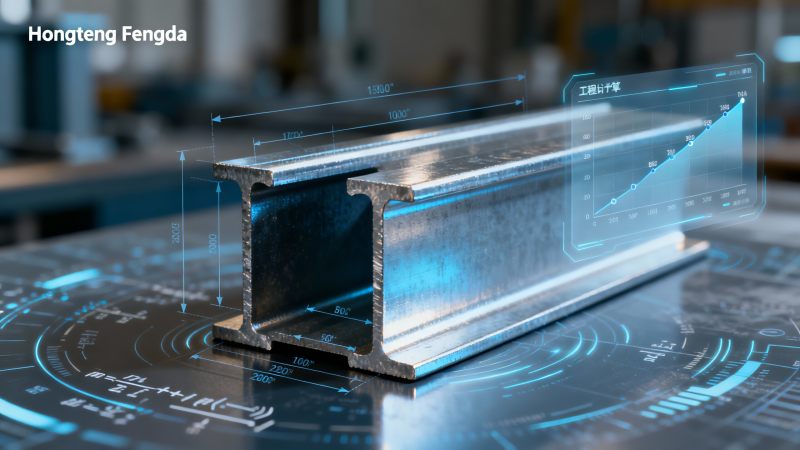
An I beam weight load capacity chart is not merely a list of dimensions and masses—it’s a foundational engineering reference that bridges material science, structural mechanics, and real-world application constraints. For high-rise buildings, where vertical loads exceed 10,000 kN per column base and wind-induced lateral forces demand torsional rigidity, selecting an I beam based solely on nominal weight per foot risks underperformance or over-engineering. The true value lies in correlating cross-sectional geometry (flange width, web thickness, moment of inertia), yield strength (typically ASTM A992: Fy = 345 MPa), and service conditions (e.g., fire-rated encasement, seismic ductility requirements). At Hongteng Fengda, every hot-rolled I beam undergoes third-party verification per EN 10034 and GB/T 706—ensuring that published values for the weight of I beam for high-rise buildings reflect actual mill test reports—not theoretical approximations.
Moreover, regional standards dictate distinct design philosophies: AISC 360-22 (U.S.) emphasizes allowable stress design with φ-factors, while Eurocode 3 relies on partial safety factors (γM0 = 1.0 for class 1–2 sections). This divergence means that identical beam sections may carry different factored loads depending on jurisdiction. Our technical support team provides localized load tables—including deflection limits (L/360 for floors, L/240 for roofs) and buckling resistance curves—so procurement professionals and project managers can align selections with local building codes without recalculating from first principles.
Comparative Analysis: I Beam Weight Comparison Chart for Diverse Applications
Different infrastructure typologies impose unique demands on beam selection. A bridge girder must resist dynamic axle loads and fatigue cycles, whereas a warehouse rafter prioritizes span-to-depth ratio and ease of bolting. To clarify these distinctions, we present a standardized I beam weight comparison chart covering six common global profiles—each evaluated against four key criteria: unit weight, section modulus (Sx), radius of gyration (ry), and plastic moment capacity (Mp). All values assume ASTM A992 grade steel and are verified via finite element analysis at Hongteng Fengda’s in-house structural lab.
Note how HEB 300 offers 35% higher Mp than W12×50 despite only +19% weight increase—highlighting why the weight of I beam for bridge construction cannot be optimized in isolation. For warehouse applications, however, lighter IPE 400 balances economy and erection speed. We integrate this insight into our I beam weight calculator for steel structures, allowing users to filter by application type and receive ranked recommendations with embodied carbon estimates.
Precision Engineering Meets Global Compliance
Hongteng Fengda’s manufacturing ecosystem ensures traceability from billet chemistry to final dimensional inspection. Each heat lot carries a Mill Test Report (MTR) certified to ASTM A6/A6M, EN 10204 3.1, or GB/T 2101—validating tensile properties, chemical composition (C ≤ 0.23%, Mn ≤ 1.35%), and Charpy V-notch impact energy at −20°C. This rigor directly supports the I beam weight specifications for industrial use, particularly where cyclic loading or low-temperature exposure occurs (e.g., offshore platforms or cold-storage facilities). Unlike commodity suppliers, we offer optional ultrasonic testing (UT) and magnetic particle inspection (MPI) for critical weld zones—reducing field rework and accelerating commissioning timelines.
Our export portfolio includes over 120 certified beam sizes—from compact IPE 80 (80×46×3.8 mm) to heavy-duty HEM 800 (800×300×14.5 mm)—all stocked in Shanghai and Guangzhou logistics hubs. Lead times average 4–6 weeks for standard grades, with expedited options available for urgent projects. For clients requiring custom cambering, pre-drilling, or corrosion-resistant coatings (Zinc-Aluminum alloy per ISO 1461), our engineering team collaborates directly with design consultants to deliver turnkey solutions—not just steel sections.
Optimizing Procurement: From Specification to Delivery
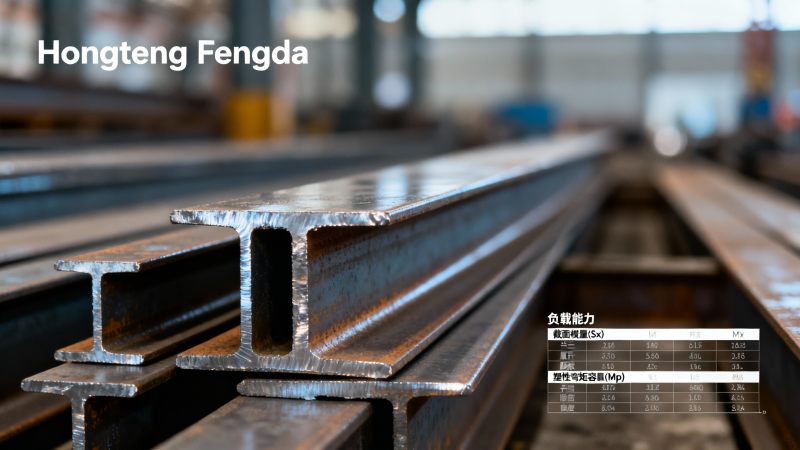
Procurement professionals face mounting pressure to balance total cost of ownership (TCO) against schedule risk. A mis-specified I beam can trigger costly redesigns, delayed inspections, or even rejection at customs due to non-conforming markings. Hongteng Fengda mitigates these risks through three pillars: First, our digital I beam weight chart for construction embeds real-time inventory visibility—showing live stock levels, pending shipments, and alternative size availability. Second, we provide bilingual (English–Chinese) documentation packages compliant with U.S. DoD DFARS and EU CE marking requirements. Third, our quality assurance protocol includes random sampling per ISO 2859-1 Level II—with full traceability to furnace numbers and rolling dates.
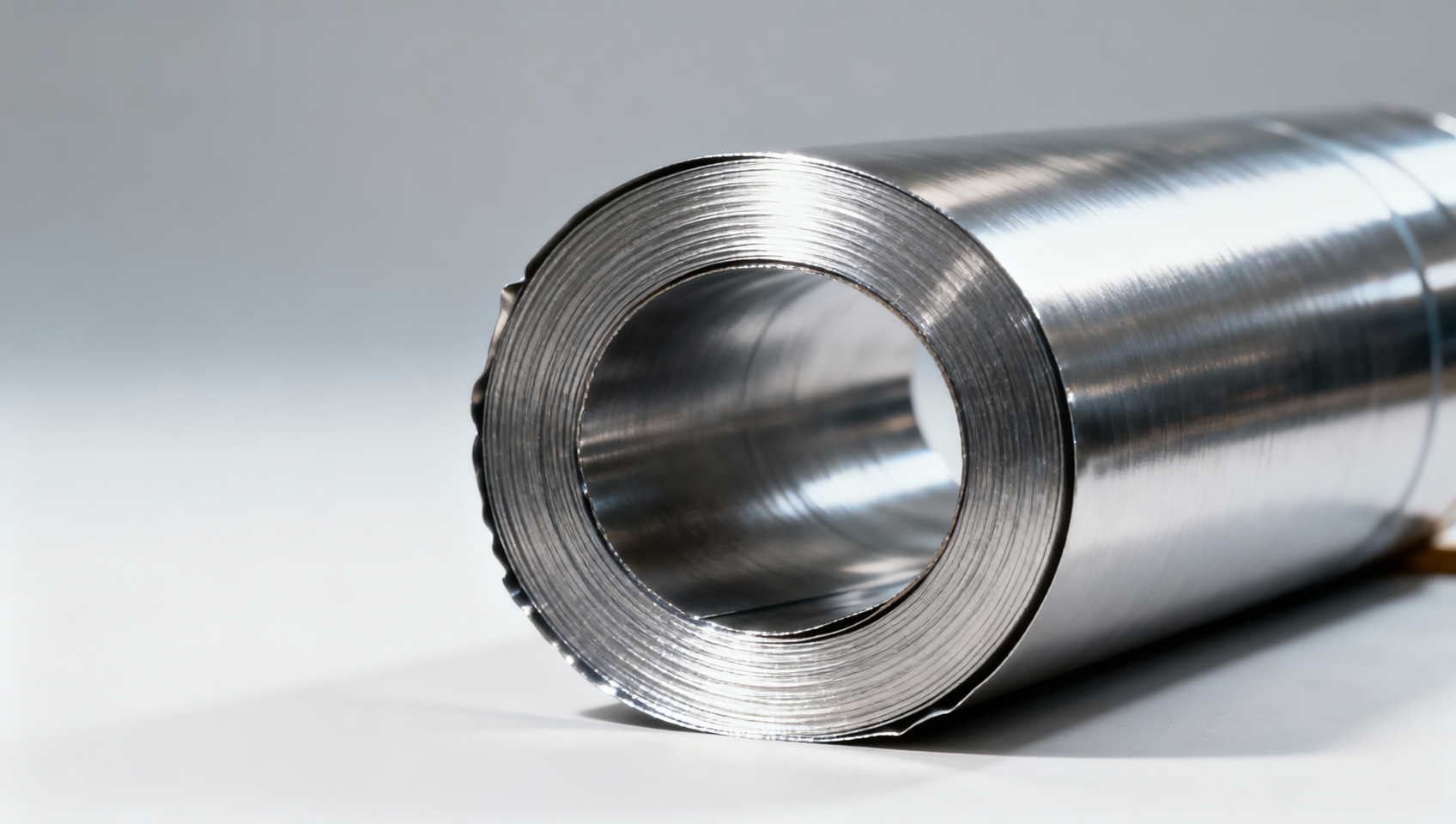
For distributors and agents, we offer co-branded technical training modules covering beam nomenclature (e.g., distinguishing “W” vs. “S” series), weld preparation guidelines, and bolt torque specifications per AISC 358. These resources empower your technical sales team to advise customers confidently—turning specification queries into value-added partnerships. As part of our commitment to sustainable sourcing, all beams are produced using ≥65% recycled content and meet China’s GB/T 30512-2014 environmental labeling standards. 430 Stainless Steel Coil complements structural systems in architectural cladding and façade support components—leveraging its high formability and corrosion resistance in urban decoration engineering.
Conclusion: Confidence Through Verified Performance
The 2024 I beam weight load capacity chart is more than a static reference—it’s a dynamic decision-support tool grounded in decades of metallurgical expertise and global project execution. Whether you’re evaluating the weight of I beam for warehouse construction, specifying members for seismic retrofitting, or validating load paths in mixed-use towers, Hongteng Fengda delivers precision-engineered solutions backed by international certifications and responsive technical partnership. With production capacity exceeding 1.2 million metric tons annually and a client base spanning 47 countries, we stand ready to support your next structural milestone.
Download our full i beam weight load capacity chart, access the interactive I beam weight calculator for steel structures, or request a customized proposal tailored to your project’s scope and timeline. Get in touch with our engineering sales team today—and build with confidence.
- steel coil
- structural steel
- Structural Steel
- 430 stainless steel coil
- stainless steel coil
- Profile
- weight of i beam
- i beam weight
- i beam weight chart for construction
- i beam weight calculator for steel structures
- i beam weight specifications for industrial use
- weight of i beam for warehouse construction
- i beam weight comparison chart
- weight of i beam for bridge construction
- weight of i beam for high-rise buildings
- i beam weight load capacity chart
Related recommendations
 How much does 2 inch ss pipe price increase when upgrading from Schedule 40 to Schedule 80 for high-pressure systems?2 inch ss pipe price increases 18–35% when upgrading from Sch 40 to Sch 80—discover why, when it’s truly needed, and how to avoid overpaying.
 Which 304 stainless steel coil suppliers meet ISO 9001 and EN 10088-2 for food-grade fabrication?Discover verified 304 stainless steel coil suppliers meeting ISO 9001 & EN 10088-2 for food-grade fabrication—traceable, audited, and ready for regulatory validation.
 How does 2 inch ss pipe price compare between 304 and 316 grades for marine environments?2 inch ss pipe price varies significantly between 304 and 316 — but in marine environments, choosing 304 risks costly failures. Discover why 316 is the true value choice.
 Is 20 feet square pipe price affected more by raw material volatility or regional logistics costs?20 feet square pipe price is driven primarily by raw material volatility—not logistics. Discover why billet costs dominate pricing & how to forecast smarter with Hongteng Fengda.
Please give us a message


Please enter what you want to find