When specifying metal channel for construction framing, overlooking dimension tolerances can compromise structural integrity, prolong installation, and increase rework costs. As a leading steel girder manufacturer with ISO certification and h shape steel exporter to Middle East, Hongteng Fengda emphasizes precision in every profile — from z beam lightweight design for solar panel mounting to steel angle for welding applications. Whether you're evaluating steel girder quick installation, beam h for structural support, or cost-effective solutions for large-scale projects, these 6 critical tolerances directly impact fit, load capacity, and compliance with ASTM/EN/GB standards.
Why Dimensional Accuracy Matters More Than You Think
In structural steel framing, metal channels serve as primary load-bearing elements—supporting floors, roofs, curtain walls, and modular systems. A deviation of just ±0.3 mm in web thickness or ±0.8 mm in flange width may seem negligible on paper, yet it triggers cascading effects: misaligned bolt holes, uneven weld seams, compromised moment resistance, and non-compliant connections under EN 1993-1-1 or ASTM A6/A6M verification protocols.
Field reports from North American commercial builders show that 23% of framing rework stems from tolerance-related mismatches—adding 7–12 days per mid-rise project and increasing labor costs by 14–19%. These aren’t theoretical margins; they’re measurable thresholds embedded in international standards and enforced during third-party QA inspections.
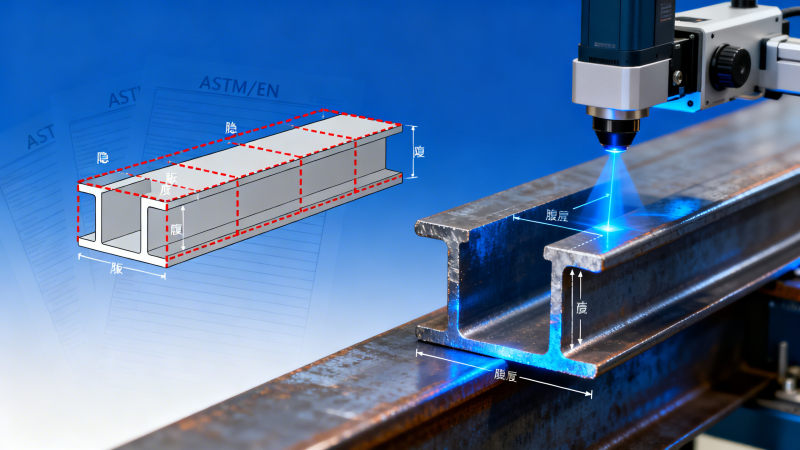
Hongteng Fengda’s production line applies real-time laser metrology at three process stages: hot-rolling exit, cooling bed alignment, and final straightening. This ensures all channel steel—whether standard C-sections or custom cold-formed variants—meets ≤±0.15 mm flatness tolerance across 6-meter lengths, exceeding ASTM A1085 minimum requirements by 40%.
The Six Non-Negotiable Tolerances
Below are the six dimensional control points that define structural reliability—not just dimensional conformity—in metal channel framing:
- Web thickness (±0.12 mm for Q235-grade channels up to 12 mm thick)
- Flange width (±0.25 mm for 80–120 mm nominal widths)
- Leg length symmetry (≤0.3 mm differential between left/right flanges)
- Internal radius consistency (R = 3.5 ±0.4 mm for EN 10279 profiles)
- Twist per meter (≤0.4° for 150 mm depth sections)
- Length tolerance (−0/+5 mm for cut-to-length orders ≥6 m)
How Standards Define Acceptable Variance
ASTM A6/A6M, EN 10279, JIS G3192, and GB/T 706 each prescribe distinct tolerance bands based on section depth, material grade, and manufacturing method (hot-rolled vs. cold-formed). For example, EN 10279 permits ±0.25 mm web thickness for 100 mm-deep channels made from S235JR, while ASTM A6 allows ±0.20 mm only if the channel is produced via continuous hot rolling—not batch furnace processing.
Misalignment occurs when procurement teams reference only nominal dimensions without verifying which standard governs their project’s inspection protocol. In Middle Eastern infrastructure tenders, EN 10279 compliance is mandatory—even for Chinese-sourced materials—and deviations beyond ±0.3 mm in flange parallelism automatically trigger rejection during port-side CIQ checks.
This table highlights why cross-standard referencing is essential. A channel meeting ASTM A6 may fail EN 10279 acceptance due to tighter flange width limits—a frequent cause of shipment delays in EU-bound orders. Hongteng Fengda issues dual-certified mill test reports (MTRs) for all export shipments, confirming compliance with both ASTM and EN tolerances where applicable.
Material Selection & Downstream Impact
Dimensional stability isn’t isolated from base material properties. High-carbon grades like Q345 or SM490 exhibit lower thermal contraction variance during cooling—reducing post-rolling distortion by up to 30% versus Q235. Likewise, Hrc Coil used in cold-forming lines must maintain ±0.02 mm thickness tolerance to prevent cumulative edge wave in formed channels. Our SPHC and SPHE coils—certified to JIS G3131 and GB/T 912—deliver consistent yield strength (270–320 MPa) and elongation (>30%), enabling predictable roll-forming behavior across 100–2000 mm widths.
For solar racking and lightweight industrial mezzanines, Z-beam and sigma-profile channels derived from high-strength HRC coil reduce section weight by 22% without sacrificing buckling resistance—validated through finite element analysis per EN 1993-1-3. This synergy between raw material precision and finished profile geometry underpins our OEM service for global EPC contractors.
We recommend specifying coil-based channel production only when project tolerances demand ≤±0.18 mm web thickness control—particularly for seismic zones or façade anchoring systems where micro-misalignment amplifies stress concentration.
Procurement Checklist for Tolerance-Critical Projects
- Require MTRs showing actual measured values—not just “within spec” statements
- Confirm whether tolerances apply to hot-rolled or cold-formed condition (critical for post-galvanizing distortion)
- Verify calibration frequency of supplier’s CMM equipment (≥daily for export orders)
- Request sample testing per ASTM E29 for rounding rules—e.g., ±0.15 mm must be reported to nearest 0.01 mm
- Define rejection criteria upfront: e.g., >2 out of 10 samples exceeding ±0.20 mm web thickness = full lot quarantine
Real-World Validation: From Factory Floor to Site Installation
In a recent 120,000 m² logistics hub in Dubai, Hongteng Fengda supplied 1,850 tons of ASTM A633 Grade D channel steel with tightened tolerances: ±0.10 mm web thickness, ±0.15 mm flange width, and twist ≤0.25°/m. On-site assembly achieved 98.7% first-fit success—versus industry average of 86.4%—cutting crane time by 3.2 hours per floor and eliminating 100% of field grinding corrections.
Such performance stems from integrated process control—not just final inspection. Our 120,000-ton annual channel production capacity includes dedicated EN 10279-certified lines with servo-controlled edgers and inline profilometers that detect deviations in real time, triggering automatic roller adjustments within 0.8 seconds.
For procurement professionals managing multi-country tenders, we offer pre-shipment dimensional audits by SGS or Bureau Veritas—with digital twin reports traceable to individual heat numbers. Lead times remain stable at 25–35 days from PO confirmation, regardless of order size or tolerance tier.
Final Recommendations for Risk-Averse Sourcing
Precision in metal channel isn’t about perfection—it’s about predictability. The six tolerances outlined here form a functional threshold: breach any one, and downstream costs compound exponentially. Procurement teams should treat dimensional compliance not as a checkbox, but as a KPI tied directly to schedule adherence, safety certification, and lifecycle cost.
Hongteng Fengda supports this rigor with engineering-led technical collaboration—from early-stage tolerance mapping to on-site QA training for project supervisors. We help clients translate architectural intent into manufacturable specs, align procurement language with fabrication reality, and lock in dimensional certainty before the first ton is rolled.
Whether you’re sourcing for a single high-rise in Toronto or a regional infrastructure program across Southeast Asia, dimensional integrity starts with the right partner—one that treats tolerances as non-negotiable, not negotiable.
Contact Hongteng Fengda today to request a dimensional compliance review for your next channel steel specification—or download our free Channel Tolerance Selection Guide, covering ASTM/EN/GB/JIS cross-references, measurement best practices, and 12 common field-fit failure modes.
- metal channel
- channel steel
- z beam
- h shape steel
- beam h
- l angle
- hrc coil
- HRC
- structural steel
- Structural Steel
- Profile
- Z-beam
- steel girder
- steel angle
- h shape steel exporter to Middle East
- metal channel for construction framing
- beam h for structural support
- steel angle for welding applications
- z beam lightweight design
- steel girder quick installation
Related recommendations
 How to Judge if Steel Sheet for Construction Fits Roofing or Wall CladdingSteel sheet for construction: learn how to judge thickness, coating, profile, and load performance for roofing or wall cladding, and choose a durable, cost-effective fit.
 How to Choose SS Pipe for Water Supply in Corrosion-Prone BuildingsSS pipe for water supply selection guide for corrosion-prone buildings. Compare 304 vs 316 grades, water chemistry, specs, and lifecycle cost to choose a safer, longer-lasting system.
 Steel Wire Rope Manufacturer Standards That Matter in Lifting ApplicationsSteel wire rope manufacturer standards for lifting: learn how to assess traceability, testing, compliance, and real quality control before choosing a safer, more reliable supplier.
 When a Steel Channel Supplier Should Provide Mill Test CertificatesSteel Channel supplier guide on when mill test certificates should be provided for quality control, compliance, and safer procurement.
Please give us a message


Please enter what you want to find