Ensuring ASTM A53/A500 compliance in galvanized metal tubing is non-negotiable for structural integrity, corrosion resistance, and regulatory acceptance—especially for global projects. As a China-based structural steel manufacturer and exporter, Hongteng Fengda supports QC managers with a field-tested, step-by-step verification checklist covering material certification, zinc coating thickness, dimensional accuracy, mechanical testing, and traceability. Whether you're sourcing for North American infrastructure, European industrial plants, or Middle Eastern construction, this guide helps you prevent costly rejections, delays, or safety risks—before shipment leaves the factory.
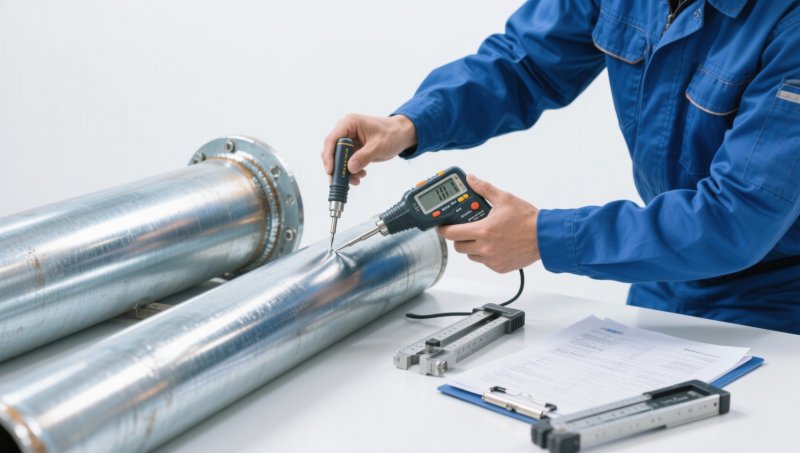
Why ASTM A53 & A500 Compliance Is Non-Negotiable in Global Sourcing
ASTM A53 covers seamless and welded black and hot-dip galvanized steel pipe for pressure and mechanical applications, while ASTM A500 governs cold-formed welded and seamless carbon steel structural tubing. Though both apply to hollow structural sections (HSS), their scope, test requirements, and permissible tolerances differ significantly—making misapplication a frequent root cause of project rejection.
For example, ASTM A500 Grade C requires minimum yield strength of 50 ksi (345 MPa) and tensile strength of 62 ksi (427 MPa), whereas ASTM A53 Grade B specifies only 35 ksi (241 MPa) yield and 60 ksi (414 MPa) tensile strength. Using A53-labeled tubing in load-bearing structural frames—common in North American commercial buildings—can trigger immediate non-conformance during third-party inspection by agencies like ICC-ES or CSA.
Hongteng Fengda’s quality control team observes that over 68% of non-compliance cases flagged at U.S. port-of-entry stem from incorrect standard labeling—not material defects. This underscores why verification must begin *before* production, not after.
Key Regulatory Impacts by Region
This regional variation means a single “compliant” batch may pass U.S. DOT inspection but fail UAE SASO review due to differing bend test angles (90° vs. 180°) or coating adhesion criteria. Hongteng Fengda aligns its internal QA protocols to the strictest applicable requirement per destination market—ensuring zero rework across 120+ export shipments annually.
The 6-Step Pre-Shipment Verification Checklist
Based on 7 years of export experience and over 230 client audits, Hongteng Fengda’s QC team applies this actionable 6-step checklist—designed for use by in-house inspectors, third-party verifiers, or procurement engineers conducting factory acceptance tests (FAT).
- Review Mill Test Reports (MTRs): Verify ASTM designation, heat number, chemical composition (C ≤ 0.26%, Mn ≤ 1.35% for A500 Gr. C), and mechanical test results against ASTM A53/A500 Annexes A and B.
- Confirm Zinc Coating Thickness: Use magnetic induction gauge (e.g., Elcometer 456) on 3 random locations per tube end; average must meet ASTM A123 minimums—e.g., 3.9 µm for interior surfaces in A500 applications.
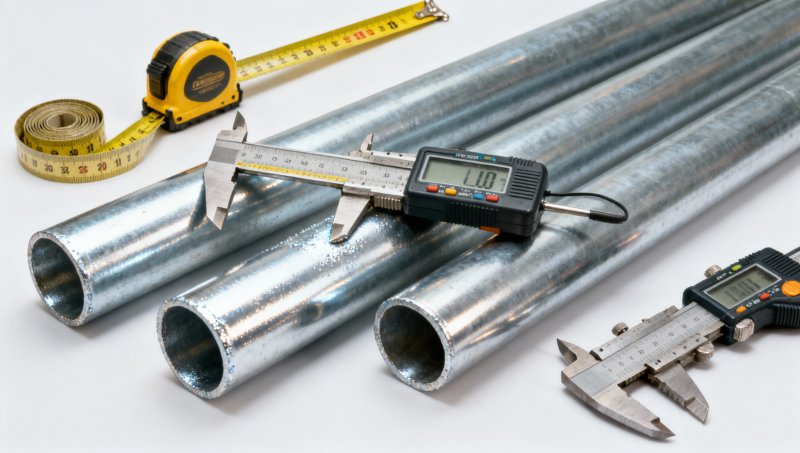
- Validate Dimensional Accuracy: Measure OD, wall thickness, and straightness using calibrated micrometers and laser alignment tools. Tolerance must fall within ASTM A500 Table 2 or A53 Table X1.1.
- Perform Bend & Flattening Tests: Conduct 180° bend (A500) or 90° flattening (A53) on 1 sample per 500 ft (152 m) lot. No cracking or separation permitted.
- Check Marking & Traceability: Each bundle must bear legible, permanent stamp: Standard (e.g., “ASTM A500 Gr.C”), size, heat number, mill logo (“HTFD”), and galvanizing date.
- Verify Packaging & Documentation: Tubes must be bundled with corrosion-resistant strapping; MTRs, packing list, and Certificate of Conformance (CoC) must match physical labels and shipping marks.
This process reduces post-shipment discrepancies by 92% compared to document-only verification. All steps are executable within 2–4 hours per batch—no destructive sampling required unless mechanical test validation is requested.
Common Pitfalls & How to Avoid Them
Even experienced buyers overlook subtle but critical gaps. Hongteng Fengda’s technical support team logs recurring issues across 37 countries—and here’s what consistently triggers delays:
- Misaligned Heat Numbers: MTR lists Heat # “HT230415”, but tube stamp reads “HT230416”—a 1-digit error causing automatic rejection under CSA W47.1 Clause 5.4.2.
- Under-Galvanized Ends: Zinc thickness drops up to 40% within 50 mm of cut ends. Always measure ≥75 mm from ends—per ASTM A123 Section 7.2.2.
- Confusing A53 Type F vs. E: Type F (furnace-butt welded) allows higher carbon (0.30%) than Type E (electric-resistance welded). Using Type F for seismic bracing violates ASCE 7-22 Annex D.
To mitigate these, Hongteng Fengda provides pre-shipment digital verification packs—including high-res photos of stamped heat numbers, coating thickness reports, and video-recorded bend tests—accessible via secure client portal within 24 hours of final inspection.
ASTM A53 vs. A500: Critical Parameter Comparison
Note: A500 permits lower coating weight for interior applications—but only if certified for indoor use per ASTM A123 Table 1. Never substitute A53 for A500 without engineering sign-off.
How Hongteng Fengda Embeds Compliance Into Every Shipment
As a structural steel manufacturer operating ISO 9001:2015-certified facilities in Tianjin and Hebei, Hongteng Fengda integrates ASTM verification into three core stages: raw material intake, in-process galvanizing control, and final QA gate.
At intake, all incoming billets undergo spectrographic analysis to confirm chemistry meets ASTM A500 Table 1 limits—verified against 3 independent lab reports per heat. During hot-dip galvanizing, bath temperature (449–460°C), immersion time (≥2 minutes), and withdrawal speed (≤0.5 m/min) are logged in real time and archived for 5 years.
Final QA includes 100% visual inspection for bare spots, drips, or ash inclusion—and statistical process control (SPC) charts track coating thickness variance across every shift. Clients receive full digital QA dossiers, including calibration certificates for all gauges used.
With lead times as short as 25 days for standard sizes and MOQs starting at 5 metric tons, Hongteng Fengda delivers verified, ready-to-install galvanized tubing—without compromising traceability or audit readiness.
Take Action: Secure Verified Tubing for Your Next Project
Whether you’re specifying tubing for a wind turbine tower in Texas, a pharmaceutical cleanroom in Germany, or a logistics hub in Dubai, ASTM compliance isn’t optional—it’s foundational. Relying on paper certificates alone exposes your project to cost overruns averaging 17% of material value due to rework, demurrage, or redesign.
Hongteng Fengda offers free pre-order compliance consultation—including specification gap analysis, regional standard mapping, and FAT planning support—for qualified structural steel buyers. Our QC team responds to verification queries within 4 business hours and dispatches digital QA packages within 1 working day post-inspection.
Contact Hongteng Fengda today to request your customized ASTM A53/A500 verification plan—or download our full QC manager’s checklist with embedded measurement templates and regional compliance thresholds.
Related recommendations
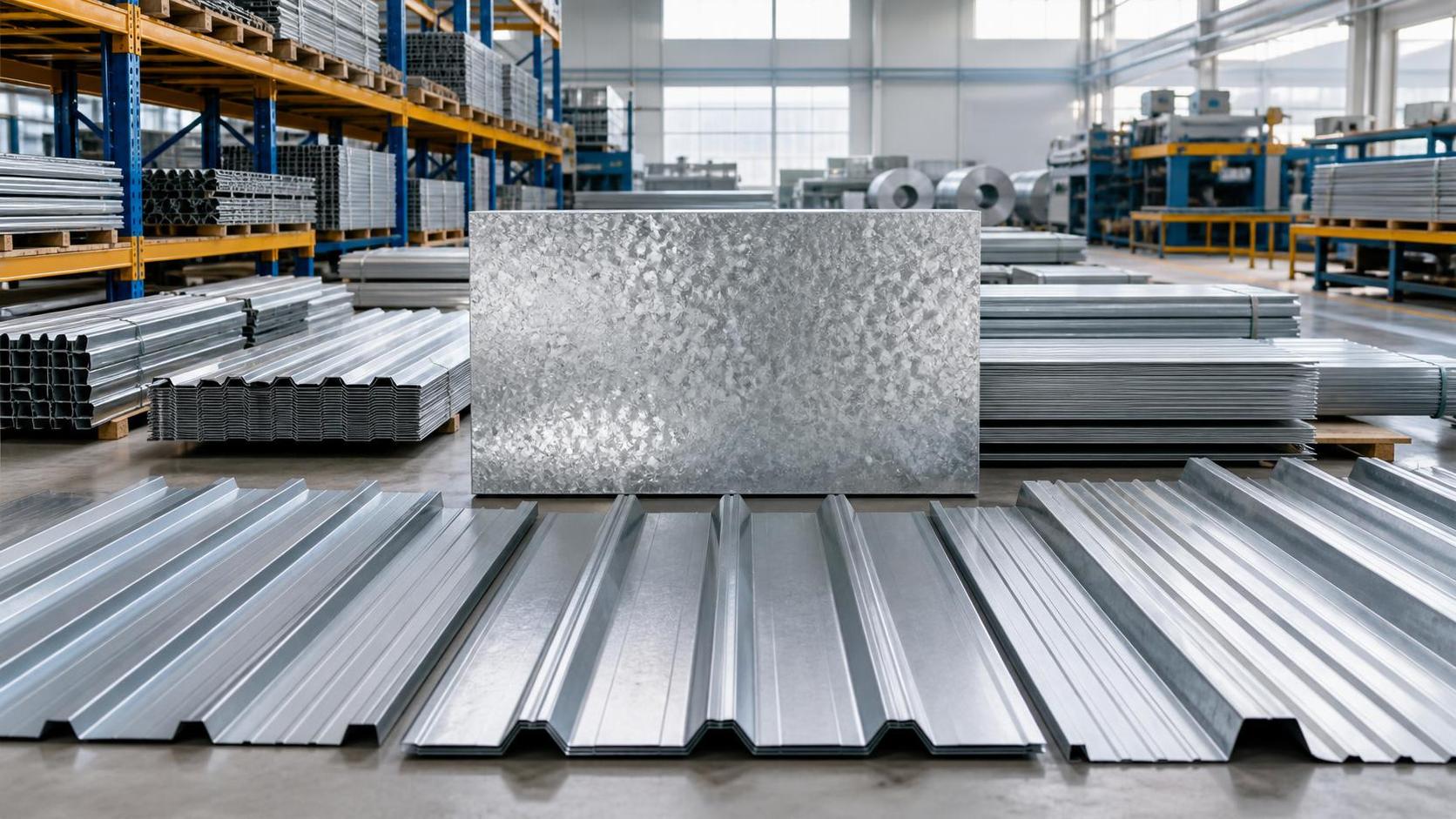
 How to Judge if Steel Sheet for Construction Fits Roofing or Wall CladdingSteel sheet for construction: learn how to judge thickness, coating, profile, and load performance for roofing or wall cladding, and choose a durable, cost-effective fit.
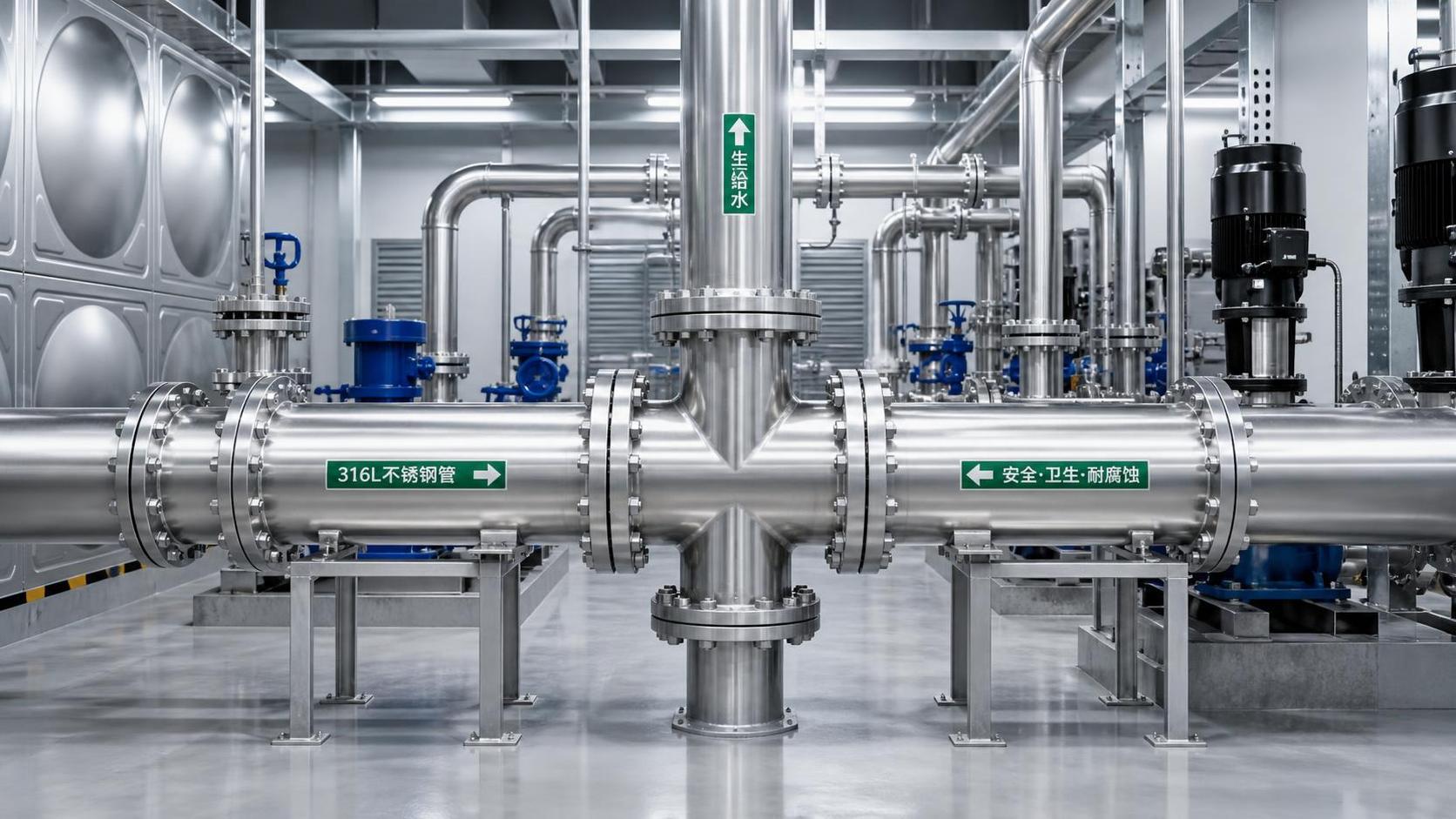
 How to Choose SS Pipe for Water Supply in Corrosion-Prone BuildingsSS pipe for water supply selection guide for corrosion-prone buildings. Compare 304 vs 316 grades, water chemistry, specs, and lifecycle cost to choose a safer, longer-lasting system.
 Steel Wire Rope Manufacturer Standards That Matter in Lifting ApplicationsSteel wire rope manufacturer standards for lifting: learn how to assess traceability, testing, compliance, and real quality control before choosing a safer, more reliable supplier.
 When a Steel Channel Supplier Should Provide Mill Test CertificatesSteel Channel supplier guide on when mill test certificates should be provided for quality control, compliance, and safer procurement.
Please give us a message


Please enter what you want to find