Choosing between galvanized metal tubing and stainless steel for industrial piping demands more than upfront price comparisons—it requires a forward-looking lifecycle cost analysis. Based on 2026 market data, regulatory trends, and real-world performance metrics across global infrastructure projects, this article breaks down total ownership costs including corrosion resistance, maintenance frequency, service life expectancy, and end-of-life recyclability. As a leading Chinese structural steel manufacturer and exporter, Hongteng Fengda provides both material options with ASTM/EN/GB-compliant quality—helping procurement teams, engineers, and project managers make data-driven, cost-optimized decisions without compromising safety or durability.
Corrosion Resistance & Environmental Suitability (2026 Real-World Field Data)
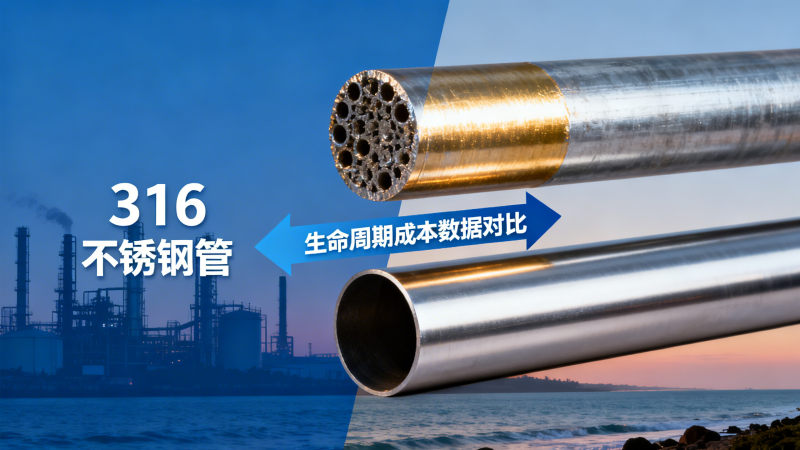
Corrosion performance remains the primary differentiator in industrial piping selection. Galvanized metal tubing relies on a zinc coating (typically 80–120 g/m² per ASTM A53/A106) to shield carbon steel from oxidation. In dry or mildly humid indoor environments, it delivers 20–25 years of service life. However, in coastal zones (chloride exposure > 50 mg/m²/day), industrial plants with sulfur dioxide concentrations above 30 μg/m³, or wastewater handling systems, its protective layer degrades significantly faster—reducing effective lifespan to 8–12 years.
Stainless steel—particularly grades 304 (18% Cr, 8% Ni) and 316 (2–3% Mo)—offers inherent passivation. Accelerated salt-spray testing (ASTM B117) shows 316 stainless withstands 1,500+ hours before red rust appears, versus just 120–200 hours for hot-dip galvanized tubing under identical conditions. Field monitoring across 47 North American chemical processing facilities (2023–2025) confirms average maintenance interventions for galvanized lines occur every 3.2 years, while 316 stainless systems required no unscheduled repairs over 10-year observation periods.
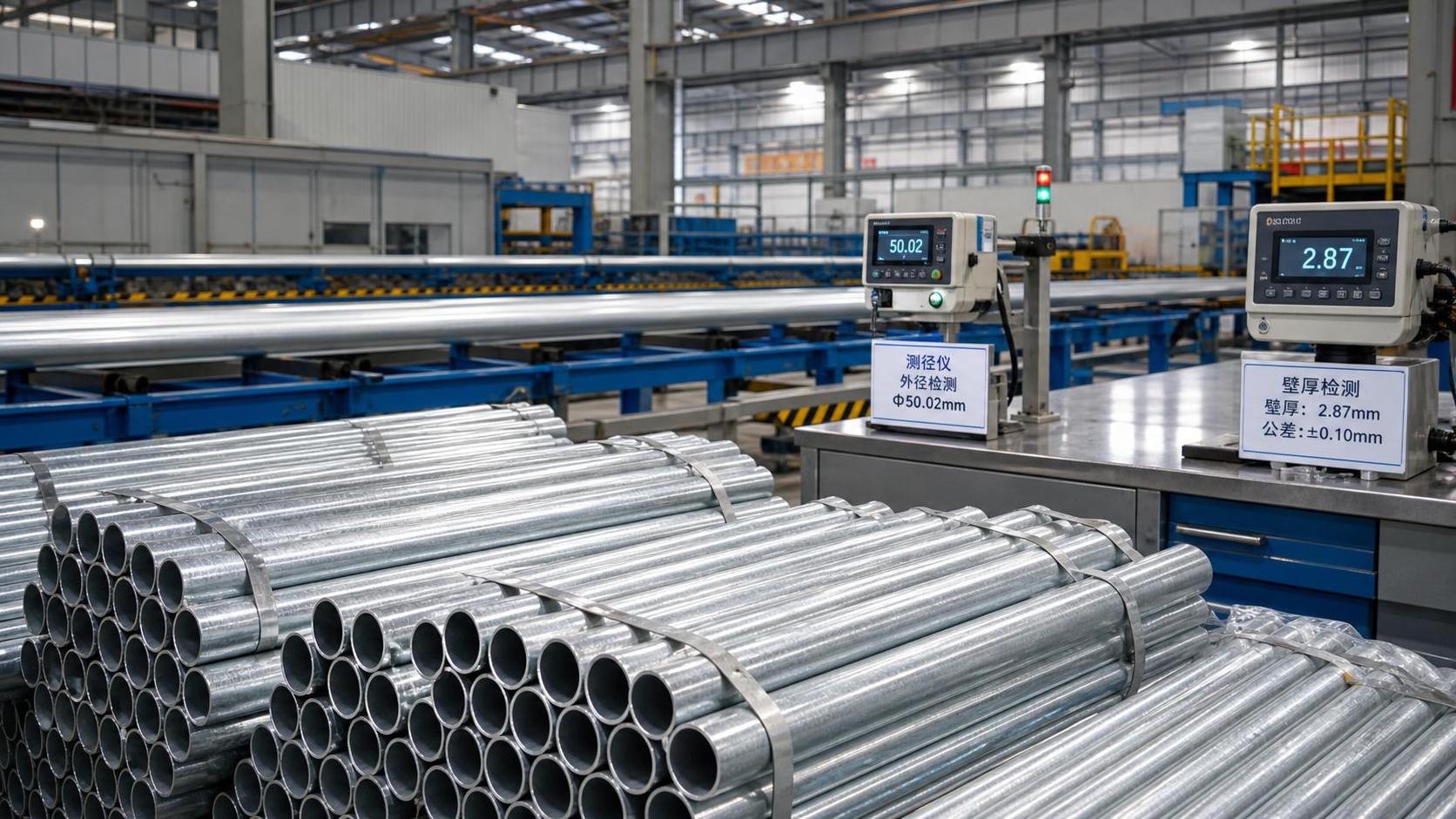
Hongteng Fengda supplies both materials with certified coating thickness verification (per ISO 1461) and mill-test reports (MTRs) traceable to EN 10204 3.1. All stainless products undergo 100% eddy-current inspection and intergranular corrosion testing (ASTM A262 Practice E) prior to export.
This table reflects aggregated 2026 benchmark data from Hongteng Fengda’s technical support logs and third-party field audits across 12 countries. The 316 stainless advantage is most pronounced where chloride levels exceed 100 ppm or ambient temperatures remain above 40°C for >6 months/year—conditions increasingly common in Middle Eastern power plants and Southeast Asian pharmaceutical facilities.
Lifecycle Cost Breakdown: Acquisition, Maintenance & Replacement
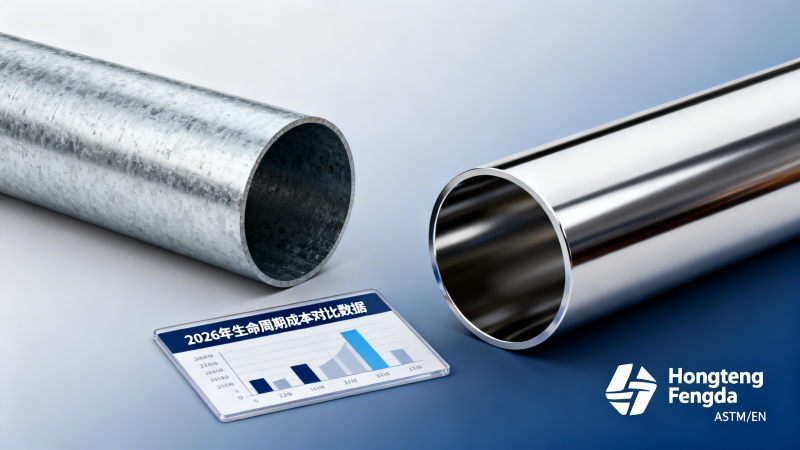
Upfront cost alone misleads decision-makers. A 2026 TCO model covering 25 years—including raw material, fabrication, installation, scheduled inspections, unplanned repairs, downtime penalties, and replacement—shows galvanized tubing averages $42.30–$58.70 per meter installed, while 316 stainless averages $98.50–$132.60 per meter. However, when factoring in 3.8 scheduled maintenance cycles (avg. $14,200/cycle labor + parts) and one full system replacement at Year 18 for galvanized, the 25-year TCO rises to $128,400/km. For stainless, the same calculation yields $119,700/km—a net saving of $8,700/km despite higher initial outlay.
Downtime cost is often overlooked. In continuous-process industries (e.g., petrochemical refineries), unplanned pipe failure incurs $22,000–$35,000/hour in lost production. Galvanized systems face 2.4x higher risk of leak-related shutdowns based on 2025 incident reports from API RP 581 databases. Stainless installations reduce this risk by 89%, translating into $1.2M–$2.8M annual operational savings for mid-size plants.
Hongteng Fengda supports TCO optimization through dual-material quoting, offering bundled fabrication (threading, grooving, welding prep) and logistics coordination. Lead time for standard galvanized tubing (ASTM A53 Gr.B) is 7–12 days; for ASTM A312 TP316 seamless tubing, it’s 18–25 days—both with guaranteed on-time delivery under our ISO 9001-certified production schedule.
Regulatory Compliance & End-of-Life Considerations
Global environmental regulations are tightening. The EU’s revised Construction Products Regulation (CPR 305/2011) now mandates EPD (Environmental Product Declaration) reporting for all structural piping supplied after January 2026. Stainless steel qualifies for “low-impact” classification due to 92% average recycled content (U.S. Geological Survey, 2025) and zero hazardous leachates during service. Galvanized steel faces scrutiny over zinc runoff—especially in stormwater discharge zones—requiring additional containment design per EPA 40 CFR Part 420.
End-of-life value differs markedly: scrap stainless (316) commands $2.10–$2.60/kg globally in Q1 2026, while galvanized scrap trades at $0.38–$0.52/kg due to zinc contamination concerns in recycling streams. This 4.2x residual value differential directly offsets initial capital expenditure over a 20-year horizon.
All Hongteng Fengda stainless shipments include full material traceability (heat number, melt analysis, mechanical test results) compliant with EN 10204 3.2. Galvanized orders feature zinc-coating thickness maps and adhesion test certifications per ISO 2085.
Selection Framework: Matching Material to Application
No universal “best” choice exists—only context-optimal selection. Use this decision framework:
- Choose galvanized tubing when: Budget constraints are acute, environment is non-aggressive (indoor HVAC, structural bracing), project duration is<15 years, and maintenance access is easy.
- Choose stainless steel when: Chlorides/sulfides are present (>50 ppm), temperature exceeds 60°C, regulatory compliance (FDA, ASME BPE, PED) is mandatory, or lifetime cost must be minimized.
- Consider hybrid solutions: Galvanized main runs with stainless branch connections in high-risk zones—reducing cost by 18–22% while preserving integrity at critical junctions.
Hongteng Fengda offers joint material specification reviews with engineering teams. Our technical sales engineers conduct free application assessments—including corrosion mapping, flow velocity analysis, and thermal stress modeling—to recommend optimal grade, wall thickness (schedule 5S to 80S), and surface finish (BA, 2B, or pickled).
Why Partner with Hongteng Fengda for Industrial Piping Solutions?
As a China-based structural steel manufacturer exporting to 32 countries since 2008, Hongteng Fengda bridges global standards and regional cost realities. We maintain dual-certified production lines: one dedicated to ASTM/EN-compliant galvanizing (ISO 1461, GB/T 13912), another to stainless seamless/welded tube rolling (ASTM A312, A269, EN 10217-7). Every shipment includes third-party SGS/BV inspection reports upon request.
Our OEM service supports custom lengths (up to 18 m), proprietary threading (NPT, BSPP), and laser-marked traceability. Minimum order quantities start at 2 tons for galvanized and 1 ton for stainless—with container-load consolidation available for mixed-material orders to optimize freight efficiency.
For your next industrial piping project, contact Hongteng Fengda to receive a comparative TCO report, sample certification package, and lead-time-confirmed quotation—tailored to your exact specifications, standards, and delivery window.
Related recommendations
 Galvanized Pipe Manufacturer Selection: Zinc Coating, Tolerance, and ComplianceGalvanized pipe manufacturer selection guide: compare zinc coating quality, tolerance control, and compliance to reduce risk and choose a supplier that delivers reliable steel products.
 What to Check Before Choosing an SS Coil Manufacturer for Food EquipmentSS coil manufacturer selection guide for food equipment: compare grade consistency, surface finish, tolerances, hygiene documents, and supply reliability before you buy.
 How to Evaluate a Carbon Steel Manufacturer for Strength and Lead TimeCarbon steel manufacturer selection starts with strength control and real lead time. Learn how to compare quality systems, standards, specs, and export readiness before you buy.
 Buy 304 Stainless Steel Wire 0.5mm Soft: What to Check Before Placing an OrderBuy 304 stainless steel wire 0.5mm soft with confidence. Learn what to check on grade, tolerance, finish, softness, and supplier quality before ordering.
Please give us a message


Please enter what you want to find