Ensuring compliant galvanized C-beam coating thickness per ASTM A123 is critical for corrosion resistance, structural integrity, and project longevity—especially before bulk procurement. As a trusted Shandong supplier and ASTM steel profile manufacturer, Hongteng Fengda helps global buyers verify galvanized C-beam, ASTM C-beam, and C-beam steel quality through certified non-destructive testing, mill test reports, and third-party inspection support. Whether you're a procurement officer, project manager, or quality control professional sourcing Steel Construction Material—including perforated steel, L shape mild steel, or Carbon Steel Angle Bar—we deliver traceable, standards-compliant structural steel purlin and cold-formed solutions with zero compromise on ASTM A123 adherence.
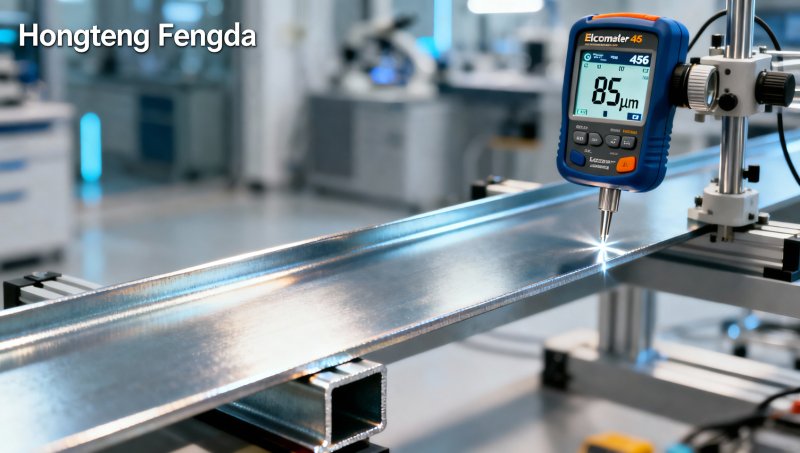
Why ASTM A123 Coating Verification Matters Before Bulk Orders
ASTM A123 defines minimum average and local coating thickness requirements for hot-dip galvanized iron and steel products—including galvanized C-beam, structural steel purlin, and cold-formed steel profiles. Under-specification leads to premature rust, reduced load-bearing capacity, and costly field rework. For procurement personnel and project managers, skipping pre-shipment verification invites supply chain risk, warranty disputes, and compliance failures—especially in aggressive environments like coastal infrastructure or industrial workshops where corrosion accelerates.
As a Structural Steel Manufacturer & Exporter from China, Hongteng Fengda integrates ASTM A123 verification into every production batch—not as an afterthought, but as a built-in checkpoint. Our Shandong supplier ecosystem supports full traceability: from zinc bath chemistry logs and withdrawal speed records to post-galvanizing thickness mapping. This ensures every C-beam steel shipment meets ASTM’s dual-layer requirement: ≥85 μm average for 3–6 mm steel sections, with no local reading below 70 μm.
Standardized Verification Methods: From Lab to Loading Dock
Per ASTM A123 Section 7, three non-destructive methods are recognized for coating thickness validation: magnetic induction (for ferrous substrates), eddy current (for non-ferrous coatings), and ultrasonic measurement (for multi-layer systems). Destructive cross-sectioning remains the gold standard—but it’s impractical for bulk orders. That’s why Hongteng Fengda equips its QC lab with calibrated Elcometer 456 gauges (ISO 2178/2360 compliant) and provides digital thickness maps per bundle—not just averages.
For buyers, here’s what to request before release:
- Mill Test Report (MTR) referencing ASTM A123-22 with certified thickness values per lot
- Third-party inspection report (e.g., SGS, BV, or TÜV) confirming ≥95% of sampled points meet ASTM minima
- Photographic evidence of gauge calibration certificates and measurement locations
- Batch-specific zinc bath temperature logs (maintained between 445–465°C per ASTM A123)
Comparative Performance: Galvanized C-beam vs. Alternatives
While galvanized C-beam delivers unmatched durability for outdoor and high-humidity applications, alternatives like painted carbon steel angle bar or perforated steel require more frequent maintenance. The table below compares key performance metrics across common structural steel purlin options:
Procurement Best Practices for Global Buyers
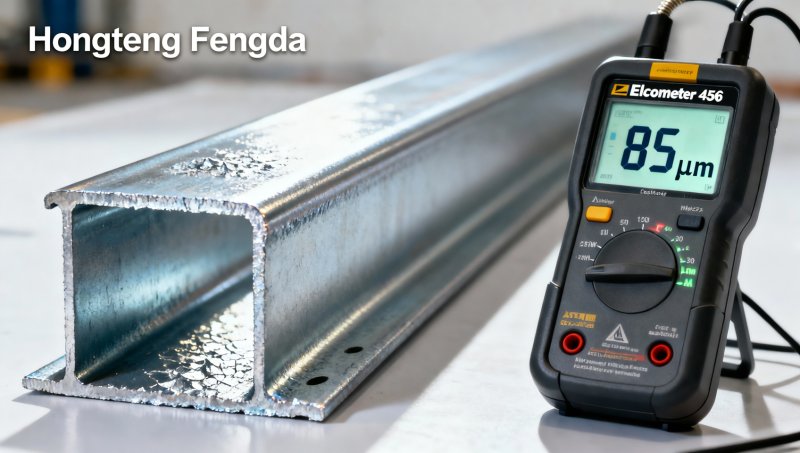
Procurement officers and enterprise decision-makers face real pressure: balancing cost, lead time, and compliance. At Hongteng Fengda, we embed ASTM A123 verification into our order workflow—not as an add-on, but as standard procedure. Here’s how we reduce your risk:
- Pre-production sample approval: We provide galvanized C-beam samples with full MTRs and third-party thickness reports before mass production begins.
- On-site witness testing: Invite your QA team—or appoint SGS/BV—to observe thickness checks at our Shandong facility prior to container loading.
- Batch-level digital traceability: Each bundle carries a QR-coded label linking to real-time thickness data, heat numbers, and galvanizing batch logs.
- ASTM-compliant packaging: Bundles secured with non-abrasive strapping to prevent coating damage during transit—critical for maintaining surface integrity.
Whether you’re sourcing ASTM steel profile for a hospital in Dubai, structural steel purlin for a warehouse in Ohio, or perforated steel for agricultural buildings in Southeast Asia—Hongteng Fengda ensures every C-beam steel unit arrives verified, documented, and ready for installation.
Why Choose Hongteng Fengda as Your ASTM C-beam Partner?
We’re not just a Shandong supplier—we’re your structural steel assurance partner. With ISO 9001-certified production lines, in-house galvanizing baths meeting ASTM A123 and EN ISO 1461, and over 15 years serving North America, Europe, and the Middle East, we combine deep technical rigor with responsive service. Our engineers speak English, Spanish, and Arabic—and support clients from initial RFQ to post-delivery technical review.
Need ASTM A123-compliant galvanized C-beam? Looking for OEM-grade structural steel purlin or customized cold-formed profiles? Contact Hongteng Fengda today for a free technical consultation, sample request, or factory audit scheduling. Let’s build trust—layer by layer, micron by micron.
- carbon steel angle
- l angle
- steel construction
- hot-dip galvanized
- structural steel
- steel profiles
- Structural steel purlin
- ASTM steel profile
- Carbon Steel Angle Bar
- Structural Steel
- steel angle bar
- L shape mild steel
- Shandong supplier
- C-beam steel
- galvanized C-beam
- ASTM C-beam
- perforated steel
- Steel Construction Material
- Profile
- Galvanized
- carbon steel
- steel profile
- steel angle
Related recommendations
 What is an H-Beam and How Does it Differ from an I-Beam?Discover what an H-beam is and how it differs from an I-beam. Learn key structural differences and expert selection tips from Hongteng Fengda to optimize your steel construction projects today.
 Hot Rolled vs. Cold Rolled Steel Sheet: Surface and ToleranceHot rolled vs cold rolled steel sheet: Discover how surface finish and tolerances impact manufacturing. Optimize material selection, reduce costs, and ensure quality. Read our expert guide today!
 Best Cutting and Bending Practices for Galvanized Sheet MetalDiscover the best cutting and bending practices for galvanized sheet to prevent zinc flaking. Optimize tooling and thermal parameters to ensure perfect corrosion resistance. Read the full guide!
 What is Galvanized Sheet and How Does the Zinc Coating Work?Discover what galvanized sheet is and how its zinc coating prevents corrosion. Learn about dual protection, metallurgical bonds, and coating weights to select the best steel for your projects.
Please give us a message


Please enter what you want to find