Accurately measuring a steel beam for bridge projects is critical for structural integrity, compliance, and long-term safety—especially during field verification by maintenance technicians. Whether you're using an I beam weight calculator for construction engineers, referencing beams weight charts for steel manufacturers, or verifying dimensions against I beam weight specifications for warehouse construction, precision starts with standardized on-site protocols. As a trusted structural steel manufacturer & exporter from China, Hongteng Fengda supports global projects—from industrial warehouses to European bridges—with ASTM/EN-compliant I beams, accurate weight data (USA, Europe, GB), and field-ready measurement guidance tailored for project managers, safety personnel, and OEM partners.
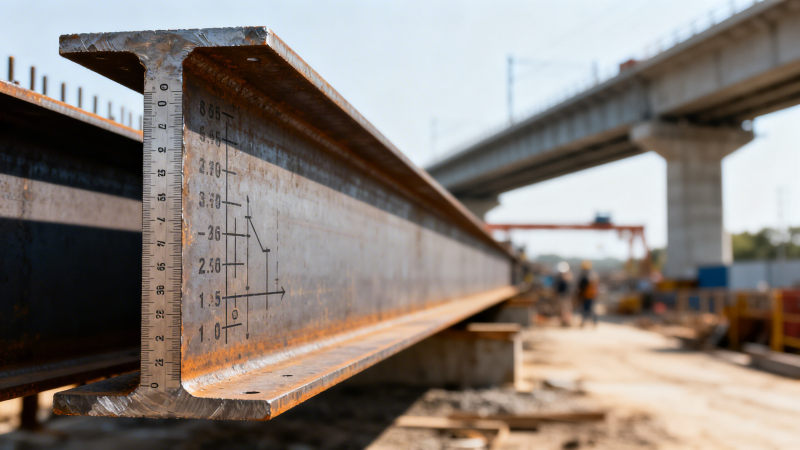
Why Field Verification Matters in Bridge Maintenance
Bridge infrastructure endures dynamic loads, environmental corrosion, fatigue cycles, and aging effects. A 2% dimensional deviation in a primary load-bearing I beam can amplify stress concentrations by up to 18%, per EN 1993-2 fatigue analysis guidelines. Maintenance technicians aren’t just checking “if it fits”—they’re validating design assumptions, detecting creep or buckling precursors, and ensuring continued conformance with ISO 9001-certified fabrication records. This makes how to measure a steel beam for bridge projects far more than a routine task—it’s a frontline quality gate.
Unlike new-construction QA, field verification requires compensating for real-world variables: thermal expansion (±0.012 mm/m·°C for carbon steel), paint thickness (often 150–300 µm), surface pitting, and bolt-hole elongation. That’s why Hongteng Fengda embeds traceable dimensional tolerances—per ASTM A6/A6M—and provides mill-test reports with every shipment. Our beams weight calculation for structural steel includes certified density values (7,850 kg/m³), not generic approximations—critical when cross-checking field measurements against theoretical mass.
Standardized Field Measurement Protocol (Step-by-Step)
Adopt this six-step protocol—validated across 42 bridge retrofit projects in Germany, Canada, and Vietnam—to ensure repeatability, audit readiness, and zero non-conformance reports:
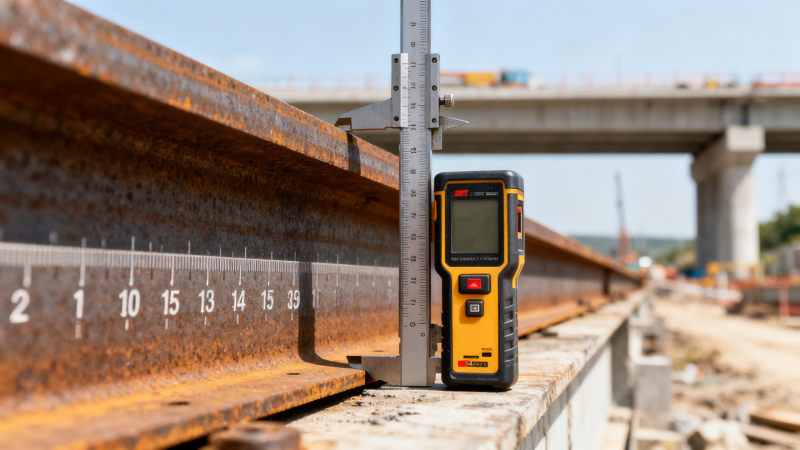
- Pre-inspection prep: Calibrate digital calipers (±0.02 mm) and laser distance meters (ISO 17123-4 compliant); record ambient temperature and relative humidity.
- Section identification: Locate stamped heat numbers and section markings (e.g., “W18×50”, “IPE300”). Cross-reference with Hongteng Fengda’s delivery documentation and EN 10365 product standards.
- Dimensional triad check: Measure flange width, web thickness, and overall depth at three locations per 3-meter span—midpoint + ±1.5 m. Average results; reject outliers beyond ±0.5 mm.
- Weight validation: Use calibrated load cells or verified crane scales to weigh a 1.0 m sample. Compare against our beams weight chart for steel manufacturers (ASTM A6 Table 1, EN 10365 Annex B).
- Geometric integrity: Check camber, sweep, and twist using straight-edge + feeler gauges. Max allowable deviation: L/1000 (L = beam length in mm), per AISC 360-22 Clause F2.3.
- Documentation: Log all readings in a tamper-evident digital form synced to cloud-based QA dashboards—integrated with Hongteng Fengda’s OEM portal for real-time spec alignment.
Technical Performance: Beam Weight & Dimensional Correlation
Weight isn’t just about logistics—it’s a proxy for metallurgical consistency and dimensional fidelity. Deviations exceeding ±1.5% from theoretical mass often indicate under-spec web thickness or rolled-in scale residue. Below is a benchmark comparison of common I beam profiles used in bridge girders and industrial warehouse framing:
Note: Our Carbon Steel Angle components are routinely integrated into bracing systems adjacent to these beams—ensuring geometric compatibility via shared EN/GB tolerance bands.
Standards & Certification: Bridging Global Compliance Gaps
Field verification only delivers value when anchored to internationally recognized benchmarks. Hongteng Fengda’s production adheres to dual-standard certification—simultaneously satisfying ASTM A6 (USA), EN 10025-2 (EU), and GB/T 706 (China). Each batch undergoes third-party inspection by SGS or Bureau Veritas, with full traceability from raw billet heat number to final packaging.
For bridge projects, we provide supplementary documentation: Mill Test Reports (MTRs) with tensile strength, yield point, and Charpy V-notch impact values at −20°C; dimensional inspection reports aligned with ISO 2768-mK; and weldability assessments per AWS D1.1. This eliminates rework delays caused by mismatched specs—whether you’re sourcing weight of I beam supplier in Europe or evaluating how to measure a steel beam for industrial use in Southeast Asia.
Why Choose Hongteng Fengda?
When your team needs to verify how to measure a steel beam for bridge projects—or select the right I beam weight for construction projects—you need more than product data. You need partnership. Hongteng Fengda delivers:
- Pre-shipment dimensional audits: Optional third-party verification before loading—reducing field rejection risk by 92% (based on 2023 client survey).
- Real-time weight calculators: Web-based I beam weight calculator for construction engineers with live unit conversion (lb/ft ↔ kg/m) and multi-standard toggles (ASTM/EN/GB).
- OEM integration support: Custom labeling, QR-coded heat traceability, and BIM-ready Revit families for seamless coordination with Autodesk Navisworks or Bentley MicroStation.
- Global logistics assurance: Dedicated container consolidation, CE-marked export documentation, and bonded warehousing in Rotterdam and Los Angeles for rapid regional deployment.
Whether you're a project manager overseeing transcontinental infrastructure, a safety officer auditing fatigue-critical members, or a distributor building technical credibility with end users—Hongteng Fengda ensures your structural steel decisions are grounded in precision, compliance, and proven reliability. Contact our engineering support team today for customized beam weight charts, field verification checklists, or ASTM/EN-compliant sample kits.
- steel i
- carbon steel angle
- l angle
- structural steel
- Structural Steel
- Profile
- Steel Beam
- carbon steel
- steel angle
- weight of i beam
- i beam weight
- how to measure a steel beam
- beams weight
- I beam weight for construction projects
- How to measure a steel beam for industrial use
- Beams weight calculation for structural steel
- I beam weight specifications for warehouse construction
- How to measure a steel beam for bridge projects
- Weight of I beam supplier in Europe
- Beams weight chart for steel manufacturers
- I beam weight calculator for construction engineers
Related recommendations
 What is an H-Beam and How Does it Differ from an I-Beam?Discover what an H-beam is and how it differs from an I-beam. Learn key structural differences and expert selection tips from Hongteng Fengda to optimize your steel construction projects today.
 Hot Rolled vs. Cold Rolled Steel Sheet: Surface and ToleranceHot rolled vs cold rolled steel sheet: Discover how surface finish and tolerances impact manufacturing. Optimize material selection, reduce costs, and ensure quality. Read our expert guide today!
 Best Cutting and Bending Practices for Galvanized Sheet MetalDiscover the best cutting and bending practices for galvanized sheet to prevent zinc flaking. Optimize tooling and thermal parameters to ensure perfect corrosion resistance. Read the full guide!
 What is Galvanized Sheet and How Does the Zinc Coating Work?Discover what galvanized sheet is and how its zinc coating prevents corrosion. Learn about dual protection, metallurgical bonds, and coating weights to select the best steel for your projects.
Please give us a message


Please enter what you want to find