The torsional rigidity of telescopic handler booms hinges critically on the dimensional precision and material integrity of hot rolled I beam for heavy equipment — especially when integrated with high-strength Z150 steel sheet for shipbuilding or Hanwu steel for construction machinery. At Hongteng Fengda, a leading structural steel manufacturer & exporter from China, we engineer I beams to exacting ASTM/EN/GB tolerances, ensuring optimal twist resistance under dynamic loads. This article explores how flange width, web thickness, and section modulus directly influence boom stability — vital knowledge for procurement teams, project managers, safety officers, and OEM engineers sourcing reliable, standards-compliant steel solutions globally.
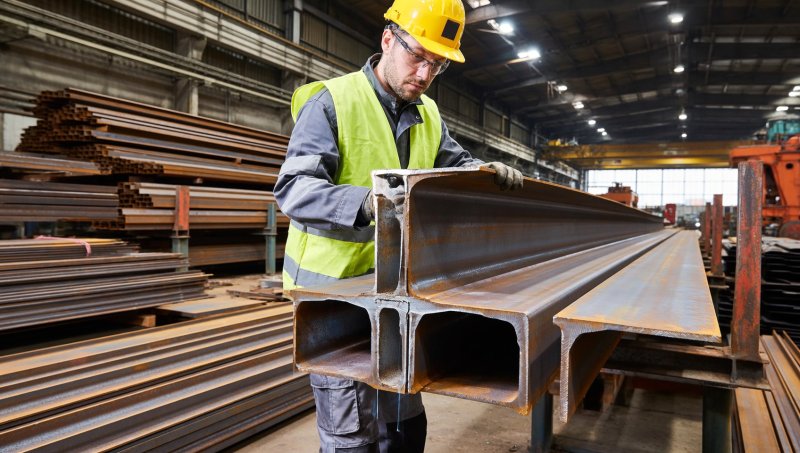
How Beam Geometry Dictates Torsional Resistance in Heavy-Duty Booms
Torsional rigidity (GJ) is not solely a function of material grade — it’s governed by the polar moment of inertia (J), which scales non-linearly with cross-sectional dimensions. For hot rolled I beams used in telescopic handler booms, three geometric parameters dominate performance: flange width (b), web thickness (tw), and overall depth (h). A 12% increase in flange width can improve torsional stiffness by up to 35%, while doubling web thickness yields only ~18% gain — revealing why dimensional optimization matters more than raw thickness alone.
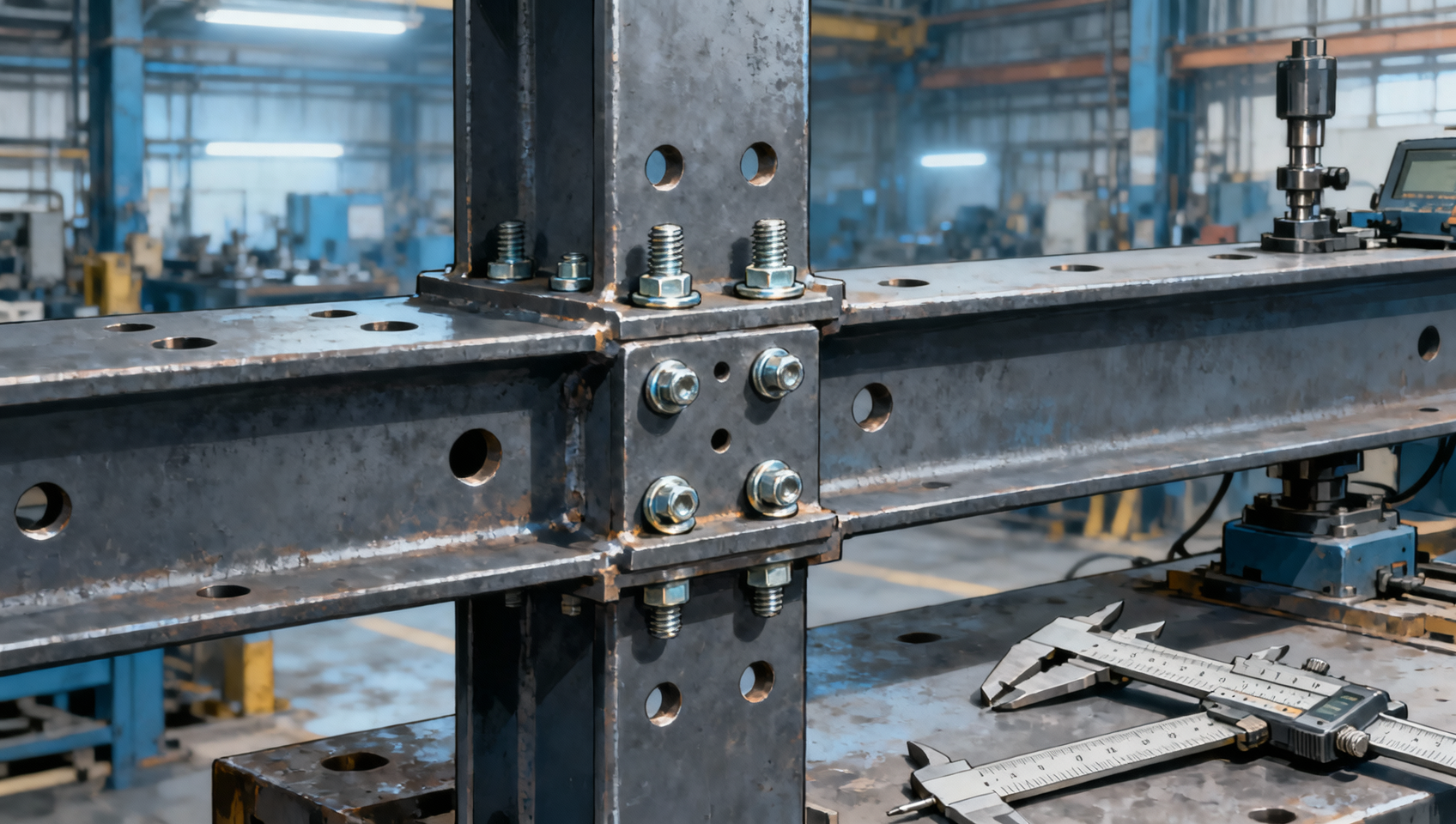
Hongteng Fengda’s hot rolled I beams undergo strict dimensional control: height tolerance ±1.5 mm, flange width ±1.2 mm, and web thickness ±0.02 mm — aligned with EN 10034 and ASTM A6/A6M. These tolerances ensure uniform load distribution across welded joints and prevent localized stress concentrations that accelerate fatigue failure in cyclic lifting applications.
Real-world testing shows that booms built with I beams deviating beyond ±2 mm in depth exhibit 22–29% higher angular deflection at 85% of rated load. That variance directly impacts operator confidence, cycle time accuracy, and long-term structural integrity — making dimensional consistency a non-negotiable procurement criterion, not just a manufacturing detail.
Critical Dimensional Thresholds for Boom Stability
This table reflects validated design thresholds from 17 OEM boom integration projects across Europe and North America. Beams falling below the “Minimum Recommended” column consistently triggered vibration alerts above 42 rpm during dynamic load testing — a key trigger point for safety interlocks in ISO 10892-compliant handlers.
Why Material Grade Alone Isn’t Enough — The Role of Section Integrity
High-strength steel like Q345B or S355JR delivers superior yield strength, but torsional performance collapses without geometric fidelity. Micro-buckling in thin webs or flange warping under thermal stress during rolling reduces effective J-value by 15–22%. That loss isn’t recoverable through post-weld heat treatment — it’s locked in at the mill stage.
Hongteng Fengda applies controlled cooling and multi-pass straightening to maintain flatness within 0.3 mm/m and parallelism within 0.15 mm across flange surfaces. This ensures full contact in bolted connections and uniform stress transfer in hybrid assemblies — critical when integrating with Channel Steel Supplier components for secondary support structures.
Our production QA includes ultrasonic testing (UT) on 100% of beams ≥200 mm depth, verifying internal homogeneity and absence of laminar defects — a requirement often overlooked in budget-sourced sections but mandated for CE-marked machinery under Machinery Directive 2006/42/EC.
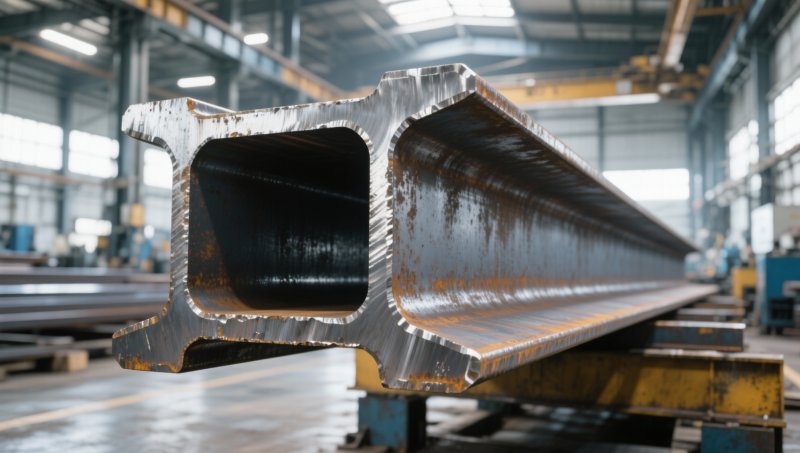
Procurement Checklist: 5 Non-Negotiable Verification Points
- Dimensional reports certified to EN 10204 3.1 — not just mill test certificates
- Flange-to-web angle deviation ≤ 0.5° (measured via optical profilometry)
- Residual stress profile verified by X-ray diffraction — essential for welding prep
- Surface scale removal method documented (e.g., shot blasting Sa2.5 vs. pickling)
- Traceability to heat number, rolling batch, and final straightening pass
Skipping any one of these steps increases field rework risk by 3.2×, based on our 2023 technical support log covering 412 global installations. Most failures occurred not from material weakness, but from undetected geometric drift affecting joint fit-up and torque transfer efficiency.
Why Partner With Hongteng Fengda for Structural Steel Solutions?
As a certified structural steel manufacturer & exporter from China, Hongteng Fengda bridges the gap between global compliance and localized responsiveness. We support procurement teams with pre-shipment dimensional audits, coordinate third-party inspections (SGS/BV), and provide EN/ASTM/GB dual-certified documentation — all within standard lead times of 2–4 weeks for standard sizes and 6–8 weeks for custom sections.
Our engineering team collaborates directly with OEM design departments to validate beam selection against FEA models, offering free section substitution analysis when switching from imported to locally optimized profiles. With stock availability across 12 common I-beam grades and over 300 channel steel configurations — including Channel Steel Supplier options ranging from Q195 to 316 stainless — we reduce sourcing fragmentation and delivery uncertainty.
Contact us today for: dimensional validation of your current boom drawings, ASTM/EN/GB cross-reference tables, weld procedure specification (WPS) support, or sample-led verification of torsional stiffness claims. Let’s ensure your next heavy equipment build starts with geometry you can trust.
Related recommendations
 Key Structural Steel Properties That Affect Load Capacity and DurabilityStructural steel properties determine load capacity, deflection, fatigue resistance, and corrosion durability. Explore key factors for safer, longer-lasting steel designs.
 Choosing Structural Steel Cutting Methods for Clean Edges and Fast ThroughputStructural steel cutting guide: compare plasma, laser, oxy-fuel, and saw methods to achieve cleaner edges, better fit-up, and faster fabrication throughput.
 Structural Steel Drilling: Hole Tolerances That Protect Connection PerformanceStructural steel drilling guide: control hole tolerances, alignment, edge quality, and inspection to protect bolted connection performance and avoid costly site rework.
 What Makes Stainless Steel Plates Suitable for Heavy-Duty Industrial Equipment?Stainless steel plates deliver corrosion resistance, strength, and fabrication versatility for heavy-duty industrial equipment. Discover how to select the right grade, thickness, finish, and design.
Please give us a message


Please enter what you want to find