Selecting the right steel conduit for electrical wiring is essential to ensure safety, performance, and long-term cost efficiency. For project managers and procurement professionals comparing options like angle vs channel steel or choosing ASTM certified steel square rods, understanding material standards and installation requirements can significantly impact overall quality. As a leading steel manufacturer in China, Hongteng Fengda provides high‑strength steel solutions, from industrial steel tubes to durable girders for bridge construction, helping global buyers meet international safety standards while optimizing budgets.
Definition and Overview of Steel Conduits
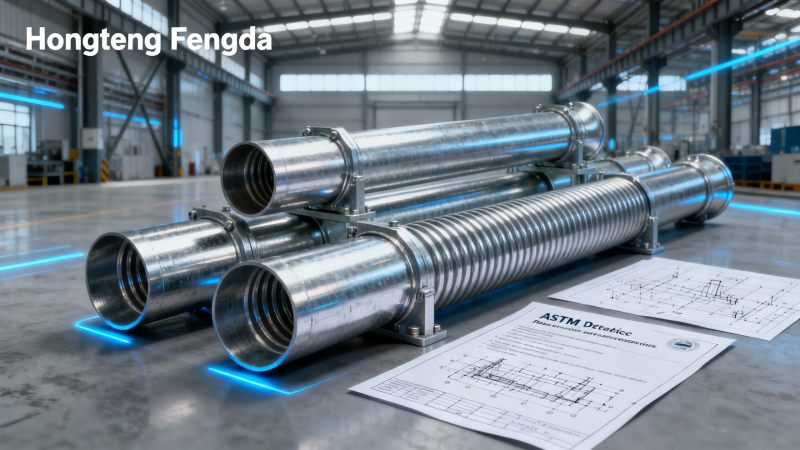
A steel conduit is a tubular raceway that protects and routes electrical wiring within commercial, industrial, and infrastructure projects. Unlike plastic or PVC conduits, steel conduits offer superior mechanical strength, ensuring electrical integrity even in harsh environments. Electrical contractors often choose between rigid steel conduit (RMC), intermediate metal conduit (IMC), and electrical metallic tubing (EMT), each designed for varying load capacities, corrosion resistance, and installation conditions. Rigid steel conduit provides the highest mechanical protection and is typically hot-dip galvanized to resist rust. IMC offers a lighter yet robust alternative for interior or exterior runs. EMT, being thinner-walled, is preferred for indoor installations where weight and cost management are priorities. Whether used in factory floors, bridge lighting systems, or power distribution networks, selecting the correct conduit type is vital to ensure compliance with standards such as ASTM, EN, and IEC. For large infrastructure projects that also involve structural elements like steel girder for bridge construction or steel angle for construction projects, integrating conduit systems with structural steel components enhances both functionality and safety. Through advanced manufacturing and precision galvanization, Hongteng Fengda enables engineers to align conduit material selection with broader project sustainability goals while maintaining straightforward installation and wiring security.
Market Overview and Industry Background
The steel conduit market has evolved significantly over the past decade due to increased urbanization, smart infrastructure projects, and stricter safety regulations. Global demand is being driven by accelerated industrial automation and data center development, which require reliable electrical containment solutions. As power density in these facilities rises, premium conduit systems must resist corrosion, mechanical stress, and high temperatures. Manufacturers in China have strengthened their competitiveness by expanding capacity, improving galvanizing lines, and complying with international standards such as ASTM and JIS. Hongteng Fengda has been at the forefront, serving clients across North America, Europe, the Middle East, and Southeast Asia with quality-assured components, from high strength steel round bar supplier products to customized steel tube for industrial applications. The use of energy-efficient materials and recyclable inputs in conduit manufacturing also supports global sustainability goals, aligning with the growing shift toward eco-friendly project sourcing. Moreover, the cost-performance ratio of steel conduits is increasingly attractive when compared to alternative materials like aluminum or PVC, due to their extended service life and reduced maintenance frequency. Market analysts forecast that demand for certified conduit systems will continue to rise as governments enforce construction codes mandating metallic protection for wiring in commercial installations and critical infrastructure.
Technical Performance and Standards Compliance
The technical performance of a steel conduit largely depends on the manufacturing process, coating method, and mechanical properties of the base metal. Galvanized and electroplated coatings extend corrosion resistance, while consistent wall thickness ensures uniform bending and threading performance. Typical yield strength parameters vary by conduit type, but most compliant products fall within 250-400 MPa with tensile strengths exceeding 300 MPa. Compliance with ASTM, EN, and GB standards certifies that conduits meet global electrical and safety requirements. Projects operating in coastal or offshore environments often integrate advanced galvanization technologies to prevent premature deterioration. Furthermore, innovations in conduit accessories—like couplings, elbows, and bushings—enhance electrical continuity and installation reliability. The integration of advanced cold formed steel profiles also allows conduit assemblies to merge smoothly with structural components, improving spatial efficiency. Hongteng Fengda adopts a rigorous quality control system including tensile testing, coating thickness measurement, and salt spray testing to ensure every steel conduit meets or exceeds designated standards. Our factory uses precision galvanization lines similar to those applied on Galvanised Steel Sheet Metal, ensuring consistent coating adhesion and long-term corrosion protection essential for both interior and exterior wiring solutions.
Comparison Analysis: Angle vs Channel Steel and Conduit Integration
Project managers often compare angle vs channel steel when designing frames or support systems for electrical conduit installations. While angle steel provides excellent compression and corner support, channel steel offers open-face versatility for easier cable routing. The ideal selection depends on the load distribution and space availability. In heavy-duty applications such as tunnel or bridge installations, integrating conduits with steel girders ensures robust mechanical protection and efficient cable management. For instance, a properly installed conduit alongside an ASTM certified steel square rod support system minimizes vibration effects and enhances overall stability. Meanwhile, the synergy between structural and electrical steel components simplifies procurement and improves design efficiency. Many international contractors standardize such practices by sourcing all steel materials—from conduits to beams—from a single reliable supplier like Hongteng Fengda. This one-stop solution reduces compatibility issues, ensures identical coating and mechanical performance, and shortens project delivery times. Further comparison with aluminum conduit demonstrates that steel variations, though slightly heavier, deliver vastly superior fire resistance and endurance. Combining them with cost-efficient fabrication and galvanization, they remain the professional’s first choice for critical installations.
Cost and Alternatives: Balancing Quality and Budget
In procurement decisions, understanding conduit cost structures is key to long-term economic efficiency. The initial investment in steel conduit for electrical wiring may appear higher than non-metallic options, but total lifecycle cost favors metallic systems due to durability and reduced maintenance intervention. Factors affecting cost include steel type, galvanization thickness, and installation environment. For instance, a conduit with heavy zinc coating and high yield strength provides better outdoor performance, while thinner-walled EMT types are cost-effective for commercial interiors. When evaluating steel roof sheet price per square meter alongside conduit costs, decision-makers should assess total structural integration rather than isolated components. The holistic approach also allows savings in labor and accessory inventory. Hongteng Fengda provides flexible OEM services, enabling buyers to align conduit dimensions with other fabricated steel profiles such as beams or channels, minimizing waste during assembly. Moreover, alternative materials like copper or aluminum conduits can be considered for specific conductivity requirements, but their higher metal value often inflates project costs. Singapore, Dubai, and European contractors increasingly specify galvanized conduits due to enhanced corrosion resistance similar to that found in coated Galvanised Steel Sheet Metal. By implementing standardized components, buyers can achieve optimal performance without compromising structural resilience or safety compliance.
Procurement Guide for Electrical Wiring Projects
When planning procurement for electrical wiring, clarity on technical requirements and compliance benchmarks is fundamental. Buyers should first define mechanical protection needs (light, medium, heavy) based on installation location and environmental exposure. Then they must ensure every selected conduit meets documented testing certifications—ASTM for North America, EN for Europe, JIS for Asia—to guarantee interchangeability across global supply chains. Detailed specification sheets should include wall thickness tolerances, coating composition, and bending radius to support installation efficiency. Procurement personnel should collaborate with suppliers like Hongteng Fengda early during design to harmonize conduit selection with other structural components. Our team provides customized technical documentation, product sampling, and logistics coordination to help buyers manage complex international sourcing operations smoothly. Additionally, selecting standardized thread fittings simplifies installation training protocols for technicians in distributed global projects. In modern industrial plants, there is also a trend toward modular conduit prefabrication, allowing time savings during site assembly. By pairing conduits with accessories fabricated from compatible steels, electrical engineers ensure mechanical synergy throughout the entire system. To further control costs, procurement leaders can analyze annual usage volumes and negotiate bulk delivery schedules that maintain quality yet reduce unit pricing. Adopting this strategic approach transforms conduit selection from a technical necessity into a source of competitive advantage for every project.
Case Study: Integrated Conduit Systems in International Projects
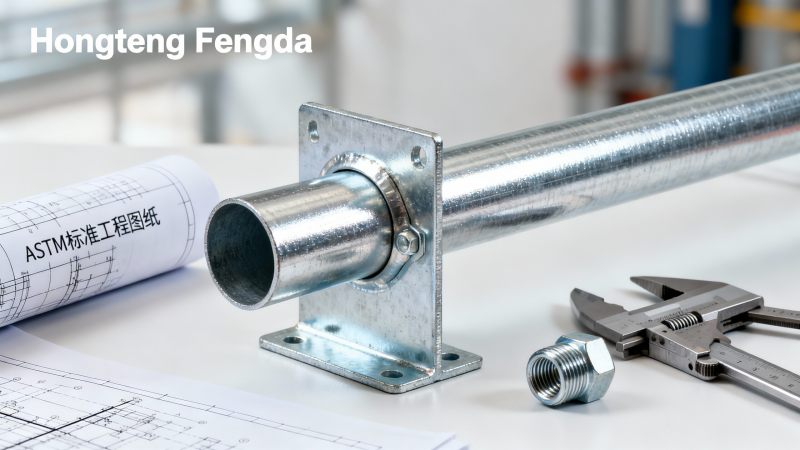
A representative infrastructure project in Southeast Asia demonstrates the value of selecting the proper steel conduit. The project involved a dual-bridge highway with integrated lighting and signaling systems exposed to marine humidity and constant vibration. Engineers initially evaluated aluminum and PVC options but determined that hot-dip galvanized steel conduit offered superior longevity and safety margin. The procurement team collaborated with Hongteng Fengda to supply pre-threaded conduit sections, matching tensile strength and coating uniformity to structural elements like steel girders and channels. Installation speed improved by 15%, and maintenance inspections over three years recorded zero corrosion incidents. This success case reinforced the necessity of sourcing from a certified steel rail manufacturer in China that adheres strictly to international safety standards. The project also used cold formed channel steel supports and angle steel brackets, integrating with conduit runs without additional interfaces. Ultimately, this structure demonstrated reduced total cost of ownership, validating the strategy of specifying consistent steel grade compatibility across all mechanical and electrical assemblies.
FAQ and Common Misconceptions
Q1: Are steel conduits always better than non-metallic conduits? While steel offers superior protection against physical damage and fire, the optimal choice depends on the environment and regulatory requirements. Non-metallic options may be suitable for low-load or residential projects, but industrial developments favor steel for enhanced durability.
Q2: How do I ensure my steel conduit complies with ASTM standards? Always request certificates of conformity and conduct spot verification tests for yield strength, elongation, and coating thickness. Hongteng Fengda includes these reports with every shipment.
Q3: Can steel conduits be used outdoors without additional protection? Yes, if they are properly galvanized. Coatings similar to those applied on structural steels prevent corrosion even in high-humidity or coastal regions.
Q4: Is the price difference between angle and channel steel significant when used as support for conduits? It varies by weight and cross-sectional design, but strategic material optimization can balance costs while maintaining mechanical integrity.
Trend and Insights: Future of Conduit Systems
The future of steel conduit systems will center on intelligent infrastructure and sustainability. With the advent of 5G networks and renewable energy installations, electrical pathways are becoming increasingly dense and complex. Manufacturers are therefore developing lighter high strength steel grades and energy-efficient coatings. Digital integration is emerging, where embedded sensors within conduits can detect heat or current irregularities, signaling early maintenance alerts. Technological synergies with Galvanised Steel Sheet Metal production machinery also enable surface enhancement processes that simultaneously improve conductivity and corrosion resistance. Furthermore, recycling and closed-loop manufacturing are gaining importance as clients prioritize ESG compliance. For buyers, these innovations translate to greater transparency in sourcing, predictable lead times, and improved project certifications under green building schemes. Hongteng Fengda, leveraging its extensive experience in steel tube for industrial applications and cold formed profile manufacturing, continuously invests in process upgrades and quality control automation to deliver conduits aligned with next-generation infrastructure needs.
Why Choose Hongteng Fengda
Hongteng Fengda stands out as a trusted structural steel manufacturer and exporter from China, specializing in comprehensive solutions that include angle steel, channel steel, steel beams, and customized conduit systems. By combining advanced production equipment with an experienced technical team, we ensure that every shipment meets ASTM, EN, JIS, and GB standards. Our global supply network supports rapid delivery to North America, Europe, the Middle East, and Southeast Asia, ensuring consistent quality and stable production capacity. Beyond delivering physical products, we collaborate closely with engineers, quality inspectors, and procurement managers to simplify design coordination and minimize sourcing risk. Whether you require standardized frames, galvanized conduits, or OEM-built components, Hongteng Fengda is ready to provide reliable support from initial design consultation to final delivery. Contact our team today to learn how our high strength steel solutions can enhance your electrical wiring safety, structural performance, and overall project value.
- channel steel
- l angle
- angle steel
- galvanised steel sheet metal
- galvanized steel conduit
- ASTM standards
- Industrial Steel
- ASTM standard
- galvanised steel sheet
- steel sheet metal
- hot-dip galvanized
- galvanized steel
- structural steel
- steel beams
- steel profiles
- Structural Steel
- Steel Beams
- Profile
- Galvanized
- Steel Beam
- steel sheet
- steel profile
- steel conduit
- steel roof sheet
- steel tube
- steel rail
- steel girder
- steel angle
- steel round bar
- steel square rod
- angle vs channel
- steel angle for construction projects
- high strength steel round bar supplier
- steel tube for industrial applications
- ASTM certified steel square rod
- steel roof sheet price per square meter
- steel girder for bridge construction
- steel conduit for electrical wiring
- steel rail manufacturer in China
Related recommendations
 How long does acero prepintado retain gloss and color stability in direct desert sunlight?Acero prepintado gloss & color stability in desert sun? Discover real-world performance data, PVDF vs. polyester longevity, and spec-critical insights for GCC projects.
 Does acero pregalvanizado maintain coating integrity after cold bending to 90 degrees?Acero pregalvanizado maintains coating integrity after 90° cold bending — when engineered right. Discover how Hongteng Fengda guarantees real-world performance, adhesion & corrosion resistance.
 Do the advantages of galvanized steel include reduced fire risk compared to untreated carbon steel?Advantages of galvanized steel include measurable fire-risk reduction vs. untreated carbon steel—learn how zinc delays ignition, buys critical escape time, and enhances safety without false 'fireproof' claims.
 What is the minimum bend radius for 12mm steel wire rope without permanent deformation?12mm steel wire rope capacity depends on bend radius — discover the safe 72–96mm minimum to prevent permanent deformation, fatigue & failure. Expert rigging insights inside.
Please give us a message


Please enter what you want to find