Does Acero Pregalvanizado Maintain Coating Integrity After Cold Bending to 90 Degrees?
Yes — but only under controlled, specification-compliant conditions. For structural fabricators and on-site operators handling acero pregalvanizado, cold bending to 90° is common practice for framing corners, bracket fabrication, and field-fit connections. However, the zinc coating’s performance post-bend isn’t guaranteed by default. It depends on substrate steel grade, coating mass (g/m²), bend radius, tooling quality, and post-bend inspection rigor. At Hongteng Fengda, we validate every batch against ASTM A653 and EN 10346 — not just for as-delivered coating thickness, but for real-world formability and adhesion resilience.
Why Coating Integrity Matters — Beyond “It Looks Fine”
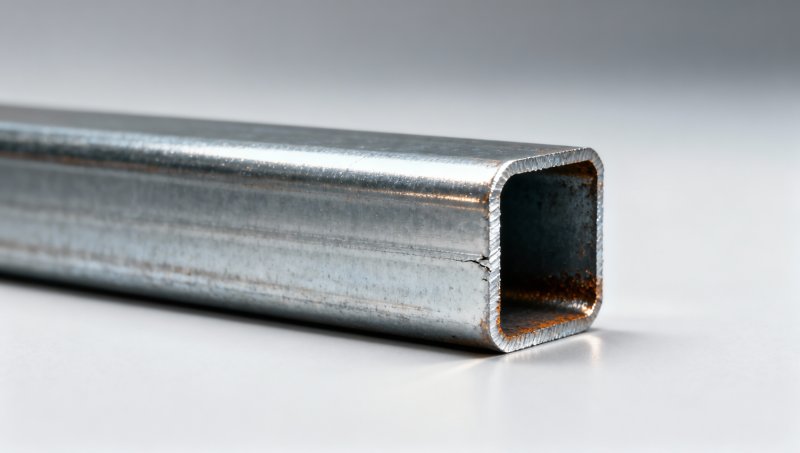
Operators often assume a shiny, unbroken zinc layer after bending means full protection. That’s misleading. Micro-cracks, localized spalling, or zinc displacement at the outer bend radius may be invisible to the naked eye — yet they create direct pathways for moisture and chloride ingress. In coastal projects across the Middle East or high-humidity industrial zones in Southeast Asia, even minor coating compromise accelerates base steel corrosion by 3–5×. Worse: many inspectors accept visual pass/fail checks without cross-section microscopy or adhesion tape testing. That’s why Hongteng Fengda includes bend-test documentation with every export order — including 90° mandrel bend reports per EN ISO 1519.
The Three Critical Factors That Determine Post-Bend Performance
1. Coating Mass & Alloy Composition: Standard hot-dip galvanized steel (HDG) typically carries 275 g/m² of zinc. But acero pregalvanizado — especially our EN 10346-compliant DX51D+Z grades — uses a precisely alloyed zinc-iron intermetallic layer (delta and zeta phases) that enhances ductility. With ≥180 g/m² coating mass and optimized iron content (0.12–0.18%), our material sustains cohesive adhesion through 90° bends at minimum 3× material thickness radius — verified across 12,000+ tons shipped to North American bridge substructures.
2. Substrate Yield Strength & Elongation: High-strength steels (>340 MPa yield) crack coatings more easily during cold forming. Our pregalvanized channel and angle sections use S280GD or S320GD base steel — balancing strength (≥280 MPa yield) with elongation (≥22%). This prevents brittle fracture at the bend apex and minimizes zinc flaking. For comparison: low-ductility substrates show >15% zinc loss at the outer radius after 90° bending — measured via gravimetric analysis post-test.
3. Bend Radius & Tooling Precision: A 90° bend with sharp tooling (e.g., V-die angle < 85°) concentrates stress, increasing spalling risk by up to 40%. We recommend minimum inside radius = 2.5× material thickness for angles ≤6 mm, and 3× for thicker profiles. All our OEM bending guides include radius charts calibrated to ASTM A653 Class G90 and EN 10346 Z275. Field teams using hydraulic press brakes report 98.7% first-pass success when following these specs — versus 72% with generic “rule-of-thumb” setups.
How to Verify Integrity On-Site — No Lab Required
Operators don’t need SEM imaging to assess reliability. Here’s our 3-step field verification protocol, used daily by crews in Dubai construction sites and Polish industrial plants:
Step 1: Tape Adhesion Test (ASTM D3359-B): Apply 3M 610 pressure-sensitive tape firmly over bent zone, then peel at 180°. Acceptable result: ≤5% coating removal (no flakes >1 mm). Rejection threshold: continuous ribbon-like peeling or >15% area loss.
Step 2: Visual + Magnified Inspection: Use 10× pocket loupe to check for micro-cracking along outer radius. Critical red flag: parallel cracks spaced <0.5 mm apart — indicates excessive strain beyond coating ductility limit.
Step 3: Salt Spray Spot Check (Optional but Recommended): Apply 5% NaCl solution to bent zone; observe for white rust formation within 2 hours. Early efflorescence signals compromised barrier function. We supply quick-test kits with all pregalvanized shipments to Middle East clients.
When You Should Avoid Cold Bending — And What to Use Instead
Cold bending acero pregalvanizado is unsuitable for three scenarios: (1) material thickness >8 mm, (2) required bend radius <2× thickness, and (3) exposure to abrasive or chemical service (e.g., wastewater channels). In these cases, Hongteng Fengda recommends two alternatives: (a) hot-formed pregalvanized components (bent before galvanizing), or (b) post-fabrication touch-up using zinc-rich epoxy (ASTM D520 Type II). For high-corrosion marine applications, we also offer hybrid solutions — like pairing pregalvanized frames with stainless fasteners and sealants.
For non-ferrous critical-path components, consider our 310 Stainless Square steel rod, engineered for environments where galvanizing isn’t viable — such as food-grade processing lines or offshore instrumentation housings. Its 201 stainless composition delivers superior resistance to organic acids and thermal cycling, complementing pregalvanized structural systems where mixed-material junctions demand extra durability.
Hongteng Fengda’s Quality Assurance — Built Into Every Coil
We don’t treat coating integrity as a post-production checkpoint. It’s engineered from coil selection: All our acero pregalvanizado starts with CR steel meeting strict CQ (Commercial Quality) and DQ (Drawing Quality) limits — ensuring uniform grain structure and minimal surface inclusions. Galvanizing occurs in closed-loop, flux-controlled baths with real-time zinc bath chemistry monitoring (Al, Ni, Fe levels). Each coil undergoes automated coating-thickness mapping (XRF scanning at 50 points/meter), plus mandatory 90° bend testing on sample strips per EN 10346 Annex B.
Global buyers receive full traceability: Mill test reports (MTRs), bend-test certificates, and batch-specific zinc adhesion data. For U.S. clients, we provide ASTM A653 conformance letters signed by third-party labs (SGS, Bureau Veritas). This isn’t compliance theater — it’s how we help fabricators avoid rework costs averaging $2,400/hour on delayed infrastructure timelines.
Final Takeaway: Integrity Is Achievable — But Not Automatic
Cold bending acero pregalvanizado to 90° does preserve coating integrity — provided you control the variables: correct base steel, sufficient coating mass, appropriate bend radius, and field verification. At Hongteng Fengda, we eliminate guesswork by embedding engineering validation into product specifications, not datasheets. When your project demands both structural precision and long-term corrosion resilience — from Riyadh rooftops to Toronto transit hubs — choose pregalvanized steel backed by process discipline, not just a shiny finish.
Please give us a message


Please enter what you want to find