For quality control managers overseeing structural steel procurement or fabrication, understanding ASTM A6’s beams weight tolerance standards is non-negotiable—especially when verifying i beam weight consistency across batches. Whether you’re calculating load capacity, validating mill test reports, or auditing supplier compliance, knowing how to measure a steel beam accurately—and how much variation in beams weight is permissible—directly impacts safety, cost, and project timelines. This article breaks down the critical tolerances, clarifies common misconceptions about weight of i beam vs. theoretical values, and delivers actionable verification steps tailored for QC teams, project managers, and global buyers sourcing from certified manufacturers like Hongteng Fengda.
ASTM A6: The Foundation of Structural Steel Weight Tolerance
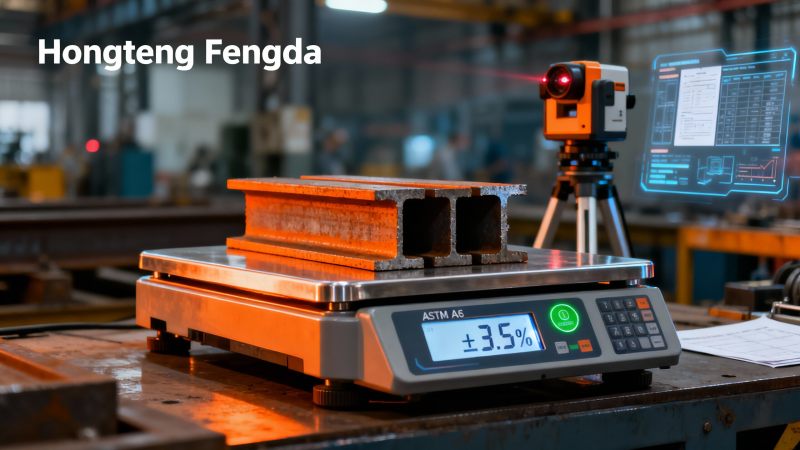
ASTM A6/A6M is the cornerstone standard governing dimensional tolerances, weight tolerances, and surface quality for hot-rolled structural steel shapes—including I-beams, H-beams, channels, angles, and tees. First published in 1927 and continuously updated, it remains globally referenced by engineers, inspectors, and procurement professionals in North America, the Middle East, and Southeast Asia. For quality control managers, Section 13—“Tolerances on Weight”—is where precision meets accountability.
Unlike dimensional tolerances (e.g., flange thickness or web depth), weight tolerances reflect cumulative deviations across multiple cross-sectional dimensions. A seemingly minor 0.8% over-thickness in both flanges and web can compound into a +2.4% deviation in actual beams weight—well beyond ASTM A6’s allowable limit. That’s why verifying i beam weight isn’t just about scale calibration—it’s about traceable process control from rolling mill to final inspection.
Technical Performance: What ASTM A6 Specifies for Beams Weight
Per ASTM A6-23, the permissible weight tolerance for hot-rolled structural steel shapes—including all standard I-beams (W-, S-, M-, and HP-series)—is ±3.5% of the theoretical weight per foot (or per meter). This applies to individual pieces, not batch averages. Crucially, this tolerance is *not* additive with dimensional tolerances; it stands as an independent pass/fail criterion.
The theoretical weight is calculated using nominal dimensions and the density of steel (0.2836 lb/in³ or 7,850 kg/m³). Real-world variation arises from mill scale, surface roughness, cooling shrinkage, and rolling temperature fluctuations—all factors that reputable mills like Hongteng Fengda monitor via real-time thermal profiling and automated dimensional scanning.
How to Measure a Steel Beam: From Field Practice to Lab-Grade Verification
“How to measure a steel beam” goes far beyond placing it on a scale. Accurate weight verification requires a three-tiered approach: pre-measurement conditioning, calibrated instrumentation, and statistical sampling aligned with ASTM A6’s acceptance criteria.
First, ensure the beam is clean, dry, and free of mill scale residue or protective coatings—unless the coating is part of the contractual specification (e.g., galvanized or painted beams). Then, use Class III or better digital floor scales certified to ISO/IEC 17025, with resolution ≤0.1% of expected weight. For a W12×50 beam (theoretical: 50.0 lb/ft), resolution must be ≤0.05 lb/ft.
Crucially, never rely on single-point measurement. ASTM A6 mandates evaluation across at least three locations—typically near each end and mid-span—to detect tapering or localized over-rolling. Combine weight data with cross-sectional measurements (flange width/thickness, web thickness) using micrometers traceable to NIST standards. Discrepancies >1.2% between measured and theoretical weight warrant full dimensional re-scan and root-cause analysis.
Common Misconceptions & FAQ: Weight of I Beam vs. Reality
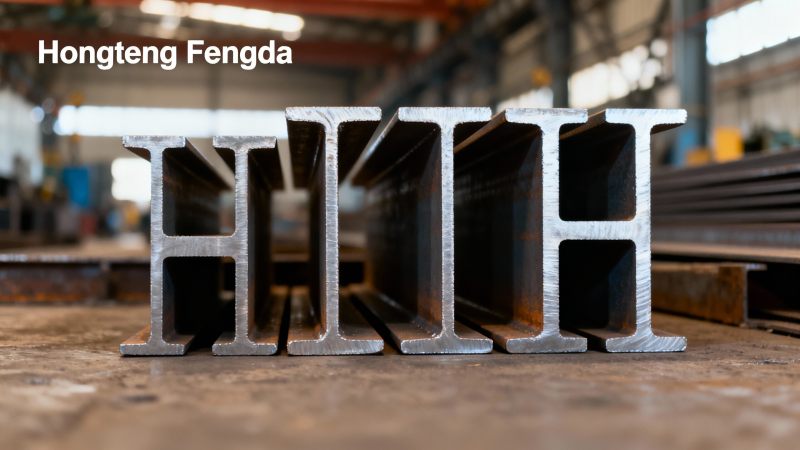
Misconception #1: “If dimensions are within tolerance, weight must be fine.” False. A W14×211 beam could have flange thickness +0.020 in and web thickness +0.015 in—both within ASTM A6’s ±0.030 in tolerance—but still exceed +3.5% in beams weight due to volume compounding.
Misconception #2: “Mill test reports (MTRs) guarantee weight compliance.” Not necessarily. MTRs list chemical composition and tensile properties—not verified weight. Reputable suppliers like Hongteng Fengda include third-party witnessed weight audits in their extended MTR packages upon request.
FAQ: Can rolled coil stock affect beam weight consistency? Yes—especially for custom sections. Variability in Rolled Coil thickness uniformity directly influences final beam mass. Our Q235B and Q345B coils maintain ±1% thickness tolerance per GB/T 700-2006 and ASTM A651, ensuring predictable rolling yield and minimal weight drift.
Why Choose Hongteng Fengda for ASTM-Compliant Structural Steel?
When your project hinges on precision—whether it’s a seismic-resistant hospital in Istanbul or a logistics hub in Dallas—you need more than compliance. You need predictability. At Hongteng Fengda, every structural steel beam undergoes dual-stage weight verification: first, inline laser-based cross-section monitoring during hot rolling; second, post-cooling weighbridge validation against theoretical weight, with full traceability to raw Rolled Coil lot numbers.
We don’t just meet ASTM A6—we engineer around its margins. Our ERP-integrated QA system flags any weight deviation ≥2.0% in real time, triggering automatic reroll or segregation. With production facilities certified to ISO 9001:2015 and EN 1090-1 EXC2, we deliver consistent i beam weight performance across 50+ export markets—backed by documented lead times, transparent documentation, and responsive technical support in English, Arabic, and Spanish.
Ready to verify beam weight compliance before your next order? Contact Hongteng Fengda’s QC Engineering Team today for customized tolerance protocols, witnessed testing arrangements, or ASTM A6-aligned mill test report templates. Let’s build certainty—into every ton, every beam, every project.
Related recommendations
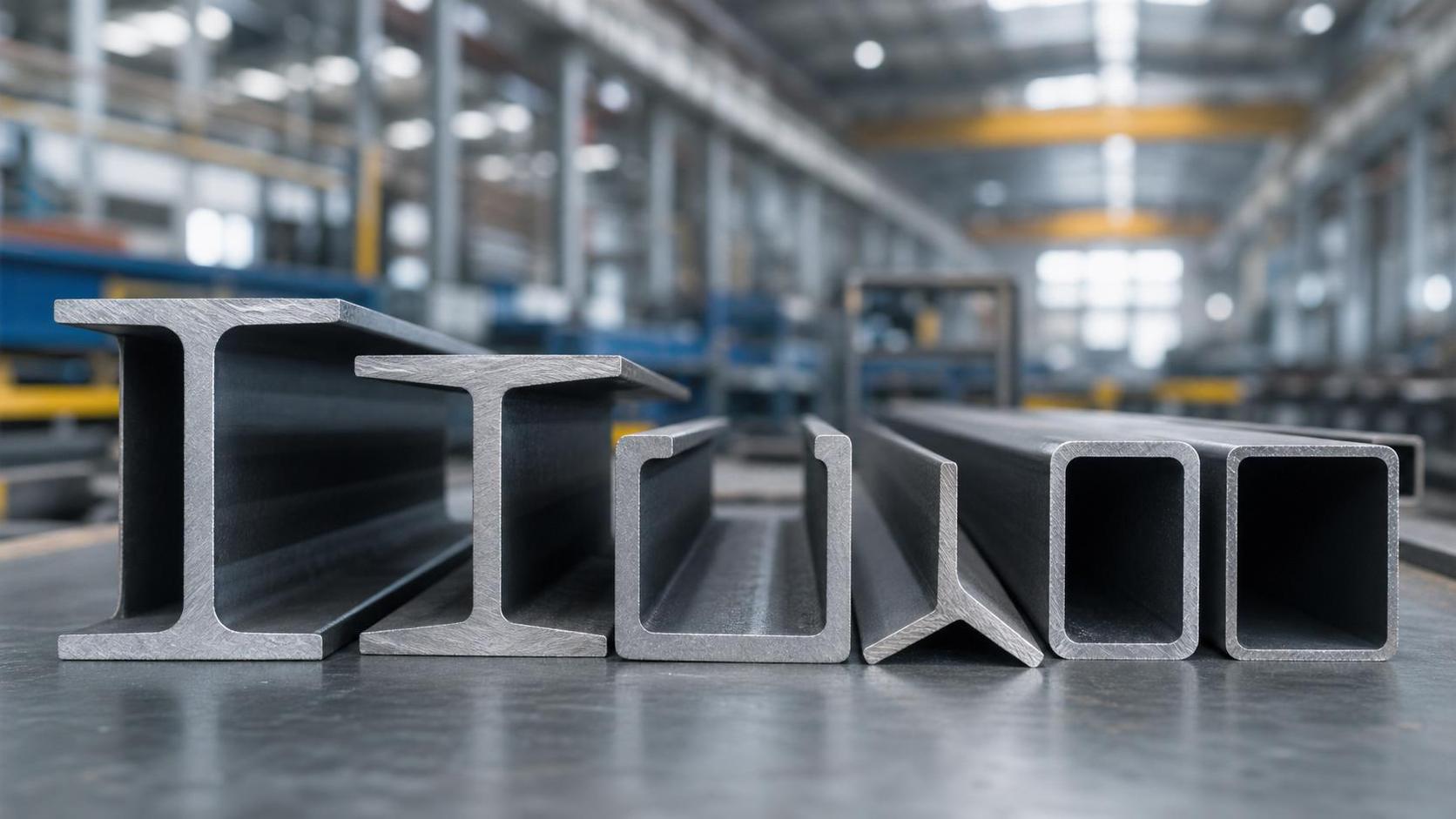
 What Is a Steel Profile? Common Shapes, Uses, and Selection BasicsProfile selection starts with shape, but performance depends on load, fabrication, and standards. Learn common steel profile types, uses, and smart selection basics.
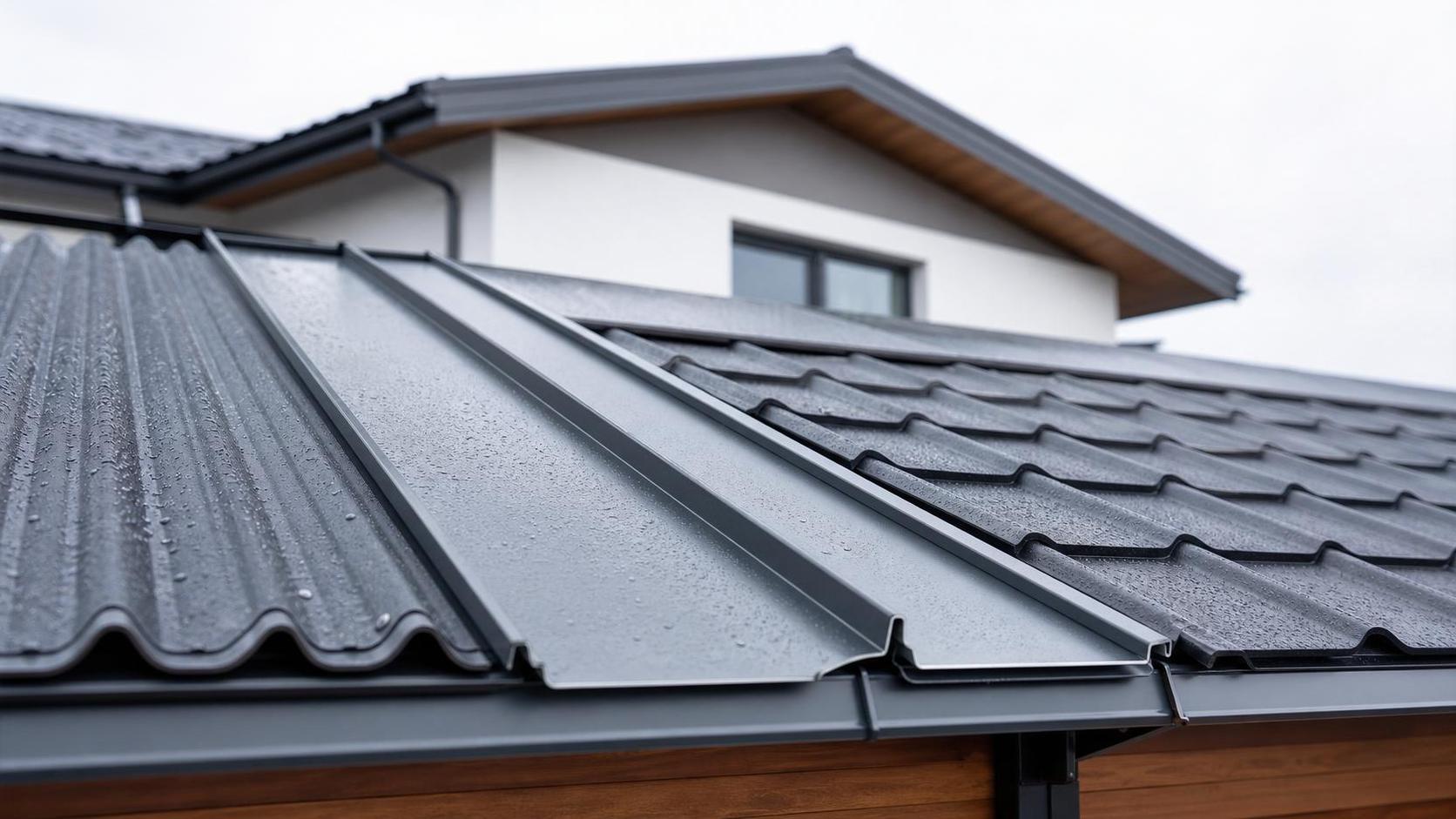
 Steel Roofing Types Explained: Corrugated, Standing Seam, and Metal ShinglesSteel Roofing guide comparing corrugated panels, standing seam, and metal shingles. Discover costs, durability, weather performance, and how to choose the best roof for your home.
 How Hot-Dip Galvanized Coating Thickness Affects Service LifeHot-dip galvanized coating thickness directly affects steel service life. Learn how the right zinc layer improves corrosion protection, controls cost, and supports smarter project decisions.
 Pipe Stainless Grades Explained: 304 vs 316 for Corrosion ResistancePipe stainless grades explained: compare 304 vs 316 for corrosion resistance, cost, and service life. Learn which stainless pipe grade fits marine, chemical, and water system applications.

Please give us a message


Please enter what you want to find