Understanding the difference between angle and channel steel is essential for selecting the right material for industrial frame structures. This angle vs channel steel comparison explores their load capacity, cost efficiency, and performance in various construction applications. As a leading structural steel manufacturer in China, Hongteng Fengda provides ASTM certified steel square rods, high strength steel round bars, and steel tubes for industrial applications, helping project managers, procurement teams, and engineers choose reliable solutions for construction projects worldwide.
Definition and Structural Overview
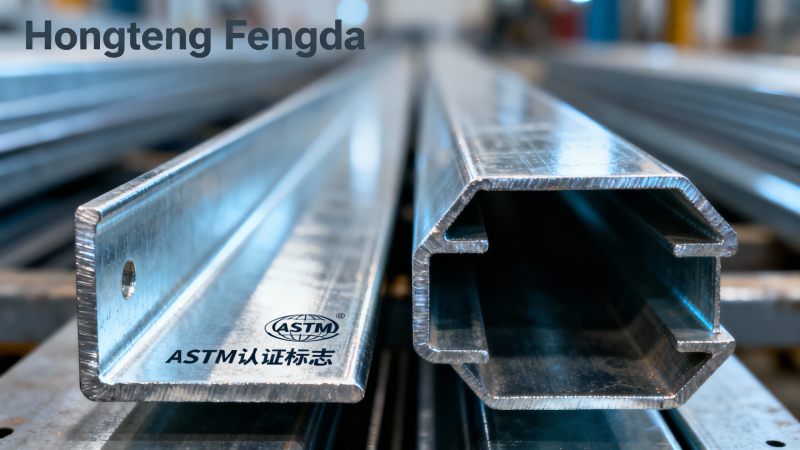
Angle steel, also known as L-shaped steel, features two legs that form a right angle, offering stability and versatility for industrial framing. It is typically made from mild or high-strength carbon steel and comes in equal and unequal configurations. Channel steel, identified by its C-shaped cross-section, provides superior resistance to bending in one direction and is favored for load-bearing applications such as bridge frameworks, support beams, and conveyor systems. Both materials are used extensively in construction projects across North America and Europe due to their combination of strength, availability, and customization options. Hongteng Fengda, as a structural steel manufacturer & exporter from China, supplies both angle and channel steel manufactured under ASTM, EN, JIS, and GB standards, ensuring consistency in dimensional tolerance and welding compatibility.
Market Overview and Industry Adoption
In recent years, global demand for structural steel has grown steadily as industrial infrastructure and transportation networks expand. For buyers comparing angle vs channel steel, the final selection often aligns with specific performance criteria: resistance to torsion, cost efficiency, and ease of assembly. According to market data, the construction and heavy manufacturing sectors account for over 60% of total channel and angle steel consumption. Channel steel is favored in large-scale bridge construction and equipment frames due to its ability to sustain directional loads, while angle steel dominates in trusses, racks, and lighter industrial frames. Chinese steel exporters like Hongteng Fengda are increasingly investing in automated production lines and precision testing systems, allowing them to produce consistent geometry, tight dimensional tolerances, and customized lengths ranging from 1 to 12 meters. Many international clients also look for integrated suppliers capable of offering not only structural sections but also accessories such as steel conduit for electrical wiring and steel girder for bridge construction, both of which contribute to cohesive project management.
Comparison Analysis: Load Capacity and Cost Breakdown
When comparing the load capacity of angle vs channel steel, it’s important to consider the cross-sectional moment of inertia and the overall frame design. The C-section of channel steel provides a higher bending resistance about its major axis, while angle steel performs better in torsional rigidity where multidirectional stresses occur. The cost comparison reveals that angle steel offers a lower unit price due to reduced rolling complexity and lighter weight. Channel steel, although more expensive per ton, may reduce total frame count and installation time for high-load structures. The following table illustrates a simplified comparative overview often used during procurement:
Such insights help purchasing managers and project engineers assess the overall structural economics. Selecting ASTM certified steel square rods, or combining these elements with products like High Carbon Steel Plate , enables enhanced rigidity for integrated frames supporting heavy loads in bridge construction, roof systems, and factory installations. By controlling the load distribution pattern, operators can achieve better safety margins without unnecessary material overdesign. Hongteng Fengda’s engineering team often assists clients in optimizing section selection to meet international standards at optimal cost efficiency.
Technical Performance and Standards Compliance
Both angle and channel steels from Hongteng Fengda comply with international certifications such as ASTM A36, JIS G3101, and EN10025 structural grades. Manufacturing under ISO-certified facilities ensures consistency in modulus of elasticity, straightness, and surface finish. Typical mechanical properties include yield strength between 235 and 355 MPa and tensile strength above 400 MPa. Material toughness is tested according to Charpy V-notch standards, and all sections undergo ultrasonic testing for internal integrity. Channel steel is often galvanized or hot-rolled depending on corrosion requirements, while angle steel may benefit from painting or powder coating in exposed applications. Complementary products such as steel tube for industrial applications or ASTMs certified steel square rods add flexibility to systems requiring multiple shapes. Hongteng Fengda also offers customized cold formed profiles for clients seeking lightweight yet durable structural components in automated assembly lines and modular buildings. The integration of precise cutting, drilling, and finishing equipment allows reduced assembly time on-site.
Procurement and Selection Guide
For procurement teams evaluating suppliers in China, several factors drive decision-making: certification traceability, dimensional consistency, packaging, delivery reliability, and after-sales technical support. When comparing angle vs channel steel, it is essential to define the project purpose—whether the steel will form a main structural support or act as reinforcement in a secondary frame. Hongteng Fengda’s procurement guidance includes evaluation of bending strength, uniformity, and price per linear meter. The company delivers both standard specifications and OEM solutions, ensuring compatibility with international construction standards. Buyers may request mill test certificates and mechanical reports compliant with GB/T700 for angle iron or ASTM A572 for channel sections. High strength steel round bar supplier networks within the company’s ecosystem provide flexibility in material substitution when certain profiles face supply constraints. With global logistics hubs, Hongteng Fengda guarantees timely shipping to clients across the Middle East, Southeast Asia, and Europe. This supply chain reliability directly translates into reduced sourcing risks and lower project downtime.
Cost & Alternative Material Insights
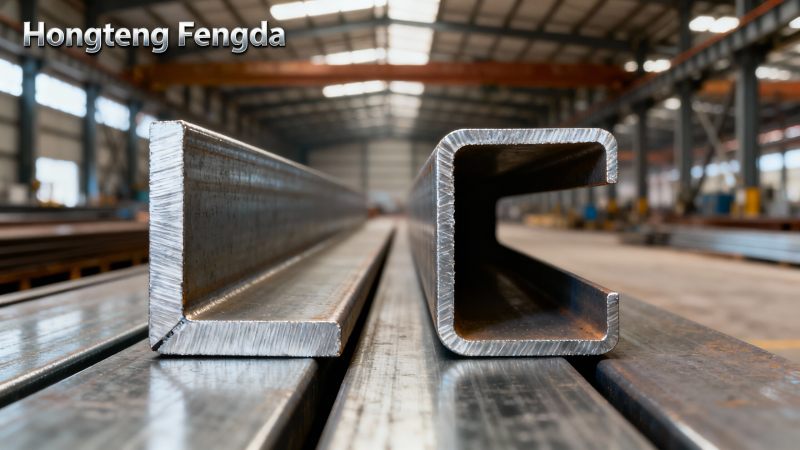
Cost efficiency remains at the heart of every industrial project. Angle steel is typically priced around 5% to 10% lower per ton compared to channel steel due to its simpler shape and lower raw material consumption. However, the total cost must include welding labor, number of joints, and reinforcement requirements. In large spans or bridges, the higher load efficiency of channel sections can actually reduce total steel consumption. When it comes to surface treatment or structural reinforcement, clients sometimes integrate components like High Carbon Steel Plate under frames or floor panels, as these plates feature excellent tensile strength and formability, suitable for stamping, bending, and corrosion resistance. Such hybrid configurations help meet specialized requirements for automobile chassis and industrial roofs. Hongteng Fengda’s technical department assists with value engineering to strike optimal balance between material performance, safety, and project cost. Moreover, through bulk procurement channels and established supplier partnerships, the company ensures competitive steel roof sheet price per square meter, aligning with budget planning in infrastructure contracts.
Case Studies and Application Scenarios
At an automotive assembly plant in Malaysia, angle steel from Hongteng Fengda was used for workstation frames and conveyor undercarriages. The facility achieved a 12% weight reduction compared with previous solid beam designs, improving ergonomics for maintenance access. Meanwhile, in a European bridge renovation project, the contractor selected channel steel sections for load-bearing trusses, reducing weld joints by 35% and significantly shortening installation. In both cases, Hongteng Fengda provided steel components fully compliant with EN and ASTM standards, meeting local authority requirements for safety and durability. In another scenario, a steel rail manufacturer in China integrated Hongteng’s components within railway switchboard frameworks, using a combination of channel sections and steel conduit for electrical wiring to enhance mechanical protection. Such versatility demonstrates the adaptability of these materials across industries from automotive to infrastructure. The company also supports customized fabrication based on provided CAD drawings, ensuring precision matching and smooth installation at site.
FAQ and Common Misconceptions
One frequent misconception is that angle steel is inherently weaker than channel steel. In fact, the performance depends heavily on load direction and the type of stress applied. For structures requiring multidirectional load distribution, angle sections may even outperform channel sections in stability. Another confusion arises concerning cost per unit length; while initial price comparisons often favor angle steel, optimization at the design stage could make channel sections more economical once assembly costs are factored in. Buyers also tend to overlook the importance of standard compliance—selecting non-certified sources can lead to dimensional inconsistencies and quality risks. Hongteng Fengda mitigates such issues through traceable material lot control and in-house mechanical testing. Clients are encouraged to review mill certificates and batch reports before shipping. Finally, it’s worth remembering that both angle and channel steel can be fabricated using high carbon or mild grades depending on the requirement. Understanding the distinction ensures material integrity throughout the life cycle of industrial frames.
Trend and Future Outlook
The global steel industry is shifting toward sustainability and digitalization. Future designs of industrial frames demand higher precision and lighter weight without compromising structural integrity. Angle and channel steels are now being optimized through advanced metallurgical processes like micro-alloying and vacuum degassing, which enhance tensile and yield strength ratios. Automated cutting and robotic welding further improve accuracy during fabrication. Hongteng Fengda invests in innovative forming technologies to manufacture energy-efficient sections with consistent performance. The company’s roadmap includes development of smart quality monitoring systems, integration with digital supply chain management, and faster response to OEM customization requests. Strategic alliances with construction groups across North America and Europe also reinforce its position as a key exporter of reliable structural steel. In future infrastructure projects—from skyscraper frames to modular factories—angle and channel steel will remain vital components driving sustainable industrial growth worldwide.
Why Choose Hongteng Fengda
As a trusted structural steel manufacturer and exporter from China, Hongteng Fengda offers comprehensive steel product solutions, ranging from angle and channel steel to cold formed profiles and custom structural components. Our products meet ASTM, EN, JIS, and GB standards, ensuring that customers receive globally recognized quality and performance. Clients appreciate our dependable lead times, competitive pricing, and responsive service team. With stable production capacity and strict quality control, we empower engineering project leaders, procurement officers, and distributors to execute their projects safely, on schedule, and within budget. Whether for steel girder for bridge construction, industrial pipeline supports, or heavy machinery frames, Hongteng Fengda provides one-stop sourcing that reduces supply chain complexity. Contact us today to discuss your upcoming construction project and experience professional guidance in selecting the right structural solution that best fits your performance and cost objectives.
- channel steel
- steel i
- angle steel
- high carbon steel plate
- carbon steel plate
- ASTM A572
- ASTM standards
- ASTM standard
- ASTM A36
- structural steel
- Structural Steel
- L-Shaped Steel
- L-shaped steel
- angle iron
- steel plate
- Profile
- Galvanized
- carbon steel
- steel conduit
- steel roof sheet
- steel tube
- steel rail
- steel girder
- steel round bar
- steel square rod
- angle vs channel
- high strength steel round bar supplier
- steel tube for industrial applications
- ASTM certified steel square rod
- steel roof sheet price per square meter
- steel girder for bridge construction
- steel conduit for electrical wiring
- steel rail manufacturer in China
- angle vs channel steel comparison
Related recommendations
 What Is a Steel Profile? Common Shapes, Uses, and Selection BasicsProfile selection starts with shape, but performance depends on load, fabrication, and standards. Learn common steel profile types, uses, and smart selection basics.
 Steel Roofing Types Explained: Corrugated, Standing Seam, and Metal ShinglesSteel Roofing guide comparing corrugated panels, standing seam, and metal shingles. Discover costs, durability, weather performance, and how to choose the best roof for your home.
 How Hot-Dip Galvanized Coating Thickness Affects Service LifeHot-dip galvanized coating thickness directly affects steel service life. Learn how the right zinc layer improves corrosion protection, controls cost, and supports smarter project decisions.
 Pipe Stainless Grades Explained: 304 vs 316 for Corrosion ResistancePipe stainless grades explained: compare 304 vs 316 for corrosion resistance, cost, and service life. Learn which stainless pipe grade fits marine, chemical, and water system applications.
Please give us a message


Please enter what you want to find