Understanding the angle steel vs channel steel differences is crucial for project managers and quality inspectors who aim to select the right materials for safe, efficient, and cost-effective structural applications. As a reliable structural steel manufacturer and exporter from China, Hongteng Fengda provides expert insights and high-quality steel products that meet international standards, helping professionals make informed decisions in construction, industrial, and manufacturing projects. For purchasing teams, engineers, and decision-makers who manage infrastructure or industrial development, knowing the practical comparison of these two steel types ensures functional safety, compliance, and long-term cost control. When selecting structural elements, balancing load-bearing capacity, connection type, and installation efficiency is vital. The comparison of angle steel vs channel steel differences involves geometry, strength, processing precision, and production standards—all influencing project performance and inspection quality.
Definition and Basic Characteristics
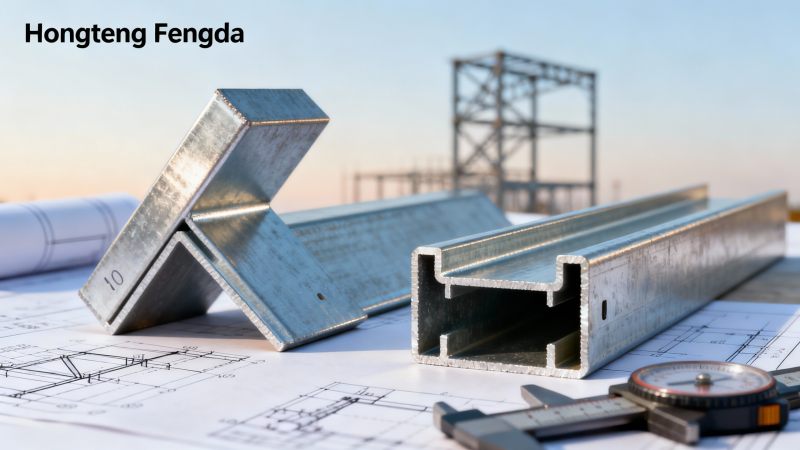
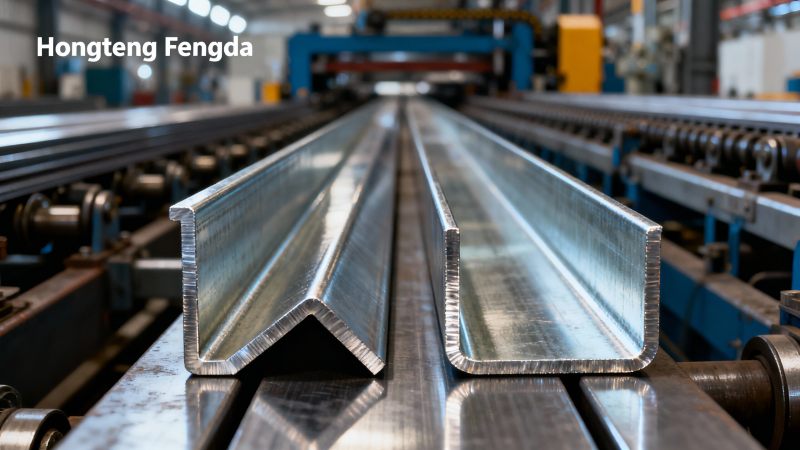
Angle steel, also known as L-section steel, features two legs that form a 90-degree angle. It comes in equal and unequal leg forms and is often used for bracing, framework, and support applications. Channel steel, on the other hand, is defined by a U-shaped cross-section with flanges extending from a central web, typically used as beams, tracks, or supports. The main angle steel vs channel steel differences can be observed in geometry and mechanical function: angle steel provides multidirectional load-bearing with symmetry, whereas channel steel offers primary support in one direction with high moment of inertia along its web axis. From a theoretical perspective, angle steel resists torsion well for frame corners, while channel steel is more efficient in linear load applications like girder systems and conveyor structures.
Market Overview and Industry Context
The global construction steel market continues to expand with urbanization, industrialization, and infrastructure investment across emerging economies. For quality inspectors and procurement specialists, distinguishing between angle steel vs channel steel differences aligns with the goal of optimizing sourcing costs without compromising performance. Structural steel demand has shifted toward efficiency-driven designs that emphasize modularity and corrosion resistance. In Europe and North America, the adoption of digital design models and BIM systems has amplified the importance of standardized materials conforming to ASTM, EN, and JIS benchmarks. Within this context, China’s structural steel suppliers like Hongteng Fengda contribute a large share of both angle and channel steel exports. Equipped with modern equipment and controlled production, we ensure reliability under standards such as GB/T, EN10025, and ASTM A36. Additionally, related steel products including Steel Coil Galvanized provide enhanced corrosion protection for external structural use—its zinc coating acts as a durable shield against oxidation, a key maintenance advantage in humid or coastal installation contexts.
Technical Performance Comparison
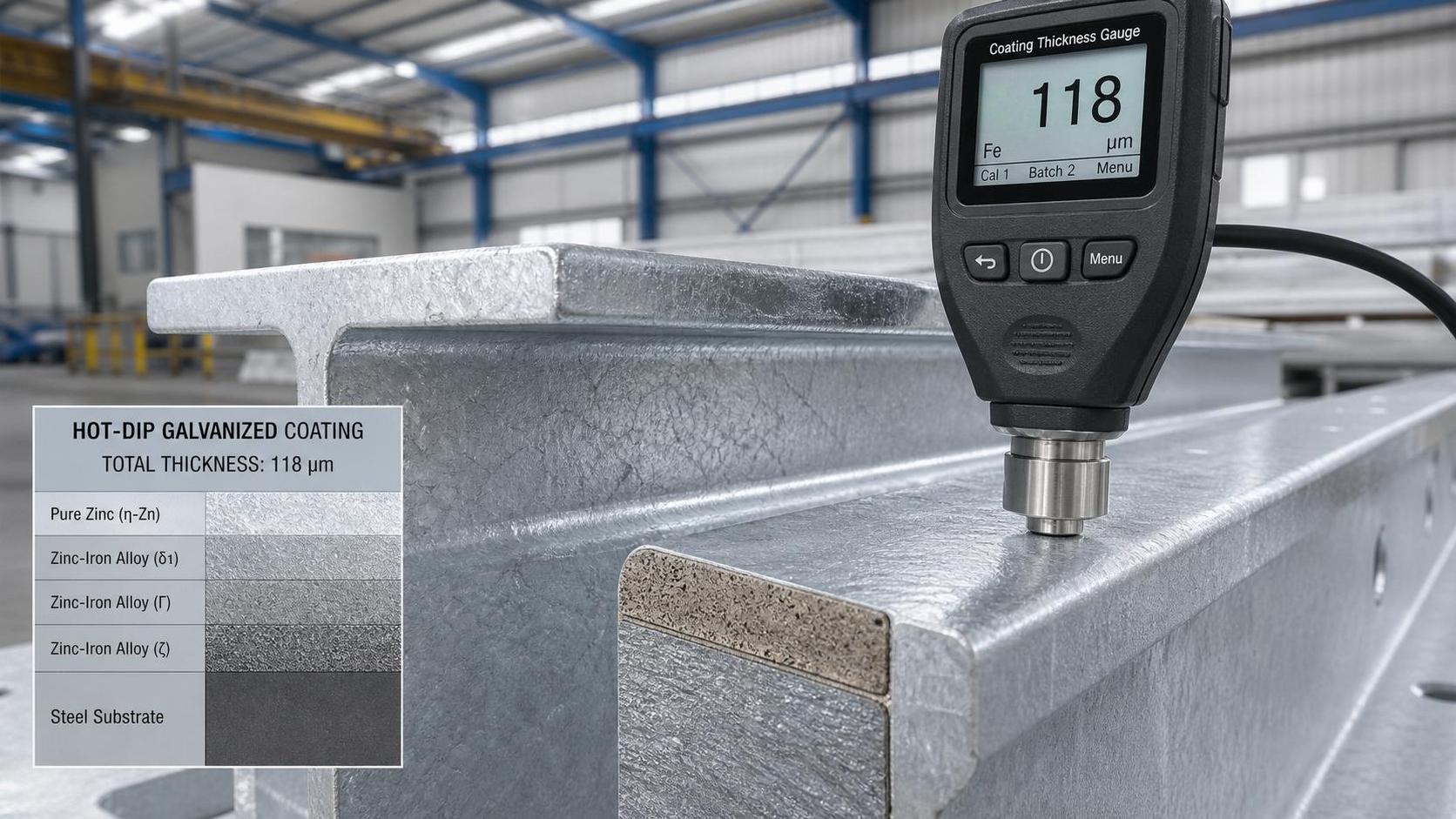
For technical evaluations, both angle and channel steels undergo mechanical testing to validate yield strength, tensile capacity, and elongation. Typical angle steel sizes range from 20×20 mm to over 250×250 mm, while channel steel sizes vary according to their height and flange width ratio. One of the noticeable angle steel vs channel steel differences lies in the distribution of stress under point loads: channels concentrate load along their web centerline, while angles distribute stress more evenly across two axes. Therefore, when creating frameworks, engineers prefer angle steel for diagonal bracings and composite trusses. Quality inspectors often examine the uniformity of the steel’s thickness, deformations at bending, and mill tolerance compliance. For corrosion resistance, surface treatment plays a decisive role. Hot-dip galvanizing or pre-galvanized coating prolongs service life by forming a zinc sacrifice layer that slows corrosion propagation. Hongteng Fengda’s products align with international coatings standards and can be paired with protective materials such as Steel Coil Galvanized in multilayer assembly, especially when producing hybrid components that demand aesthetic surface finishing combined with structural rigidity.
Application Scenarios and Functional Comparison
Angle steel and channel steel serve distinct yet complementary roles in modern projects. Angle steel is commonly utilized in reinforcement frames, tower structures, heavy machinery brackets, and shipbuilding. Because it provides multidirectional support, the material excels in complex frameworks that involve wind or seismic loading conditions. Channel steel, with its strong unidirectional load capacity, is frequently applied to construction beams, vehicle chassis, and conveyor frame systems. Project managers often consider installation speed and joint compatibility: angle steel supports easier bolted or welded connections in lattice-type frames, while channel steel simplifies connection with flat plates and base foundations. Recognizing the angle steel vs channel steel differences here helps planners strategically balance mechanical strength with assembly efficiency. In industrial practice, both steel types can be produced in hot-rolled or cold-formed varieties. The cold-formed versions improve dimensional accuracy and surface uniformity—important for architectural aesthetics or precision machine structures. Combined with galvanizing protection, these profiles improve longevity and reduce long-term maintenance, contributing to cost efficiency in total project expenditure.
Procurement Guide and Quality Inspection
Procurement teams must consider four critical aspects when sourcing structural steel: specification compliance, production origin, dimensional accuracy, and surface condition. Hongteng Fengda assists global buyers with detailed documentation, mill test certificates, and international compliance evidence for ASTM, EN, JIS, and GB standards. When comparing angle steel vs channel steel differences in procurement terms, professionals evaluate not only unit cost per ton but also material efficiency per functional span. For example, in tension framework assembly, angle steel may minimize offcut loss because of equal leg geometry, while channel steel’s web shape could lead to welding convenience in continuous spans. Quality inspectors must verify mechanical properties through batch sampling and nondestructive testing. Regular checks include ultrasonic inspection for cracks, coating thickness testing for galvanizing consistency, and visual assessments of rolled edges. Digital inspection reports and third-party certifications give clients and project teams measurable confidence. By cooperating with an experienced exporter like Hongteng Fengda, procurement specialists mitigate sourcing risk and ensure the structural integrity of long-term projects across different environmental exposures.
Standards and Certification Compliance
In the steel manufacturing industry, standardization dictates safety and interoperability. Both angle and channel steels from Hongteng Fengda are produced under strict compliance with ASTM A36, EN10056, JIS G3192, and GB/T9787. These standards define dimensional tolerances, mechanical requirements, and permissible thermal processing. Keeping consistency between design codes and supplied steel ensures seamless integration with international engineering practices. For export projects, conformity documentation is indispensable: mill certifications, inspection data sheets, and shipping quality records accompany every batch. By using advanced heating and rolling control, Hongteng Fengda ensures weldability and formability without internal inclusion defects. Furthermore, our surface finishing techniques, similar to those used in galvanizing processes, deliver improved adhesion when combined with paint or protective coatings, reducing maintenance for end users. This certification-driven system empowers project managers and quality inspectors to guarantee safe, standardized, and traceable steel use.
Cost and Alternatives
Material cost remains a major determinant for procurement officers and enterprise decision-makers. Comparing angle steel vs channel steel differences from an economic perspective reveals that angle steel typically has lower raw material consumption due to its linear geometry. However, for long-span applications, channel steel’s higher bending moment capacity may reduce overall beam quantity, optimizing total cost. Evaluating total cost per square foot of supported structure often yields a balance between section efficiency and assembly labor. For corrosion-conscious designs, galvanized versions or structural integration with zinc-coated coils are common alternatives. Products like Steel Coil Galvanized (model range DX51D+Z to S550GD+Z) provide mechanical reinforcement plus anti-corrosion functionality through zinc barrier protection. They match ASTM and EN standards with yield strength control and elongation metrics that secure durability in outdoor use. Thus, even when selecting angle or channel sections, integrating zinc-coated components enhances lifecycle performance and resale value of the entire structure.
Trends and Future Insights
Industry evolution toward sustainable steel solutions elevates the importance of recyclable materials, low-emission processes, and advanced coating systems. The angle steel vs channel steel differences will continue to influence component design as engineers seek lighter yet stronger substitutes. Technological innovations such as AI-driven production control, laser measurement, and predictive maintenance ensure higher dimensional precision and surface quality. Moreover, building information modeling (BIM) integration allows designers to simulate load effects and choose ideal section types even before production. The future of structural steel demands transparency in sourcing and environmental compliance. Manufacturers like Hongteng Fengda are investing in green smelting lines and energy-efficient galvanizing baths, providing international buyers with certified low-carbon steel options. By maintaining strong R&D capacity and ISO/QMS-based management, the company ensures adaptability to upcoming environmental directives in North America, Europe, and Asia-Pacific regions.
Case Studies and Practical Application
In a Southeast Asian industrial warehouse project, Hongteng Fengda supplied both angle and channel steel sections in combination for an efficient load-bearing system. Angle steel provided reinforcement for truss corners and joint connections, while channel steel composed the main support beams. Quality inspectors confirmed that dimensional deviations remained below 1.5 mm, well within international tolerance. The structure passed local regulatory inspections and remained corrosion-free after several monsoon seasons due to proper galvanizing protection. In another case, a European machinery manufacturer selected hot-rolled channel steel for equipment frames under high dynamic load, backed by certification and mechanical testing consistent with EN10279 standards. Using strategic material pairing, the company reduced production time by 12% and maintenance costs by 8% annually. Such examples prove that understanding the functional differences allows decision-makers to maximize both performance and economic returns.
FAQ and Common Misconceptions
1. Is angle steel weaker than channel steel? Not necessarily. Angle steel can handle multidirectional forces better, but channel steel possesses higher web strength in one axis. Selection depends on load direction and support design. 2. Can these steels be substituted for each other? Limited substitution is possible, yet safety and connection geometry must always be considered. 3. Do both materials require surface protection? Yes, corrosion prevention is essential; galvanizing or painting ensures durability. 4. Are international standards interchangeable? While major standards align in concept, exact definitions vary; compliance with targeted regional standards should be verified before usage.
Why Choose Hongteng Fengda
As a structural steel manufacturer and exporter from China, Hongteng Fengda combines advanced production technology with global logistics capability to serve clients worldwide. Our advantage lies in comprehensive product ranges, professional technical support, and consistency from raw material sourcing to final quality inspection. Whether dealing with angle steel vs channel steel differences or other structural steel requirements, the company emphasizes practical engineering value over simple material supply. Hongteng Fengda’s partners in North America, Europe, the Middle East, and Southeast Asia benefit from customized OEM solutions, dependable lead times, and rigorous quality management aligned with ASTM, EN, JIS, and GB standards. For inquiries, specification advice, or cooperation discussions, contact Hongteng Fengda to obtain tailored structural steel solutions that ensure your project’s safety, efficiency, and profitability.
Related recommendations
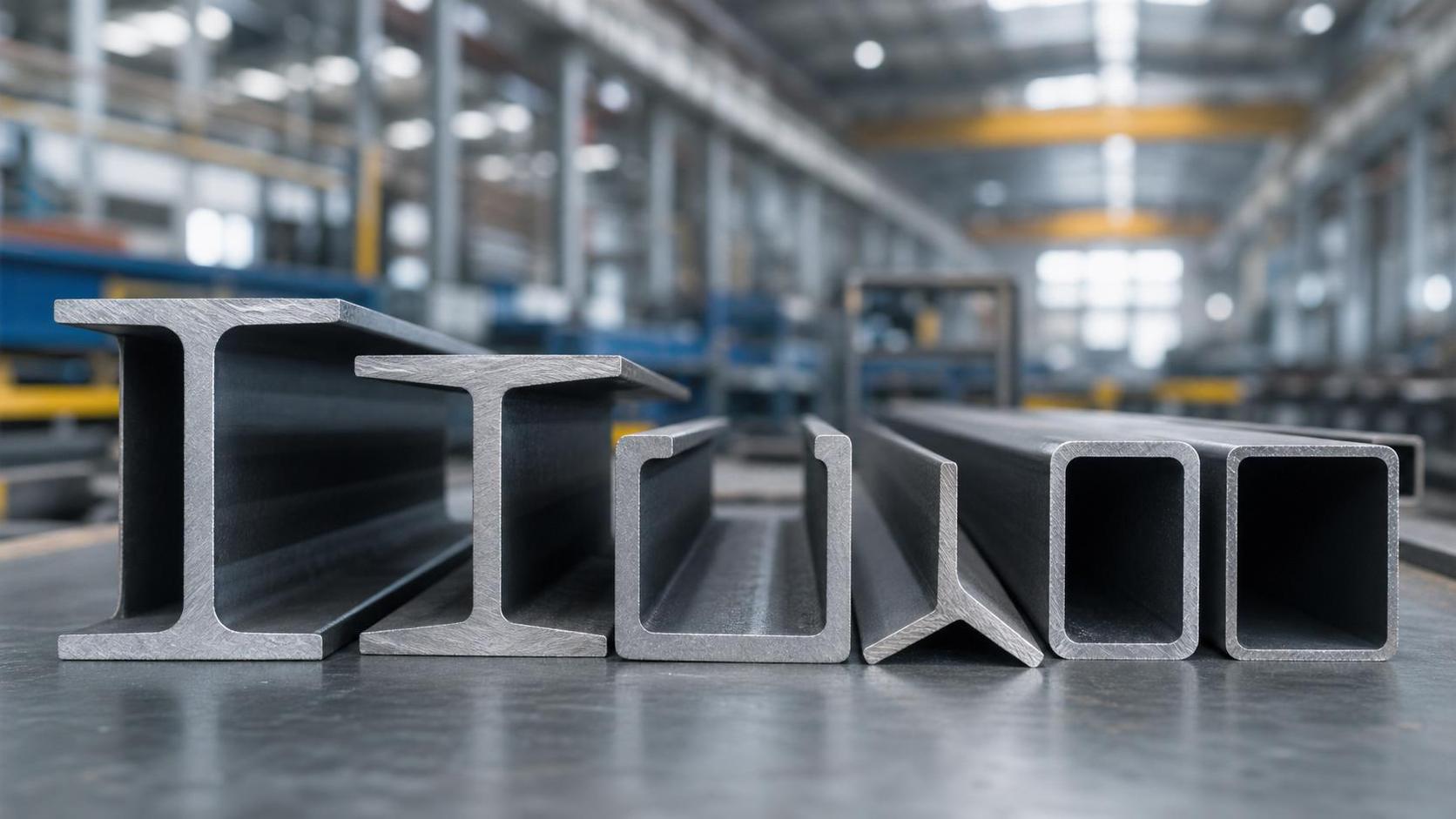
 What Is a Steel Profile? Common Shapes, Uses, and Selection BasicsProfile selection starts with shape, but performance depends on load, fabrication, and standards. Learn common steel profile types, uses, and smart selection basics.
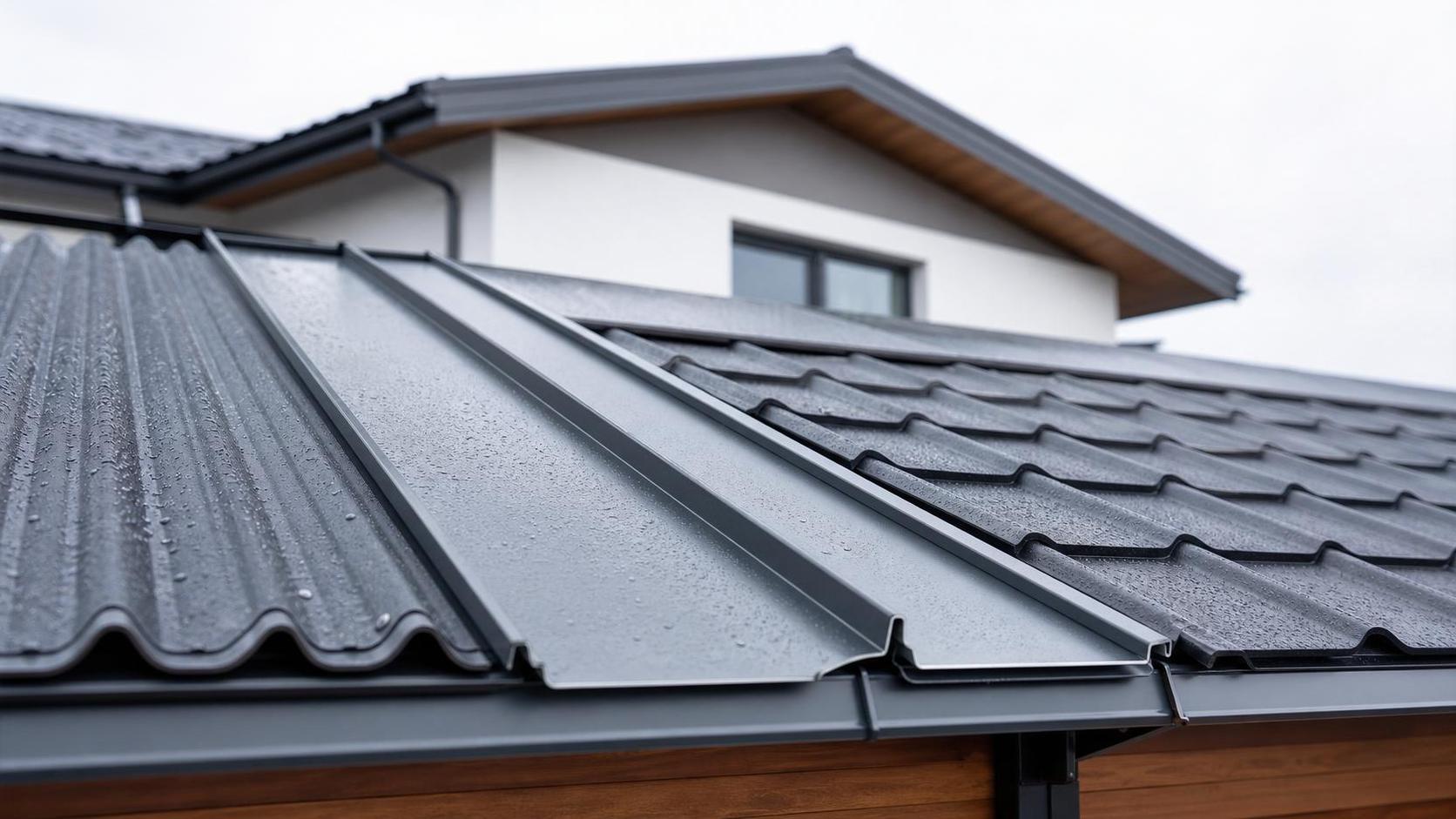
 Steel Roofing Types Explained: Corrugated, Standing Seam, and Metal ShinglesSteel Roofing guide comparing corrugated panels, standing seam, and metal shingles. Discover costs, durability, weather performance, and how to choose the best roof for your home.
 How Hot-Dip Galvanized Coating Thickness Affects Service LifeHot-dip galvanized coating thickness directly affects steel service life. Learn how the right zinc layer improves corrosion protection, controls cost, and supports smarter project decisions.
 Pipe Stainless Grades Explained: 304 vs 316 for Corrosion ResistancePipe stainless grades explained: compare 304 vs 316 for corrosion resistance, cost, and service life. Learn which stainless pipe grade fits marine, chemical, and water system applications.
Please give us a message


Please enter what you want to find