Introduction
Optimize installation and maintenance of angle stainless steel and ss 304 pipe in industrial systems to reduce downtime and costs. This practical guide, from a leading steel supplier Shandong Hongteng Fengda Metal Materials Co., Ltd., walks engineers, project managers, procurement and maintenance teams through best practices for fitting angle stainless steel, pipe stainless and 304 pipe, plus selecting complementary products such as electrogalvanized wire, galvanized steel channel, Wire Products, Profile, Steel Rod and stainless seamless pipe. Learn step-by-step procedures, material selection tips and inspection checkpoints to improve reliability, simplify repairs and extend service life. Industrial teams face persistent challenges: unexpected downtime from corrosion, incorrect jointing of ss 304 pipe, supply chain delays for critical components, and ambiguous installation standards across projects. This guide addresses these pain points by combining field-tested installation workflows, material selection matrices, and actionable inspection checkpoints that improve mean time between failures and simplify spare-parts logistics. Readers responsible for procurement will find clear purchase specifications and acceptance criteria for angle stainless steel and pipe stainless, allowing procurement to compare quotes on an apples-to-apples basis and reduce costly rework. Maintenance teams and operators will gain step-by-step procedures to perform leak-proof welds, correct mechanical fastening for angle members, and recommended torque and sealant practices for 304 pipe flanges and couplings. Project managers and engineers can apply the checklist-driven approach to reduce on-site variability and ensure consistent detail drawings for stainless seamless pipe runs and structural angle connections. For distributors and dealers, understanding the complementary role of electrogalvanized wire and galvanized steel channel in support systems helps create bundled proposals that increase project margin while improving installation speed. Throughout this guide we emphasize traceable specifications, supplier verification, and simple testing protocols that can be integrated into quality control plans, so operations teams can maintain uptime, control lifecycle costs, and meet regulatory or client standards for plant reliability.
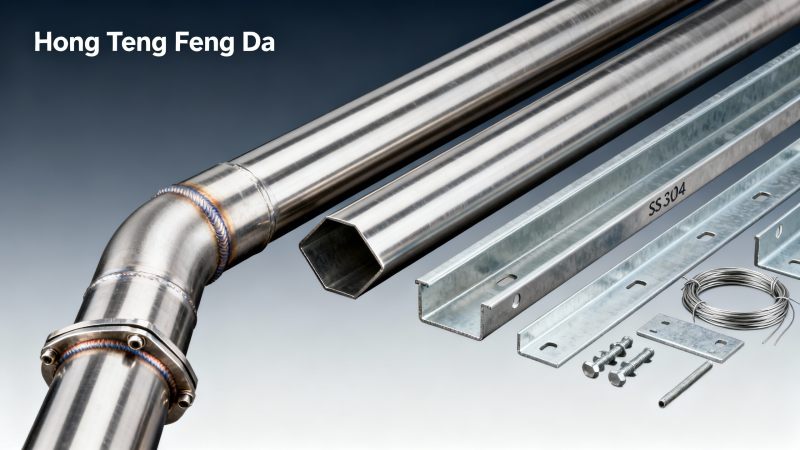
Material selection and specification: choosing the right angle stainless steel and 304 pipe
Selecting the proper material grade and product form is the first defense against premature failure in industrial systems. When evaluating angle stainless steel and ss 304 pipe or stainless seamless pipe, prioritize corrosion resistance, mechanical properties, weldability, and surface finish requirements based on the service environment. SS 304 pipe remains a versatile choice for many applications where moderate corrosion resistance and good formability are required; specify ss 304 pipe when exposure is to mild chemical atmospheres, water lines, or where food-grade compatibility is necessary. For harsher chloride-rich or high-temperature environments consider duplex or higher-alloy grades, and for structural angle members review carbon content and toughness metrics. Procurement teams should request mill test certificates and clearly define dimensions, tolerances and surface finish in the purchase order to avoid mismatch during installation. Typical acceptance criteria include dimensional tolerance, straightness, and eddy-current or hydrostatic test results for pipe stainless products. For angle stainless steel used as supports or frames, document required leg lengths, thickness, hole patterns and pre-drilling needs to reduce onsite machining time. Complementary fasteners and anchoring materials should also be specified: when bonding to galvanized steel channel or when tying in with Wire Products and Profile components, select corrosion-compatible coatings or stainless fasteners to avoid galvanic corrosion. If electrogalvanized wire or Steel Rod elements are part of the support system, confirm their zinc coating class and expected lifecycle in situ. Including inspection checkpoints in specifications—such as surface passivation verification for 304 pipe welds and non-destructive testing for stainless seamless pipe joints—saves time during commissioning. For projects with high regulatory scrutiny, provide explicit referencing to accepted standards (e.g., ASTM, EN) and demand traceability from coil through finished product. Clear material selection and specification minimize field change orders, accelerate approvals, and ensure that installation crews can proceed without material-related interruptions.
2. Pre-installation preparation and handling best practices
Meticulous pre-installation work reduces mistakes that lead to downtime. Before any fitting of angle stainless steel or 304 pipe begins, perform a staged preparation process: first, confirm delivery against purchase documentation, checking serial numbers, certificates, and packaging for damage. Use an acceptance checklist that includes visual inspection for dents, scratches, or coating irregularities; dimensional checks against drawing tolerances; and verification of complementary items such as electrogalvanized wire, galvanized steel channel, Wire Products, Profile pieces and Steel Rods. For long linear runs of pipe stainless or stainless seamless pipe, plan support spacing, thermal expansion loops, and access points for future inspection. Handling and storage are equally critical: store stainless materials off the ground on clean pallets, protect against contact with carbon steel debris, and avoid contact with acidic storage chemicals that may compromise passivation. For angle stainless steel components, mark orientation and hole patterns clearly, and issue pre-assembly kits to on-site teams that include matching fasteners and gaskets. If pre-fabrication in a controlled shop is possible, cut and pre-drill angles, prefabricate pipe sections with welded features and attach galvanized steel channel supports in modular subassemblies to reduce field labor time and constrain quality variability. During handling, ensure personnel use non-abrasive slings or soft straps to avoid surface marring that would later trap corrosive agents. For pipe stainless and ss 304 pipe, protect internal bores with temporary end caps to prevent debris ingress, and label spool pieces with flow direction and ID numbers. Confirm welding consumables are specified for stainless grades and that welders are certified for stainless welding procedures, including appropriate backing gas and filler metals to prevent sensitization of 304 pipe welds. Adequate pre-installation preparation also includes updating the spare-parts list to include consumables like gaskets, clamps, and localized sections of stainless seamless pipe so maintenance teams can quickly respond without sourcing delays.
3. Installation techniques to minimize downtime: mechanical and welding methods
Correct installation technique is central to achieving leak-free, durable systems. For angle stainless steel assemblies and supports, use controlled assembly sequences and torque-controlled fasteners to maintain alignment and prevent overstressing components. When anchoring angle members to concrete or steel substrates, choose chemically compatible anchors and isolate dissimilar metals if they are in direct contact with SS 304 pipe or stainless seamless pipe to prevent galvanic attack. Mechanical joining for piping—flanged, threaded, or pressed fittings—should follow manufacturer torque schedules and flange face preparation standards; use proper gasket materials compatible with the conveyed media and operating temperature. For welded joints, apply best practices for stainless welding: maintain clean joint surfaces, use low-carbon or stabilized filler materials where required, and minimize heat input to reduce distortion and preserve corrosion resistance. Implement back purging for critical ss 304 pipe welds in product-service areas where root integrity is essential. Post-weld cleaning and passivation restore the chromium oxide layer; verify effectiveness with simple chemical tests or surface analysis for high-stakes systems. To speed installation without compromising quality, consider modular prefabrication of spool pieces and angle frames; this approach reduces hot-work and rework on site and facilitates quicker commissioning. When using ancillary components like electrogalvanized wire for support or galvanized steel channel for secondary framing, ensure these materials are isolated from stainless components where possible or use duplex coatings and compatible fasteners to reduce bimetallic concerns. Train installation crews on common failure modes—improper weld profile, under-torqued fasteners, pipe misalignment—and supply clear checklists for sign-off at each stage. By standardizing installation methods and documentation, teams will minimize unexpected interruptions, accelerate commissioning, and extend service intervals for 304 pipe and related stainless elements.
4. Inspection, testing and preventive maintenance protocols
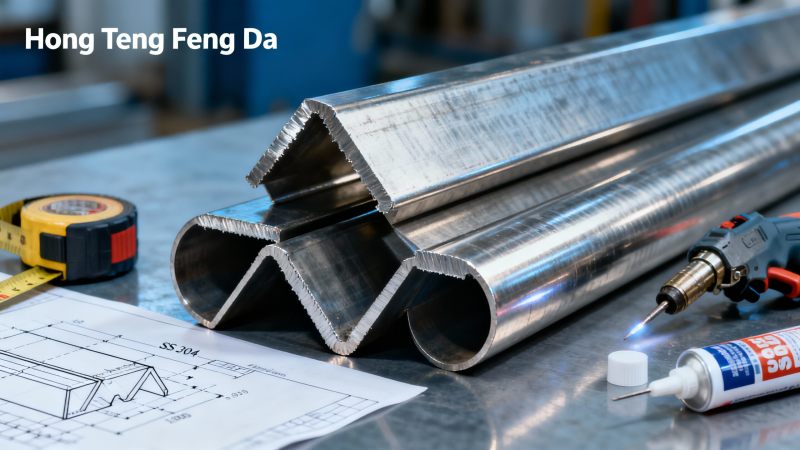
A structured inspection and maintenance program keeps industrial systems running and prevents costly emergency shutdowns. For systems incorporating angle stainless steel, pipe stainless, ss 304 pipe and stainless seamless pipe, set inspection intervals based on service severity, accessibility and historical data. Routine visual inspection should target weld seams, flange faces, fastener torque, and contact points with galvanized steel channel or support Wire Products. Implement non-destructive testing (NDT) for critical welds—dye penetrant, ultrasonic, or radiography depending on access and criticality—and document findings with photographic records and condition tags. Pressure testing schedules for pipe stainless runs must align with plant start-up protocols and any regulatory standards; perform hydrostatic or pneumatic testing as specified and record leakage rates and hold times. Passivation verification is an important checkpoint after any repair welding to ensure restored corrosion resistance on 304 pipe surfaces; simple chloride spot testing or electrochemical methods can quantify surface condition. For preventive maintenance, define lubrication/inspection cycles for moving assemblies and vibration monitoring points for long unsupported spans that may transmit dynamic loads to angle members. Keep a red-line as-built that records any in-situ alterations, replacement of Steel Rod supports, or retrofitted galvanized elements, ensuring future interventions do not introduce incompatible materials. Spare-part strategy should include critical lengths of stainless seamless pipe, pre-cut angles, appropriate gaskets and certified fasteners to allow same-shift repairs. For high-value assets, consider adding sensors for leak detection and a basic CMMS entry for each stainless assembly, capturing installation date, supplier information, and last inspection notes to build a data-backed lifecycle plan. These inspection and maintenance protocols reduce unplanned downtime, extend the life of 304 pipe systems, and provide evidence for continuous improvement and procurement optimization.
5. Integration with complementary products, supply chain considerations and case example
Integrating angle stainless steel and ss 304 pipe installations with complementary products improves system resilience and simplifies procurement. When designing support systems, coordinate the use of galvanized steel channel for secondary framing, electrogalvanized wire for cable trays or temporary support, and select Wire Products and Profile elements that are dimensionally compatible with angle members and Steel Rod anchors. Bundling compatible items in a single procurement package reduces lead times and minimizes risk of mismatched materials arriving on site. Suppliers with comprehensive processing capabilities, such as Shandong Hongteng Fengda Metal Materials Co., Ltd., can supply a range of items from Stainless seamless pipe spools to structural angle and profile pieces, often with customization and prompt delivery. For example, in a recent rail-side infrastructure upgrade, coordinated delivery of angle supports, ss 304 pipe for drainage lines and galvanized channel for handrail bases allowed one contractor to complete a complex sequence with minimal hold-ups. In projects where track protection or handrail systems are required, product types like Rail are specified alongside stainless pipe runs; the ability to source rail-grade carbon steel sections and stainless fittings from the same supply chain simplified approvals and logistics. From a supply chain perspective, specify lead times, inspection hold points, and supplier responsibilities for rectifying non-conforming material before site release. Establish minimum stock levels for frequently replaced items—gaskets for 304 pipe flanges, short runs of stainless seamless pipe, and pre-cut angle pieces—so maintenance teams can execute repairs during off-shift hours. Finally, create a supplier scorecard that tracks on-time delivery, certificate accuracy and post-sale support to foster continuous improvement and maintain competitive lifecycle costs across projects.
Conclusion and recommended next steps
Effective installation and maintenance of angle stainless steel and 304 pipe requires disciplined material selection, careful pre-installation preparation, standardized installation techniques and a proactive inspection regime. By following the practices outlined in this guide—verifying mill certificates, protecting stainless surfaces during handling, applying controlled welding and torque methods, and implementing regular NDT and passivation checks—engineers and maintenance teams can significantly reduce downtime and total cost of ownership. Leverage complementary products such as electrogalvanized wire, galvanized steel channel, Wire Products, Profile and Steel Rod to create resilient support systems, and maintain a focused spare-parts strategy that includes stainless seamless pipe spools and pre-cut angle members. Shandong Hongteng Fengda Metal Materials Co., Ltd. offers a broad portfolio, technical documentation, and supply reliability to support industrial projects from procurement through aftermarket support, helping you meet schedule and performance targets. For project managers, procurement officers and maintenance leaders seeking to improve system uptime and simplify logistics, act now: request detailed specifications, order sample material for acceptance testing, or schedule a technical consultation to align installation procedures with your plant standards. Contact our sales and technical team to receive tailored recommendations, material certificates, and a bundled quote that matches your project timeline. Immediate actions: 1) Review current specifications and update acceptance criteria for stainless items; 2) Audit on-site storage and handling procedures; 3) Ensure welders and fitters are briefed on stainless installation standards; 4) Place critical spares on reorder to avoid supply gaps. Learn more about our solutions and arrange a consultation—reach out today to reduce downtime and secure predictable long-term performance.
Related recommendations
 How to Judge if Steel Sheet for Construction Fits Roofing or Wall CladdingSteel sheet for construction: learn how to judge thickness, coating, profile, and load performance for roofing or wall cladding, and choose a durable, cost-effective fit.
 Galvanized Pipe Manufacturer Selection: Zinc Coating, Tolerance, and ComplianceGalvanized pipe manufacturer selection guide: compare zinc coating quality, tolerance control, and compliance to reduce risk and choose a supplier that delivers reliable steel products.
 How to Choose SS Pipe for Water Supply in Corrosion-Prone BuildingsSS pipe for water supply selection guide for corrosion-prone buildings. Compare 304 vs 316 grades, water chemistry, specs, and lifecycle cost to choose a safer, longer-lasting system.
 Steel Wire Rope Manufacturer Standards That Matter in Lifting ApplicationsSteel wire rope manufacturer standards for lifting: learn how to assess traceability, testing, compliance, and real quality control before choosing a safer, more reliable supplier.
Please give us a message


Please enter what you want to find