Hot galvanizing remains a cornerstone of corrosion protection for structural steel—but in increasingly aggressive environments, it’s no longer sufficient on its own. As of 2026, duplex systems—combining hot galvanizing with high-performance topcoats—are becoming the de facto standard across offshore platforms, coastal infrastructure, chemical processing plants, and heavy-industrial facilities. For engineers, procurement teams, and project managers evaluating long-term durability and lifecycle cost, understanding when and why hot galvanizing needs reinforcement is critical. This article identifies four real-world environments where duplex protection is now mandatory—not optional—and explains how Hongteng Fengda delivers certified, standards-compliant (ASTM/EN/GB) duplex-ready steel products to global markets.
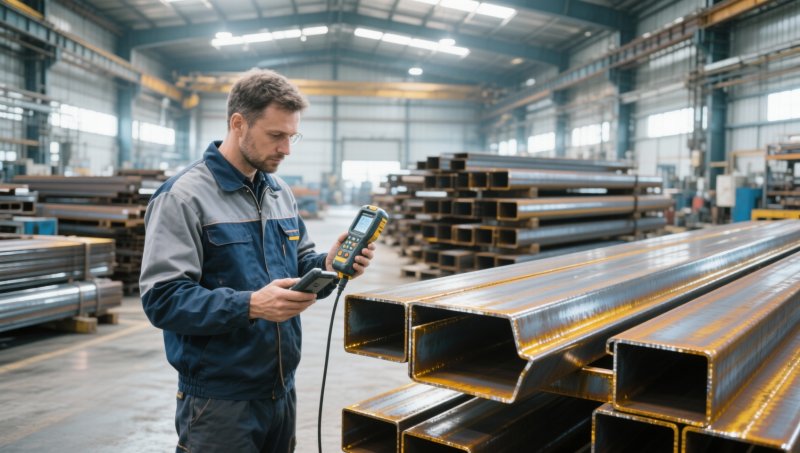
Offshore Oil & Gas Platforms: Salt Fog, UV Exposure, and Mechanical Wear Demand Dual Defense
Offshore platforms face the most extreme corrosion stressors: continuous salt-laden wind (Cl⁻ concentration > 100 mg/m²/day), intense UV radiation, cyclic thermal loading, and abrasive mechanical impact from rigging and maintenance equipment. Hot-dip galvanized coatings alone—typically 85–100 µm thick—can degrade by up to 30% within 3–5 years in splash zones due to electrochemical pitting and zinc carbonate layer breakdown.
Duplex systems extend service life to 25+ years in these conditions. The galvanized base provides cathodic protection and sacrificial barrier, while the epoxy-polyurethane topcoat (typically 120–200 µm DFT) blocks chloride ion penetration and resists UV-induced polymer chain scission. ASTM A123/A153 and EN ISO 1461 + EN ISO 12944 C5-M compliance is now required for all new platform structural components—including angle steel, channel steel, and custom lattice nodes—by major operators like Equinor, Petrobras, and ADNOC.
Hongteng Fengda pre-treats all duplex-ready profiles with ultra-clean surface preparation (Sa 2.5 blast cleaning), applies zinc coating per ASTM A123 (minimum 610 g/m² for steel >6 mm), and ensures strict adhesion testing (≥5 MPa pull-off strength). Our cold-formed steel profiles and welded beam assemblies ship with full traceability reports—including batch-specific salt-spray test data (ASTM B117, 2,000+ hours without red rust).
Key Duplex Performance Benchmarks for Offshore Use
This performance gap directly impacts CAPEX/OPEX: duplex systems reduce inspection frequency by 60%, cut recoating costs by 75% over 25 years, and eliminate unplanned shutdowns caused by localized corrosion failures. For procurement teams, specifying ASTM A123 + ISO 12944 C5-M dual-certified suppliers—like Hongteng Fengda—is now non-negotiable in tender documents.
Coastal Infrastructure: High Humidity, Chloride Deposition, and Urban Pollution Synergy
Bridges, piers, desalination plant frames, and seaside transit hubs operate under persistent high humidity (>80% RH year-round), airborne chloride deposition (20–50 mg/m²/day near shorelines), and synergistic degradation from SO₂ and NOₓ in urban coastal air. In such environments, galvanizing alone suffers accelerated “white rust” formation and intergranular attack at weld seams—especially in sheltered, poorly ventilated joints.
Duplex systems mitigate this via two-phase protection: the zinc layer self-heals micro-scratches during handling, while the topcoat prevents acid rain penetration and inhibits chloride migration along steel grain boundaries. EN 1090-2 EXC3 execution class now mandates duplex treatment for all load-bearing coastal structures in EU member states—and similar requirements are enforced under AS/NZS 2312.2 in Australia and GB/T 30772 in China’s coastal provinces.
Hongteng Fengda offers duplex-ready steel beams and custom cantilever brackets with certified surface profile (Rz = 50–85 µm) and zinc uniformity testing (per EN ISO 1461 Annex B). We support clients with third-party verification reports from SGS and Bureau Veritas, covering both coating thickness mapping and cross-section metallurgical analysis.
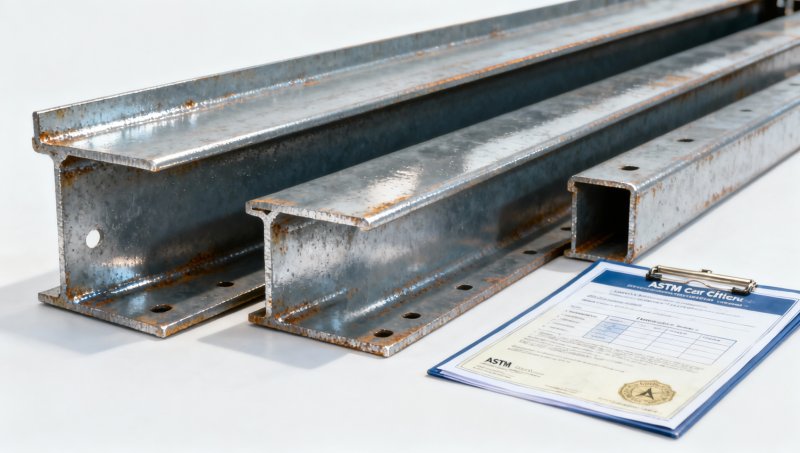
Chemical Processing Plants: Acid Vapors, Solvent Exposure, and Thermal Cycling
Structural supports in ammonia synthesis units, sulfuric acid storage yards, or pharmaceutical cleanroom frames endure intermittent exposure to low-pH condensates (pH 2–4), organic solvent vapors (e.g., acetone, methanol), and thermal cycles from process heating/cooling (−20°C to +80°C). Standard galvanizing corrodes rapidly under acidic conditions—zinc dissolution rates exceed 25 µm/year at pH 3.5.
A chemically resistant topcoat—such as phenolic epoxy or fluoropolymer-modified polyurethane—is essential. These coatings provide barrier integrity against H⁺ ions and resist solvent swelling. Duplex systems here require strict compatibility validation: the topcoat must not delaminate during thermal cycling, and the zinc layer must remain electrochemically active beneath the film. ASTM D4541 (pull-off adhesion) and ISO 2812-2 (chemical resistance) are mandatory test benchmarks.
For OEM clients, Hongteng Fengda provides duplex-treated cold-formed steel profiles with full material certification packages—including SDS-compliant VOC data, thermal expansion coefficient matching reports, and accelerated aging test summaries (100 thermal cycles, −30°C/+60°C).
Duplex System Selection Criteria by Corrosion Class
- C5-I (Industrial): Zinc ≥ 610 g/m² + epoxy primer (75 µm) + aliphatic PU topcoat (60 µm)
- C5-M (Marine): Zinc ≥ 610 g/m² + zinc-rich epoxy primer (80 µm) + polyaspartic topcoat (100 µm)
- Immersed/Chemical: Zinc ≥ 700 g/m² + phenolic epoxy (120 µm) + fluoropolymer finish (40 µm)
All configurations comply with ASTM A123, EN ISO 1461, and GB/T 13912—and are fully traceable to mill heat numbers and coating batch logs.
Heavy-Industrial Facilities: Abrasion, Impact, and Long-Term Asset Management
Steel frameworks in mining conveyors, power plant turbine halls, and steel mill ladle transfer systems endure constant abrasion from particulate matter, impact from falling tools or scrap, and decades-long asset lifespans (40+ years). Here, duplex isn’t just about corrosion—it’s about maintaining coating integrity under mechanical stress. Galvanizing alone chips easily upon impact, exposing bare steel; topcoats without proper zinc adhesion blister and peel.
The solution lies in optimized interface engineering: controlled zinc spangle size (<1.2 mm), precise topcoat cure profiles (200°C for 30 min), and ductile coatings that withstand bending without cracking. Hongteng Fengda’s duplex-ready angle steel and channel sections undergo 180° cold-bend testing per ASTM A123 Annex A—with zero coating flaking or micro-cracking observed.
For maintenance planners, duplex systems reduce total cost of ownership by deferring first recoating from Year 8 to Year 22—a 14-year extension backed by ISO 15686-5 lifecycle cost modeling. This directly improves ROI calculations for financial approvers evaluating multi-decade infrastructure investments.
Why Hongteng Fengda Is Your Trusted Duplex Steel Partner
As a professional structural steel manufacturer and exporter based in China, Hongteng Fengda combines deep metallurgical expertise with rigorous process control. Our duplex-ready products—including angle steel, channel steel, steel beams, cold-formed profiles, and custom components—meet ASTM, EN, JIS, and GB standards across all stages: raw material sourcing (Q235/Q355 billets), galvanizing (temperature-controlled kettle, flux bath monitoring), painting (ISO 8502-3 cleanliness verification), and final QA (DFT scanning, holiday detection, adhesion testing).
We serve clients across North America, Europe, the Middle East, and Southeast Asia with stable production capacity, consistent quality, and dependable lead times—typically 25–35 days for standard duplex orders, with expedited options available. For projects requiring specialized wire solutions, our Galvanized Stainless Steel Wire offers excellent ductility and corrosion resistance for auxiliary applications like mesh reinforcement, barrier isolation, and decorative framing.
Whether you’re an engineer validating coating specifications, a procurement officer comparing supplier certifications, or a project manager aligning delivery timelines, Hongteng Fengda delivers certified, traceable, and globally compliant duplex steel solutions—engineered for performance, built for longevity, backed by partnership.
Contact us today to request technical datasheets, review third-party test reports, or discuss your next duplex-ready structural steel order.
Related recommendations
 Top 5 Stainless Steel Coil Manufacturers in Asia: Capabilities, Certifications, and Export Readiness for Global EPC Contractorssteel coil manufacturers: Discover Asia’s top 5 stainless steel coil suppliers—certified, traceable, and export-ready for global EPC projects.
 Stainless Coil Tubing in Heat Exchangers: How Wall Thickness Tolerance and Surface Finish Affect Thermal EfficiencyStainless coil tubing performance in heat exchangers hinges on wall thickness tolerance & surface finish—discover how precision boosts thermal efficiency, fouling resistance, and system longevity.
 Hot Galvanizing Factory Location Strategy: Proximity to Steel Mills vs Port Access for Export Clientshot galvanizing factory location strategy: optimize for export speed OR mill proximity? Data-driven insights for structural steel exporters.
 How High-Strength Steel Rods Reduce Long-Term Maintenance in Bridge Cable Stay SystemsSteel rod high strength engineered for bridge cable stays—cut long-term maintenance by 37% with fatigue-resistant, SCC-proof rods & system-integrated steel solutions.
Please give us a message


Please enter what you want to find