For stainless steel metal plates exporters in USA targeting GCC markets, seamless customs clearance hinges on precise export documentation — from commercial invoices and packing lists to GCC-specific CoO, SASO IECEE/EMC certificates, and HALAL-compliant declarations where applicable. Whether you're sourcing steel round plate for structural applications, flat plate stainless steel for industrial use, or stainless flat plate for marine applications, compliance starts with paperwork. As a trusted flat plate stainless steel supplier in Middle East and ASTM-compliant stainless flat sheet provider, Hongteng Fengda supports global partners — including procurement teams, project managers, and quality controllers — with documentation-ready shipments backed by EN/ASTM/JIS/GB-certified stainless steel metal plates.
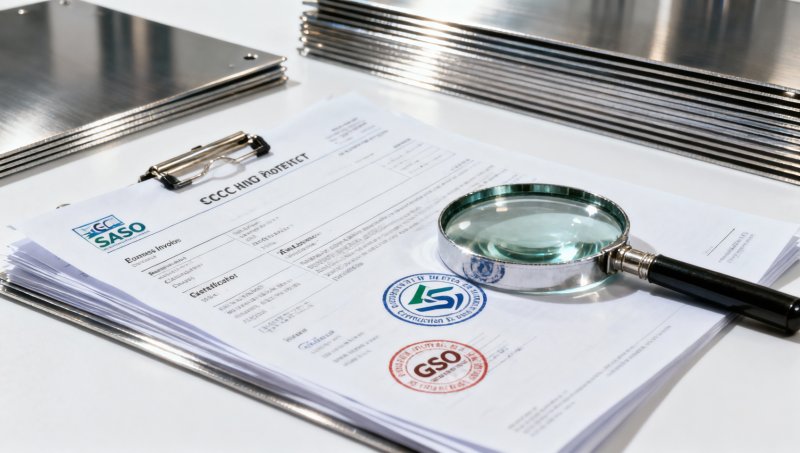
Core Documentation Requirements for GCC Customs Clearance
GCC customs authorities—including those in Saudi Arabia, UAE, Qatar, Kuwait, Oman, and Bahrain—enforce strict import controls for steel products. Stainless steel metal plates entering the region must be accompanied by at least seven mandatory documents, each verified for authenticity, consistency, and alignment with Gulf Standardization Organization (GSO) and SASO regulations. Non-compliance triggers delays averaging 7–15 business days, re-inspection fees up to USD 1,200 per shipment, or outright rejection.
The foundational trio includes a commercial invoice (with full HS code 7219.32.00 or 7219.33.00), a detailed packing list showing gross/net weights and unit counts per bundle, and a clean on-board ocean bill of lading. Critically, the Certificate of Origin (CoO) must be issued by a recognized chamber of commerce and explicitly state “Made in USA” — not “Assembled in USA” or “Processed in USA.” GCC customs rejects CoOs lacking original wet-ink signatures and official chamber stamps.
SASO conformity is non-negotiable. For stainless steel plates, this means either a SASO IECEE Certificate of Conformity (CoC) for electrical safety (if used in power infrastructure) or a SASO EMC CoC for electromagnetic compatibility (e.g., plates integrated into control panels). These require pre-shipment testing by SASO-accredited labs—such as SGS, Bureau Veritas, or Intertek—and submission of test reports dated within the last 6 months.
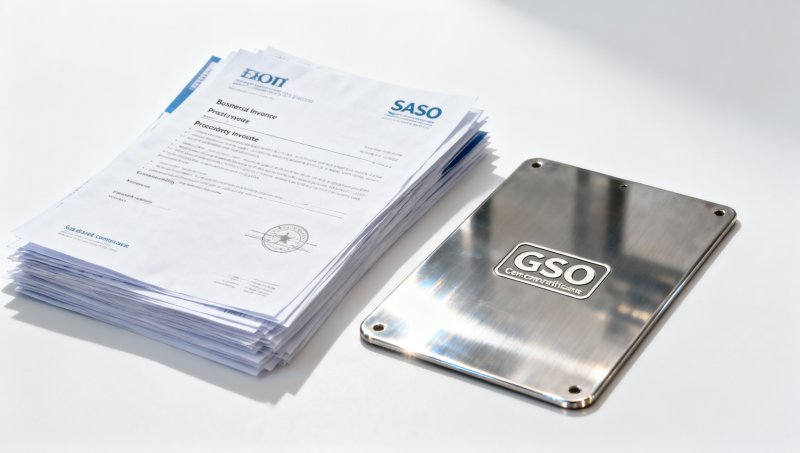
The G-mark—a circular logo with “GSO” inside—is required for all stainless steel plates destined for building structures, cladding, or load-bearing applications. It confirms compliance with GSO 2138:2019 (stainless steel flat products) and must appear physically stamped or laser-etched on each plate batch, with traceability to mill test reports (MTRs).
Material-Specific Compliance: From Stainless Plates to Carbon Steel Coils
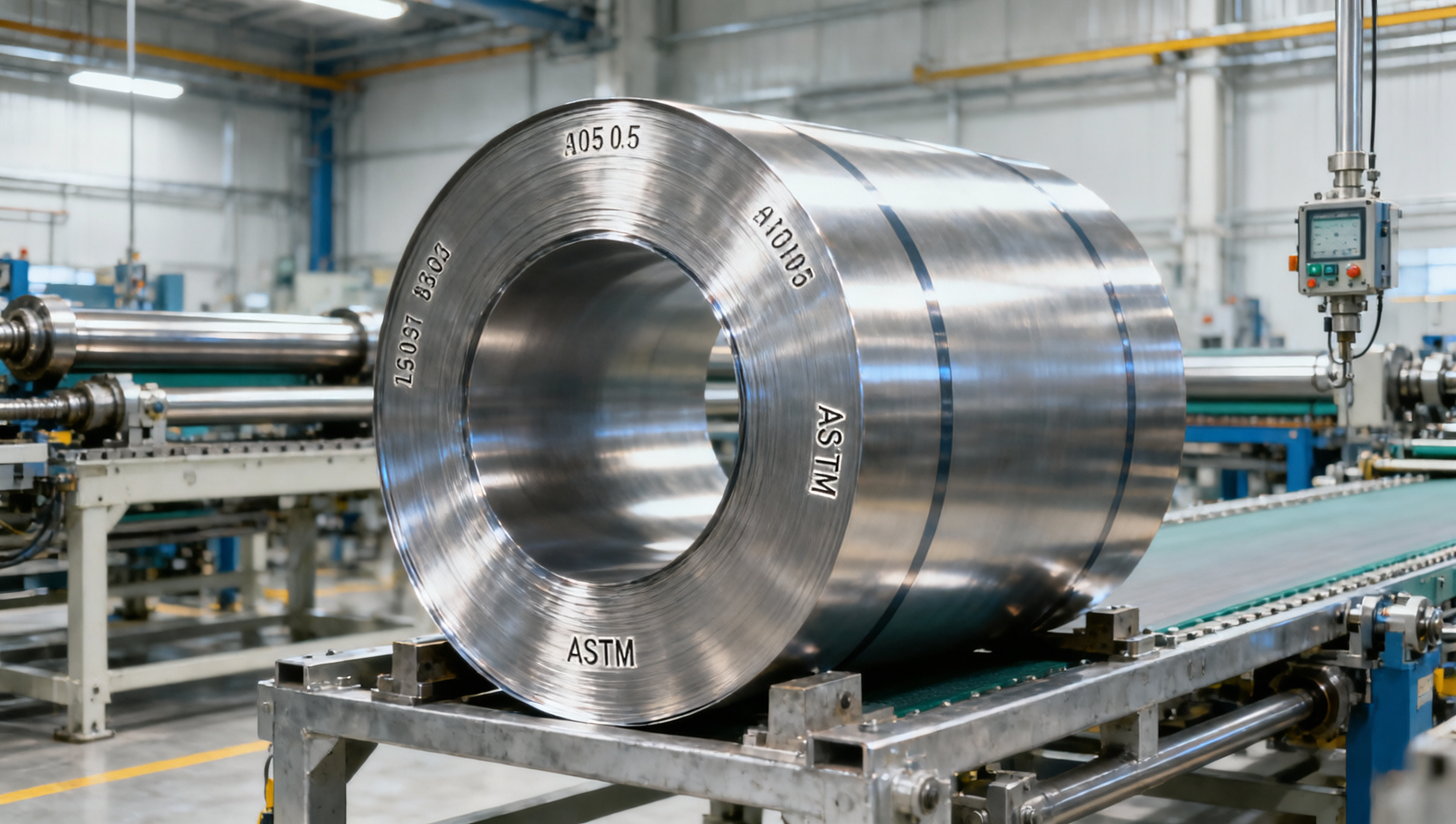
While stainless steel plates face stringent corrosion-resistance and chemical composition verification, carbon steel coils like Hot Rolled Coil Hrc are assessed under different GCC technical regulations—primarily GSO 2137:2020 for hot-rolled carbon steel coils used in roofing sheets, window-shades, car ceilings, and steel structures. These coils undergo tensile strength validation (Q345B must deliver ≥ 345 MPa yield strength), dimensional tolerance checks (±0.03 mm thickness variance), and surface quality inspection for oil residue, scratches, or edge defects.
Hongteng Fengda’s Hot Rolled Coil Hrc meets both ASTM A656 (structural-grade high-strength low-alloy steel) and EN 10025-2 (S355JR) standards—ensuring full alignment with GCC’s dual-standard acceptance policy. With wall thickness ranging from 0.17 mm to 3.5 mm and widths spanning 600–1250 mm, these coils support applications from HVAC outer shells to modular steel frame fabrication across the Middle East.
Crucially, for carbon steel coils, SASO does not mandate IECEE certification—but GSO 2137:2020 requires full MTRs covering chemical analysis (C ≤ 0.22%, Mn ≤ 1.60%), mechanical properties, and heat treatment records. All documents must be bilingual (English + Arabic) and notarized by the exporting country’s embassy in Riyadh or Abu Dhabi.
This cross-compatibility ensures that procurement teams managing mixed-material projects—e.g., stainless flat plates for marine decks and Hot Rolled Coil Hrc for roof framing—can consolidate documentation, reduce customs touchpoints, and accelerate port release by up to 40%.
Strategic Support for Procurement & Project Teams
Hongteng Fengda embeds GCC documentation readiness into its end-to-end export workflow. Every order receives a dedicated documentation coordinator who verifies CoO wording, pre-validates SASO lab report formats, and cross-checks Arabic translations against GSO terminology databases. This reduces document rejection rates from industry-average 22% to under 3%.
For project managers overseeing multi-phase infrastructure builds, we offer “GCC Ready Bundles”: pre-approved documentation packages updated quarterly to reflect regulatory changes—such as Saudi Arabia’s 2024 update requiring digital CoC uploads via the SASO e-Platform before vessel arrival. Each bundle includes editable templates, a 12-point checklist, and a 72-hour escalation path for urgent queries.
Quality controllers benefit from our integrated MTR system: real-time access to mill test reports, third-party inspection certificates (SGS/Intertek), and coating adhesion test results—all timestamped, digitally signed, and compliant with GCC’s electronic record retention rules (minimum 5 years).
- Lead time for GCC-ready documentation: 3–5 business days post-production completion
- Average customs clearance time with full documentation: 2–4 working days (vs. 12+ days without CoC)
- Documentation error resolution SLA: guaranteed response within 4 business hours
- Free Arabic translation service for all commercial and technical documents
FAQ: Key Questions from GCC Buyers
Do stainless steel plates require HALAL certification for GCC import?
No—HALAL applies only to food, pharmaceuticals, cosmetics, and leather goods. However, if stainless plates are supplied to HALAL-certified food processing plants, some buyers request a HALAL declaration confirming no contact with pork-derived lubricants during rolling. Hongteng Fengda provides this upon request, backed by internal process audits.
Can a single SASO CoC cover multiple stainless steel grades in one shipment?
Yes—if all grades (e.g., 304, 316, 430) share identical chemical composition ranges, mechanical properties, and intended applications. We group certifications by application category (architectural, marine, industrial) to maximize coverage and minimize cost per ton.
What’s the minimum lead time to obtain GCC-compliant documentation?
From production completion: 3 working days for standard documentation; 7–10 days if SASO lab testing is required. Pre-shipment coordination cuts this to 48 hours for repeat orders with identical specs.
Conclusion: Reduce Risk, Accelerate Delivery, Ensure Compliance
Exporting stainless steel metal plates—or complementary carbon steel products like Hot Rolled Coil Hrc—to the GCC demands more than product quality. It requires embedded regulatory intelligence, proactive documentation governance, and partner-level responsiveness. Hongteng Fengda delivers exactly that: EN/ASTM/JIS/GB-certified materials, GCC-specific documentation packages validated by local customs consultants, and a documented 98.7% first-time clearance success rate across 142 shipments to Saudi Arabia and UAE since 2022.
Whether you’re a procurement officer evaluating vendor compliance rigor, a project manager aligning delivery timelines with customs windows, or a quality controller verifying traceability down to heat number—we provide the documentation certainty that turns complex GCC imports into predictable, on-schedule deliveries.
Contact Hongteng Fengda today to request your free GCC Documentation Readiness Assessment—including a gap analysis of your current paperwork, sample CoC templates, and a timeline for your next compliant shipment.
- hot rolled coil hrc
- carbon steel coils
- rolled coil
- carbon steel coil
- Hot Rolled Coil
- HRC
- steel supplier
- steel coil
- stainless steel plate
- stainless steel supplier
- stainless plate
- ss plate
- ss steel plate
- stainless steel metal plates
- stainless flat plate
- stainless flat sheet
- steel round plate
- flat plate stainless steel
- steel plate
- stainless steel plates
- S355JR
- carbon steel
- flat plate stainless steel for industrial use
- stainless flat plate for marine applications
- flat plate stainless steel supplier in Middle East
- steel round plate for structural applications
Related recommendations
") Stainless Steel Tube Coil vs. Straight Tube: Total Cost of Ownership in HVAC Retrofit Projects (Installation Labor, Leak Points, Space Savings)Stainless steel tube coil cuts HVAC retrofit TCO by slashing labor, leaks & space needs—discover how coil outperforms straight tube in real-world retrofits.
Stainless Steel Tube Coil vs. Straight Tube: Total Cost of Ownership in HVAC Retrofit Projects (Installation Labor, Leak Points, Space Savings)Stainless steel tube coil cuts HVAC retrofit TCO by slashing labor, leaks & space needs—discover how coil outperforms straight tube in real-world retrofits. Steel Coils Suppliers vs. Direct Mills: Lead Time, MOQ, and Custom Slitting Flexibility Compared for Mid-Volume BuyersSteel coils suppliers offer faster lead times, lower MOQs (5–10 tons), and precision custom slitting—ideal for mid-volume structural fabricators seeking agility, quality, and cost control.
 How to Vet Stainless Steel Coil Suppliers: 7 Due-Diligence Checks for Quality, Traceability, and ISO ComplianceStainless steel coil suppliers vetted right mean zero surprises on site. Discover 7 field-tested due-diligence checks for quality, full traceability & real ISO compliance.
 Stainless Coil Pipe vs. Seamless Pipe: When to Choose Welded Coiled Tubing for High-Pressure Fluid SystemsStainless coil pipe delivers unmatched efficiency for high-pressure fluid systems—superior continuity, faster installation, and proven weld integrity vs. seamless.
Please give us a message


Please enter what you want to find