Understanding what affects 1 1 2 stainless steel pipe price is critical for HVAC project planning—whether you're comparing ss pipe 304 price, stainless steel square pipe price 20 feet, or stainless tube price per meter. As a trusted structural steel manufacturer & exporter from China, Hongteng Fengda helps procurement teams, engineers, and project managers navigate variables like material grade (e.g., SS304 pipe price), dimensions (ss pipe 1 inch price vs. ss pipe 2 inch price), surface finish, certification requirements, and order volume—all impacting stainless steel pipe price. Explore key cost drivers to optimize budgeting and sourcing decisions.
Material Grade and Corrosion Resistance: The Core Price Determinant
Stainless steel pipe pricing begins with alloy composition. For HVAC applications—especially in humid, coastal, or chemically aggressive environments—grade selection directly dictates both performance and cost. SS304 remains the most widely specified grade due to its balanced chromium (18–20%) and nickel (8–10.5%) content, offering strong resistance to oxidation and mild corrosion at a mid-tier price point. In contrast, SS316 adds 2–3% molybdenum, elevating chloride resistance by up to 40% and increasing unit cost by 15–25% versus SS304 for identical 1½-inch nominal diameter pipes.
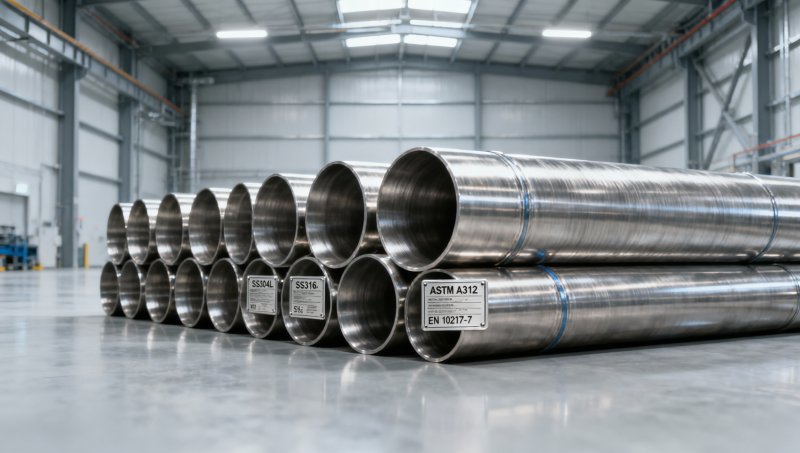
Carbon content also matters: low-carbon variants like SS304L (C ≤ 0.03%) prevent sensitization during welding—a critical requirement for seamless HVAC ductwork joints. While SS304L commands a 5–8% premium over standard SS304, it eliminates post-weld annealing costs and reduces long-term leakage risk. At Hongteng Fengda, all stainless pipe grades undergo ASTM A312 and EN 10217-7 compliance verification, with full mill test reports (MTRs) traceable to heat number and chemical analysis.
Below is a comparative overview of common HVAC-grade stainless pipe specifications and their typical price differentials relative to base SS304:
Selecting the right grade isn’t about maximizing specs—it’s about matching metallurgical performance to actual environmental exposure. Over-specifying SS316 where SS304 suffices inflates project cost without added value; under-specifying risks premature pitting, costly system shutdowns, and non-compliant MTR documentation.
Dimensional Tolerances, Wall Thickness, and Manufacturing Process
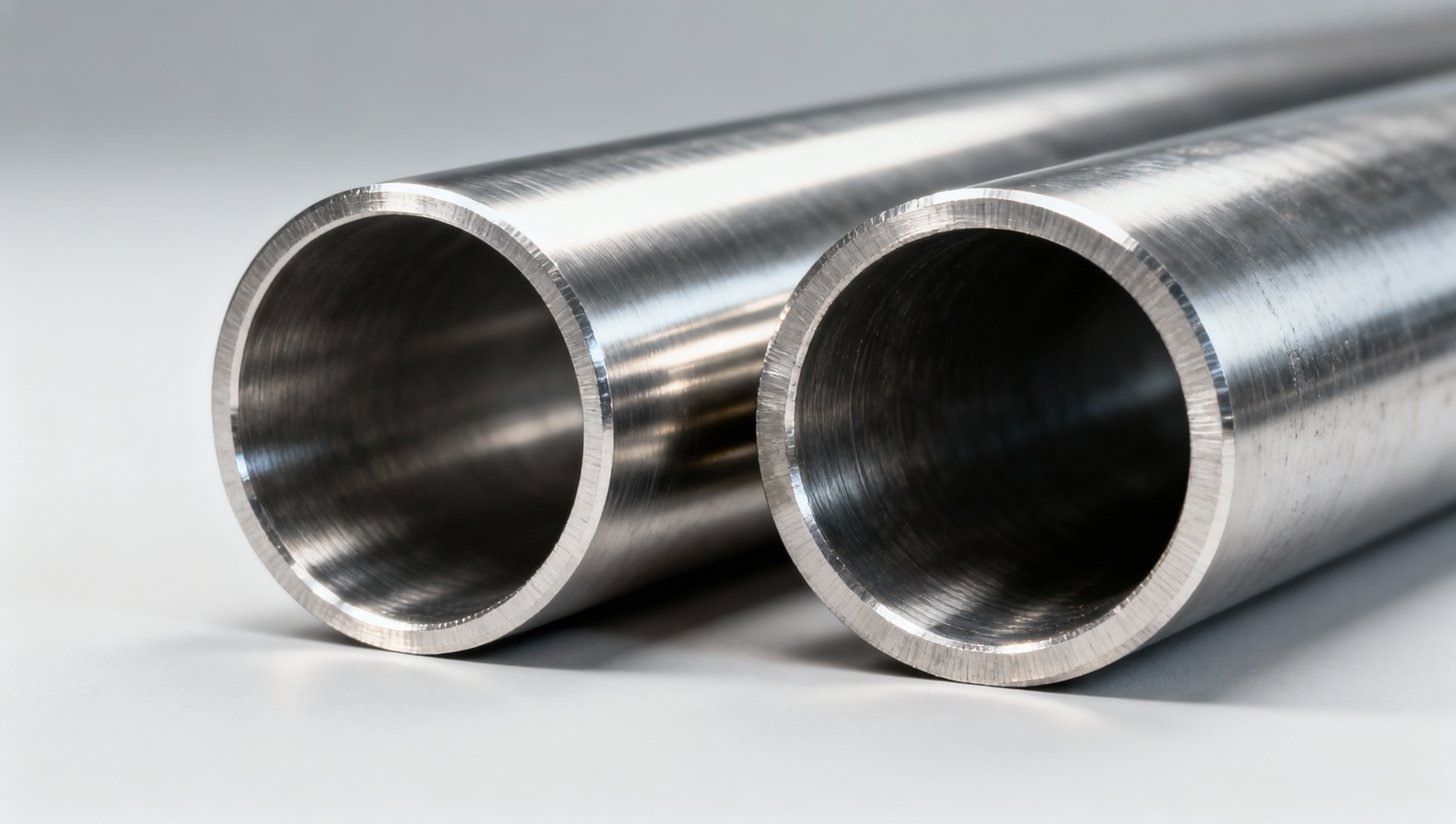
A “1½-inch” stainless steel pipe refers to its nominal pipe size (NPS), not its actual outer diameter (OD). For NPS 1½, the true OD is consistently 1.900 inches—but wall thickness (schedule) varies significantly. Schedule 10S (1.65 mm wall) weighs ~1.78 kg/m, while Schedule 40S (3.73 mm) weighs ~3.52 kg/m—a 98% weight difference that directly scales raw material cost. At Hongteng Fengda, we offer cold-drawn seamless (ASTM A269) and welded (ASTM A312) options, with dimensional tolerances held to ±0.75% for OD and ±12.5% for wall thickness—meeting ASME B36.19M requirements.
Seamless pipes command a 10–18% price premium over welded equivalents due to higher energy input and lower yield rates. However, they deliver superior pressure integrity (tested to 1.5× working pressure) and uniform grain structure—critical for high-static-pressure HVAC plenums. Welded pipes, meanwhile, are ideal for low-pressure return air ducts and offer faster lead times (7–12 days vs. 14–21 days for seamless).
Surface finish further modulates cost. Standard pickled-and-passivated surfaces meet most HVAC hygiene standards, while electro-polished finishes (Ra ≤ 0.4 µm) add 20–35% to unit price but reduce biofilm adhesion by >60%—a decisive factor in hospital HVAC retrofits.
Certification, Traceability, and Compliance Burden
HVAC projects in North America, EU, and GCC regions require third-party certified documentation—not just supplier declarations. Each stainless pipe shipment from Hongteng Fengda includes EN 10204 3.1 or 3.2 inspection certificates, with full traceability to heat number, mechanical test results (tensile strength ≥ 515 MPa, elongation ≥ 35%), and intergranular corrosion test reports (ASTM A262 Practice E). This compliance infrastructure adds ~3–5% to landed cost—but eliminates rework penalties, customs delays, and rejection at site handover.
For large-scale commercial builds, buyers often request additional certifications: UL 181 listing for flexible duct connectors, NSF/ANSI 61 for potable water contact, or ISO 14001-aligned environmental declarations. These aren’t optional extras—they’re contractual obligations. Our export team coordinates BV, SGS, and TÜV audits on demand, with average certification turnaround of 5–8 business days.
Order Volume, Logistics, and Structural Steel Synergy
Unit pricing drops predictably with volume: orders of 5+ metric tons typically secure 4–7% discounts versus spot-buy quantities. But real savings emerge when integrating stainless pipe procurement with broader structural needs. For example, HVAC support framing, duct hangers, and roof-mounted unit bases often use C-beam sections in Q235 or Q345 steel—materials we produce in-house alongside stainless pipe. Bundling these items into one PO reduces logistics overhead, harmonizes delivery windows (standard lead time: 25–35 days), and unlocks cross-product volume incentives.
C-beam products are precision-formed via automated roll-forming lines, available in lengths from 6m to 12m, with galvanized, powder-coated, or black varnish finishes. Their ±1% dimensional tolerance and CE/ISO-certified production ensure compatibility with HVAC mounting hardware—reducing on-site fabrication labor by up to 30%.
The table below outlines how integrated procurement across stainless pipe and structural components improves total project economics:
This synergy reflects our core value proposition: as a vertically integrated structural steel manufacturer, Hongteng Fengda doesn’t sell isolated components—we engineer coordinated material solutions that reduce total installed cost, accelerate commissioning, and de-risk supply chain execution.
Strategic Sourcing Recommendations for HVAC Professionals
To optimize stainless pipe cost without compromising HVAC system reliability, follow these evidence-based practices:
- Specify SS304L—not SS304—for all welded assemblies requiring pressure integrity or regulatory compliance (e.g., LEED, ASHRAE 170).
- Require EN 10204 3.2 certificates for every heat lot—verify mill test reports match actual batch IDs before shipment release.
- Consolidate stainless pipe with structural supports (e.g., C-beam, angle steel) to compress logistics cost and synchronize delivery schedules.
- Lock in pricing with 30-day validity and firm delivery windows—avoid open-ended contracts vulnerable to raw material volatility (nickel price swings ±12% quarterly).
Hongteng Fengda provides dedicated technical support for HVAC material specification, including free dimensional validation, weld procedure review, and OEM-style packaging for just-in-time site delivery. With production capacity exceeding 500,000 MT/year and facilities certified to ISO 9001, ISO 14001, and OHSAS 18001, we enable global buyers to source with confidence—not compromise.
Ready to align your HVAC stainless pipe procurement with real-world performance, compliance, and cost targets? Contact Hongteng Fengda today for a customized material solution and competitive quotation—backed by 15+ years of structural steel export expertise.
- angle steel
- seamless pipe
- steel pipe
- structural steel
- Structural Steel
- stainless steel pipe
- ss pipe 1 inch price
- ss pipe 2 inch price
- ss304 pipe price
- stainless steel pipe price
- stainless steel square pipe price
- 1 1 2 stainless steel pipe price
- stainless tube price
- stainless steel square pipe price 20 feet
- ss pipe 304 price
- ss steel pipe price
- stainless steel square pipe
- stainless pipe
- ss pipe
- ss tube
- 2 stainless steel pipe
- 304 pipe
- Galvanized
Related recommendations
 How much does 2 inch ss pipe price increase when upgrading from Schedule 40 to Schedule 80 for high-pressure systems?2 inch ss pipe price increases 18–35% when upgrading from Sch 40 to Sch 80—discover why, when it’s truly needed, and how to avoid overpaying.
 Which 304 stainless steel coil suppliers meet ISO 9001 and EN 10088-2 for food-grade fabrication?Discover verified 304 stainless steel coil suppliers meeting ISO 9001 & EN 10088-2 for food-grade fabrication—traceable, audited, and ready for regulatory validation.
 How does 2 inch ss pipe price compare between 304 and 316 grades for marine environments?2 inch ss pipe price varies significantly between 304 and 316 — but in marine environments, choosing 304 risks costly failures. Discover why 316 is the true value choice.
 Is 20 feet square pipe price affected more by raw material volatility or regional logistics costs?20 feet square pipe price is driven primarily by raw material volatility—not logistics. Discover why billet costs dominate pricing & how to forecast smarter with Hongteng Fengda.
Please give us a message


Please enter what you want to find