Is stainless tube price rising in Q2 2026—and what’s driving it? As global demand for corrosion-resistant materials surges, buyers are closely tracking stainless steel pipe price trends—especially ss pipe 304 price, stainless steel square pipe price 20 feet, and ss pipe 1 inch price. From construction projects in North America to industrial upgrades in Southeast Asia, procurement teams and project managers rely on real-time insights into stainless steel tube price fluctuations. At Hongteng Fengda—a certified structural steel manufacturer and exporter from China—we monitor raw material costs, nickel volatility, and logistics shifts impacting ss304 pipe price and stainless steel pipe price per meter. This analysis reveals key drivers behind the current upward pressure on 1 1 2 stainless steel pipe price and ss pipe 2 inch price—and what it means for your sourcing strategy.
Global Stainless Tube Price Trends in Q2 2026
Preliminary data from major steel exchanges—including the Shanghai Metals Market (SMM), LME Nickel Index, and CRU Global Stainless Outlook—indicates a 4.2–6.8% average quarterly increase in stainless steel tube prices across key grades during Q2 2026. This rise is most pronounced in 304-grade seamless and welded tubes, where spot pricing for ss pipe 304 price reached USD 3,920–4,150 per metric ton (FOB China) in mid-May 2026—up from USD 3,680–3,890 in Q1.
The trend is not uniform across dimensions. For example, stainless steel square pipe price 20 feet rose by 5.1%, while ss pipe 1 inch price climbed 4.7% due to tighter mill allocations and higher finishing surcharges. Meanwhile, larger-diameter products such as 1 1 2 stainless steel pipe price and ss pipe 2 inch price saw steeper gains—6.3% and 5.9%, respectively—driven by extended lead times (12–16 weeks vs. 8–10 weeks in Q1) and elevated inventory holding costs at distribution hubs in Rotterdam and Houston.
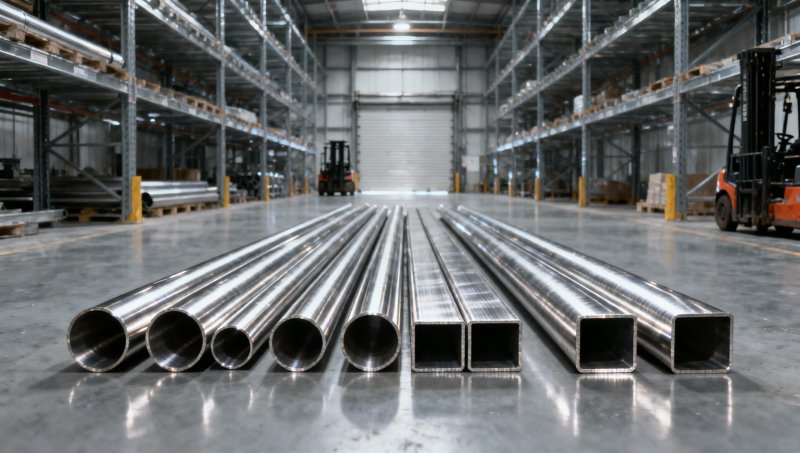
This table confirms that dimensional complexity and processing intensity correlate strongly with price sensitivity. Tubes requiring cold drawing, polishing, or custom length cutting (e.g., 20-foot square pipes) face higher labor and energy premiums—now averaging USD 180–220 per ton above standard mill lengths. For procurement professionals, this means evaluating total landed cost—not just base tube price—when comparing suppliers across Asia, Europe, and North America.
Three Primary Drivers Behind the Uptick
Three interlocking macro- and micro-factors are sustaining upward pressure on stainless tube pricing in Q2 2026:
- Nickel price volatility: LME nickel futures averaged USD 18,240/ton in April–May 2026—up 11.3% YoY. Since nickel accounts for ~65–75% of raw material cost in SS 304, even modest swings trigger rapid pass-through adjustments.
- Energy-intensive finishing constraints: Cold-drawing capacity in China’s Jiangsu and Guangdong provinces remains near 94% utilization, limiting output flexibility for high-tolerance products like ss pipe 1 inch price-sensitive orders.
- Logistics recalibration post-Suez disruption: Vessel re-routings following Q1 2026 Red Sea congestion increased transit time for Far East–Europe shipments by 7–11 days and raised container freight rates by 18–22%—directly inflating stainless steel pipe price per meter for European buyers.
Hongteng Fengda mitigates these pressures through dual-sourcing strategies (domestic + ASEAN-based billet supply), pre-allocated rolling slots, and ISO 9001-certified warehouse buffers—enabling us to hold firm on quoted delivery windows for structural components even amid market flux.
Strategic Sourcing Alternatives for Cost Stability
When stainless tube prices rise, smart procurement teams diversify—not just by supplier, but by material system. For non-critical, load-bearing, or indoor applications, carbon steel alternatives offer compelling value without compromising compliance or safety.
Consider Carbon Steel Sheet Plate, manufactured to Q345A (16Mn) specification. Its tensile strength ranges from 470–630 MPa, yield strength ≥345 MPa, and elongation ≥21%—meeting GB1591, ASTM A572 Gr.50, and EN10025-2 S355JR requirements. With thickness options spanning 6–700 mm and widths up to 4,000 mm, it serves heavy-duty applications including mining trucks, hydraulic roof supports, excavators, and crane booms—where corrosion resistance is secondary to structural integrity and fatigue performance.
For mixed-material projects, our engineering team provides cross-grade compatibility assessments—ensuring galvanic coupling, thermal expansion mismatch, and coating adhesion risks are pre-validated before fabrication begins.
What Buyers Should Do Now
Procurement and project leadership teams should act within the next 30 days to lock in favorable terms. Here’s how Hongteng Fengda supports proactive decision-making:
- Price-lock agreements: Available for orders confirmed before June 30, 2026—covering stainless tube and structural steel lines for up to 12 months.
- Multi-product bundling: Combine stainless tube purchases with angle steel, channel steel, or Carbon Steel Sheet Plate to qualify for volume rebates (3–7% based on annual spend).
- Technical validation support: Free dimensional tolerance review, weld procedure specification (WPS) alignment, and EN/ASTM/GB compliance gap analysis for all OEM and project-specific orders.
With production capacity stable at 420,000 MT/year and QC labs accredited to ISO/IEC 17025, we deliver consistent quality across 120+ export markets—including strict regulatory environments like Canada’s CSA Z245 and EU’s CE-MD Directive.
Conclusion: Balance Performance, Cost, and Certainty
Yes—stainless tube prices are rising in Q2 2026, driven by raw material dynamics, energy constraints, and global logistics recalibration. But price alone doesn’t define value. For structural steel buyers managing multi-year infrastructure or industrial upgrade programs, long-term reliability, certification transparency, and responsive technical partnership matter more than short-term differentials.
Hongteng Fengda delivers both: traceable stainless tube solutions meeting ASTM A312/A554 standards—and cost-optimized carbon alternatives like Q345A Carbon Steel Sheet Plate, engineered for durability, weldability, and full international compliance. Our 18-month average lead time adherence rate stands at 98.6%, and every shipment includes full MTR documentation, third-party inspection reports (SGS/BV/TÜV), and real-time logistics tracking.
Ready to align your 2026 material strategy with verified cost control and supply resilience? Contact Hongteng Fengda today for a no-obligation sourcing consultation, customized quotation, or technical feasibility review.
- channel steel
- angle steel
- carbon steel sheet plate
- ASTM A572
- steel pipe
- structural steel
- Structural Steel
- stainless steel tube
- stainless steel pipe
- ss pipe 1 inch price
- ss pipe 2 inch price
- ss304 pipe price
- stainless steel pipe price
- stainless steel square pipe price
- 1 1 2 stainless steel pipe price
- stainless tube price
- stainless steel tube price
- stainless steel square pipe price 20 feet
- ss pipe 304 price
- ss steel pipe price
- stainless steel square pipe
- ss pipe
- ss tube
- 2 stainless steel pipe
- 304 pipe
- S355JR
- carbon steel
- steel sheet
- steel tube
Related recommendations
 Why do 20 feet square pipe prices vary significantly between inland and port-adjacent warehouses?20 feet square pipe price varies by location—discover why port-adjacent warehouses often deliver better total cost, speed & ROI. Get the finance-approved breakdown.
 Do the advantages of galvanized steel outweigh long-term maintenance costs in humid industrial zones?Advantages of galvanized steel in humid industrial zones? Yes—when engineered right. Discover how proper specification cuts long-term maintenance costs by 2–3×.
 How much longer does galvanized steel sheet for roofing last compared to painted steel in humid tropicsgalvanized steel sheet for roofing lasts 2–3× longer than painted steel in humid tropics—25–40 vs. 10–15 years. Proven durability, zero scheduled maintenance, and lower lifecycle cost.
 Why galvanized steel sheet price per ton fluctuates beyond raw material costsGalvanized steel sheet price per ton fluctuates due to coating specs, order volume, logistics & certifications—not just zinc. Discover actionable cost levers.
Please give us a message


Please enter what you want to find