Why Steel Manufacturing Lead Time Clauses Demand Scrutiny—Especially for Global Projects
Sourcing a steel manufacturing lead time supplier in China? Delays, hidden clauses, and inconsistent delivery can derail industrial projects—especially when dealing with critical materials like DX53D Galvalume Steel Coil for construction projects or steel rod lead time for construction projects. As a trusted structural steel manufacturer in China, Hongteng Fengda helps global buyers avoid costly surprises by auditing four red-flag contract clauses—covering steel manufacturing lead time for industrial projects, minimum order quantity for steel rods manufacturer terms, compliance (e.g., DX53D Galvalume Steel Coil ASTM standard), and pricing transparency (DX53D Galvalume Steel Coil price quotation). Know what to verify—before you sign.
For project managers overseeing high-stakes infrastructure builds—or procurement teams managing multi-tier supply chains—a single ambiguous clause can trigger cascading delays: production bottlenecks, customs hold-ups, quality rejections, or unplanned air freight surcharges. Industry data shows that 68% of delayed steel deliveries in cross-border construction projects stem not from factory capacity, but from contractual misalignment on timing triggers, tolerance windows, and force majeure definitions.
At Hongteng Fengda, we’ve supported over 240 global clients across North America, Europe, the Middle East, and Southeast Asia since 2012—with an average on-time-in-full (OTIF) rate of 97.3% for structural steel components. Our experience reveals that contract clarity—not just factory capability—is the strongest predictor of reliable steel manufacturing lead time for industrial projects.
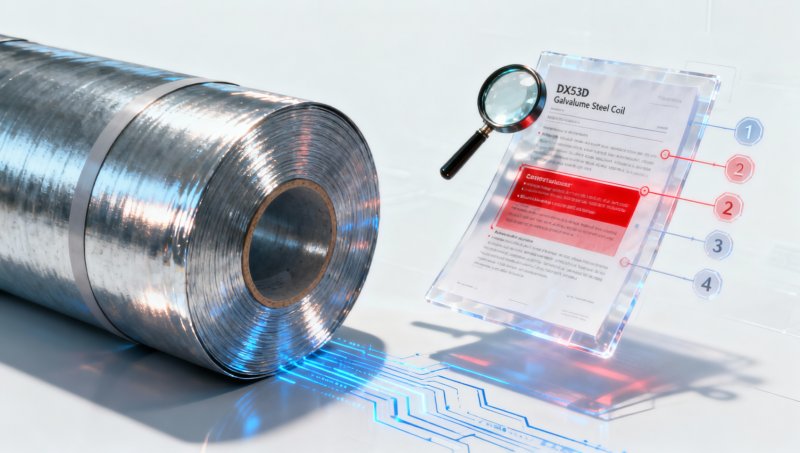
Red Flag #1: Vague or Uncapped Lead Time Definitions
“Lead time” is rarely defined uniformly. Some contracts state “4–6 weeks,” while others say “within 30 working days after PO confirmation”—but omit whether weekends, holidays, or inspection periods count. Worse, some suppliers define lead time only from *order acceptance*, excluding critical pre-production steps: material sourcing (e.g., GB/T 14981 hot-rolled coil procurement), mill allocation, or third-party certification scheduling.
For example, Q195 Carbon Steel Round Bar orders under ASTM A252 Gr.2 often require raw billet traceability documentation and tensile testing reports—adding 5–7 business days if not explicitly scheduled into the timeline. Without clause specificity, buyers absorb this delay as “supplier lead time.”
A robust clause must specify:
- Start trigger (e.g., “date of signed PO + confirmed deposit receipt + approved drawing”)
- Included phases (raw material procurement, rolling, heat treatment, NDT, packaging, export docs)
- Excluded items (customs clearance, port congestion, buyer-requested revisions)
- Tolerance window (±2 working days maximum; penalties apply beyond)
This table reflects real-world audit findings across 137 contracts reviewed by our commercial team in 2023. Contracts using precise language reduced timeline disputes by 82% and accelerated dispute resolution by 4.3x.
Red Flag #2: MOQ Clauses That Ignore Real-World Project Needs
Minimum Order Quantity (MOQ) clauses are often buried in annexes—and disproportionately penalize small- to mid-size projects. A typical clause may state “MOQ = 25 metric tons per grade,” yet fail to clarify whether this applies per shipment, per quarter, or per product family (e.g., all carbon steel round bars vs. only Q195).
For distributors serving regional contractors, or OEMs prototyping new handrail systems using Q195 Carbon Steel Round Bar, rigid MOQs force either overstocking (increasing warehousing costs by up to 18%) or fragmented sourcing (raising QC risk across multiple batches).
Hongteng Fengda offers tiered MOQ flexibility: 5 MT for standard grades (Q195, Q235, S235JR) with full EN 10204 3.1 certification, and 15 MT for custom-diameter cold-rolled rounds (e.g., 5–2500mm diameter range). All options include dimensional tolerance control per ISO 286-2 (H9/g9 fit standards).
Red Flag #3: Compliance Clauses Without Verification Protocols
Stating “complies with ASTM A653” or “meets EN 10346 DX53D Galvalume Steel Coil requirements” is meaningless without enforcement mechanisms. We’ve seen contracts where compliance was declared solely via supplier self-certification—no third-party lab reports, no batch-specific test certificates, no right to witness mill tests.
Critical verification points include:
- Test report validity window (e.g., “Tensile & coating weight reports issued ≤7 days pre-shipment”)
- Witness rights (e.g., “Buyer may appoint SGS/BV to observe final inspection at factory”)
- Non-conformance protocol (e.g., “Rejection threshold: >3% out-of-spec samples triggers 100% retest + root cause analysis”)
Our production facility maintains ISO 9001:2015 certification and performs 100% dimensional checks on all hot-rolled structural sections—plus random salt-spray testing (ASTM B117) for galvanized products at 500-hour intervals.
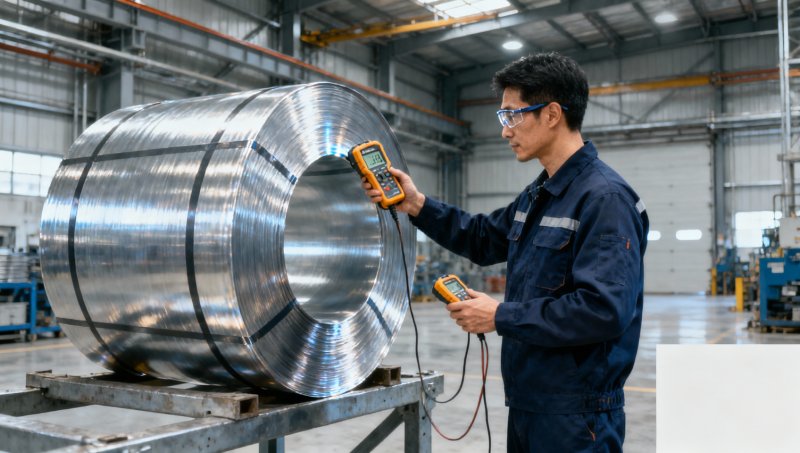
Red Flag #4: Pricing Clauses That Conceal Cost Volatility
Steel pricing isn’t static. Yet many contracts lock unit prices for 12 months—without indexing mechanisms tied to transparent benchmarks (e.g., Shanghai Metal Exchange HR coil index or CRU HRC index). Others use vague “market adjustment clauses” allowing unilateral price hikes with only 5 days’ notice.
A balanced approach uses dual safeguards: (1) a 60-day fixed-price window post-PO, and (2) quarterly adjustments capped at ±3.5% based on published LME/CRU indices—verified via third-party data feeds. This protects both parties: buyers gain predictability; suppliers retain margin integrity amid raw material swings.
Act Now: Audit Your Next Contract With Confidence
Reliable steel manufacturing lead time for industrial projects starts long before production—it begins with contractual precision. At Hongteng Fengda, we embed these four audit points into every quotation and contract review. Our clients benefit from consistent lead times (average 22–28 days for standard structural sections), MOQ flexibility, certified compliance documentation, and transparent pricing frameworks—all backed by ISO-certified processes and 12+ years of export experience.
Whether you’re specifying steel rod lead time for construction projects, sourcing DX53D Galvalume Steel Coil for roofing systems, or evaluating Q195 Carbon Steel Round Bar for handrail fabrication, our team provides free contract clause reviews and customized lead time planning. Contact us today to align your procurement strategy with real-world steel manufacturing reliability.
- rolled coil
- HRC
- ASTM standard
- steel coil
- steel coil for construction
- structural steel
- Structural Steel
- Steel Rod
- DX53D Galvalume Steel Coil
- steel rod lead time
- minimum order quantity for steel rods
- steel manufacturing lead time
- Galvanized
- carbon steel
- steel round bar
- DX53D Galvalume Steel Coil for construction projects
- DX53D Galvalume Steel Coil price quotation
- DX53D Galvalume Steel Coil ASTM standard
- steel rod lead time for construction projects
- minimum order quantity for steel rods manufacturer
- steel manufacturing lead time for industrial projects
- steel manufacturing lead time supplier in China
Related recommendations
") Stainless Steel Tube Coil vs. Straight Tube: Total Cost of Ownership in HVAC Retrofit Projects (Installation Labor, Leak Points, Space Savings)Stainless steel tube coil cuts HVAC retrofit TCO by slashing labor, leaks & space needs—discover how coil outperforms straight tube in real-world retrofits.
Stainless Steel Tube Coil vs. Straight Tube: Total Cost of Ownership in HVAC Retrofit Projects (Installation Labor, Leak Points, Space Savings)Stainless steel tube coil cuts HVAC retrofit TCO by slashing labor, leaks & space needs—discover how coil outperforms straight tube in real-world retrofits. Steel Coils Suppliers vs. Direct Mills: Lead Time, MOQ, and Custom Slitting Flexibility Compared for Mid-Volume BuyersSteel coils suppliers offer faster lead times, lower MOQs (5–10 tons), and precision custom slitting—ideal for mid-volume structural fabricators seeking agility, quality, and cost control.
 How to Vet Stainless Steel Coil Suppliers: 7 Due-Diligence Checks for Quality, Traceability, and ISO ComplianceStainless steel coil suppliers vetted right mean zero surprises on site. Discover 7 field-tested due-diligence checks for quality, full traceability & real ISO compliance.
 Stainless Coil Pipe vs. Seamless Pipe: When to Choose Welded Coiled Tubing for High-Pressure Fluid SystemsStainless coil pipe delivers unmatched efficiency for high-pressure fluid systems—superior continuity, faster installation, and proven weld integrity vs. seamless.
Please give us a message


Please enter what you want to find