When you’re evaluating 2 inch ss pipe price for marine applications, the real question isn’t just “which is cheaper?” — it’s “what happens if I choose wrong?” In offshore platforms, shipboard piping systems, or coastal desalination plants, a seemingly small cost saving on stainless steel pipe can trigger costly failures: pitting under insulation, crevice corrosion in flanged joints, or stress corrosion cracking near welds. That’s why procurement teams don’t compare 304 and 316 based on catalog prices alone — they assess how each grade behaves *in context*.
It’s Not About Corrosion Resistance — It’s About *Which Kind* of Corrosion Matters
Both 304 and 316 are austenitic stainless steels with strong general corrosion resistance. But marine environments don’t challenge steel uniformly. They deliver three distinct threats:
- Chloride ion concentration: Seawater contains ~19,000 ppm chloride — orders of magnitude higher than inland water or rain.
- Stagnant or low-flow zones: Bilge areas, pump suction lines, or insulated sections where oxygen diffusion is limited.
- Temperature and surface condition: Warm seawater (e.g., tropical ports), heat-affected zones from welding, or rough mill scale left after fabrication.
304 stainless steel performs well in freshwater, atmospheric exposure, or mildly saline settings — think coastal buildings’ handrails or HVAC condensate lines. Its chromium-nickel composition resists uniform rusting, but it lacks molybdenum. And that’s the critical gap: molybdenum (2–3% in 316) dramatically increases resistance to localized attack — especially pitting and crevice corrosion — in chloride-rich conditions.
The Real Cost Difference Isn’t Just in the Invoice
Yes, 2 inch ss pipe price for 316 is typically 15–30% higher than 304 — depending on wall thickness (schedule), finish (annealed vs. pickled), and order volume. But procurement professionals who’ve managed marine projects know this number is incomplete without two other layers:
1. Lifetime Cost of Failure Risk
A 304 pipe may pass initial inspection and even survive 12–18 months in a ballast water line. Then, microscopic pits initiate at a support clamp or under thermal insulation. Once started, pitting grows rapidly in stagnant seawater — leading to leaks, unplanned shutdowns, emergency repairs, and potential environmental non-compliance. One offshore platform operator reported replacing 304 bilge piping after 22 months — at 3× the labor and downtime cost of original installation. With 316, the same system lasted over 12 years before scheduled maintenance.
2. Hidden Costs of Mitigation
If you opt for 304 in borderline marine use, you’ll likely need compensating measures: thicker walls (increasing weight and material cost), more frequent inspections (NDT, dye penetrant), cathodic protection integration, or aggressive cleaning protocols. These aren’t optional add-ons — they’re risk-reduction necessities. For many procurement teams, those added engineering, labor, and monitoring costs erase any upfront savings within the first project year.
When 304 *Might* Be Acceptable — And When It’s Never Worth the Risk
There’s no universal “no” — but there are clear thresholds:
- Acceptable for 304: Non-critical, intermittent-use lines exposed to splash-only saltwater (e.g., deck washdown outlets on smaller vessels), or inland facilities near coasts *with strict humidity control and no direct seawater contact*.
- Strongly discouraged for 304: Any continuous seawater service (cooling loops, firemain, ballast, bilge), submerged components, welded assemblies in humid enclosures, or systems operating above 30°C in coastal climates.
Note: “Marine environment” doesn’t mean only offshore rigs. Coastal power plants, floating LNG terminals, aquaculture systems, and even port-side manufacturing facilities face similar chloride exposure — often underestimated during early specification.
What Buyers Actually Need to Verify — Beyond Grade Labels
A mill certificate stating “ASTM A312 TP316” doesn’t guarantee performance. Procurement teams should confirm:
- Actual molybdenum content: Not just “meets spec,” but verified via PMI (positive material identification) on delivered pipe — some lower-tier suppliers substitute near-spec 304L with trace Mo to mimic 316.
- Heat treatment condition: Solution annealing is mandatory for optimal corrosion resistance. Pipes supplied in cold-worked condition (e.g., for bending) must be re-annealed post-fabrication — a step often skipped onsite.
- Surface finish consistency: Pickled and passivated surfaces significantly outperform mill-scale or mechanically polished finishes in chloride environments. Ask for test reports (e.g., ASTM A967) — not just declarations.
Why Sourcing from a Structural Steel Manufacturer Adds Value
As a structural steel manufacturer and exporter from China, Hongteng Fengda works directly with certified mills and maintains full traceability from heat number to delivery. For global procurement teams, this means:
- Mill test reports (MTRs) with full chemical and mechanical data — not generic summaries;
- Consistent 2 inch ss pipe price across batches, backed by stable production capacity;
- Customized logistics — including pre-inspection coordination, third-party verification (SGS/BV), and documentation aligned with EN 10204 3.1 or ASTM A312 requirements;
- Technical support for joint selection, welding procedure qualification (WPQ), and compatibility with supporting structures like Z-beam framing used in marine workshop construction or equipment mounting.
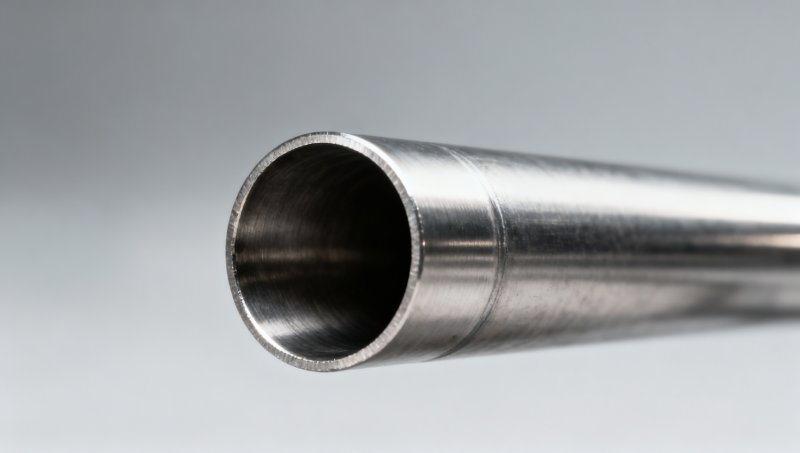
Final Recommendation: Make the Grade Decision Before You Quote the Price
Don’t start your RFQ with “What’s your 2 inch ss pipe price for 304 vs. 316?” Start with: “What’s the pipe’s exact service condition — fluid type, temperature, flow velocity, exposure duration, and proximity to welds or insulation?” Then decide the grade — and only then compare prices.
For any continuous seawater application, 316 isn’t an upgrade — it’s the baseline. Choosing 304 here shifts cost from procurement to operations, maintenance, and risk management. The higher upfront 2 inch ss pipe price for 316 is better understood as prepaid insurance: against leaks, downtime, safety incidents, and reputational damage.
If your project involves coastal infrastructure, shipbuilding, or offshore energy — and you’re sourcing globally — work with a supplier that treats material selection as part of engineering collaboration, not just transactional pricing. That’s how procurement moves from cost center to value driver.
Please give us a message


Please enter what you want to find