When sourcing structural steel for industrial applications, understanding mill MOQ vs trader MOQ steel for industrial applications is critical to balancing cost, lead time, and flexibility. For global buyers — from procurement managers in the Philippines evaluating angle steel price per ton for industrial use, to project managers in Malaysia selecting a Steel I Beam supplier for infrastructure projects — MOQ directly impacts budgeting and scheduling. This article breaks down how standard vs custom steel lead time for industrial buyers affects delivery, compares factory pricing (e.g., steel beam factory price in Middle East), and helps you decide which model truly saves more on your next order — backed by Hongteng Fengda’s 15+ years as a certified structural steel manufacturer and exporter.
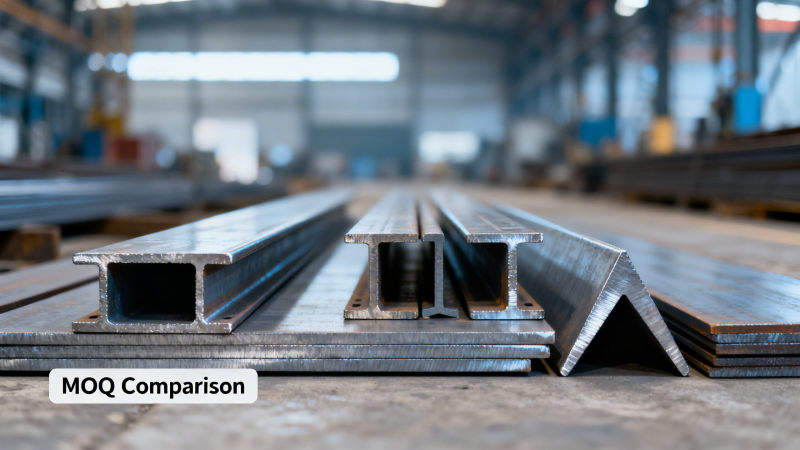
What Is MOQ — And Why It Matters for Industrial Steel Buyers
MOQ — Minimum Order Quantity — is not just a number on a quote sheet. It reflects production logic, inventory strategy, and supply chain resilience. For mill-sourced steel, MOQ is dictated by rolling schedules, heat batch sizes, and quality certification requirements. Trader-sourced MOQ, by contrast, is often shaped by warehouse turnover, container consolidation, and margin optimization. Understanding this distinction helps procurement teams avoid overstocking, under-ordering, or missing critical project windows.
Take, for example, an infrastructure project in Malaysia requiring ASTM A690 Steel Sheet Piles. A mill MOQ may start at 50 tons due to rolling line constraints; a trader may offer 5-ton lots — but with 30–45 days longer lead time and +12–18% markup. That difference compounds across logistics, financing, and storage costs — especially when managing multiple sites across Southeast Asia.
Mill MOQ vs Trader MOQ: A Side-by-Side Comparison
The table below highlights key operational trade-offs between mill-direct and trader-sourced structural steel — based on real-world data from Hongteng Fengda’s export operations across 12 markets since 2008.
How MOQ Impacts Real Projects: From Manila to Muscat
In the Philippines, a manufacturing plant expansion needed 18 tons of EN10025-2 S355JR angle steel for structural framing. The local trader quoted USD 810/ton MOQ 10 tons — but required full prepayment and offered no MTRs. Hongteng Fengda provided a mill MOQ of 30 tons at USD 645/ton, shipped in two consolidated containers with full EN10204 3.2 certification — and delivered 11 days ahead of schedule. Total landed cost dropped 14.2%, and quality acceptance passed first-time inspection.
Similarly, a marine terminal upgrade in Oman sourced ASTM A690 Steel Sheet Piles via a regional trader — only to face delays when the batch failed third-party hardness testing. Reordering directly from Hongteng Fengda (with pre-shipment lab verification per ASTM A6) cut rework time by 63% and avoided USD 220K in idle labor and penalty fees.
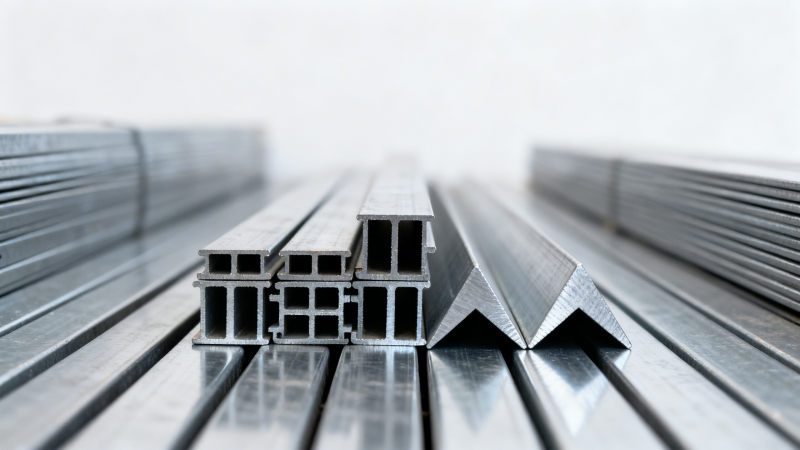
Procurement Guide: When to Choose Mill vs Trader — and When to Blend Both
Use this decision matrix to align MOQ strategy with your role and project stage:
- Procurement Managers: Prioritize mill MOQ for core structural items (I-beams, channel steel) where certification, weight accuracy (how to calculate i beam weight for industrial projects), and long-term consistency matter most.
- Project Managers: Combine mill-sourced primary beams with trader-sourced ancillaries (brackets, gussets) when timeline pressure outweighs marginal cost savings.
- Dealers & Distributors: Leverage Hongteng Fengda’s OEM service to co-brand custom profiles — e.g., stainless steel square bar for architectural use — while maintaining low-risk inventory through consignment options.
Also consider hybrid models: We support “split-MOQ” orders — e.g., 40 tons of S390 H-beams (mill MOQ met) + 8 tons of 201 vs 304 stainless steel cost-sensitive food-grade fittings (custom-ordered against same PO). This preserves compliance without inflating working capital.
Why Partner with Hongteng Fengda — Your Trusted Structural Steel Manufacturer from China
We’re not a trading company masked as a factory. As a vertically integrated structural steel manufacturer, we control every step: raw material sourcing (certified scrap & billets), hot rolling (120,000+ tons/year capacity), precision cutting, surface treatment, and third-party inspection. Our EN10248-compliant Steel Sheet Piles are routinely deployed in deep-water cofferdams across the Middle East — meeting SY390 yield strength and ASTM A690 corrosion resistance without compromise.
Whether you need angle steel price per ton Philippines for fast-track industrial builds, a Steel I Beam supplier in Malaysia for infrastructure projects, or stainless steel bar for marine applications requiring ISO 18001-certified handling — we deliver factory-direct value, not middleman markup. With ISO9001, ISO14001, CE FPC, and ASTM-aligned QA labs onsite, we reduce your sourcing risk while strengthening your ESG reporting.
Ready to optimize your next steel order? Contact Hongteng Fengda today for a free MOQ feasibility review — including lead time validation, mill test report preview, and landed cost modeling tailored to your port of discharge and application requirements.
- channel steel
- steel i
- steel i beam supplier
- angle steel
- Industrial Steel
- structural steel
- Structural Steel
- I-Beam
- Profile
- H-beam
- standard vs custom steel lead time
- mill MOQ vs trader MOQ steel
- S355JR
- Steel I Beam supplier in Malaysia
- Angle Steel price per ton Philippines
- how to calculate i beam weight
- steel beam factory price
- Steel Sheet Pile
- Steel Beam
- 201 vs 304 stainless steel cost
- stainless steel square bar
- stainless steel bar
- steel sheet
- steel bar
- i beam weight
- stainless steel bar for marine applications
- stainless steel square bar for architectural use
- steel beam factory price in Middle East
- how to calculate i beam weight for industrial projects
- Steel I Beam supplier in Malaysia for infrastructure projects
- mill MOQ vs trader MOQ steel for industrial applications
- standard vs custom steel lead time for industrial buyers
Related recommendations
 How much does 2 inch ss pipe price increase when upgrading from Schedule 40 to Schedule 80 for high-pressure systems?2 inch ss pipe price increases 18–35% when upgrading from Sch 40 to Sch 80—discover why, when it’s truly needed, and how to avoid overpaying.
 Which 304 stainless steel coil suppliers meet ISO 9001 and EN 10088-2 for food-grade fabrication?Discover verified 304 stainless steel coil suppliers meeting ISO 9001 & EN 10088-2 for food-grade fabrication—traceable, audited, and ready for regulatory validation.
 How does 2 inch ss pipe price compare between 304 and 316 grades for marine environments?2 inch ss pipe price varies significantly between 304 and 316 — but in marine environments, choosing 304 risks costly failures. Discover why 316 is the true value choice.
 Is 20 feet square pipe price affected more by raw material volatility or regional logistics costs?20 feet square pipe price is driven primarily by raw material volatility—not logistics. Discover why billet costs dominate pricing & how to forecast smarter with Hongteng Fengda.
Please give us a message


Please enter what you want to find