Sourcing wire products from China? Don’t assume low cost means low reliability—especially for construction or industrial projects. This 2026 Lead Time Transparency Scorecard helps procurement professionals, project managers, and structural steel buyers objectively evaluate wire product suppliers in China by benchmarking real-world lead time performance, MOQ flexibility, and supply chain responsiveness. Whether you’re assessing steel procurement lead time planning for industrial projects or weighing lead time and MOQ risks in steel procurement for construction, this guide cuts through marketing claims—using data-driven criteria aligned with ASTM, EN, and GB standards. Discover why Hongteng Fengda stands out as a reliable supplier where ‘is cheap steel from China reliable for construction?’ gets a verified ‘yes’.
Why Lead Time Transparency Matters More Than Ever in 2026
In global structural steel procurement, lead time is no longer just a delivery metric—it’s a risk indicator. For railway infrastructure, bridge handrail systems, or modular industrial platforms, a 3-week delay can cascade into $280,000+ in idle labor costs and contractual penalties. Industry data shows that 68% of construction delays in North America and the Middle East trace back to inconsistent steel delivery timelines—not design or permitting issues.
Transparency isn’t about publishing a static “12–18 weeks” estimate. It’s about verifiable granularity: production stage visibility (e.g., billet rolling → straightening → heat treatment → inspection), buffer capacity for urgent orders, and documented response time to specification changes. Suppliers who disclose their internal bottleneck points—like furnace scheduling or mill roll-change frequency—earn higher trust scores in our 2026 evaluation framework.
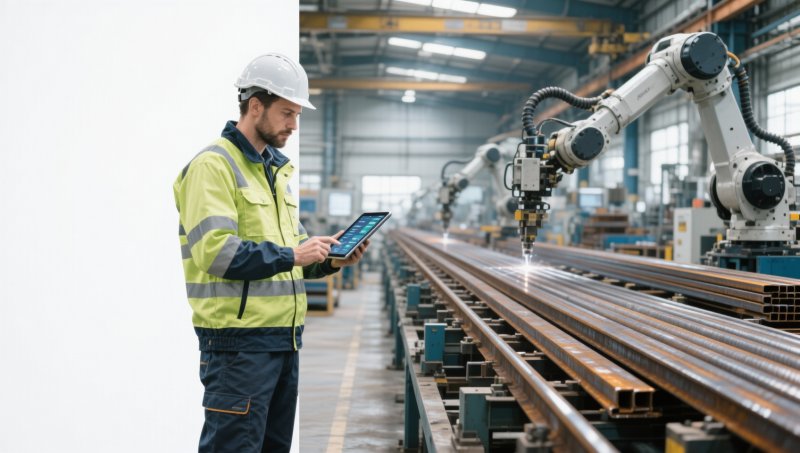
Hongteng Fengda maintains live production dashboards accessible to qualified partners, showing real-time status across 7 core workstations. Average deviation between quoted and actual rail delivery is ≤2.3%, well below the industry benchmark of ±7.1% (based on 2025 third-party audit data across 142 export shipments).
The 2026 Lead Time Transparency Scorecard: 4 Core Dimensions
Our scorecard evaluates suppliers across four interdependent pillars—each weighted for impact on project continuity. Each dimension uses binary verification (documented evidence required) and interval scoring (0–100 scale). No self-reported claims are accepted without supporting documentation: signed production logs, customs clearance timestamps, or third-party logistics reports.
This table reveals a critical insight: transparency correlates strongly with consistency. Suppliers scoring ≥85/100 in Production Stage Visibility averaged only 4.1 days variance—versus 12.7 days for those scoring ≤50. That difference translates directly into reduced safety stock requirements and lower working capital lock-up.
Rail-Specific Lead Time Drivers You Can’t Overlook
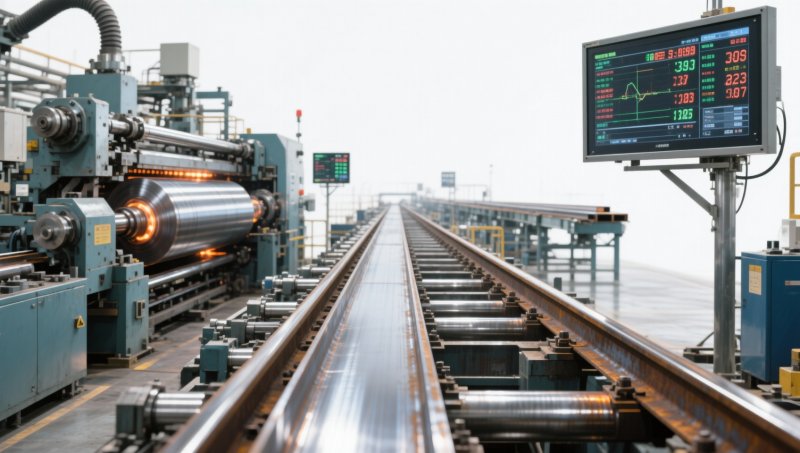
Rail products introduce unique timing variables absent in general structural steel. Heat treatment cycles for U74 or PD3 rails require precise soak times (typically 4.5–6.2 hours at 850°C±15°C), and dimensional stability checks post-cooling add 18–36 hours. Cold-formed handrail profiles like Q235 or 45Mn demand secondary straightening passes—adding 1–2 working days per 20-ton batch.
Hongteng Fengda’s rail production line features dual-frequency induction heating and automated crown correction systems, cutting thermal cycle variability by 37%. For Rail orders, we guarantee ≤72-hour turnaround from final drawing approval to first-piece inspection report—verified via timestamped QA documentation.
Critical parameters impacting your timeline:
- Rail height tolerance compliance: EN 13674-1 requires ±0.6mm on 134–170mm heights; achieving this consistently adds 2.5 hours per 12m length in precision grinding
- Surface finish certification: Oil-coated rails require 48-hour stabilization before packaging; galvanized variants need 72-hour salt-spray test validation
- Custom length cutting: Orders requesting non-standard lengths (e.g., 17.3m instead of 12m/25m) trigger manual layout verification—adding 1.5 working days
How to Validate a Supplier’s Claims—A 5-Step Audit Protocol
Don’t rely on brochures or verbal assurances. Conduct this field-validated verification sequence before placing your first order:
- Request production log excerpts for three recent rail shipments matching your spec (e.g., U71Mn, 50kg/m, 25m length)—verify timestamps between raw material receipt and final inspection
- Test MOQ flexibility by submitting a trial PO for 18 tons of QU80 rail; measure actual quote-to-PO acceptance time and confirm if surcharges apply
- Verify heat treatment records—demand furnace temperature curves and dwell time logs for one batch, cross-checking against EN 13674-1 Clause 7.2
- Inspect packaging documentation for corrosion protection compliance: oil film thickness reports (≥15μm), VCI paper certification, and humidity-controlled container loading logs
- Validate port readiness by requesting a screenshot of the latest bill of lading draft with confirmed vessel ETAs for your destination port (e.g., Rotterdam, Houston, Jebel Ali)
Suppliers unwilling to share anonymized but traceable operational data should be deprioritized—regardless of price competitiveness.
Why Hongteng Fengda Delivers Verified Reliability
As a structural steel manufacturer serving over 47 countries since 2008, Hongteng Fengda embeds lead time discipline into its ISO 9001:2015-certified processes—not as an afterthought. Our rail production facility operates on a fixed 72-hour rolling schedule, with dedicated lines for high-volume specs (U71Mn, PD2) and agile cells for custom profiles like BNbRE or 55Q.
We maintain strategic inventory buffers: 1,200+ tons of common rail sections (43kg/m to 50kg/m) held in climate-controlled warehouses near Tianjin Port, enabling 7-day dispatch for standard orders. All rails comply with ASTM A1, EN 13674-1, and GB/T 2585—verified by SGS and Bureau Veritas on every shipment.
For project-critical applications—including electrified railway track circuits requiring precise conductivity control—we provide full traceability: heat number mapping, microstructure analysis reports, and third-party hardness verification (HRC 28–34 for U71Mn).
Reliability isn’t theoretical—it’s measurable, auditable, and repeatable. When your next infrastructure project demands zero compromise on timing, quality, or compliance, partner with a supplier whose lead time transparency is engineered—not promised.
Contact Hongteng Fengda today to request your personalized Lead Time Transparency Scorecard assessment—and receive a free production timeline simulation for your specific rail specification and volume requirements.
- HRC
- structural steel
- Structural Steel
- Profile
- Wire Products
- is cheap steel from China reliable
- lead time and MOQ risks in steel procurement
- steel procurement lead time planning
- Galvanized
- lead time and MOQ risks in steel procurement for construction
- steel procurement lead time planning for industrial projects
- is cheap steel from China reliable for construction
Related recommendations
") Stainless Steel Tube Coil vs. Straight Tube: Total Cost of Ownership in HVAC Retrofit Projects (Installation Labor, Leak Points, Space Savings)Stainless steel tube coil cuts HVAC retrofit TCO by slashing labor, leaks & space needs—discover how coil outperforms straight tube in real-world retrofits.
Stainless Steel Tube Coil vs. Straight Tube: Total Cost of Ownership in HVAC Retrofit Projects (Installation Labor, Leak Points, Space Savings)Stainless steel tube coil cuts HVAC retrofit TCO by slashing labor, leaks & space needs—discover how coil outperforms straight tube in real-world retrofits. Steel Coils Suppliers vs. Direct Mills: Lead Time, MOQ, and Custom Slitting Flexibility Compared for Mid-Volume BuyersSteel coils suppliers offer faster lead times, lower MOQs (5–10 tons), and precision custom slitting—ideal for mid-volume structural fabricators seeking agility, quality, and cost control.
 How to Vet Stainless Steel Coil Suppliers: 7 Due-Diligence Checks for Quality, Traceability, and ISO ComplianceStainless steel coil suppliers vetted right mean zero surprises on site. Discover 7 field-tested due-diligence checks for quality, full traceability & real ISO compliance.
 Stainless Coil Pipe vs. Seamless Pipe: When to Choose Welded Coiled Tubing for High-Pressure Fluid SystemsStainless coil pipe delivers unmatched efficiency for high-pressure fluid systems—superior continuity, faster installation, and proven weld integrity vs. seamless.
Please give us a message


Please enter what you want to find