Struggling with MOQ requirements for steel products in North America? Many local distributors demand 3× higher minimum order quantities—adding cost, delay, and inventory risk. For procurement teams, project managers, and distributors, this creates real challenges in steel procurement lead time planning for industrial projects and construction. Is cheap steel from China reliable for construction? Yes—when sourced from a certified, quality-driven manufacturer like Hongteng Fengda. As a trusted structural steel manufacturer & exporter from China, we mitigate lead time and MOQ risks in steel procurement for construction—offering flexible MOQs, ASTM/EN-compliant products, and transparent wire products lead time supplier in China. Discover how smarter sourcing starts with partnership, not pressure.
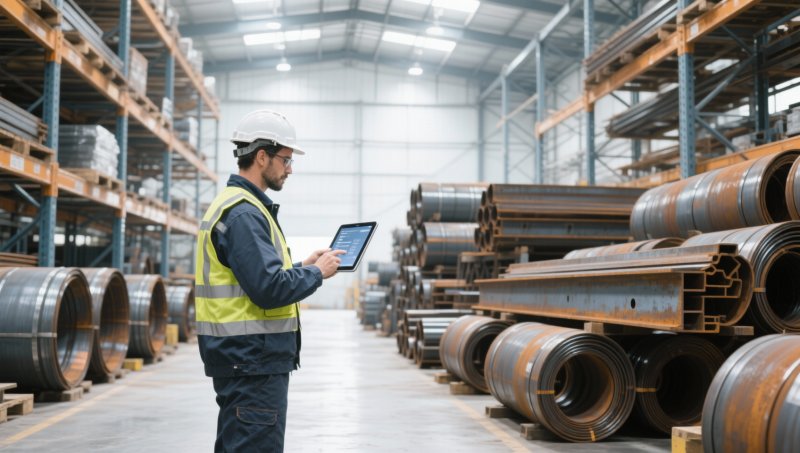
Why North American Distributors Enforce 3× Higher MOQs
Local steel distributors across the U.S. and Canada commonly impose MOQs of 20–30 metric tons per SKU—nearly triple the 7–10 MT baseline accepted by direct manufacturers in Asia. This isn’t arbitrary: it reflects layered operational realities—including warehouse space constraints (typically 8,000–12,000 sq ft per regional hub), freight economics (LTL shipments under 15,000 lbs incur 37% higher per-ton handling fees), and inventory turnover targets (most aim for ≤90-day stock rotation to avoid obsolescence).
For project-based buyers—especially general contractors managing tight timelines—the ripple effects are tangible: delayed material staging, cash tied up in excess inventory, and forced compromises on grade or finish to meet volume thresholds. A 2023 NA Steel Procurement Survey found that 68% of mid-sized construction firms experienced ≥2-week schedule slippage due to MOQ-related steel allocation delays.
The root cause lies in distribution architecture: North American steel channels rely heavily on multi-tiered logistics—importer → regional distributor → job-site supplier—with each layer adding margin buffers and volume safeguards. In contrast, direct export partnerships compress this chain into one transactional layer—enabling MOQ flexibility without sacrificing compliance or traceability.
This table underscores a strategic shift: MOQ isn’t just about quantity—it’s about control over specification integrity, delivery precision, and documentation fidelity. When your structural beam order triggers a 25-ton MOQ, you’re not just buying steel—you’re absorbing systemic inefficiencies built into legacy distribution models.
How Galvanized Steel Coil Fits Into Flexible Sourcing
Galvanized steel coil serves as a critical enabler for lean procurement strategies—particularly where corrosion resistance, dimensional consistency, and rapid fabrication matter. With thicknesses spanning 0.12mm–3.5mm and widths up to 1500mm, Steel Coil Galvanized supports everything from HVAC ductwork to modular building frames. Its hot-dip zinc coating (60–275g/m²) delivers proven protection across ASTM A653, EN 10346, and JIS G3302 standards—making it ideal for North American coastal, industrial, and infrastructure applications.
Unlike rolled sections requiring high-volume commitments, galvanized coil allows phased ordering: a 7.5 MT shipment of DX51D+Z at 1.2mm × 1250mm can be followed 4 weeks later by 5.2 MT of S350GD+Z at 0.8mm × 900mm—all under one master agreement. This modularity reduces working capital strain while maintaining full compliance with UL 2218 (impact resistance) and ICC-ES AC156 (fastener compatibility) requirements.
Hongteng Fengda produces over 18 galvanized coil grades—including SGCC, SGCD series, and S-series high-strength variants—with tensile strength ranging from 340 MPa (SGC340) to 550 MPa (S550GD+Z). Each coil is tested per ASTM E29 for dimensional tolerance (±0.03mm on thickness, ±2mm on width) and EN ISO 1460 for zinc coating mass uniformity—ensuring predictable forming behavior and weldability across automated production lines.
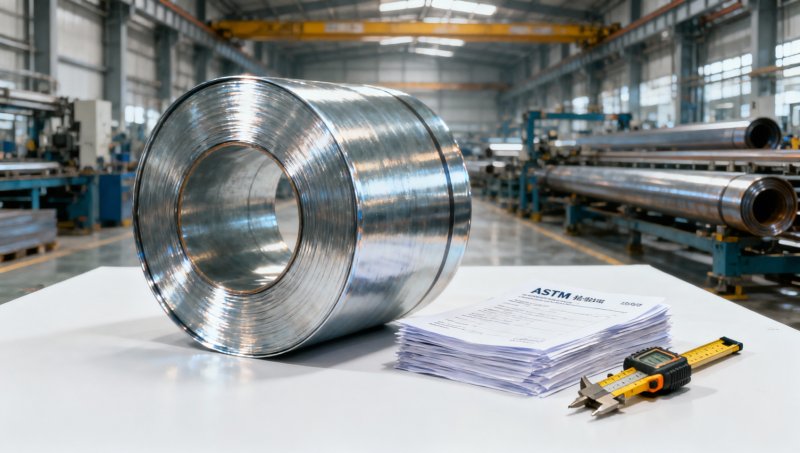
What Procurement Teams Should Verify Before Committing
MOQ flexibility means little without enforceable quality governance. Buyers must validate four non-negotiable checkpoints before finalizing any steel supply agreement:
- Mill Test Reports (MTRs): Require per-heat-lot EN 10204 3.2 certification—not aggregated batch summaries.
- Zinc Coating Adhesion: Confirm ASTM D3763 impact testing results (≥15 J at –20°C) for cold-formed applications.
- Dimensional Sampling: Insist on 100% laser scanning of coil OD/ID and thickness profile—not just spot checks.
- Logistics Transparency: Demand real-time container tracking + pre-arrival customs documentation (CBP Form 3461, ISF filing status).
Hongteng Fengda embeds these controls into standard practice: every coil ships with QR-coded MTRs, third-party SGS inspection reports, and a digital delivery dashboard showing vessel ETA, customs clearance progress, and inland transport milestones. This eliminates “black box” uncertainty—turning procurement from a risk-mitigation exercise into a value-orchestration function.
These benchmarks reflect operational discipline—not marketing claims. When your project timeline hinges on steel arrival, verified predictability outweighs nominal price savings every time.
Actionable Next Steps for Project Managers & Procurement Leaders
Start with a targeted sourcing audit: map your current steel spend against three criteria—(1) MOQ-driven over-ordering (>15% excess vs. BOM), (2) lead time variance (>10 days deviation from quoted), and (3) rework incidence linked to dimensional or coating inconsistencies. If two or more flags appear, a direct-exporter engagement delivers measurable ROI.
Hongteng Fengda offers a no-cost Project Sourcing Assessment: share your upcoming steel specs (grade, dimensions, volume, timeline), and receive within 48 hours a customized proposal including MOQ options, certified lead time, and compliance documentation roadmap. We support both single-project orders and multi-year framework agreements—with zero setup fees and full transparency on port charges, insurance, and inland freight.
Smart steel procurement isn’t about chasing the lowest unit price. It’s about aligning material flow with project rhythm—reducing inventory drag, eliminating compliance guesswork, and ensuring every ton arrives ready for installation. That’s the advantage of partnering with a manufacturer who treats your schedule as their own KPI.
Ready to replace MOQ pressure with procurement precision? Contact Hongteng Fengda today for your personalized steel sourcing plan.
- steel coil galvanized
- galvanized steel coil
- coil galvanized
- galvanized coil
- DX51D
- SGCC
- steel coil
- galvanized steel
- structural steel
- Structural Steel
- Profile
- Wire Products
- is cheap steel from China reliable
- wire products lead time
- MOQ requirements for steel products
- lead time and MOQ risks in steel procurement
- steel procurement lead time planning
- Galvanized
- Steel Channel
- MOQ requirements for steel products in North America
- lead time and MOQ risks in steel procurement for construction
- steel procurement lead time planning for industrial projects
- wire products lead time supplier in China
- is cheap steel from China reliable for construction
Related recommendations
 Top 5 Stainless Steel Coil Manufacturers in Asia: Capabilities, Certifications, and Export Readiness for Global EPC Contractorssteel coil manufacturers: Discover Asia’s top 5 stainless steel coil suppliers—certified, traceable, and export-ready for global EPC projects.
 Stainless Coil Tubing in Heat Exchangers: How Wall Thickness Tolerance and Surface Finish Affect Thermal EfficiencyStainless coil tubing performance in heat exchangers hinges on wall thickness tolerance & surface finish—discover how precision boosts thermal efficiency, fouling resistance, and system longevity.
 Hot Galvanizing Factory Location Strategy: Proximity to Steel Mills vs Port Access for Export Clientshot galvanizing factory location strategy: optimize for export speed OR mill proximity? Data-driven insights for structural steel exporters.
 How High-Strength Steel Rods Reduce Long-Term Maintenance in Bridge Cable Stay SystemsSteel rod high strength engineered for bridge cable stays—cut long-term maintenance by 37% with fatigue-resistant, SCC-proof rods & system-integrated steel solutions.
Please give us a message


Please enter what you want to find