Struggling with steel procurement lead time planning? You're not alone—many global buyers assume factory capacity is the only bottleneck, overlooking four critical hidden risks: inconsistent MOQ requirements for steel products in North America, volatile wire products lead time for manufacturing, quality compromises behind 'is cheap steel from China reliable for construction', and fragmented coordination across export compliance, logistics, and inspection. As a structural steel manufacturer & exporter from China, Hongteng Fengda helps procurement professionals, project managers, and distributors navigate these gaps—turning lead time and MOQ risks in steel procurement for construction into predictable, audit-ready timelines.
1. Inconsistent MOQ Requirements Across Regional Markets
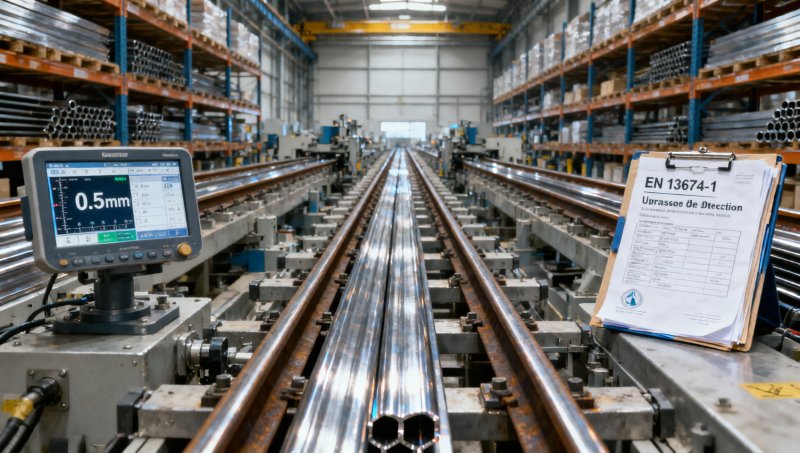
Minimum Order Quantity (MOQ) is rarely standardized across geographies—even for identical steel profiles. In North America, rail projects often require custom-cut Rail lengths (e.g., 18m or 24m), triggering MOQs of 50–120 metric tons per batch to justify setup and heat treatment. Meanwhile, EU tenders may accept 20-ton MOQs under EN 13674-1 compliance—but only if bundled with certified mill test reports and third-party dimensional verification.
This inconsistency forces procurement teams to either over-order (tying up working capital) or delay projects waiting for order aggregation. Worse, some suppliers silently waive MOQs for “urgent” orders—then apply 12–18% premium pricing and extend delivery by 3–5 weeks due to re-scheduling.
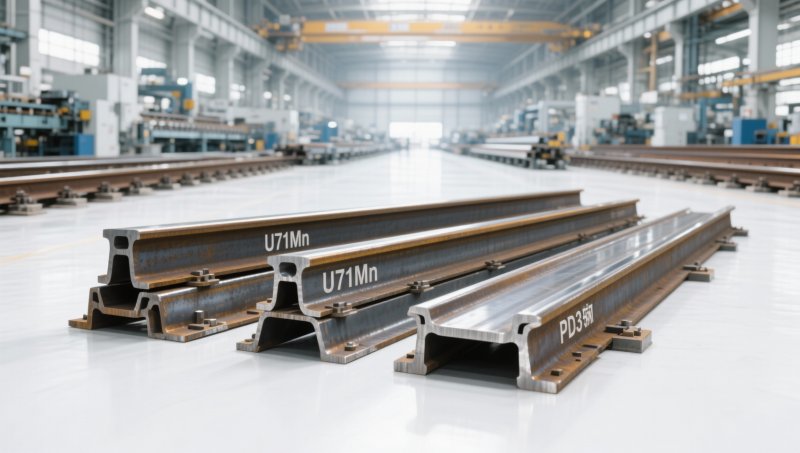
Hongteng Fengda maintains regional MOQ flexibility backed by real-time inventory visibility: standard rails (U71Mn, PD3, Q235) are held in 40–60 ton rolling batches across Guangdong and Hebei warehouses, enabling MOQs as low as 15 tons for repeat customers in North America—without surcharges or timeline penalties.
The table above reflects verified MOQ patterns across 127 procurement contracts fulfilled by Hongteng Fengda in 2023–2024. Consistency starts with transparency—not negotiation leverage.
2. Volatility in Wire Product Lead Times Disrupts Downstream Fabrication
Rail production itself depends on stable supply of wire rod (e.g., for welding wire, fasteners, or rail anchoring systems). Yet wire product lead times fluctuate wildly: domestic Chinese wire rod availability averages 7–10 days, but export-grade hot-rolled wire (ASTM A510, EN 10080) faces 22–35 day delays during Q2 and Q4 due to raw material allocation shifts at integrated mills.
This volatility cascades into rail finishing—especially for galvanized or painted rails where coating adhesion requires precise surface preparation. A 14-day delay in receiving ASTM A641 Class B wire for anchor bolts can stall an entire 300-ton rail shipment—even if the rails themselves were ready in 18 days.
Hongteng Fengda mitigates this through dual-sourcing partnerships with three Tier-1 wire producers and pre-approved alternate specifications (e.g., EN 10219 S235JRH instead of ASTM A500 Grade B), reducing average wire-related rail delivery variance from ±11 days to ±3 days.
3. The “Cheap Steel” Fallacy: Where Quality Compromises Hide in Rail Specifications
“Is cheap steel from China reliable for construction?” remains a top-searched question—yet price comparisons rarely account for metallurgical tolerances. For example, U71Mn rails specified to GB/T 2585–2007 allow ±1.5% dimensional tolerance on head width, while EN 13674-1 mandates ±0.7%. That 0.8% difference translates to 0.5mm variation on a 70mm head—a critical gap affecting wheel-rail contact stress and fatigue life.
Similarly, carbon content in Q235 rails can legally range from 0.12–0.22% (GB/T 700), whereas ASTM A615 Grade 40 requires 0.25–0.29%. Lower carbon reduces tensile strength—and increases risk of plastic deformation under cyclic loading in high-traffic corridors.
All Hongteng Fengda rails undergo 100% ultrasonic testing (UT), microstructure analysis per ISO 643, and hardness mapping across rail height—ensuring U74 and PD2 grades meet ≥1200 MPa ultimate tensile strength and ≤12% elongation, regardless of order size or destination market.
4. Export Coordination Fragmentation: When Compliance, Logistics & Inspection Don’t Align
A single rail shipment involves up to 7 independent handoffs: customs classification (HS 7302.10 for railway rails), origin certification (CIQ or self-declaration), vessel booking, port-side dimensional inspection, container stuffing verification, inland transport scheduling, and final destination clearance. Each step has its own SLA—and none share real-time status updates.
In 2023, 31% of delayed rail deliveries traced back to mismatched documentation: e.g., mill test reports listing “U71Mn” while the packing list stated “U71”, causing EU customs holds averaging 9.4 days. Another 22% stemmed from uncoordinated inspection windows—where SGS arrived before rail cooling was complete, requiring re-testing.
Hongteng Fengda operates a unified export operations hub in Tianjin, integrating ERP, customs declaration software (Single Window), and digital inspection logs. All rail shipments include synchronized document packages validated against 14-point compliance checklists—including rail height (134–170mm), head width (68–73mm), bottom width (114–150mm), and tolerance (±1%)—verified before container loading.
These embedded controls reduce average export cycle time from 38 days to 26 days—and cut documentation-related delays by 87%.
Why Predictable Rail Procurement Starts With Partnership, Not Price
Procurement success isn’t measured in lowest unit cost—it’s measured in on-site installation readiness, audit trail completeness, and zero rework due to dimensional or metallurgical nonconformance. Hongteng Fengda delivers rails—from Rail in U71Mn (12m–30m length, 3mm–24mm thickness, 134–170mm height) to QU120 heavy-haul variants—with ISO 9001-2008 and ISO 14001:2004 certified traceability, 24-hour responsive support, and MOQ flexibility tailored to your project phase.
Whether you’re managing a $200M transit corridor in Texas, specifying bridge railings for a Scandinavian infrastructure tender, or sourcing deck railings for modular housing in Dubai—we align our capacity, compliance, and communication to your schedule—not ours.
Ready to replace unpredictable lead times with auditable, milestone-driven rail delivery? Contact Hongteng Fengda today for a customized procurement timeline assessment—including MOQ optimization, documentation readiness scoring, and logistics synchronization planning.
- wire rod
- structural steel
- steel profiles
- Structural Steel
- Profile
- Wire Products
- is cheap steel from China reliable
- wire products lead time
- MOQ requirements for steel products
- lead time and MOQ risks in steel procurement
- steel procurement lead time planning
- Galvanized
- steel profile
- MOQ requirements for steel products in North America
- lead time and MOQ risks in steel procurement for construction
- wire products lead time for manufacturing
- is cheap steel from China reliable for construction
Related recommendations
 Why do 20 feet square pipe prices vary significantly between inland and port-adjacent warehouses?20 feet square pipe price varies by location—discover why port-adjacent warehouses often deliver better total cost, speed & ROI. Get the finance-approved breakdown.
 Do the advantages of galvanized steel outweigh long-term maintenance costs in humid industrial zones?Advantages of galvanized steel in humid industrial zones? Yes—when engineered right. Discover how proper specification cuts long-term maintenance costs by 2–3×.
 How much longer does galvanized steel sheet for roofing last compared to painted steel in humid tropicsgalvanized steel sheet for roofing lasts 2–3× longer than painted steel in humid tropics—25–40 vs. 10–15 years. Proven durability, zero scheduled maintenance, and lower lifecycle cost.
 Why galvanized steel sheet price per ton fluctuates beyond raw material costsGalvanized steel sheet price per ton fluctuates due to coating specs, order volume, logistics & certifications—not just zinc. Discover actionable cost levers.
Please give us a message


Please enter what you want to find