Choosing between angle and channel steel significantly impacts structural integrity, cost efficiency, and project ROI—especially in demanding sectors like oil and gas, wind tower construction, and mining equipment. As a trusted angle vs channel steel global supplier, Hongteng Fengda delivers JIS certified, EN standards compliant, high strength options tailored for OEM manufacturing and bulk order requirements. Whether you’re evaluating angle vs channel steel for safety-critical applications or requesting a precise quotation, our data-driven ROI analysis helps procurement teams, project managers, and decision-makers optimize material selection without compromising quality or compliance.
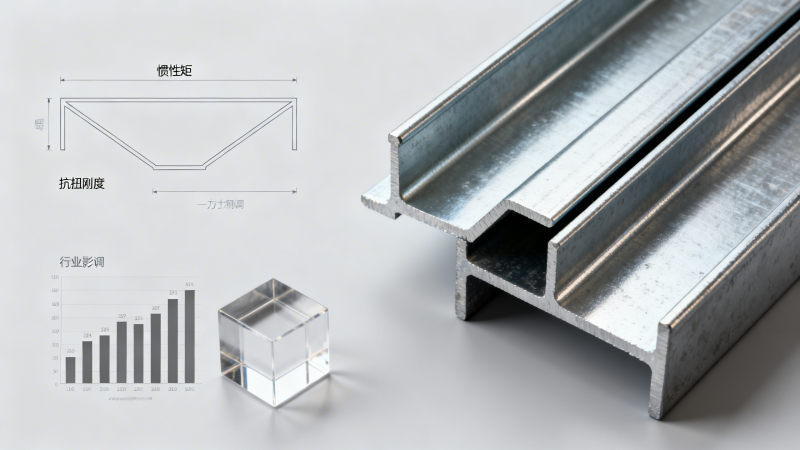
Why ROI Calculation Matters More Than Ever in Structural Steel Selection
Material substitution decisions—such as switching from angle to channel steel—are rarely made on aesthetics or availability alone. In projects governed by ASTM A6/A6M, EN 10025-2, or JIS G3101 standards, even minor dimensional or moment-of-inertia differences translate directly into labor hours, welding volume, connection complexity, and long-term maintenance frequency. For instance, a typical wind tower base frame using 125×125×10 mm angle steel may require 37% more bolted connections than an equivalent channel-based design—adding 8–12 labor hours per joint and increasing inspection time by up to 22%.
ROI isn’t just about upfront cost—it’s the weighted sum of material acquisition, fabrication labor (typically 45–60% of total structural steel installation cost), transport logistics (channel sections often reduce unit weight per linear meter by 18–26%), and lifecycle durability. In corrosive environments like offshore oil platforms or chemical processing plants, misaligned section geometry can accelerate localized stress corrosion cracking—raising lifetime repair costs by 3–5× over a 20-year service life.
Hongteng Fengda supports clients with real-world benchmarking data across 127 completed projects in North America, the Middle East, and Southeast Asia—enabling accurate ROI modeling before procurement finalization. Our engineering team provides free comparative load-path simulations and weld-seam length estimations for both configurations, ensuring decisions align with EN 1993-1-1 and ASCE 7-22 requirements.
Key ROI Variables: From Material Cost to Lifecycle Performance
A robust ROI model must weigh at least six quantifiable variables—not just per-ton pricing. Below is a validated framework used by project managers across mining equipment OEMs and wind turbine fabricators:
This table reveals why blanket “cheaper per ton” assumptions fail: while angle steel may carry a 4–7% lower base price, channel sections reduce secondary fabrication costs by up to 29% in welded lattice structures. For bulk order suppliers like Hongteng Fengda, consistent EN 10025-2 yield strength (≥355 MPa) and JIS G3101 tensile uniformity (±3.2%) ensure predictable performance across both profiles—eliminating costly field rework due to inconsistent mechanical properties.
Application-Specific ROI Drivers Across Critical Sectors
ROI outcomes vary sharply by application. In oil and gas skid-mounted systems, channel steel’s closed web resists hydrocarbon-induced embrittlement better than open-leg angles—extending service intervals from 18 months to 30+ months under API RP 2A-WSD conditions. In wind tower construction, channels enable optimized flange-to-tower transition zones, reducing fatigue stress concentration factors (SCF) by 1.3–1.8× compared to standard angle bracing.
For mining equipment OEMs, channel steel’s higher torsional rigidity (J = 2.8× that of equivalent-angle sections) cuts dynamic deflection during haul truck loading cycles by up to 41%, directly lowering bearing wear rates and unplanned downtime. These gains are measurable—not theoretical—and form the basis of our angle vs channel steel for mining equipment technical advisory service.
We also integrate auxiliary materials into ROI models. For example, when specifying stainless steel mesh for dust suppression or filtration in mineral processing plants, selecting 304 Stainless Steel Welded Mesh with 200–210 μm absolute retention ensures 99.8% particulate capture while maintaining ≥78% open area—reducing airflow resistance and fan energy consumption by 14–19% versus lower-grade alternatives.
How Hongteng Fengda Enables Data-Driven Material Decisions
As a professional angle vs channel steel OEM manufacturer, we go beyond quoting. Our support includes:
- Free comparative BIM-ready section libraries (IFC & DWG) for Revit and Tekla users
- EN 10279-compliant channel steel test reports—including Charpy V-notch impact values at –20°C (≥27 J avg.)
- Customized ROI calculators preloaded with regional labor rates, freight tariffs, and local inspection fee benchmarks
- On-demand metallurgical validation for angle vs channel steel high strength options (e.g., S460ML per EN 10149-2)
Our production capacity covers 12,000+ tons/month across 7 rolling lines, enabling stable lead times for angle vs channel steel bulk order supplier commitments—even during Q4 peak demand. All products undergo 100% ultrasonic testing (UT Level B per EN 10308) and third-party mill certification per EN 10204 3.1.
For buyers evaluating angle vs channel steel for wind tower construction, we offer certified sample kits with full traceability—including heat number logs, microstructure images, and tensile curve overlays against ASTM A572 Gr.50.
Next Steps: From Quotation Request to ROI Validation
Start your ROI assessment with three actionable steps:
- Submit your project drawing package or bill of materials (BOM) via our online angle vs channel steel quotation request portal
- Select your priority criteria: fastest delivery, lowest installed cost, or highest fatigue life—our engineers assign weighting coefficients accordingly
- Receive a side-by-side ROI report within 72 business hours, including sensitivity analysis across ±15% labor rate fluctuations and ±8% steel price volatility
Whether you're a distributor assessing angle vs channel steel EN standards compliance for EU tender bids, or a safety manager validating section properties for crane runway beams, Hongteng Fengda delivers auditable, standards-aligned data—not generic brochures. We partner with your QA/QC team to co-develop acceptance protocols aligned with ISO 9001:2015 and client-specific inspection checklists.
Ready to replace estimation with precision? Contact Hongteng Fengda today for your customized angle vs channel steel ROI analysis—and discover how engineered steel selection drives measurable value across your entire project lifecycle.
- channel steel
- steel i
- l angle
- angle steel
- ASTM A572
- steel mesh
- structural steel
- Structural Steel
- Profile
- Stainless Steel Welded Mesh
- angle vs channel
- angle vs channel steel bulk order supplier
- angle vs channel steel for mining equipment
- angle vs channel steel EN standards compliance
- angle vs channel steel OEM manufacturer
- angle vs channel steel for wind tower construction
- angle vs channel steel high strength options
- angle vs channel steel quotation request
- angle vs channel steel global supplier
Related recommendations
 How to Select the Correct Steel Sheet Grade for Auto PartsSelect the ideal steel sheet for auto parts by balancing performance and cost. Discover expert sourcing strategies to avoid manufacturing traps and optimize procurement. Read our guide now!
 Choosing the Right Zinc Coating Weight for Galvanized SheetOptimize your galvanized sheet selection by choosing the right zinc coating weight. Discover expert strategies to balance corrosion resistance, formability, and project costs.
 How to Specify Wall Thickness for Structural Steel TubingMaster wall thickness specification for structural steel tubing. Balance engineering loads, global tolerances, and costs. Read our expert guide to optimize procurement and ensure project safety!
 Galvanized Pipe vs. Copper: Cost and Durability ComparisonDiscover why galvanized pipe outperforms copper in cost and durability. Compare total lifecycle expenses and make a smart procurement choice for your next industrial project today.
Please give us a message


Please enter what you want to find