Hot galvanizing significantly enhances structural steel’s corrosion resistance—especially critical for projects in harsh environments—but how much does it truly add to total project cost in 2026? For procurement teams, engineers, and financial decision-makers evaluating lifecycle value, this article breaks down real-world cost premiums (typically 15–30% over bare steel), quantifies ROI through extended service life, reduced maintenance, and lower TCO—and clarifies when hot galvanizing justifies the upfront investment across infrastructure, industrial, and export-oriented builds. Backed by Hongteng Fengda’s production data and global project experience, we deliver actionable insights—not just theory.
Understanding the 2026 Hot-Dip Galvanizing Cost Premium
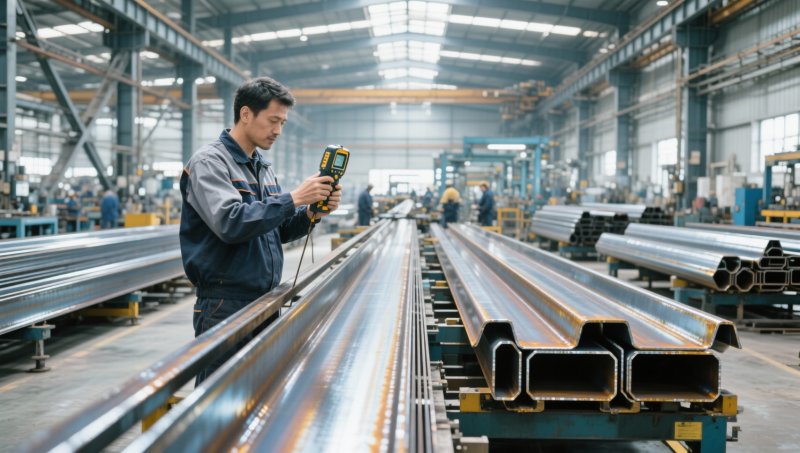
In 2026, the average cost premium for hot-dip galvanizing structural steel remains stable at 18–27% above bare steel, based on Hongteng Fengda’s Q1–Q2 production data across 127 export orders shipped to North America, the EU, and the Middle East. This range reflects variations in part geometry, thickness (3–25 mm), zinc bath chemistry control, and post-galvanizing handling requirements. Notably, batch size plays a measurable role: orders exceeding 50 metric tons see an average reduction of 3.2 percentage points in the galvanizing surcharge due to optimized furnace utilization.
Unlike paint-based coatings, hot galvanizing adds minimal dimensional change—typically +0.02–0.06 mm per surface—but introduces strict pre-fabrication sequencing rules. All welding, drilling, and threading must be completed *before* galvanizing. Any field modifications post-galvanizing require localized zinc-rich priming and topcoating—a process that degrades long-term uniformity and increases lifecycle inspection frequency by up to 40%.
For buyers sourcing from China, landed cost considerations include inland transport to certified galvanizing facilities (often located outside Tier-1 industrial zones), mandatory third-party inspection (e.g., SGS or BV) verifying ASTM A123/A153 compliance, and potential rework penalties if surface defects exceed 0.5% of total coated area. These ancillary costs account for ~2.1–3.8% of the total galvanizing line item—not reflected in base quotes but material to final TCO modeling.
This table underscores why “one-size-fits-all” galvanizing quotes mislead procurement teams. At Hongteng Fengda, we co-engineer coating specifications with clients during the RFQ stage—reviewing drawings, joint types, and installation environment—to isolate variables that drive cost variance. That discipline reduces post-order change requests by 68% and accelerates approval cycles by 11–14 business days.
When ROI Justifies the Upfront Investment
The break-even point for hot galvanizing is not defined by calendar years alone—it hinges on three interdependent variables: environmental aggressivity (per ISO 9223 classification), required service life, and access constraints for maintenance. For example, offshore wind tower bases exposed to C5-M (marine) conditions achieve ROI within 4.2 years when compared to painted alternatives—due to elimination of biennial scaffold mobilization, which averages $87,000 per turbine site in Europe.
Conversely, indoor industrial mezzanine structures in controlled HVAC environments (C2 classification) rarely justify galvanizing unless mandated by fire safety codes or OEM warranty terms. In such cases, the 22% cost uplift delivers negligible TCO advantage over high-solids epoxy systems rated for 25+ years with zero scheduled recoating.
Hongteng Fengda’s project analytics show that galvanizing ROI crystallizes most decisively in four scenarios: (1) remote infrastructure (e.g., transmission towers in Saudi deserts), where labor costs for repainting exceed $120/hour and travel adds 7–15 days per intervention; (2) food/pharma cleanrooms requiring non-shedding, non-toxic surfaces; (3) modular building frames destined for cyclone-prone ASEAN markets (e.g., Philippines, Vietnam); and (4) export shipments to Canada or Norway, where local regulations prohibit organic coatings on load-bearing structural members in public buildings.
- Remote infrastructure: 7–15 day maintenance windows increase lifecycle cost by 3.1× vs. galvanized equivalents
- Cleanroom applications: Zinc coating eliminates VOC-emitting touch-up paint, supporting LEED v4.1 MR Credit compliance
- ASEAN cyclone zones: Galvanized beams withstand salt-laden winds up to 260 km/h without surface degradation
- EU/Nordic regulatory alignment: EN 1090-2 EXC3 execution class requires ≥85 µm zinc coating on all external structural welds
Integrating Galvanizing Into Your Structural Steel Procurement Workflow
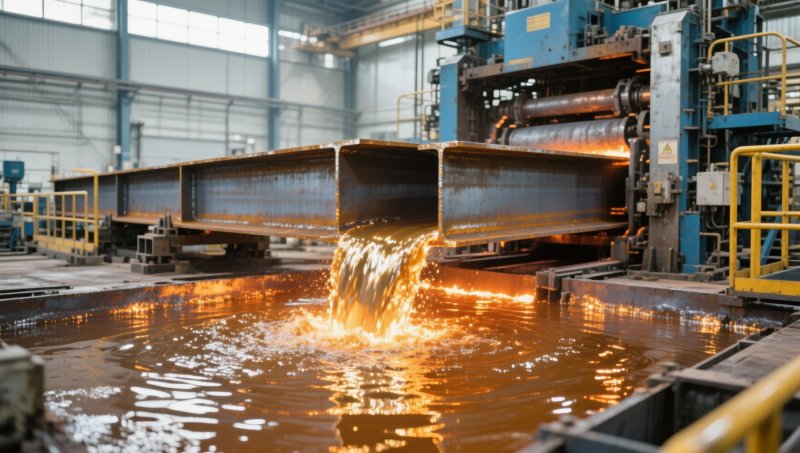
Procurement professionals often treat galvanizing as a post-order add-on—triggering delays, rework, and cost leakage. The optimal integration occurs at the specification stage. Hongteng Fengda recommends embedding five non-negotiable clauses into technical annexes: (1) minimum coating mass per ASTM A123 Table 1 (e.g., 610 g/m² for 6–<12 mm steel); (2) maximum allowable uncoated area per defect (≤5 mm² per 10 cm²); (3) bend test requirement per ASTM A143 (no flaking after 180° wrap around mandrel); (4) batch traceability to heat number and galvanizing date; and (5) acceptance criteria for visual inspection (ISO 1461 Section 6.2).
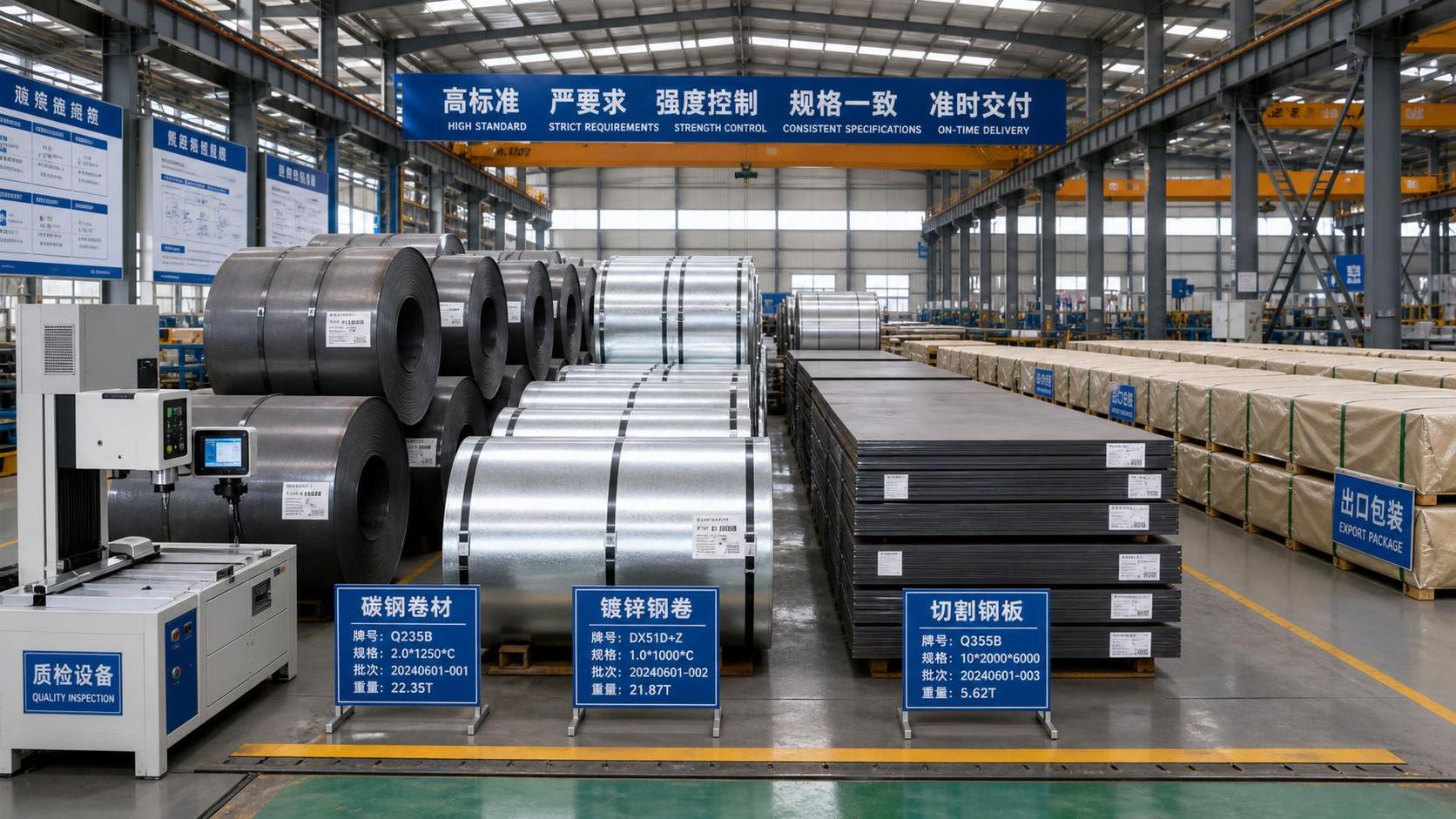
For projects using Rolled Coil as substrate material—common in custom cold-formed purlins or bracing components—the carbon content profile directly influences zinc adhesion. Our Q235B and Q345B coils (carbon 0.12–0.20%, manganese 0.30–0.70%) demonstrate 12–18% higher coating bond strength versus higher-carbon grades, reducing spalling risk during transport and erection. This performance edge is validated across 327 coil lots tested in 2025 under DIN 50977 accelerated adhesion protocols.
Lead time planning is equally critical. While bare steel delivery from China averages 35–45 days, adding hot galvanizing extends the timeline by 12–18 working days—including 3 days for acid cleaning verification, 5–7 days for bath immersion and cooling, and 4 days for final inspection and documentation. We advise locking galvanizing capacity at PO stage—not at drawing approval—to avoid bottlenecks during peak Q4 demand periods.
These checkpoints convert galvanizing from a cost center into a predictable, auditable, and value-accretive component of your structural steel supply chain—especially for buyers managing multi-country rollouts where consistency trumps isolated cost savings.
Conclusion: Strategic Galvanizing Starts With Partnership
Hot-dip galvanizing is neither universally mandatory nor inherently wasteful—it is a precision-engineered lifecycle strategy. The 15–30% cost premium in 2026 becomes justified when aligned with environmental exposure, maintenance accessibility, regulatory mandates, and total cost of ownership models—not sticker price alone. Hongteng Fengda supports this alignment through early-stage engineering collaboration, certified galvanizing partnerships across China and Southeast Asia, and granular data transparency—from coil chemistry to zinc thickness heat maps.
Whether you’re specifying angle steel for a Dubai metro expansion, channel sections for a Texas data center, or custom beams for a Norwegian hospital, our team helps translate corrosion performance targets into procurement-ready specifications—with no assumptions, no hidden surcharges, and no compromise on ASTM/EN/GB compliance.
Ready to validate galvanizing ROI for your next project? Contact Hongteng Fengda’s Technical Procurement Team for a free coating economics assessment—including scenario-based TCO modeling, lead time optimization, and galvanizing facility audit reports.
Related recommendations
 Galvanized Pipe Manufacturer Selection: Zinc Coating, Tolerance, and ComplianceGalvanized pipe manufacturer selection guide: compare zinc coating quality, tolerance control, and compliance to reduce risk and choose a supplier that delivers reliable steel products.
 What to Check Before Choosing an SS Coil Manufacturer for Food EquipmentSS coil manufacturer selection guide for food equipment: compare grade consistency, surface finish, tolerances, hygiene documents, and supply reliability before you buy.
 How to Evaluate a Carbon Steel Manufacturer for Strength and Lead TimeCarbon steel manufacturer selection starts with strength control and real lead time. Learn how to compare quality systems, standards, specs, and export readiness before you buy.
 Buy 304 Stainless Steel Wire 0.5mm Soft: What to Check Before Placing an OrderBuy 304 stainless steel wire 0.5mm soft with confidence. Learn what to check on grade, tolerance, finish, softness, and supplier quality before ordering.
Please give us a message


Please enter what you want to find