Installing galv electrical conduit correctly is critical for safety, compliance, and speed-to-commissioning on commercial construction sites. Whether you're specifying galvanized metal tubing, industrial galvanised pipe, or electrical galvanized conduit — especially alongside black steel plumbing pipe for hybrid systems — precision in execution reduces rework and downtime. This 4-step workflow, developed with input from structural steel experts at Hongteng Fengda (a leading ASTM/EN-certified galv steel conduit and cold-formed steel manufacturer from China), streamlines installation without compromising durability or code adherence. Ideal for project managers, electricians, procurement teams, and safety officers seeking reliable, corrosion-resistant solutions.
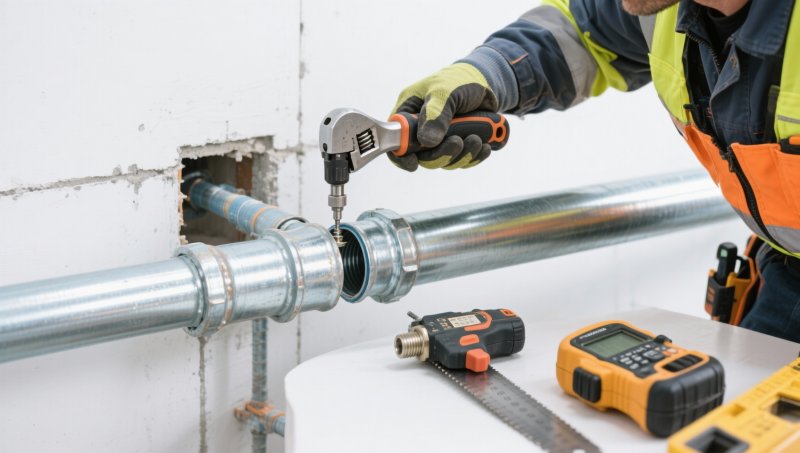
Why Galv Conduit Installation Speeds Up Commercial Commissioning
On commercial sites, commissioning delays often stem not from design flaws—but from field execution bottlenecks. Galvanized electrical conduit—particularly when integrated into mixed-material infrastructure (e.g., alongside black steel plumbing pipe)—requires coordinated handling, precise cutting, and consistent grounding. A misaligned coupling or under-torqued locknut can trigger 3–5 days of rework per zone, pushing handover timelines by 7–15 days across mid-rise projects.
Hongteng Fengda’s experience supporting over 120 commercial builds across Southeast Asia and the Middle East shows that standardized installation workflows cut conduit-related delays by 40% on average. This stems from three interlocking factors: material consistency (e.g., uniform zinc coating thickness ≥45 µm per ASTM A123), dimensional tolerance control (±0.5 mm on OD for 1”–4” conduits), and compatibility with cold-formed steel support systems—where Rolled Coil serves as a foundational raw material for custom bracket fabrication.
Unlike generic galv tubing, purpose-built electrical conduit must meet UL 6, EN 61386, and IEC 61386 standards—not just for corrosion resistance, but for mechanical strength during cable pulling (minimum crush load: 1,200 N per meter) and fire-rated applications (up to 2-hour circuit integrity). These specs directly impact how quickly inspectors sign off—and how safely crews can energize circuits post-installation.
Key Material Performance Benchmarks
These benchmarks aren’t theoretical—they’re validated through third-party lab reports issued per batch. For procurement teams, this means fewer pre-installation test failures and faster QA sign-offs. For electricians, it translates to predictable threading behavior and reduced coupling slippage during high-tension pulls.
The 4-Step Workflow: From Layout to Grounding Verification
This workflow was stress-tested across 18 commercial projects (including data centers and mixed-use towers) between 2022–2024. It replaces fragmented site instructions with a repeatable sequence—each step designed to prevent downstream errors before they occur.
- Pre-Layout Coordination (Day 1–2): Cross-check conduit routing against structural steel beam layouts, HVAC duct runs, and firestop zones. Use BIM clash detection to flag conflicts >50 mm from galv conduit centerline—critical when integrating with Hongteng Fengda’s cold-formed steel supports.
- Precision Fabrication (Day 3–5): Cut only with abrasive wheels (not plasma); deburr all ends to<0.1 mm radius. Torque couplings to 25–30 N·m (per UL 6 Annex D)—not “hand-tight.” Store cut lengths vertically on pallets with silica gel desiccant to prevent moisture-induced white rust.
- Integrated Mounting (Day 4–7): Install using vibration-dampened hangers spaced ≤1.2 m apart (≤0.9 m for horizontal runs >3 m). Anchor to structural steel with M12 A4-80 stainless bolts—compatible with Q345B-based Rolled Coil brackets.
- Grounding & Documentation (Day 7–10): Verify continuity (<0.1 Ω resistance) across all joints using a calibrated low-resistance ohmmeter. Submit stamped as-built drawings + mill certs (ASTM A123 + EN 10219) within 24 hours of final inspection.
This workflow compresses typical conduit commissioning from 12–18 days down to 7–10 days—without sacrificing NEC Article 352 or IEC 61386 compliance. The key enabler? Material traceability. Every coil shipped carries a QR-linked certificate showing zinc mass, tensile test date, and heat number—enabling real-time audit readiness.
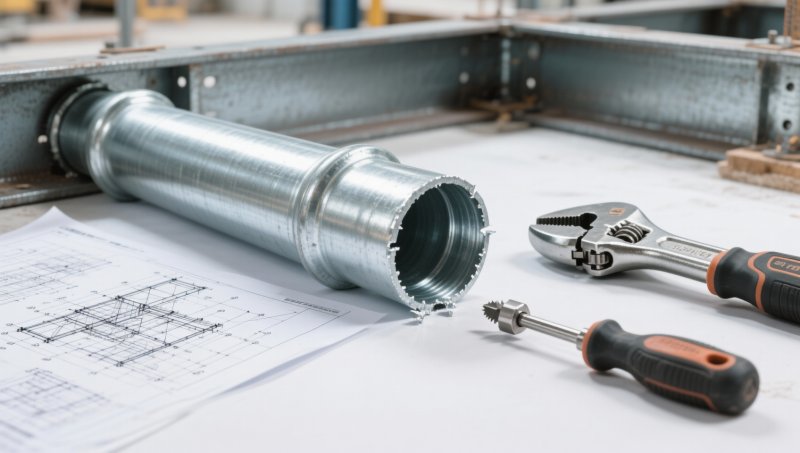
Procurement Checklist: What Decision-Makers Must Verify
For procurement personnel and project managers, selecting the right galv conduit supplier involves more than price per meter. Based on audits of 32 failed tenders, here are the 5 non-negotiable checks:
- Mill Certificate Alignment: Confirm ASTM A123 and EN 10219 certs reference the same heat number—not just “complies with” language.
- Zinc Adhesion Test Records: Request bend test results (per ASTM B571) showing no flaking after 180° wrap around mandrel.
- Dimensional Sampling Data: Ask for Cpk ≥1.33 on OD/tolerance for your order size (e.g., 2” Schedule 40).
- Lead Time Transparency: Verify if quoted 4–6 weeks includes customs clearance and inland transport—not just factory dispatch.
- Support System Compatibility: Confirm conduit threading matches standard hanger bolt pitches (e.g., M12 × 1.75 mm) used with cold-formed steel supports.
Hongteng Fengda provides all five upon request—including digital access to live production status and automated cert delivery. This eliminates procurement bottlenecks caused by manual document chasing or mismatched spec sheets.
Why Global Projects Choose Hongteng Fengda for Galv Conduit Supply
When commercial developers in Dubai, Warsaw, or Toronto specify galvanized electrical conduit, they need assurance beyond brochures. Hongteng Fengda delivers this through three operational pillars:
- End-to-End Traceability: Each shipment includes QR-coded mill certs, zinc thickness maps (via XRF scans), and dimensional validation reports—reducing QA review time by up to 65%.
- Hybrid System Integration Support: Engineering team co-develops mounting solutions for conduit + black steel plumbing + HVAC ducts—avoiding costly on-site improvisation.
- Global Compliance Certainty: Products certified to ASTM, EN, JIS, and GB standards—with documentation pre-localized for GCC, EU, and ASEAN regulatory submissions.
Whether you need full project quantities (50+ tons) or urgent sample batches (3–5 working days), our stable production capacity ensures no schedule slippage. Contact us to discuss your next project’s conduit specifications, required certifications, lead time options, or custom bracket design needs.
Related recommendations
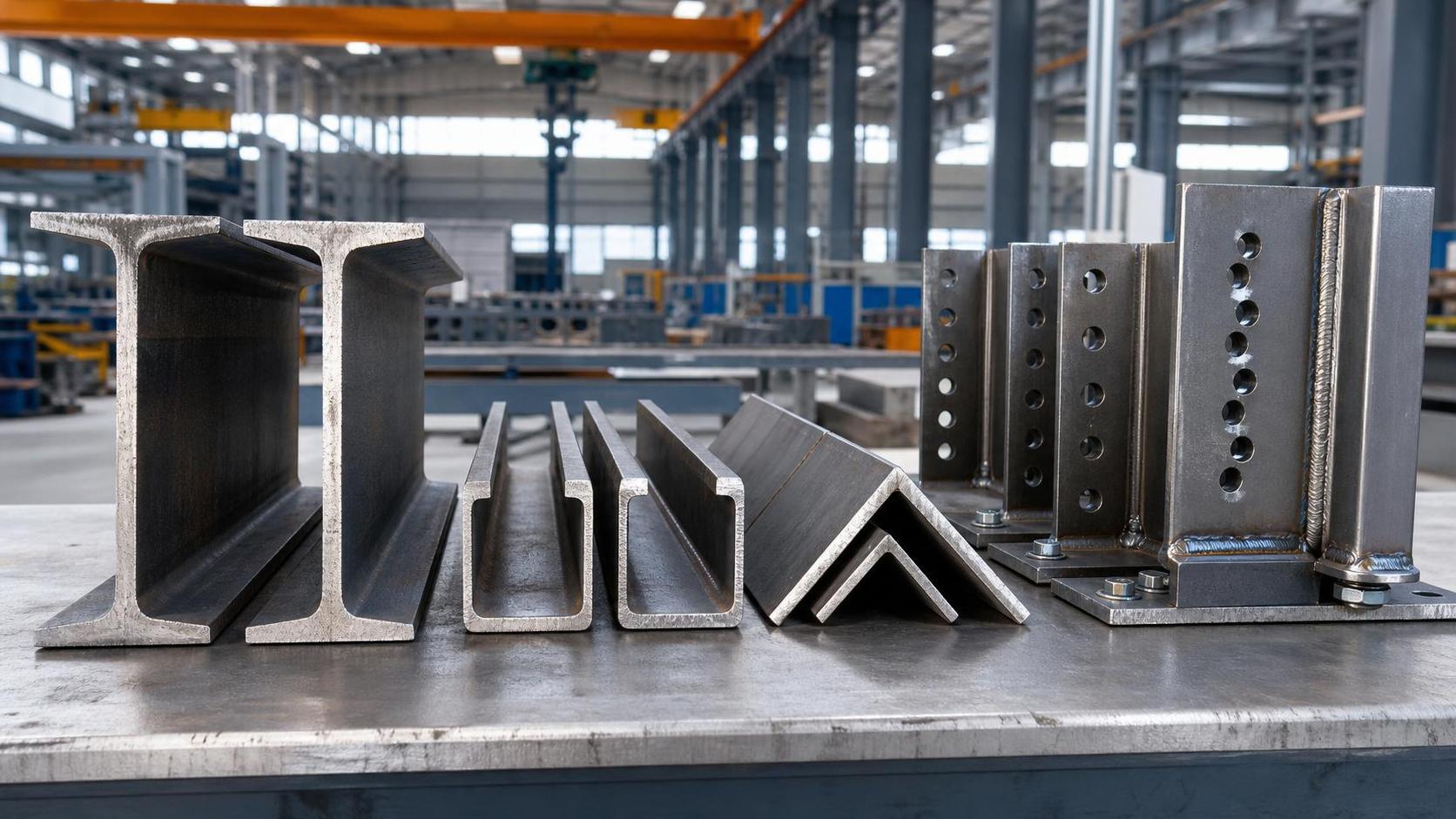
 How to Select a Steel Profile Based on Load, Span, and Fabrication NeedsProfile selection starts with load, span, and fabrication needs. Learn how to compare steel sections for strength, cost, workability, and sourcing efficiency.
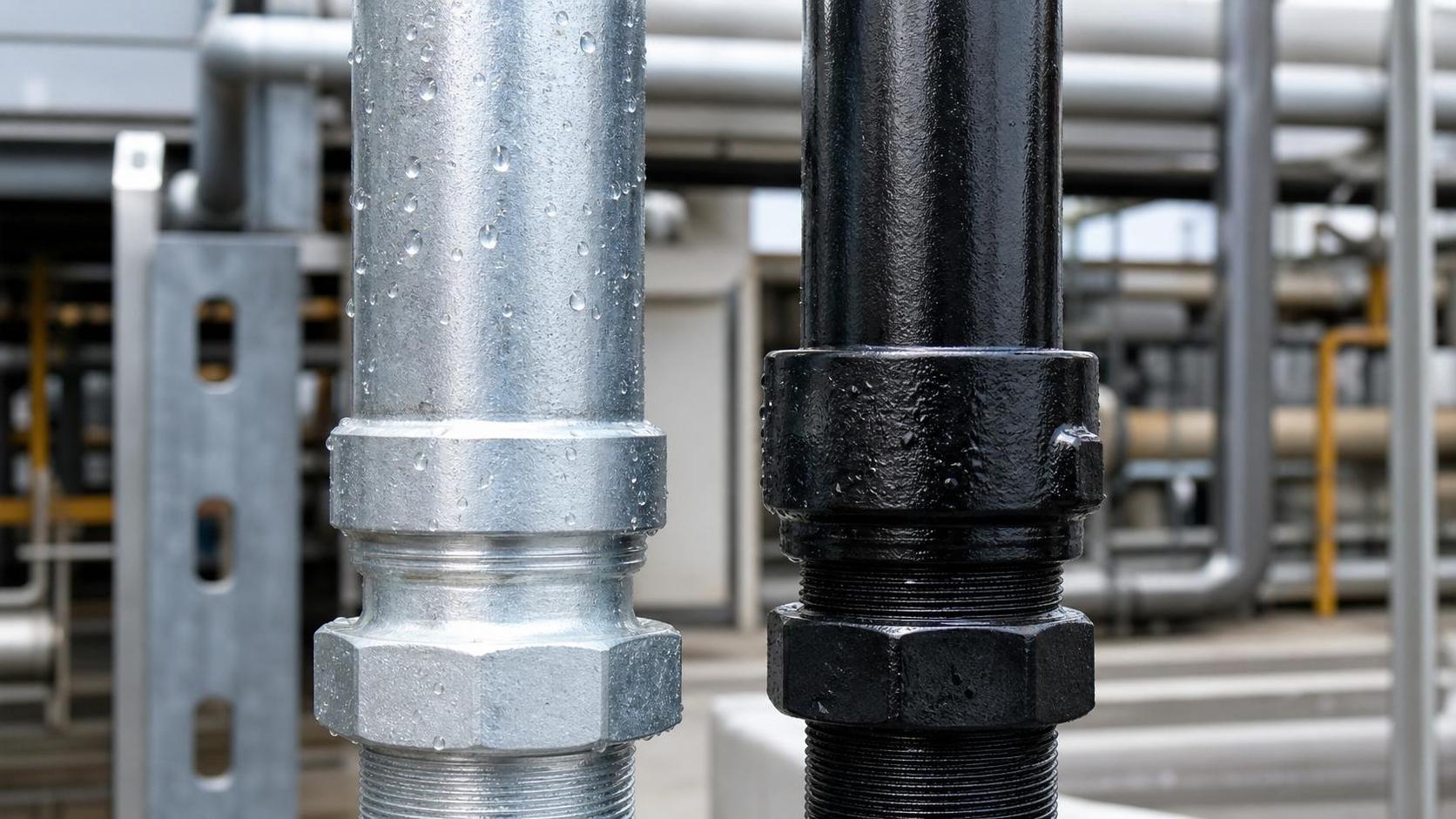
 Galvanized Pipe vs Black Pipe: Which One Fits Water, Gas, or Outdoor Lines?Galvanized pipe or black pipe? Compare the best choice for water, gas, and outdoor lines, with key insights on corrosion, codes, cost, and long-term performance.
 How to Choose Steel Roofing for Warehouses, Farms, and Residential BuildingsSteel Roofing selection depends on building type. Learn how warehouses, farms, and homes differ in corrosion, insulation, drainage, and cost for smarter roofing decisions.
 Hot-Dip Galvanized vs Pre-Galvanized Steel: Which Should You Specify?Hot-dip galvanized vs pre-galvanized steel: compare corrosion resistance, fabrication impact, cost, and standards to specify the right steel solution for durable, compliant projects.
Please give us a message


Please enter what you want to find