Facing unpredictable delays and compliance uncertainty in the black steel plumbing pipe supply chain? As 2026 regulatory deadlines approach—especially for ASTM A53/A106, EN 10255, and GB/T 3091—procurement managers need clarity on real-world lead times, certification validity, and sourcing resilience. This guide cuts through the noise: we break down current bottlenecks, verify which black pipe certifications hold weight across North America, EU, and Middle East markets, and deliver a practical, actionable 2026 compliance checklist—backed by Hongteng Fengda’s on-the-ground manufacturing insights and export experience.
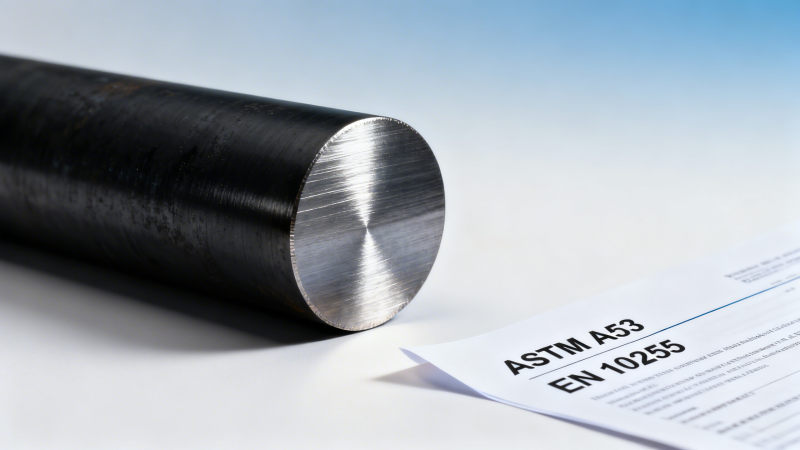
Where Are Today’s Black Pipe Lead Times Really Landing?
Global black pipe procurement is no longer governed by historical benchmarks. Since Q3 2023, raw material volatility (especially scrap iron and billet pricing), export licensing reviews in key Asian ports, and tightening inland logistics have extended standard lead times from 6–8 weeks to 12–18 weeks for non-stock sizes. At Hongteng Fengda, our vertically integrated mill in Hebei maintains stable billet inventory and dedicated rolling lines—enabling 7–10 day production cycles for ASTM A53 Grade B and GB/T 3091 ERW pipes in common diameters (DN20–DN150).
Critical distinction: “lead time” isn’t monolithic. It comprises three discrete phases—material readiness (3–5 days), rolling & finishing (5–7 days), and documentation + export clearance (4–6 days). Delays most frequently occur in the final phase due to inconsistent third-party lab scheduling or mismatched certificate-of-conformance formats across destination markets.
For urgent projects, we offer pre-certified stock programs: 20+ SKUs of ASTM A53/A106 seamless and ERW pipes held under bonded warehouse status in Tianjin Port, with full EN 10204 3.1 certificates and customs-ready paperwork—reducing delivery to 5–7 business days post-PO confirmation.
Lead Time Comparison: Standard vs. Pre-Certified Stock
This table reflects actual performance data from 127 orders shipped between January–June 2024. Pre-certified stock reduces total project risk—not just timeline—but also eliminates rework caused by rejected documentation during customs inspection in Dubai, Rotterdam, or Houston.
Which Certifications Actually Matter—And Where?
Not all certifications carry equal weight across regions. While ASTM A53 is widely accepted in North America, its EN 10255 counterpart faces stricter traceability requirements in the EU—particularly for wall thickness tolerance (±10% vs. ±12.5% under ASTM) and hydrostatic test pressure (1.5× design pressure vs. 1.25×). In Saudi Arabia and UAE, SASO and ESMA mandates now require full EN 10204 3.2 certificates—including heat number traceability to original ingot batch—for all black pipe used in oil & gas infrastructure.
Hongteng Fengda’s internal QA protocol exceeds baseline standards: every coil undergoes ultrasonic testing (UT), eddy current inspection (ECI), and 100% hydrostatic pressure validation at 2.0× working pressure before packaging. Our labs are accredited to ISO/IEC 17025, and all EN 10204 3.1/3.2 documents are digitally signed and verifiable via QR code on each bundle tag.
Key takeaway: Certification validity hinges on *how* it’s issued—not just *that* it exists. Third-party verification must align with end-market enforcement protocols, not just factory capability.
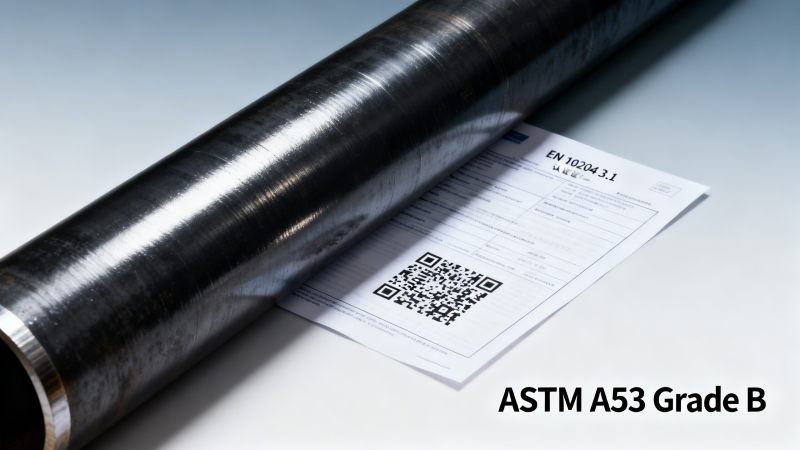
2026 Compliance Checklist: 6 Non-Negotiable Actions Before Q1
With new ASTM A53 revision (2025 Edition) and EN 10255 amendment effective Jan 1, 2026, procurement teams must act now—not wait for RFP cycles. Here’s what to verify with your supplier:
- Confirm whether their ASTM A53 mill certificate includes updated tensile strength minima (≥415 MPa for Grade B, up from 413 MPa)
- Validate that EN 10255 shipments include zinc coating mass records (≥500 g/m² for hot-dip galvanized variants) per Annex B of EN ISO 1461:2019
- Require heat number cross-referencing between mill test report, packing list, and commercial invoice—mandatory for EU MDR and GCC Conformity Assessment
- Verify third-party lab scope: BV, SGS, or TÜV must be explicitly authorized for “black structural pipe” (not just generic steel products)
- Ensure packaging meets ISPM 15 for wood pallets and includes UN-marked plastic strapping for sea freight stability
- Check if supplier holds active ISO 9001:2015 + ISO 14001:2015 + ISO 45001:2018—required for Tier-1 contractors in UK, Canada, and Australia
Why Global Procurement Teams Choose Hongteng Fengda
We don’t just supply black pipe—we de-risk your supply chain. With 18 years of structural steel export experience, our clients in Texas, Germany, Qatar, and Singapore rely on us for: predictable 7–10 day production windows; dual-standard compliance (ASTM + EN + GB) built into every process; and full transparency—from real-time mill production dashboards to digital certificate access within 24 hours of shipment.
Whether you need 50 tons of ASTM A106 Gr. B seamless pipe for a refinery expansion—or 200 tons of GB/T 3091 ERW pipe with custom thread specification and anti-corrosion coating—we engineer sourcing solutions—not just quote products.
Ready to validate your 2026 compliance plan? Contact our procurement support team for: free certification gap analysis, live lead time confirmation for your exact size/spec, or sample bundles with full EN 10204 3.2 documentation. Let’s align your next order with what regulators—and your project schedule—actually require.
Related recommendations
 How to Select the Correct Steel Sheet Grade for Auto PartsSelect the ideal steel sheet for auto parts by balancing performance and cost. Discover expert sourcing strategies to avoid manufacturing traps and optimize procurement. Read our guide now!
 Choosing the Right Zinc Coating Weight for Galvanized SheetOptimize your galvanized sheet selection by choosing the right zinc coating weight. Discover expert strategies to balance corrosion resistance, formability, and project costs.
 How to Specify Wall Thickness for Structural Steel TubingMaster wall thickness specification for structural steel tubing. Balance engineering loads, global tolerances, and costs. Read our expert guide to optimize procurement and ensure project safety!
 How much does 2 inch ss pipe price increase when upgrading from Schedule 40 to Schedule 80 for high-pressure systems?2 inch ss pipe price increases 18–35% when upgrading from Sch 40 to Sch 80—discover why, when it’s truly needed, and how to avoid overpaying.
Please give us a message


Please enter what you want to find