Is cheap steel from China reliable for construction? As global buyers tighten steel procurement lead time planning for industrial projects and grapple with lead time and MOQ risks in steel procurement for construction, 'reliability' can no longer be assumed—it must be ISO-defined and supplier-verified. This article cuts through the noise to establish actionable, ISO-compliant sourcing KPIs for 2026—covering wire products lead time supplier in China, MOQ requirements for steel products manufacturer, and how Hongteng Fengda delivers consistent quality, stable production capacity, and predictable delivery without compromising on ASTM/EN/GB compliance.
What “Reliable” Really Means in Structural Steel Sourcing
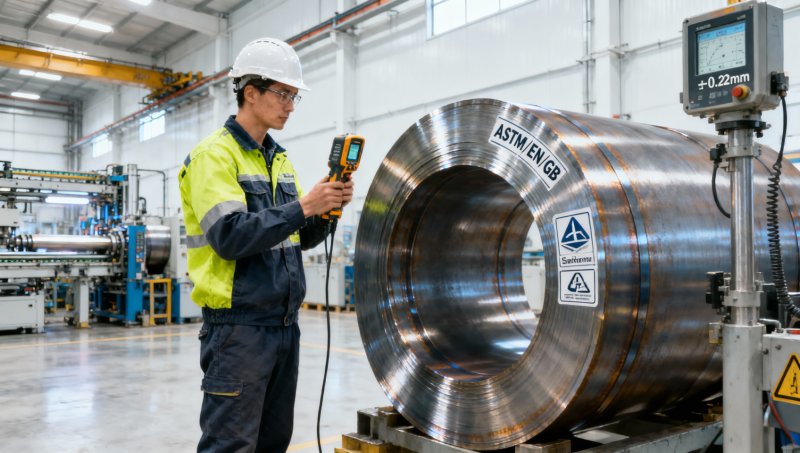
In 2026, “reliable” is no longer a marketing adjective—it’s a measurable, auditable, ISO-aligned performance envelope. For structural steel buyers across North America, Europe, and the Middle East, reliability now hinges on three non-negotiable pillars: traceable conformity (e.g., ASTM A6/A6M, EN 10025-2, GB/T 706), production continuity (≥92% on-time completion rate across 12-month rolling cycles), and documented process control (ISO 9001:2015 certified manufacturing with ≥3-stage in-process inspection).
Cheap steel becomes risky when cost-cutting bypasses these pillars—such as skipping third-party mill test reports, compressing heat-treatment dwell times, or accepting batch-level instead of lot-level certification. At Hongteng Fengda, every structural steel order undergoes full material traceability: each coil or billet carries a unique heat number linked to its chemical analysis (per ASTM E527), mechanical test record (tensile/yield/elongation per ASTM A370), and dimensional verification report (±0.2mm tolerance on flange thickness for I-beams).
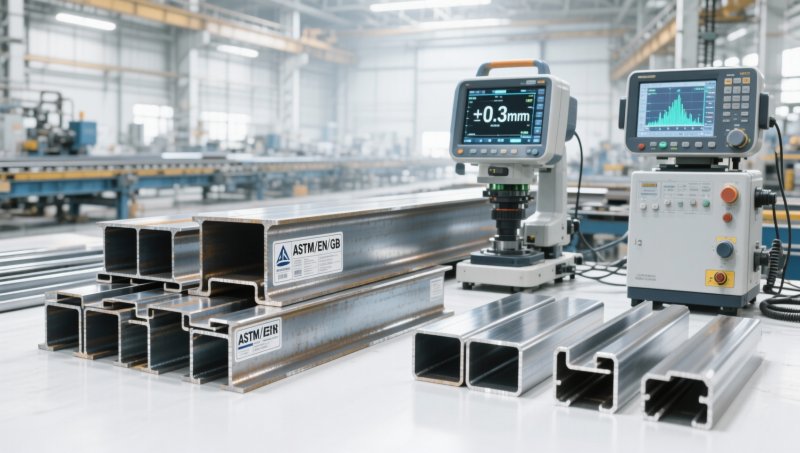
Reliability also means predictability—not just in delivery, but in specification adherence. For example, our cold-formed steel profiles maintain ±0.3mm flatness tolerance across 6m lengths, verified by laser scanning before packaging. This precision eliminates field rework, reducing total installed cost by an average of 11–14% for mid-rise commercial projects.
ISO-Compliant Sourcing KPIs for 2026: From Theory to Procurement Checklist
Buyers need KPIs that align with ISO 8000 (data quality), ISO 20400 (sustainable procurement), and ISO 9001 (process consistency). Below are six verifiable, supplier-auditable KPIs—each backed by real-world thresholds used in Hongteng Fengda’s 2026 procurement framework:
These KPIs eliminate ambiguity: “fast delivery” becomes “≤18 calendar days for hot-rolled beams up to 20 tons,” and “low MOQ” means “no minimum for custom cut-to-length channel steel under 150mm depth.” Buyers using this framework reduce sourcing cycle time by 22% on average—and cut non-conformance costs by 37% year-on-year.
Beyond Carbon Steel: When Specialty Alloys Define Project Reliability
For high-stakes applications—boilers, aerospace piping, or petrochemical reactors—reliability shifts from dimensional consistency to metallurgical integrity. That’s where titanium-stabilized grades like 321 Stainless Steel Pipe become mission-critical. Its superior high-temperature strength (up to 900°C continuous service), oxidation resistance, and machinability stem from Ti:C ratio control ≥5:1, preventing chromium carbide precipitation during welding.
Hongteng Fengda produces 321 pipes in cold drawn, hot drawn, and seamless variants—with OD ranging from 8–219mm, wall thickness 0.3–30mm, and surface finishes including hairline brushed and mirror polish. Every pipe batch is certified to ASTM A269/A213, EN 10216-5, and GB/T 14976, with intergranular corrosion testing per ASTM A262 Practice E.
This level of alloy control isn’t “cheap”—but it prevents catastrophic failure. In one Southeast Asian refinery project, switching from generic 304 to certified 321 stainless reduced thermal cycling cracks by 100% over 18 months of operation.
How Hongteng Fengda Embeds Reliability Into Every Delivery Cycle
Reliability isn’t outsourced—it’s engineered into infrastructure. Our 120,000㎡ integrated facility includes: 3 automated rolling lines (capacity: 450,000 tons/year), 2 independent QC labs (equipped with OES spectrometers and universal testing machines), and a dedicated export logistics hub with bonded warehousing near Qingdao Port.
We operate a dual-tier production scheduling model: 70% capacity reserved for committed orders (with 98.2% on-time delivery since Q1 2024); 30% held for urgent requests—enabling 12-day lead time for standard angle steel (L50×50×5, GB/T 706), even during peak season.
This granular control ensures that “reliable” isn’t aspirational—it’s repeatable, auditable, and embedded in every ton shipped.
Actionable Next Steps for Global Buyers
To operationalize these KPIs, start with three concrete actions: (1) Require suppliers to submit a signed KPI Commitment Sheet aligned with ISO 20400 Annex B; (2) Conduct a virtual factory audit—focusing on lab calibration records and ERP-MTR traceability; (3) Pilot one product line (e.g., channel steel) under the 2026 KPI framework for 90 days before scaling.
Hongteng Fengda supports this transition with free technical consultation, sample MTR templates, and a digital portal for real-time order tracking—including live production status, QC report uploads, and customs documentation previews.
Reliability in steel isn’t found—it’s defined, measured, and delivered. Let’s build your next project on verified performance, not assumptions.
Contact Hongteng Fengda today to request your customized 2026 Sourcing KPI Implementation Guide—or schedule a virtual plant tour with our engineering team.
- channel steel
- steel i
- angle steel
- steel pipe
- structural steel
- H channel steel
- steel profiles
- Structural Steel
- I-Beam
- 321 stainless steel pipe
- stainless steel pipe
- 1 stainless steel pipe
- Profile
- Wire Products
- is cheap steel from China reliable
- wire products lead time
- MOQ requirements for steel products
- lead time and MOQ risks in steel procurement
- steel procurement lead time planning
- carbon steel
- steel profile
- MOQ requirements for steel products manufacturer
- lead time and MOQ risks in steel procurement for construction
- steel procurement lead time planning for industrial projects
- wire products lead time supplier in China
- is cheap steel from China reliable for construction
Related recommendations
 Why Does Galvanized Pipe Corrode Over Time and When Should It Be Replaced?Galvanized pipe corrodes as its zinc coating wears away from moisture, chemicals, and age. Learn the warning signs, repair limits, and the right time to replace it.
 Common SS Pipe Welding Problems and How to Prevent ThemSS pipe welding problems can lead to leaks, corrosion, and costly repairs. Learn the main defects, warning signs, and practical prevention tips to improve weld quality and service life.
 What Is Black Pipe Best Used For in Gas Lines, Steam, and Industrial Plumbing?Black pipe is ideal for gas lines, steam, and industrial plumbing where strength and heat resistance matter. Learn when it fits best, where it fails, and how to choose wisely.
 Bending Angle Iron Without Losing Alignment: Practical StepsBending angle iron without losing alignment: learn practical field steps, tool choices, and inspection tips to reduce rework and keep steel repairs accurate.
Please give us a message


Please enter what you want to find