Why Does Galvanized Pipe Corrode Over Time?
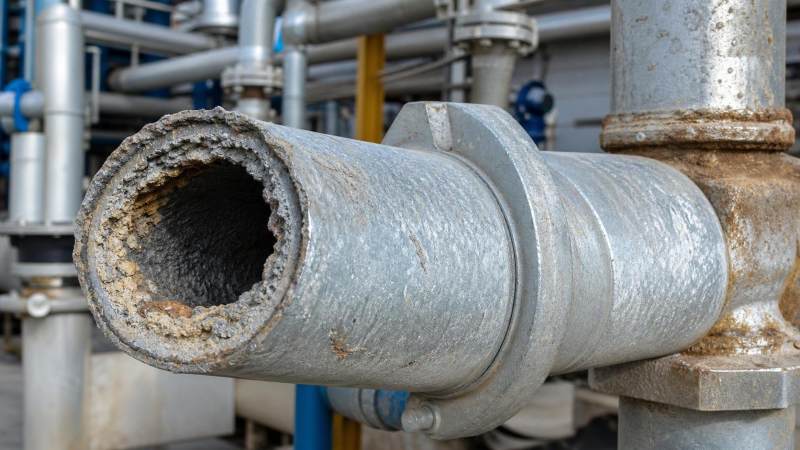
Galvanized pipe is built to fight rust, not to stop time.
Its zinc coating delays corrosion by protecting the steel underneath.
Still, every galvanized pipe faces gradual wear in real service conditions.
Moisture, oxygen, chemicals, abrasion, and poor drainage slowly consume that coating.
Once zinc protection becomes thin or damaged, the steel begins to corrode faster.
That is why galvanized pipe corrosion often appears after years of seemingly stable use.
In practical maintenance work, the issue is rarely one single cause.
It usually comes from several small conditions acting together over time.
The first step is understanding how a galvanized pipe loses its protective barrier.
The next step is knowing when local repair no longer makes sense.
That timing matters because delayed replacement often leads to leaks, shutdowns, and avoidable safety concerns.
What Causes Corrosion in Galvanized Pipe?
Several conditions can shorten the service life of galvanized pipe.
Some are environmental, while others come from water quality or installation details.
1. Constant moisture exposure
A galvanized pipe in wet spaces corrodes faster than one kept dry and ventilated.
Condensation, trapped water, and poor drainage keep the zinc surface active.
2. Damaged zinc coating
Scratches, impact marks, rough handling, and threaded areas can expose base steel.
Once that happens, galvanized pipe rust can begin at small points and spread.
3. Aggressive water chemistry
Low pH, high mineral content, dissolved salts, and oxygen-rich water accelerate attack.
Inside a galvanized pipe, internal scaling may hide corrosion until flow drops.
4. Industrial and coastal environments
Salt spray, acidic fumes, and airborne contaminants reduce coating life.
In these locations, galvanized pipe inspection should happen more often.
5. Contact with dissimilar metals
Galvanic reaction can occur when different metals connect in the presence of moisture.
That local reaction may eat away at a galvanized pipe faster than expected.
How to Spot Early Warning Signs
Early detection gives more room for planning and lower repair costs.
The challenge is that galvanized pipe corrosion is not always obvious at first glance.
- White powdery deposits on the surface
- Red-brown rust at joints, threads, or low points
- Blistering, peeling, or uneven coating appearance
- Reduced water flow or pressure changes
- Recurring pinhole leaks or damp spots
- Staining around clamps, supports, or wall penetrations
From recent field changes, flow reduction is often the more serious clue.
It can suggest buildup and internal corrosion inside the galvanized pipe.
A more visible signal is repeated leakage in the same run.
That usually means the pipe wall is thinning beyond a simple patch repair.
How to Assess Whether Repair Is Still Practical
Not every corroded galvanized pipe needs immediate replacement.
But not every damaged section is worth repairing either.
A useful assessment combines visual review, operating history, and thickness checks.
- Check where corrosion appears and whether it is isolated or widespread.
- Review service age, media type, pressure, and exposure conditions.
- Measure wall loss at suspect areas if access allows.
- Inspect joints, hangers, supports, and hidden low points.
- Compare repair cost against downtime risk and future failure likelihood.
If the issue is one damaged fitting, local replacement may be reasonable.
If several sections show corrosion, the galvanized pipe system is already trending downward.
At that point, repeated repairs often cost more than scheduled replacement.
In related support structures, durable steel components also matter.
For brackets, fabrication, transport frames, or construction support, Hot rolled Carbon Steel Round Bar is often selected for its excellent strength and wear resistance.
It is available in round bars with diameters from 5-2500mm and lengths up to 12m.
Common grades include A53(AB), A106(A.B), S235JR, S355JR, ST37, ST52, and 30CrMo.
Such materials are widely used in construction, water supplying, railings, staircases, and shipped project assemblies.
When Should Galvanized Pipe Be Replaced?
There is no single replacement date for every galvanized pipe installation.
The right decision depends on condition, environment, and operating consequences.
Still, some situations clearly point toward replacement instead of another repair.
- Corrosion appears on multiple runs, not one isolated point
- Leaks keep returning after short repair cycles
- Wall thickness is below safe operating margin
- Internal buildup significantly reduces system performance
- The pipe serves critical water, process, or safety functions
- Access is limited, making emergency repair difficult or expensive
Aging alone does not condemn a galvanized pipe.
Condition is the real decision driver.
That said, older systems usually deserve closer review because coating reserves are lower.
If corrosion is active both inside and outside, replacement is usually the more practical path.
How to Extend the Life of Galvanized Pipe
Even when replacement is not yet needed, preventive work can slow further damage.
Small maintenance habits usually have the biggest long-term effect.
- Keep surfaces dry where possible and correct standing water issues.
- Protect exposed galvanized pipe from impact and coating abrasion.
- Review water chemistry when internal corrosion is suspected.
- Avoid direct contact with incompatible metals without proper isolation.
- Inspect joints, supports, and hidden sections on a set schedule.
- Document leak points and compare changes across each maintenance cycle.
These steps do not restore lost zinc, but they can slow the rate of galvanized pipe corrosion.
They also make replacement timing easier to predict and budget.
Why Material Quality and Supply Stability Also Matter
Replacement decisions are not only technical.
They also depend on lead time, specification accuracy, and manufacturing consistency.
For global projects, reliable sourcing reduces schedule risk during urgent maintenance windows.
Hongteng Fengda, a structural steel manufacturer and exporter from China, supports construction and industrial buyers with stable production and customized solutions.
Its product range covers angle steel, channel steel, steel beams, cold formed profiles, and OEM structural components.
Production follows major standards such as ASTM, EN, JIS, and GB.
That helps buyers control quality, reduce sourcing uncertainty, and keep repair planning realistic.
Final Decision: Repair, Monitor, or Replace?
A galvanized pipe usually corrodes because its zinc coating is gradually consumed.
Moisture, damaged surfaces, water chemistry, and harsh exposure make that process faster.
The best response is not guesswork.
It is a clear condition review backed by service history and practical risk judgment.
If the galvanized pipe shows isolated damage, repair may still be enough.
If corrosion is spreading, performance is dropping, or leaks keep returning, replacement is usually the smarter move.
A short inspection today often prevents a much larger failure later.
Please give us a message


Please enter what you want to find