Common SS Pipe Welding Problems and How to Prevent Them
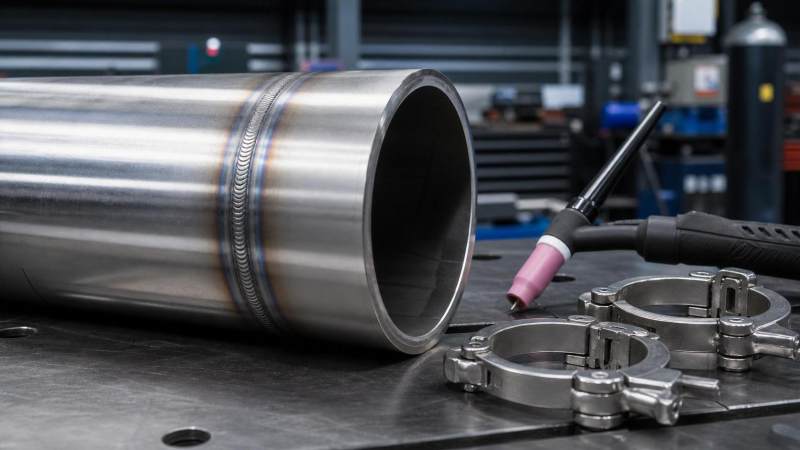
Welding defects in ss pipe can cause leaks, early corrosion, and repeated repairs. In maintenance work, those issues often appear long after installation, which makes them more expensive to fix.
That is why understanding common ss pipe welding problems matters. Better repair practice improves joint life, reduces shutdown time, and supports safer operation in demanding service conditions.
In the field, most failures do not come from one big mistake. They usually come from small process gaps, such as poor cleaning, wrong heat input, or weak shielding gas control.
This guide breaks down the most common ss pipe welding issues, the warning signs to watch for, and practical steps that help prevent repeat problems during maintenance and repair.
Why SS Pipe Welding Problems Happen So Often
Stainless steel reacts differently from carbon steel during welding. It holds heat in a different way, forms oxide quickly, and can lose corrosion resistance if the weld area is not protected properly.
In many repair situations, access is limited. Pipe position is awkward, surfaces are contaminated, and fit-up is inconsistent. These conditions make ss pipe welding more sensitive to process variation.
Another frequent issue is mismatch between original material and filler metal. If the base pipe grade is unclear, the repair may look acceptable at first but fail under pressure or corrosion later.
From a maintenance perspective, prevention starts before the arc. Material identification, surface condition, joint preparation, and purge planning often decide whether the final weld will last.
Porosity in SS Pipe Welds
Porosity is one of the most common ss pipe welding defects. It appears as small gas pockets inside the weld metal and can reduce strength, tightness, and long-term corrosion performance.
Typical causes include moisture, oil, paint, dirty filler wire, and unstable shielding gas. Even a small draft near the weld zone can disturb gas coverage and create pores.
Warning signs are usually visible during inspection. You may see pinholes on the surface, irregular bead texture, or failed leak tests after the joint cools.
How to prevent porosity
- Clean the ss pipe and filler metal thoroughly before welding.
- Store consumables in a dry area and avoid wet gloves or rags.
- Check shielding gas flow, hose condition, and nozzle blockage.
- Protect the work area from wind during field welding.
- Use the correct gas for the selected ss pipe welding process.
Lack of Fusion and Incomplete Penetration
Lack of fusion happens when the weld metal does not bond fully with the base metal. Incomplete penetration means the weld does not reach through the joint root as required.
Both are serious ss pipe welding problems because they create weak zones. Under vibration, pressure cycling, or thermal stress, these areas can crack or leak much earlier than expected.
The root causes are often poor bevel preparation, tight root gap, low amperage, fast travel speed, or incorrect torch angle. Restricted access makes these defects even more likely.
Prevention steps that work
- Verify joint geometry before striking the arc.
- Set enough heat input for full fusion without overheating the ss pipe.
- Use tack welds that hold alignment without narrowing the root opening.
- Inspect root pass quality before adding filler passes.
- When possible, perform a borescope or penetration check on critical joints.
Discoloration, Oxidation, and Heat Tint
Blue, brown, or black discoloration near a weld is more than a cosmetic problem. On ss pipe, heat tint often signals oxidation that can weaken corrosion resistance in the affected area.
This usually happens when purge gas is weak, shielding is inconsistent, or heat input stays high for too long. In internal pipe welding, poor backside protection is a major cause.
Where corrosion resistance is important, untreated oxidation can become a future failure point. That is especially true in chemical service, humid environments, and outdoor industrial systems.
For maintenance teams working around steel structures and pipe supports, material consistency in nearby fabricated parts also matters. In broader structural applications, products like Cold Rolled Steel Coil are valued for clean surface condition, stable dimensions, and compliance with standards such as ASTM, EN, JIS, and GB.
How to reduce oxidation
- Use proper purge dams and confirm oxygen levels before welding.
- Keep interpass temperature under control.
- Avoid excessive dwell time in one area.
- Remove heat tint by pickling, passivation, or approved mechanical cleaning.
Cracking After SS Pipe Welding
Cracks are less common than porosity, but they are far more critical. A cracked ss pipe weld can fail quickly in service, especially under pressure, thermal expansion, or cyclic loading.
Cracking may appear in the weld metal, the heat affected zone, or the crater. Common triggers include high restraint, rapid cooling, poor filler selection, and improper crater termination.
Some cracks are visible right away. Others show up after the system returns to operation. That delayed behavior is why post-repair inspection should never stop at a quick visual check.
Prevention methods
- Match filler metal to the ss pipe grade and service condition.
- Reduce restraint where possible through better fit-up and sequencing.
- Fill the crater completely before breaking the arc.
- Use controlled cooling based on material and procedure requirements.
- Apply dye penetrant testing on suspect weld areas.
Warping, Distortion, and Fit-Up Trouble
Thin-wall ss pipe can distort easily during repair welding. Once the roundness changes, reassembly becomes difficult, flange faces misalign, and sealing performance may suffer.
Distortion usually comes from uneven heat distribution. Long continuous passes, poor clamping, and heavy localized repair areas increase the chance of warping.
In actual maintenance work, this issue often creates secondary problems. A weld may pass inspection, yet the ss pipe still cannot be installed properly because the dimensions shifted during repair.
Practical control measures
- Use balanced weld sequences instead of one-sided heat concentration.
- Apply clamps, fixtures, or internal supports when suitable.
- Choose shorter passes and allow controlled cooling between stages.
- Measure roundness and alignment before final acceptance.
Contamination and Corrosion Risks After Welding
Even when the weld looks sound, contamination can shorten service life. Carbon steel dust, dirty tools, and embedded iron particles may trigger rust spots on ss pipe after repair.
This problem is common in mixed workshops where stainless and carbon steel are handled together. Grinding discs and wire brushes used on carbon steel should never be reused on ss pipe.
For related steel fabrication, consistent raw material quality also helps limit downstream issues. In structural manufacturing, Cold Rolled Steel Coil is widely used in construction and steel structures, including factory frameworks, load-bearing beams, trusses, and curtain wall support components.
Its available grades range from Q355 and Q345B to Q690E and 16Mo3, with thickness from 0.1mm to 300mm, supporting both standard and customized fabrication needs.
Best practices for clean welding results
- Keep stainless-only tools separated and clearly marked.
- Clean the weld zone after grinding and before passivation.
- Inspect repaired ss pipe for rust staining during follow-up checks.
- Document contamination sources when repeat failures occur.
A Simple Field Checklist for Better SS Pipe Repairs
When repeated defects appear, a short checklist is often more useful than a long report. It keeps the ss pipe welding process consistent under time pressure.
- Confirm the ss pipe material grade and wall thickness.
- Inspect bevel angle, root gap, and alignment.
- Clean oil, moisture, paint, and foreign particles completely.
- Verify filler metal, shielding gas, and purge setup.
- Control heat input and interpass temperature.
- Check root pass quality before filling and capping.
- Remove oxidation and complete final inspection.
- Record the defect type if the same ss pipe issue returns.
Final Thoughts
Most ss pipe welding problems are preventable. The real key is process discipline before, during, and after welding, especially in repair environments where conditions are rarely ideal.
By watching for porosity, fusion problems, oxidation, cracking, distortion, and contamination, maintenance teams can improve weld quality and reduce repeat service calls.
A better ss pipe repair is usually not about doing something complex. It is about doing the basics consistently, documenting what failed, and correcting the cause before the next weld starts.
Please give us a message


Please enter what you want to find