Why does black pipe still matter for gas lines and steam work?
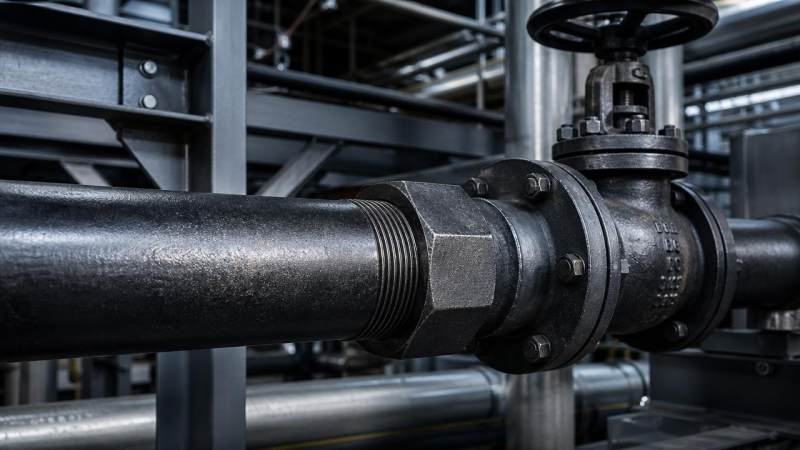
Black pipe remains a practical steel piping choice where pressure, heat, and mechanical strength matter more than decorative finish.
In gas lines, steam distribution, and industrial plumbing, it is valued for durability, threaded connection compatibility, and predictable field performance.
The term black pipe usually refers to uncoated carbon steel pipe with a dark mill-scale surface.
That surface is not the reason people choose it.
The real reason is that black pipe handles heat and internal pressure better than many light-duty alternatives.
It also fits established installation practices in commercial buildings, utility runs, workshops, plants, and equipment rooms.
For steel-focused project supply, this matters because pipe selection rarely stands alone.
It connects with structural frames, supports, fabricated brackets, and standard-compliant steel components used across industrial construction.
That is why companies with broad steel manufacturing capability, such as Hongteng Fengda, often support projects that need both structural steel reliability and practical material coordination.
So where is black pipe best used in real applications?
The best use of black pipe is in systems where corrosion exposure is manageable, but strength and temperature resistance are essential.
Gas supply is the most familiar example.
Natural gas and propane lines often use black pipe because it forms secure threaded joints and performs well in stable indoor environments.
Steam systems are another strong match.
Steam can stress lighter piping materials through heat cycling, so black pipe offers a more dependable option for branch lines and utility distribution.
Industrial plumbing also uses black pipe for compressed air, fire sprinkler branches in some specifications, oil transfer, and mechanical service lines.
The common thread is not that black pipe works everywhere.
It works best where external moisture, aggressive chemicals, and sanitary demands are limited or controlled.
- Building gas lines routed indoors
- Boiler rooms and steam service connections
- Mechanical plants with protected pipe racks
- Industrial utility lines needing robust steel wall strength
In short, black pipe is most useful when the service is demanding, but the environment is not severely corrosive.
How is black pipe different from galvanized or stainless options?
This is where many selection mistakes begin.
Black pipe, galvanized steel pipe, and stainless materials may all look like steel solutions, but they solve different problems.
Black pipe has no zinc coating, so it is usually preferred for gas rather than potable water.
Galvanized pipe adds corrosion protection through zinc, which can help in some water or exposed applications.
Stainless products move further toward corrosion resistance, hygiene, and long-term surface stability.
A simple comparison helps clarify the choice.
In projects that combine utility piping with corrosion-sensitive zones, different steel materials may appear side by side.
For example, a steam room may use black pipe on the line side, while stainless coil or sheet supports equipment cladding or process areas.
In those cases, materials such as 316 Stainless Steel Coil are chosen for chemical resistance, cleaner finishes, and stable performance in high-temperature or food-related environments.
When is black pipe the wrong choice?
Black pipe is not a universal answer, even though it is dependable in many industrial settings.
The biggest limitation is corrosion.
If the line will face constant water, salt-laden air, harsh chemicals, or sanitation-driven washdown conditions, bare carbon steel can degrade too quickly.
That is especially true outdoors without proper coating, insulation, drainage control, or maintenance access.
Another poor fit is potable water service.
Black pipe is generally not selected where water cleanliness, internal corrosion control, and long-term scaling behavior are primary concerns.
It can also be less suitable where bending flexibility is required across long, obstacle-filled routes.
A few warning signs usually point away from black pipe:
- The installation area stays wet for long periods
- The medium is corrosive or sanitation-sensitive
- The system requires lightweight, fast-flex routing
- Local code limits its use for that service
In practical specification work, the better question is not whether black pipe is good or bad.
It is whether the service conditions truly match the strengths of black pipe.
What should you check before choosing black pipe?
A good decision usually comes from a short checklist rather than a single product preference.
Start with the medium.
Gas, steam, air, and certain oils often align well with black pipe.
Then check temperature, design pressure, route exposure, joining method, and inspection requirements.
It also helps to confirm which standards apply.
Projects supplied through global steel chains often need ASTM, EN, JIS, or GB alignment across pipe supports, framing, and fabricated accessories.
That broader coordination reduces rework and sourcing gaps later.
Sometimes the right answer is a mixed-material approach.
For example, black pipe may serve utility transport, while corrosion-critical parts rely on stainless stock in 316 or 201 grades, depending on the environment and budget.
Where formed stainless parts are needed, options based on ISO, SGS, or BV-verified supply can support consistency across fabrication stages.
Does black pipe save money, or does it create hidden costs?
The cost answer depends on where the pipe will live and how long the system must perform.
In protected gas and steam service, black pipe often offers a favorable balance of price, availability, and installation familiarity.
That can reduce procurement friction and shorten project schedules.
But a lower initial material cost does not always mean lower lifecycle cost.
If repainting, insulation repair, corrosion control, or replacement risk is high, black pipe may become the more expensive choice over time.
A realistic evaluation usually considers these points:
- Material cost versus expected service life
- Installation labor and thread or weld requirements
- Need for coating, insulation, or weather protection
- Downtime exposure if corrosion causes failure
This is also where dependable steel supply matters.
Stable production capacity, quality control, and lead-time discipline can be just as important as nominal pipe price.
For projects that combine structural members, cold formed profiles, supports, and utility materials, coordinated sourcing often improves cost control more than chasing the cheapest line item.
What is the practical takeaway before you specify black pipe?
Black pipe is best used where gas, steam, and industrial utility service demand solid mechanical performance in relatively controlled environments.
Its strengths are clear: toughness, heat tolerance, widespread acceptance, and compatibility with many conventional installation methods.
Its limits are just as important: unmanaged moisture, corrosive exposure, and hygiene-sensitive systems can quickly change the material decision.
A sensible next step is to map the service medium, temperature, exposure level, standard requirements, and maintenance expectations before final selection.
If the project also includes structural frames, fabricated supports, or stainless process elements, review the full steel package together rather than treating piping as an isolated purchase.
That approach usually leads to better performance, fewer sourcing surprises, and a material choice that fits the actual job.
Please give us a message


Please enter what you want to find