Introduction: Building Safe and Compliant Carbon Steel Structures
Ensuring safety and compliance in carbon steel structures is essential for every industrial site, from construction to long-term operations. This checklist provides practical guidance for professionals dealing with steel pile, steel rebar, and other carbon steel components to meet international standards and maintain structural integrity. As a trusted structural steel manufacturer and exporter, Hongteng Fengda helps global partners implement robust safety measures while achieving consistent quality and efficiency in every project. For engineers, quality control teams, and project managers, understanding how to integrate compliance into every stage—from material selection to post-installation inspection—is crucial to operational success and legal adherence.
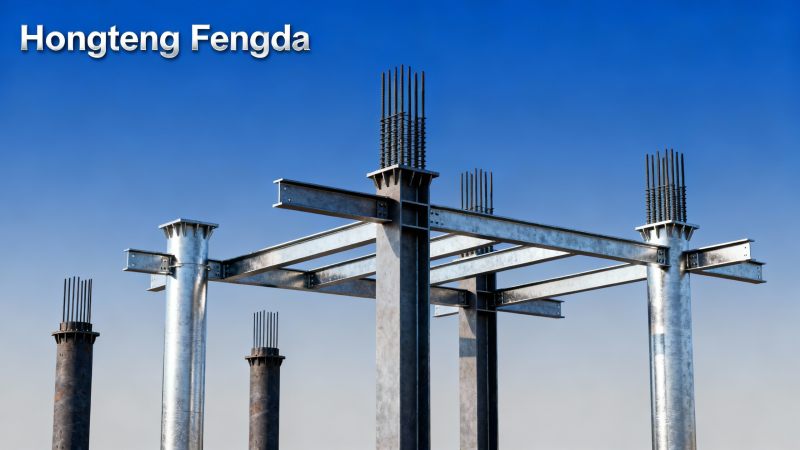
1. Understanding the Core Requirements of Carbon Steel Safety
The foundation of industrial safety begins with material quality. Carbon steel, widely used for structural frameworks, pipelines, frameworks of machinery, and heavy equipment, must meet specific mechanical and chemical properties defined by standards such as ASTM, EN, and GB/T. These standards ensure that each steel pile, steel beam, and steel rebar can bear designed loads while maintaining ductility and toughness. One critical aspect of compliance is verifying mill certification and traceability of carbon steel materials. Manufacturers like Hongteng Fengda apply rigorous quality assurance protocols that confirm tensile strength, corrosion resistance, and weldability prior to dispatch. In addition, compliance with ISO 9001 management systems strengthens the assurance that every batch meets consistent performance criteria.
On an industrial site, teams should create a baseline verification checklist that includes: (1) confirmation of supplier certification validity; (2) alignment of material numbers with engineering drawings; (3) calibration of testing equipment; and (4) documentation of any deviations. Properly documenting such measures contributes to traceability and transparency, minimizing future risks. This approach helps ensure that carbon steel elements—whether used for storage tanks, scaffolding, or reinforcement bars—provide predictable and durable performance over decades of operation.
2. Pre-Installation Inspection and Handling Procedures
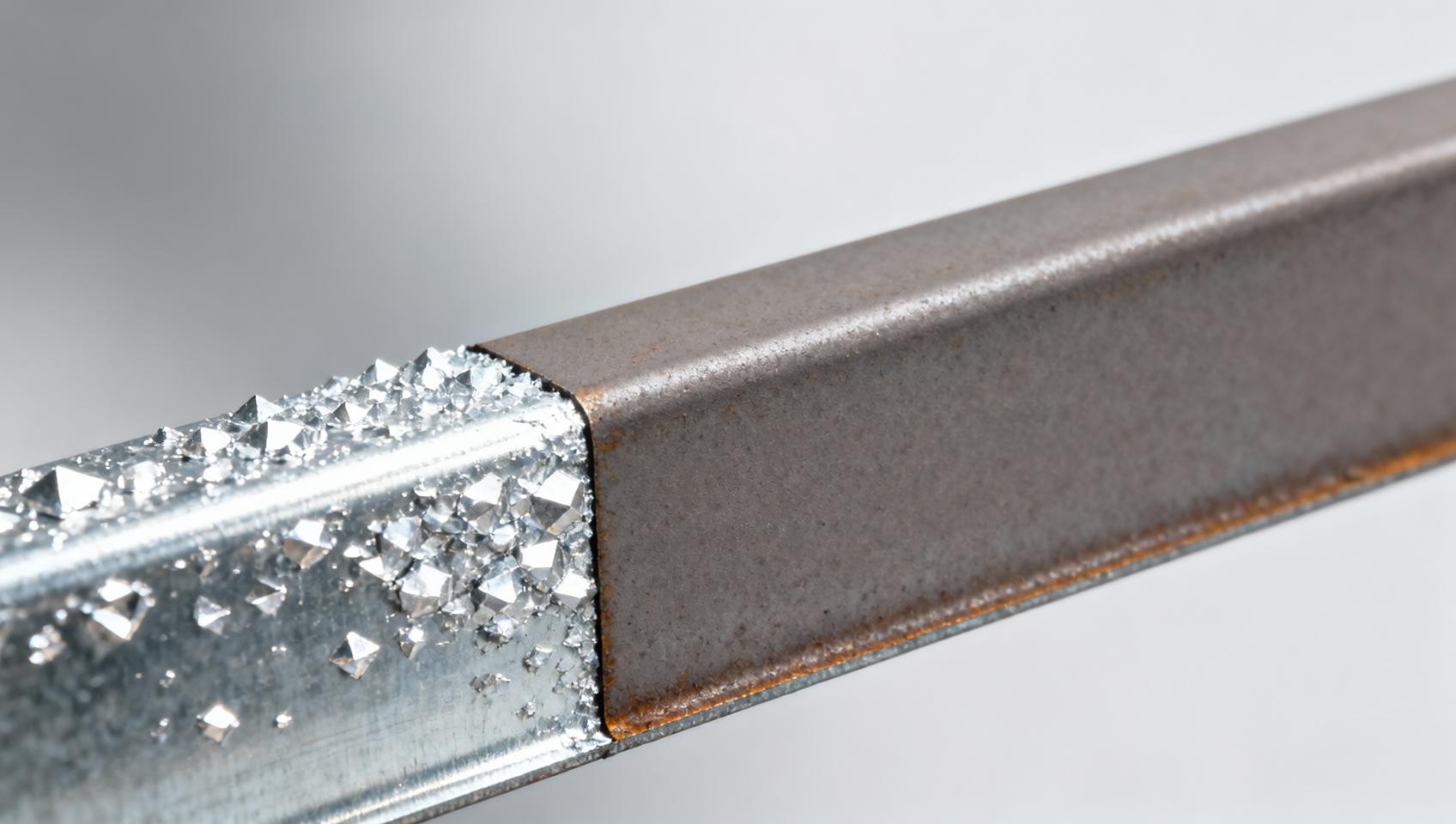
Before installation at industrial sites, proper handling and storage of carbon steel components determine long-term durability. Engineers should examine surface conditions for oxidation, pitting, or handling-induced defects. Carbon steel tends to corrode under humid and reactive industrial environments, making coating integrity paramount. Institutions often recommend routine surface testing and protective layer evaluation using non-destructive methods. To assist in minimizing corrosion, surface-treated products—such as the Hot dipped Galvanized Steel Wire Rope—offer multi-layer zinc protection suitable for use in mining, tower cranes, and marine applications, with tensile strength ranging from 1470Mpa to 1960Mpa. Selecting the correct coating thickness further enhances compatibility with corrosion severity categories, from mild to severe conditions.
Additionally, steel pile and steel rebar transportation should follow strict handling protocols to prevent bending or contamination. Forklifts should lift bundles evenly, ropes or clamps should be padded, and materials must not contact the ground directly. For pre-installation testing, ultrasonics and magnetic particle inspections help confirm structural uniformity before erection. Documentation compliance also requires maintaining Material Test Certificates (MTC) and welding procedure specifications (WPS). Field teams should monitor welding temperature, filler materials, and post-weld treatments to prevent delayed cracking or brittleness. These fine details, though seemingly minor, play major roles in ensuring that every carbon steel assembly fits precisely within the project’s safety framework.
3. In-Service Monitoring, Maintenance, and Safety Audits
Once a carbon steel structure has been installed, continuous monitoring becomes an ongoing requirement to uphold both safety and compliance. Regular inspections detect deformation, corrosion spots, or fatigue cracks early enough to avoid catastrophic failures. For industrial facilities such as refineries, chemical plants, and power stations, a comprehensive checklist should include: corrosion mapping, vibration analysis, stretching tests on steel rebar, and welding seam observation. In high-risk zones like offshore or coastal operations, specialized products such as hot dipped galvanized components are preferred for their additional metal coating and resistance to chloride environments. The Hot dipped Galvanized Steel Wire Rope exemplifies how galvanization adds a protective boundary in mechanical movements, extending rope and cable service life in hoisting, drilling, and photovoltaic installations.
Safety audits must be conducted periodically by competent personnel trained in mechanical integrity assessment. Third-party inspectors can verify compliance with standards like ISO 9001, EIPS, and ABS, ensuring international acceptability. Maintenance staff should also use predictive maintenance tools such as ultrasonic sensors and thermography to identify potential defects before visible failure occurs. Each intervention—whether a tightening, replacement, or re-welding—should be recorded in a logbook for traceability. Combined, these measures create an environment where steel pile and steel rebar solutions remain reliable under varying loads and environmental conditions, reinforcing not only the physical safety of the site but also the regulatory confidence needed for audits and customer assurance.
4. International Compliance Standards for Carbon Steel Structures
Compliance with international standards forms a vital part of any industrial steel project. ASTM A36, EN 10025, and JIS G3101 are commonly adopted benchmarks for carbon steel used in fabrication of beams, plates, and structural assemblies. Proper documentation and adherence to these codes ensure that structures can be accepted by regulatory authorities in North America, Europe, and Asia without delays. The standards define parameters for mechanical strength, chemical composition, dimensional tolerances, and acceptable limits for inclusions. Moreover, safety compliance extends beyond material properties to encompass design verification, welding quality, load testing, and stability calculations. Every piece of steel pile and steel rebar should be traceable through heat numbers and batch certifications, creating a trustworthy chain of proof from production to installation.
Manufacturers like Hongteng Fengda incorporate compliance into their production system by aligning their factory operations with GB/T 20116-2008 and ISO frameworks. This synchronization between national and international standards helps global buyers avoid costly re-certifications at project destinations. Quality personnel are trained to follow inspection by stages—raw steel examination, rolling verification, straightness, surface check, and final packaging inspection—to assure conformity with technical drawings and purchasing agreements. Such a multi-layered approach demonstrates how organized compliance not only enhances safety but also boosts consumer confidence, shortening procurement cycles and stabilizing supply chain reliability.
5. Emerging Sustainability and Safety Trends in the Steel Industry
Sustainability and safety increasingly converge in the steel industry. As industries worldwide focus on reducing emissions and lifecycle costs, demand is rising for carbon steel structures that combine strength with eco-efficiency. High-performance coatings, recyclable alloys, and digital tracking systems are now key components of industrial safety programs. Smart monitoring devices attached to steel frameworks collect real-time data on stress changes and corrosion rates, helping plant operators make proactive decisions. In addition, greener galvanization methods and cleaner heat-treatment processes reduce environmental pollutants while preserving mechanical performance. The push towards “digital twins” for critical structures is transforming the way engineers plan maintenance, significantly lowering the risk of structural failure.
Hongteng Fengda continues to innovate within this sustainability context. By integrating automated production and digital quality control systems, the company ensures consistent dimensional accuracy in steel beam, channel, and angle production. Environmentally friendly packaging and optimized transportation further limit carbon footprint throughout the logistics chain. For project managers, the integration of such technologies not only assures safety but contributes to long-term cost reduction. This convergence of safety, quality, and sustainability defines the modern future of carbon steel design for infrastructure, energy, and industrial developments worldwide.
Conclusion and Call to Action
Ensuring compliance and safety in carbon steel structures demands an integrated approach covering material selection, inspection, maintenance, and adherence to standards. By following the outlined checklist—confirming certifications, testing materials, applying protective coatings, and maintaining meticulous documentation—industrial sites can effectively reduce risks while achieving operational excellence. For those seeking reliable steel solutions, Hongteng Fengda delivers products manufactured under strict international frameworks, including ASTM, EN, JIS, and GB standards. The company’s expertise in producing customized structural components, steel pile, steel rebar, and advanced galvanized accessories helps clients achieve efficiency, consistency, and compliance.
Whether you are an engineer, procurement specialist, or quality manager, the path toward a safer and more compliant site starts with trusted partners who understand both technical precision and practical application. Contact Hongteng Fengda today to discuss project-specific requirements, request tailored quotations, or explore their comprehensive catalog of structural steel products and innovative coating solutions that safeguard industrial strength for decades to come.
Related recommendations
 Is acero galvanizado para exterior vulnerable to white rust formation during monsoon storage?Acero galvanizado para exterior *is* vulnerable to white rust in monsoons — but it’s preventable. Discover proven storage & handling strategies that protect your structural steel.
 Does ASTM A 36 plate meet impact toughness requirements for low-temperature bridge girders?Does ASTM A 36 plate meet low-temp bridge requirements? Short answer: no—unless specially tested. Discover why toughness matters more than strength in cold climates.
 Does ASTM A653 certification cover both zinc-coated and zinc-iron alloy coated steels?ASTM A653 covers both zinc-coated and zinc-iron alloy coated steels—but they’re not interchangeable. Learn key differences in testing, performance & certification.
 Does acero prepintado require surface pretreatment before welding or cutting?Does acero prepintado require pretreatment before welding or cutting? Discover when grinding is essential—and when it’s not—for safety, weld integrity & corrosion resistance.
Please give us a message


Please enter what you want to find