Understanding Common Welding Defects in Cold Rolled Steel Tubing
Reducing welding defects when using cold rolled steel tubing is key to ensuring structural integrity and long-term performance. As a leading structural steel manufacturer and exporter, Hongteng Fengda provides insights into optimizing welding processes for SGCC, C-shaped steel, ASTM A106 Gr.B, and stainless steel square bar applications. Whether you’re sourcing steel tubing, evaluating material quality, or working with stainless steel round components, understanding proper welding control can help minimize risks, meet ASTM and EN standards, and achieve better results in demanding engineering projects. In modern construction and industrial fabrication, cold rolled steel is favored for its precision dimensional tolerance, smooth finish, and high yield strength. However, welding this material requires controlled parameters and quality assurance, as issues such as porosity, cracking, lack of fusion, and distortion can compromise weld performance.
Common defects often originate from improper preheating, inadequate cleaning of the steel surface, incorrect filler selection, or suboptimal shielding gas flow. For instance, SGCC galvanized steel can introduce zinc vaporization, leading to blowholes near weld beads. Similarly, when joining stainless steel round or stainless steel square bar sections, improper heat input can result in carbide precipitation or intergranular corrosion. C-shaped steel profiles also pose challenges in maintaining alignment due to their open geometry. Hongteng Fengda’s production expertise ensures that every batch of cold rolled steel tubing is manufactured under consistent chemical composition and surface quality parameters, meeting ASTM A106 Gr.B and EN norms, which significantly reduces variability during welding operations.
Key Practices to Minimize Welding Defects in Structural Steel Projects
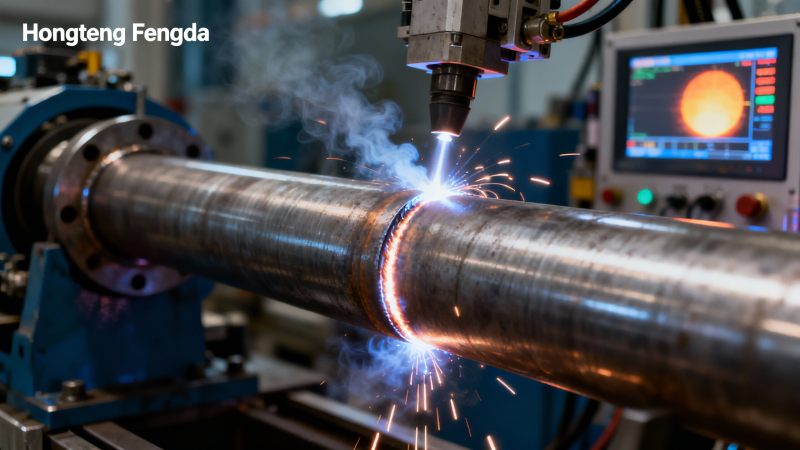
One of the most effective strategies to control welding quality in cold rolled steel is meticulous surface preparation. Before welding, the steel tubing or SGCC components must be free of mill scales, oil, rust, and contaminants. Professionals often adopt mechanical grinding or chemical cleaning methods followed by preheating when dealing with thicker tubes. Maintaining proper heat input is particularly essential for C-shaped steel and ASTM A106 Gr.B materials, as insufficient heat can lead to incomplete penetration while excessive heat may distort the tubing geometry. Welding defect analysis frequently points to incorrect parameter settings — current, voltage, or travel speed — as the main culprits.
Automation and digital monitoring technologies also play a vital role. Equipped with temperature sensors and feedback systems, automated welders adjust output to maintain stable arc characteristics. This helps improve consistency, especially when fabricating long seams found in industrial pipelines or frame systems. For stainless steel square bar and stainless steel round products, the introduction of argon shielding gas under precise flow controls can help eliminate oxidation and improve bead smoothness. Hanwu Steel and other global producers have increasingly adopted these controlled processes, allowing structures to achieve higher mechanical reliability and corrosion resistance.
Beyond weld execution, post-weld inspection remains crucial. Non-destructive testing (NDT) methods such as ultrasonic, magnetic particle, or radiographic inspection can detect internal discontinuities long before they result in performance failure. Hongteng Fengda advocates applying these techniques as part of project-level quality management systems to guarantee that every piece of steel tubing meets its design duty under static or dynamic loads. This integrated control not only reduces repair costs but also enhances project safety margins, a critical factor in structural steel applications.
Material Selection and Compatibility for Optimal Welding Performance
Material choice directly affects weldability and end-use performance. Cold rolled steel offers tighter tolerance and a smoother finish compared to hot rolled variants, making it suitable for precision fabrication. When combined with ASTM A106 Gr.B pipes or C-shaped steel channels, engineers must consider parameters such as carbon equivalent values, tensile strength, and coating properties. For example, SGCC-grade zinc coatings improve corrosion resistance but must be managed during welding to prevent toxic fume production. Using proper ventilation, de-zincing methods, or gas extraction systems significantly reduces operator risk.
Stainless steel square bars often require specialized filler metals to maintain chromium content at the weld joint. Choosing compatible filler materials ensures corrosion resistance and matching mechanical behavior across the entire assembly. Similarly, stainless steel round tubing used in architectural and high-pressure systems may demand post-weld heat treatment or pickling to restore surface integrity. Structural engineers, project managers, and procurement teams should collaborate with certified suppliers like Hongteng Fengda to ensure that all components — from Hanwu Steel pipes to OEM profile sections — align with ASTM, EN, and JIS specifications. This multidisciplinary approach reduces uncertainty in cross-material assemblies.
An additional consideration involves base metal thickness. When working with thin-gauge cold rolled steel, distortion control becomes paramount. Engineers use clamping fixtures, balanced welding sequences, and intermittent weld patterns to minimize residual stress. These technical measures unify safety standards while meeting international certification requirements such as ISO9001, ISO14001, and ISO18001. Businesses relying on high-quality steel tubing should prioritize suppliers following these rigorous frameworks, as they inherently reduce the likelihood of welding-related delays and reworks during construction.
Integrating Advanced Products for Structural Stability
Modern engineering increasingly combines multiple steel formats to achieve both strength and cost efficiency. The inclusion of innovative profiles, such as Hot Rolled Steel Sheet Pile, demonstrates how complementary materials can enhance the stability of retaining walls and water retaining structures. Constructed from carbon steel grades like S275, S355, and ASTM A690, and produced to EN10248 or JIS5528 standards, these sheet piles employ Larssen, hot rolled, or cold rolled interlocks for precise engagement. For project teams integrating cold rolled steel tubing with U-shaped sheet piles, consistent steel chemistry ensures weldability across interfaces and allows sections to form continuous retaining barriers with minimal misalignment.
Hongteng Fengda’s customization capability further allows adjustment of length — even exceeding 80 meters — supporting large-scale civil, marine, and industrial infrastructure. By controlling the metallurgical balance between hot rolled and cold rolled processes, fabricators reduce mismatch at welding joints and maintain cohesive tensile performance throughout assemblies. In addition, integrating products such as Hot Rolled Steel Sheet Pile enables diversified applications without compromising design freedom. With ISO and CE FPC certifications, each product aligns with stringent quality audits, empowering engineers to combine welded tubing frameworks with pile wall systems for higher durability and reduced lifecycle costs.
Global Supply Trends and Quality Management in Steel Welding
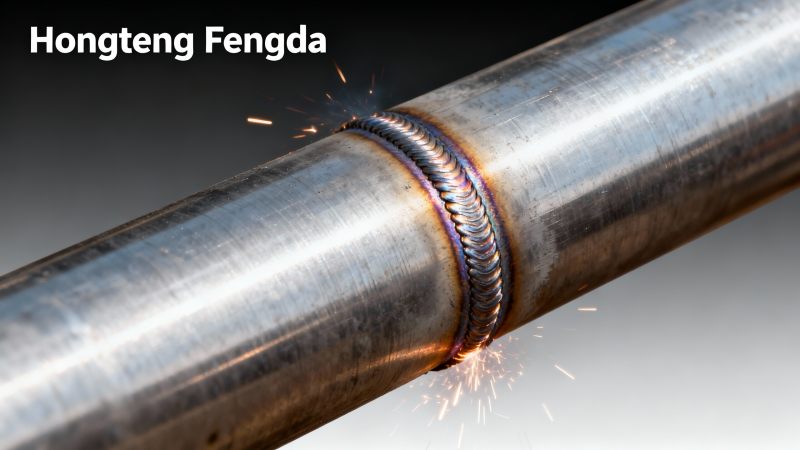
The global structural steel market reflects a steady transition toward automation, traceability, and sustainability. Buyers across North America, Europe, the Middle East, and Southeast Asia seek suppliers capable of delivering standardized cold rolled steel and welding-ready components under consistent batch traceability. Hongteng Fengda, as a professional structural steel manufacturer and exporter from China, supports these requirements through advanced quality control systems, including spectrographic analysis, tensile testing, and digital documentation management. These methods ensure materials such as SGCC coils, C-shaped steel beams, and stainless steel round profiles meet project specifications and eliminate cross-batch variation that could lead to welding inconsistencies.
In many industrial sectors — particularly oil and gas, heavy machinery, and public infrastructure — customers demand ASTM A106 Gr.B tubing due to its high pressure tolerance and weld adaptability. Maintaining quality consistency across multiple international standards (ASTM, EN, JIS, GB) allows engineers to confidently weld together parts from different origin suppliers. Furthermore, sustainability goals have prompted manufacturers to reduce emissions from welding operations by optimizing fluxes and shielding gases. By selecting energy-efficient welding processes and recyclable cold rolled steel materials, companies can meet environmental benchmarks while retaining cost efficiency. Hongteng Fengda’s commitment to low-carbon production ensures that each exported piece of steel tubing aligns with global regulatory expectations and customer reliability goals.
Conclusion: Building Confidence Through Quality Welding and Materials
Effective welding of cold rolled steel tubing is more than a technical procedure — it represents a commitment to structural durability, project safety, and economic efficiency. By understanding the science behind material behavior, maintaining controlled welding parameters, and partnering with qualified suppliers, engineers and decision-makers can significantly minimize welding defects. Hongteng Fengda continues to serve global customers with comprehensive solutions that cover material sourcing, technical support, and customized OEM production. From SGCC and ASTM A106 Gr.B pipes to stainless steel square bar and stainless steel round assemblies, each product is designed for reliability and compliance with international certification systems.
Whether you are an information researcher, technical evaluator, procurement officer, or project manager seeking to elevate welding performance, Hongteng Fengda provides the expertise and consistency necessary for success. Explore more professional structural steel applications and discover how optimized welding techniques can streamline your operations, enhance durability, and control costs effectively. Contact us today to discuss your technical requirements and access industry-leading structural steel solutions tailored for your next engineering challenge.
- steel i
- stainless steel round
- cold rolled steel
- hot rolled steel sheet
- ASTM A106 Gr.B
- steel tubing
- SGCC
- steel pipe
- galvanized steel
- Hanwu Steel
- Hot Rolled Steel
- structural steel
- steel beams
- steel profiles
- C-shaped steel profile
- C-shaped steel
- Structural Steel
- Steel Beams
- Profile
- Galvanized
- Steel Sheet Pile
- Steel Beam
- Steel Channel
- stainless steel square bar
- carbon steel
- steel sheet
- steel profile
Related recommendations
 How to Calculate Structural Steel Weight for Accurate Material TakeoffsStructural steel weight calculation made simple: use proven formulas, section masses, and takeoff tips to improve accuracy, control costs, and plan material efficiently.
 How to Control Distortion in Structural Steel Welding for Heavy SectionsStructural steel welding distortion control for heavy sections: learn proven fit-up, heat input, sequencing, and monitoring methods to reduce rework and improve accuracy.
 What Should Be Included When Calculating the Price of SS 304 Sheet?Price of SS 304 sheet explained: compare grade, finish, weight, processing, testing, freight, duties, and payment terms to calculate true landed cost.
 How Plate Dimensions and Mill Certification Influence SS304 Plate PriceSS304 plate price explained: see how dimensions, tolerances, surface finish, and mill certificates affect true purchasing cost, quality assurance, and fabrication value.
Please give us a message


Please enter what you want to find