Introduction
Choosing between a galvanized steel channel and a stainless steel channel is crucial for ensuring durability, corrosion resistance, and cost-efficiency in industrial projects. As a reliable structural steel manufacturer and exporter from China, Hongteng Fengda explores the key differences, performance factors, and application suitability of these two materials to help engineers, purchasers, and project managers make confident, cost-effective decisions for their specific construction and manufacturing needs. Both options are commonly used in modern infrastructure and equipment manufacturing, but their fundamental characteristics differ in surface treatment, corrosion behavior, and lifecycle performance, which can strongly influence project economics and safety outcomes.
Definition and Material Overview
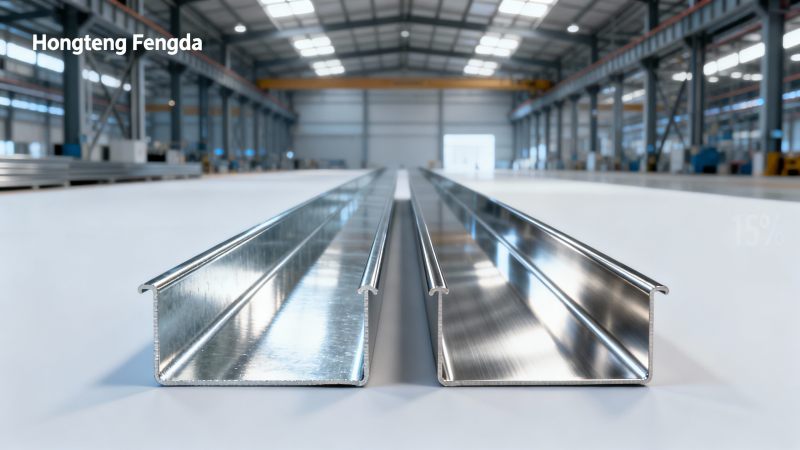
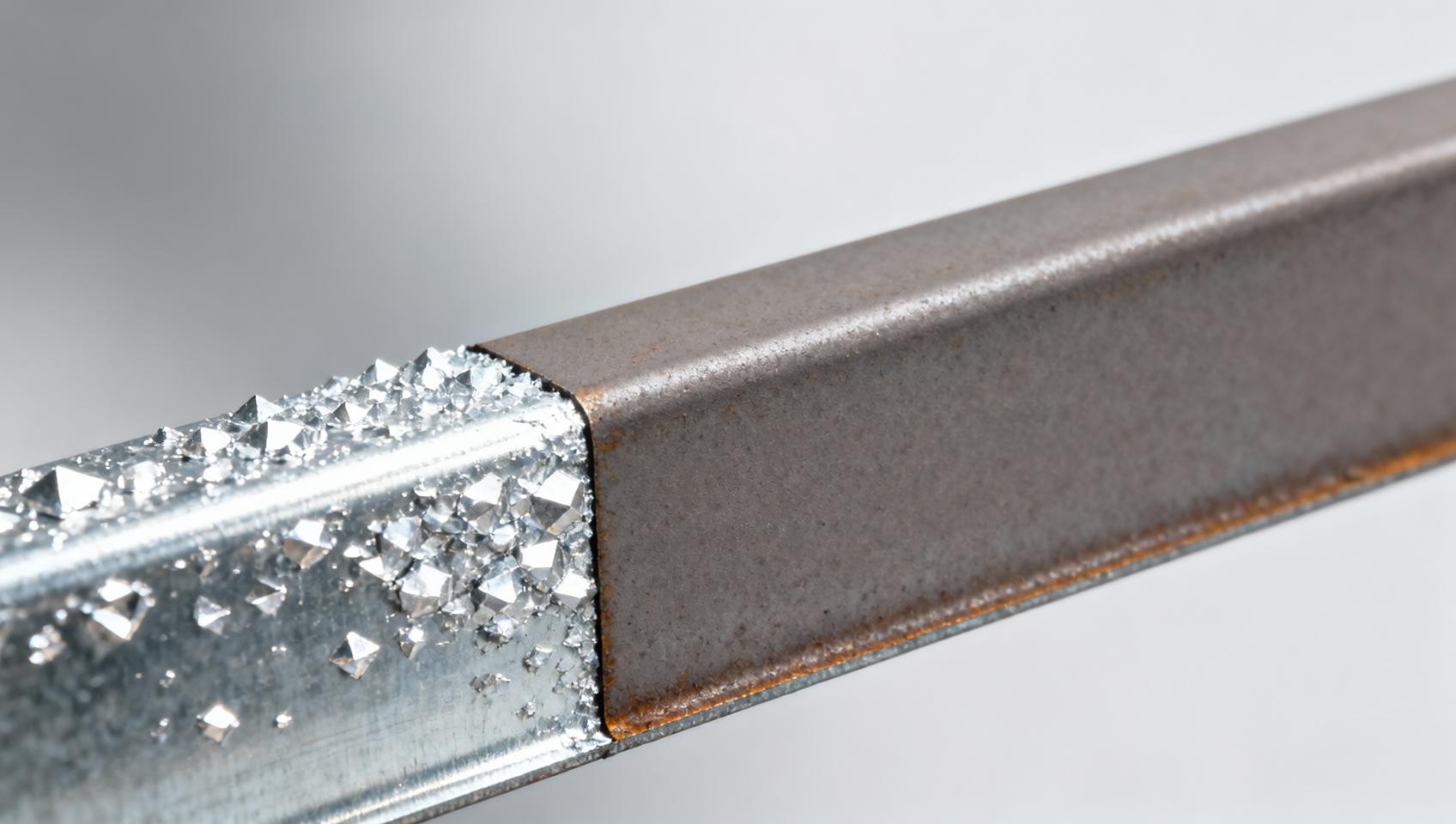
A galvanized steel channel is essentially a carbon steel channel coated with a protective layer of zinc through a hot-dip or electro-galvanizing process. This zinc coating acts as a barrier between the steel and the surrounding environment, providing galvanic protection against rust and oxidation. The process makes galvanized steel an affordable choice for outdoor frameworks, cable supports, and general industrial structures exposed to moisture and moderate corrosive conditions. In contrast, a stainless steel channel contains chromium, nickel, and sometimes molybdenum, forming a self-healing oxide layer that provides intrinsic corrosion resistance without external coating. Grades such as 304, 316, and 202 stainless steel are widely used in industries that demand long-term cleanliness, hygiene, or chemical resistance. The difference in composition means stainless channels can withstand harsher environments, but they also come at a higher initial cost.
Market Overview and Industry Demand
In the global steel market, the demand for durable structural channels continues to grow alongside industrialization and infrastructure expansion. North America and Europe maintain a strong appetite for galvanized steel due to cost-sensitive infrastructure projects and agricultural structures, while Southeast Asia and the Middle East increasingly favor stainless steel channels for handling higher humidity and chemical exposure. Manufacturing automation, environmental standards, and lifecycle management principles influence how buyers evaluate galvanization versus stainless compositions. Hongteng Fengda, as a structural steel manufacturer and exporter from China, responds to these dynamic needs with flexible production capacities, delivering both hot-dip galvanized steel channels and customized stainless steel profiles. These capabilities help international customers streamline procurement while ensuring compliance with ASTM, EN, JIS, and GB standards, enhancing the value and long-term performance of structural systems in load-bearing and architectural frameworks.
Technical Performance Comparison
From a technical perspective, performance depends on multiple variables such as tensile strength, corrosion resistance, forming ability, and maintenance requirements. Galvanized steel typically offers tensile strengths between 330 and 450 MPa, with its zinc coating delaying oxidation. However, once the coating is breached, localized corrosion can progress rapidly. In contrast, stainless steel channels—particularly when produced from alloys like the 202 Stainless Steel Coil—exhibit tensile strength of ≥520 MPa, with yield strength ≥275 MPa, and elongation capacity around 55–60%. The density (7.8 g/cm³) and hardness limit (≤183HB; ≤100 HRB) reflect a balanced combination of strength and ductility suitable for both high and low-temperature applications. This superior mechanical behavior, coupled with the austenitic structure stabilized by nickel and manganese, makes stainless steel dependable for precision structures, heat exchangers, and chemical tanks. The coefficient of thermal expansion and conductivity must also be evaluated for thermal stress scenarios, where stainless steel maintains more predictable dimensional stability under varying environmental conditions.
Application Scenarios and Use Cases
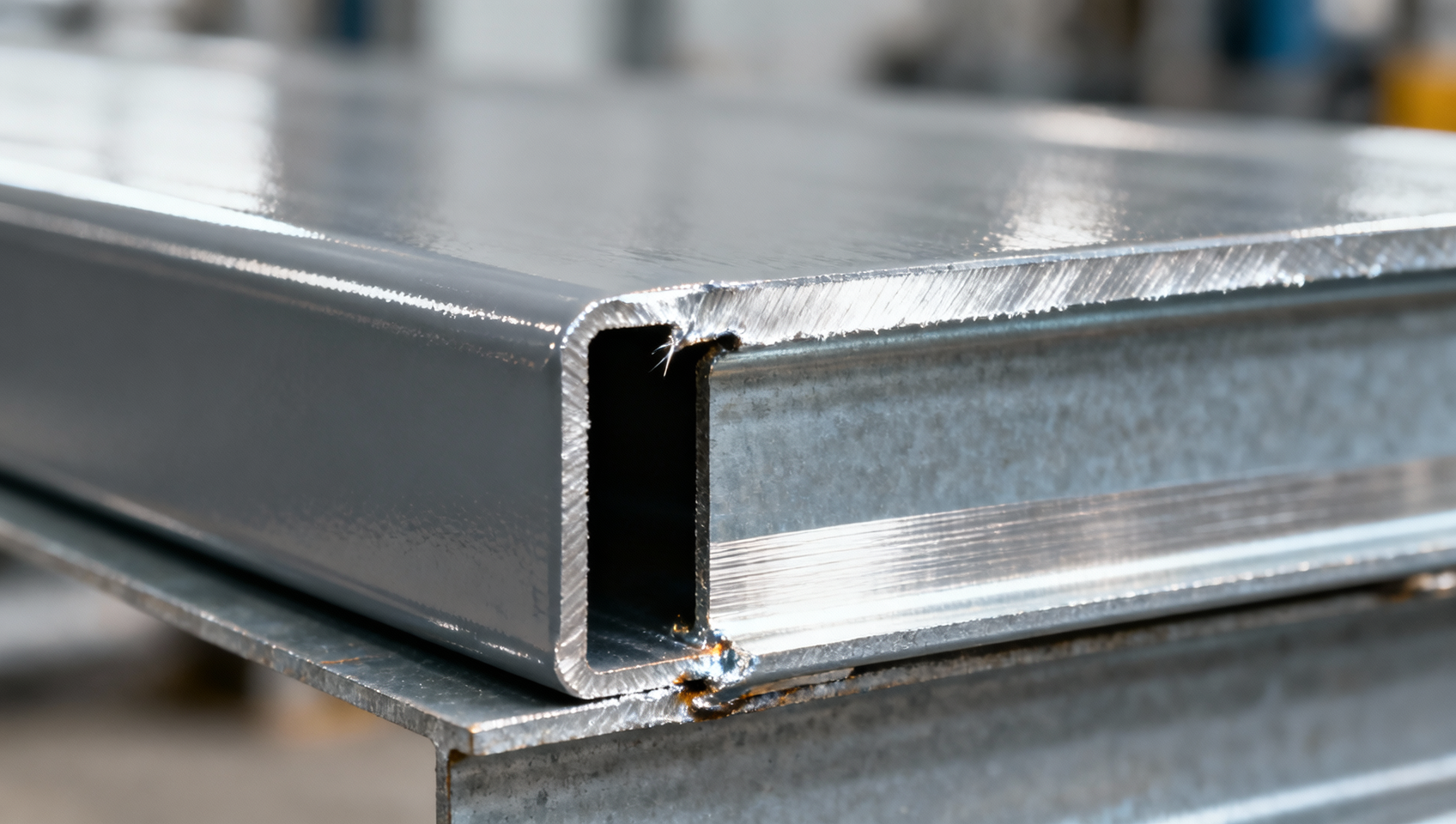
The choice between galvanized and stainless steel channels depends heavily on environment and load conditions. In construction sectors such as bridges, warehouses, and solar farm supports, galvanized steel channels remain cost-effective, particularly for short-to-medium project lifecycles. When dealing with food processing, pharmaceuticals, chemical storage, or marine environments, stainless steel channels outperform due to higher corrosion tolerance. Applications like ship components, food packaging machinery, trains, and vehicles require oxidation resistance, which makes stainless steel channels—often produced using materials similar to the 202 stainless steel grade—ideal. By integrating stainless solutions, manufacturers reduce long-term maintenance costs and improve hygienic performance. Meanwhile, Hongteng Fengda’s portfolio of angle steel, beams, and cold-formed profiles supports global clients across industrial, agricultural, and transport domains, ensuring each application benefits from precision manufacturing and globally recognized certifications such as ISO, SGS, and BV.
Cost and Lifecycle Considerations
Cost evaluation extends beyond initial material prices. A galvanized steel channel presents a lower upfront investment, but its protective layer can degrade due to chemical exposure or mechanical damage. Recoating or replacement then contributes to increased maintenance expenses. Stainless steel channels, though initially more expensive, demonstrate superior lifecycle economics due to minimal degradation and lower maintenance frequencies. Considering the Total Cost of Ownership (TCO), stainless is advantageous in long-term industrial environments exposed to moisture, acid vapors, or thermal fluctuations. For instance, when using components derived from stainless products like the 202 Stainless Steel Coil, enterprises benefit from properties including high ductility, toughness, and resistance to oxidation. These features translate into reduced downtime and improved structural reliability under both high and low temperature operations. Consequently, procurement managers balancing budgets and performance often adopt a hybrid material strategy—choosing galvanized solutions for general framing and stainless for critical or corrosive zones—to optimize financial outcomes.
Procurement Guide and Standards Compliance
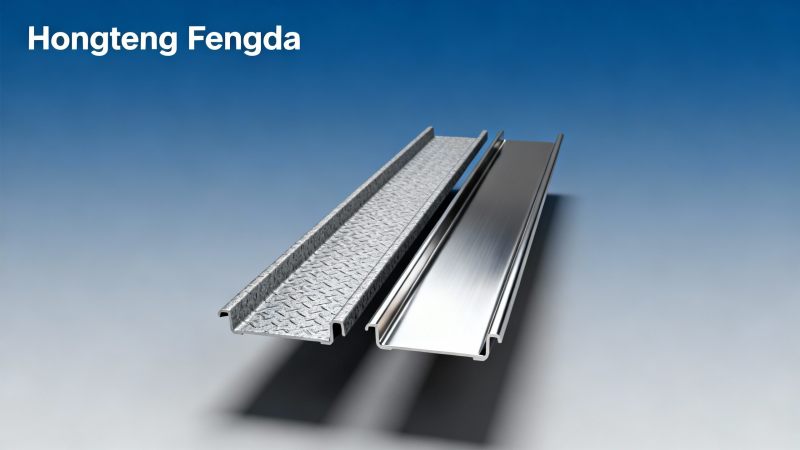
Procurement professionals and safety managers are required to align material selection with international standards and project specifications. Galvanized steel channels generally comply with ASTM A123, ASTM A653, or EN ISO 1461 for coating uniformity and adhesion, ensuring consistent corrosion protection. Stainless steel channels, on the other hand, are certified under ASTM A240 or EN 10088, covering mechanical and chemical compositions. Hongteng Fengda integrates strict quality control systems during fabrication, utilizing advanced rolling and surface finishing techniques to deliver channels that meet ASTM, EN, JIS, and GB benchmarks. In addition, our OEM customization services allow engineers to specify shapes, thicknesses, and tolerances adjusted for unique assembly conditions. Buyers can also request documentation related to ISO quality systems, SGS testing, and BV certification to support audit-ready procurement. By ensuring traceability from raw coil to finished beam, Hongteng Fengda minimizes sourcing risks and complements modern supply-chain compliance initiatives across international infrastructure projects.
FAQs and Common Misconceptions
- Is galvanized steel always inferior to stainless steel? Not necessarily. For dry or moderately humid conditions, galvanized steel offers adequate protection at a lower cost, provided the zinc coating remains intact.
- Can stainless steel rust? Under extreme conditions, such as chloride exposure without maintenance, certain grades may show slight discoloration, but corrosion progression is minimal compared to general carbon steel.
- How should I maintain each material? Galvanized steel requires inspection of coating integrity, while stainless components should be cleaned periodically to remove chloride deposits or contaminants.
- Does weight differ significantly? The density difference is minor, but design thicknesses can vary according to structural load and resistance requirements, affecting overall mass and cost per unit area.
- When should a hybrid approach be used? For large facilities, hybrid designs combine galvanized channels for interior framing with stainless in exposed or chemically active zones, balancing cost and longevity.
Trends and Future Insights
With global focus shifting toward sustainability and circular economy principles, both galvanized and stainless steel channels are being optimized for recyclability and environmental compliance. The move toward lead-free galvanization, improved coating adhesion, and precision alloy control in stainless grades responds to stricter emissions regulations and lifecycle assessment demands. Additive manufacturing, digital production monitoring, and AI-based inspection are transforming how manufacturers like Hongteng Fengda ensure consistent metallurgy and defect-free finishes. Furthermore, the demand for lightweight, high-strength alternatives has increased R&D into austenitic and duplex stainless alloys, potentially reducing wall thickness without compromising mechanical integrity. As part of China’s advanced steel manufacturing sector, Hongteng Fengda contributes to this trend by offering customized cold-formed channels and innovative profiles tailored for renewable energy infrastructure, modular construction, and intelligent transportation systems, positioning clients for future-ready structural solutions in an increasingly performance-driven global marketplace.
Why Choose Hongteng Fengda
Partnering with Hongteng Fengda means working with a manufacturer that combines advanced production technology, comprehensive quality control, and professional export experience. Our extensive range of channel steel, beams, angle profiles, and cold-formed shapes allows clients worldwide to source all structural steel components from one trusted supplier. With stable capacity, dependable logistics, and direct factory pricing, we empower project managers, quality supervisors, and procurement officers to manage deadlines and budgets without compromising quality. Our support covers engineering consultation, OEM solutions, packaging optimization, and document certification to meet regional regulatory requirements. Whether for industrial frames, equipment fabrication, infrastructure renewal, or specialized machinery projects, Hongteng Fengda remains committed to delivering compliant, consistent, and customized steel solutions. To explore specifications, standards, or tailored manufacturing options, contact us directly and experience reliable cooperation that translates innovative metallurgy into tangible project success.
Related recommendations
 Is acero galvanizado para exterior vulnerable to white rust formation during monsoon storage?Acero galvanizado para exterior *is* vulnerable to white rust in monsoons — but it’s preventable. Discover proven storage & handling strategies that protect your structural steel.
 Does ASTM A 36 plate meet impact toughness requirements for low-temperature bridge girders?Does ASTM A 36 plate meet low-temp bridge requirements? Short answer: no—unless specially tested. Discover why toughness matters more than strength in cold climates.
 Does ASTM A653 certification cover both zinc-coated and zinc-iron alloy coated steels?ASTM A653 covers both zinc-coated and zinc-iron alloy coated steels—but they’re not interchangeable. Learn key differences in testing, performance & certification.
 Does acero prepintado require surface pretreatment before welding or cutting?Does acero prepintado require pretreatment before welding or cutting? Discover when grinding is essential—and when it’s not—for safety, weld integrity & corrosion resistance.
Please give us a message


Please enter what you want to find