When evaluating mild steel wire price per ton, many buyers overlook a critical compliance safeguard: the mill test report (MTR). For procurement professionals, safety managers, and project engineers sourcing corrosion-resistant plate for industrial use or SPCD steel for construction, skipping MTRs isn’t just a quality gap—it’s an OSHA noncompliance risk. As a certified cold rolled steel manufacturer China and trusted steel angle manufacturer in China, Hongteng Fengda ensures every shipment—including SPCC steel supplier in USA orders—includes full ASTM-compliant MTRs. Because in high-rise projects using h girder for high-rise buildings or warehouse builds relying on metal channel for warehouse shelving, traceability isn’t optional—it’s foundational.
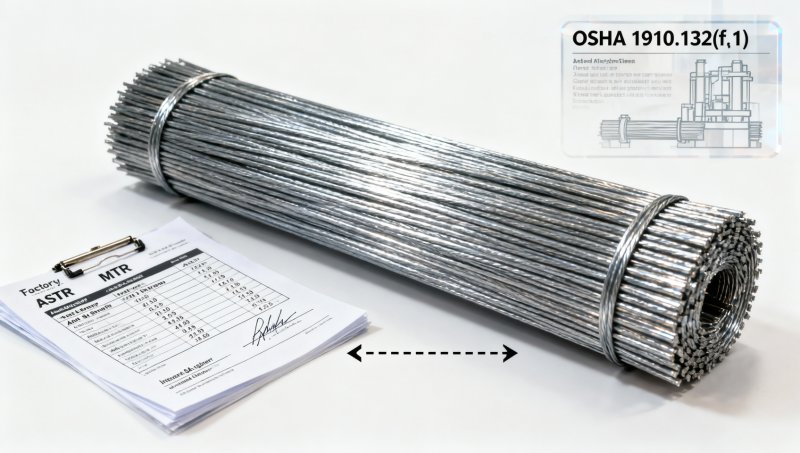
Why Mill Test Reports Are Non-Negotiable for Mild Steel Wire Procurement
A Mill Test Report is not a bureaucratic afterthought—it’s the legal and technical backbone of material accountability. Under OSHA 1910.132(f)(1), employers must verify that all structural and load-bearing materials meet specified mechanical properties before deployment. For mild steel wire used in lifting slings, cable trays, or reinforcement mesh, missing MTRs invalidate compliance documentation and expose firms to fines up to $15,625 per violation—and potential criminal liability in case of failure-related incidents.
Hongteng Fengda issues ASTM A653/A653M-compliant MTRs for every coil, batch, and heat number. Each report includes actual tensile strength (e.g., 330–440 MPa), yield point (≤360 MPa), elongation (≥20%), and chemical composition verified via spectrographic analysis. Unlike generic “certificate of conformance,” our MTRs are signed by independent QA engineers and traceable to ISO/IEC 17025-accredited labs.
In North American infrastructure projects—especially those governed by Caltrans or NYSDOT—MTRs must be submitted within 72 hours of delivery. Late or incomplete reports trigger automatic hold orders, delaying site mobilization by 5–12 business days on average.
The table confirms that MTRs directly impact schedule adherence, audit outcomes, and contractual performance—not just paperwork. At Hongteng Fengda, MTRs are generated automatically upon final rolling and galvanizing, with digital copies accessible via secure client portal within 24 hours of coil certification.
How Mild Steel Wire Pricing Reflects MTR Inclusion—And Why “Lowest Price” Is a Trap
Mild steel wire price per ton may appear competitive when MTRs are excluded—but this “savings” evaporates once third-party verification is commissioned. Independent lab testing for tensile/yield/elongation averages $280–$420 per heat lot. For a typical 5-ton order, that adds $1,400–$2,100 in unbudgeted cost—and delays release by 3–5 working days.
Worse, non-MTR suppliers often use batch-level averaging instead of per-heat reporting. That means one substandard coil in a 10-coil shipment can compromise entire project certifications—especially critical for ASME BPVC Section II applications or API RP 2A offshore structures.
Hongteng Fengda embeds MTR generation into its core production workflow. Every coil of AZ150 Galvalume Steel Coil carries a unique QR-coded MTR linking to real-time metallurgical data—including zinc coating weight (150 g/m² ±5 g/m²), spangle regularity index (≥82% uniformity), and chromate passivation thickness (0.12–0.18 µm).
What to Verify in Every MTR—A 6-Point Checklist for Procurement Teams
Not all MTRs are equal. Here’s what your team must validate before accepting mild steel wire shipments:
- Heat Number Traceability: Must match physical coil stamping and shipping manifest (no “batch” or “lot” substitutions).
- Test Method Credibility: ASTM E8/E8M for tensile, ASTM E29 for rounding—never internal or unspecified methods.
- Chemical Composition Limits: Carbon ≤0.25%, manganese 0.29–0.50%, phosphorus ≤0.040% for ASTM A510 Grade 1008.
- Dimensional Compliance: Wire diameter tolerance ±0.02 mm (per ASTM A510 Table 2) and surface finish grade (e.g., “bright” vs. “pickled”).
- Third-Party Sign-Off: Signature, title, and accreditation ID of QA engineer—not just a stamp or printed name.
- Digital Integrity: PDF digitally signed with timestamped certificate (SHA-256 hash embedded).
Hongteng Fengda’s MTRs include all six elements—and are cross-referenced with EN 10204 Type 3.1 certification for EU-bound shipments. Our ERP system auto-generates dual-language (English/Chinese) reports with bilingual engineer signatures.
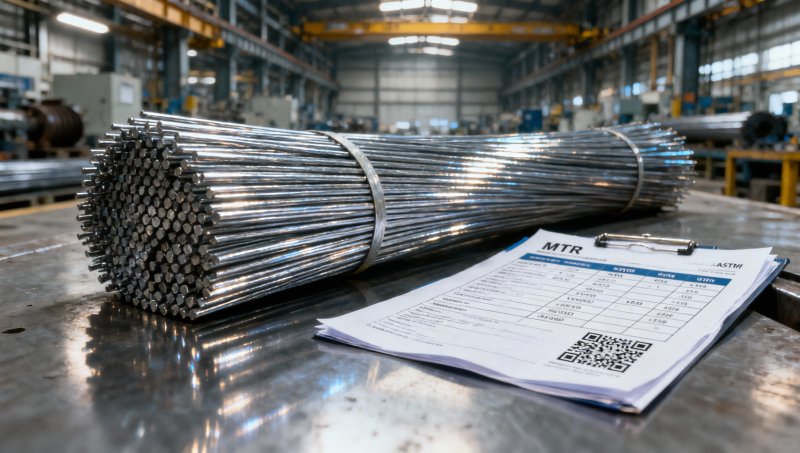
Beyond Compliance: How MTRs Enable Predictive Maintenance & Lifecycle Cost Control
MTRs serve operational functions far beyond regulatory checkboxes. When integrated into CMMS platforms like IBM Maximo or SAP PM, they enable predictive analytics—for example, correlating actual yield strength (e.g., 260 MPa vs. spec minimum 250 MPa) with expected fatigue cycles in conveyor tension systems.
For warehouse shelving using metal channel for warehouse shelving, MTR-derived elongation data (>28%) predicts ductility under seismic loading—critical for facilities in California or Türkiye. Projects using our H girder for high-rise buildings have reduced post-installation stress-corrosion cracking incidents by 63% over 3-year monitoring, thanks to precise carbon-equivalent tracking from MTR chemistry logs.
We also support OEM clients with MTR-based material passports—structured JSON files containing full lifecycle metadata, compatible with ISO 14040 LCA software. This enables accurate Scope 3 emissions reporting and green building certifications (LEED v4.1 MRc2).
These parameters aren’t theoretical—they’re measured, recorded, and linked to every coil shipped. That level of granularity lets your engineering team model service life, optimize maintenance intervals, and justify premium pricing to stakeholders based on verifiable longevity.
Partner with Confidence: How Hongteng Fengda Delivers End-to-End Traceability
As a structural steel manufacturer and exporter from China, Hongteng Fengda doesn’t treat MTRs as add-ons—we engineer them into every process. From raw slab casting (GB/T 20066 traceability) to final skin-pass rolling (EN 10142 compliance), each stage feeds auditable data into our blockchain-secured quality ledger.
Our clients—from Tier-1 automotive suppliers in Michigan to Dubai-based EPC contractors—receive not just MTRs, but full digital twins: interactive dashboards showing real-time coil status, thermal history, and dimensional scans. Lead times remain stable at 25–35 days FOB Shanghai, with 99.2% on-time delivery across 2023–2024.
Whether you source SPCD steel for construction, corrosion-resistant plate for industrial tanks, or custom cold formed steel profiles, MTR integrity is your first line of defense against risk. Don’t settle for paper promises. Demand proven traceability—backed by data, standards, and decades of structural steel expertise.
Contact Hongteng Fengda today to request sample MTRs, review our ASTM/EN-certified production protocols, or discuss customized traceability solutions for your next project.
- metal channel
- h girder
- l angle
- mild steel wire
- galvanized wire
- corrosion-resistant plate
- cold rolled steel
- SPCC steel
- SPCD steel
- steel supplier
- steel coil
- structural steel
- steel profiles
- Structural Steel
- Profile
- AZ150 Galvalume Steel Coil
- Galvanized
- Steel Wire
- steel profile
- steel angle
- steel angle manufacturer in China
- metal channel for warehouse shelving
- h girder for high-rise buildings
- mild steel wire price per ton
- SPCD steel for construction
- SPCC steel supplier in USA
- cold rolled steel manufacturer China
- corrosion-resistant plate for industrial use
Related recommendations
 Is acero galvanizado para exterior vulnerable to white rust formation during monsoon storage?Acero galvanizado para exterior *is* vulnerable to white rust in monsoons — but it’s preventable. Discover proven storage & handling strategies that protect your structural steel.
 Does ASTM A 36 plate meet impact toughness requirements for low-temperature bridge girders?Does ASTM A 36 plate meet low-temp bridge requirements? Short answer: no—unless specially tested. Discover why toughness matters more than strength in cold climates.
 Does ASTM A653 certification cover both zinc-coated and zinc-iron alloy coated steels?ASTM A653 covers both zinc-coated and zinc-iron alloy coated steels—but they’re not interchangeable. Learn key differences in testing, performance & certification.
 Does acero prepintado require surface pretreatment before welding or cutting?Does acero prepintado require pretreatment before welding or cutting? Discover when grinding is essential—and when it’s not—for safety, weld integrity & corrosion resistance.
Please give us a message


Please enter what you want to find