Selecting the correct pipe stainless steel ASTM standard is critical for food-grade process piping systems—where hygiene, corrosion resistance, and regulatory compliance are non-negotiable. For engineers, procurement teams, and QA managers sourcing materials like SS 304 tube price quotation or mirror stainless sheet for furniture, understanding ASTM A312, A270, and A249 ensures safety and performance. As a trusted structural steel manufacturer in China, Hongteng Fengda supplies ASTM-compliant stainless steel products—including stainless steel corrugated sheet lightweight and stainless steel embossed plate for elevator decoration—supporting global food, pharma, and beverage projects with traceable, certified solutions.
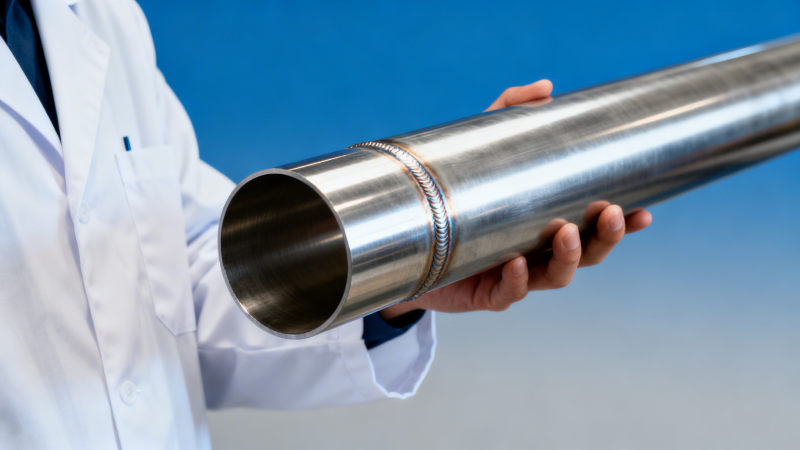
Why ASTM Standard Selection Directly Impacts Food Safety & Regulatory Approval
In food, dairy, brewing, and pharmaceutical processing, stainless steel piping isn’t just structural—it’s part of the product contact surface. ASTM standards define not only chemical composition and mechanical properties but also surface finish requirements, weld integrity, and cleaning validation protocols. Using ASTM A312 (for general seamless/welded austenitic stainless pipe) instead of ASTM A270 (specifically designed for sanitary tubing) may meet basic pressure ratings—but fail FDA 21 CFR §178.3570 or 3-A Sanitary Standards for surface roughness (Ra ≤ 0.8 µm), particulate shedding, or microbiological retention risk.
Misapplication can trigger costly rework: 62% of audit failures in EU food facilities involving piping trace back to non-compliant material certification or undocumented surface treatment. ASTM A270 mandates electropolished inner surfaces, helium leak testing, and full lot traceability—requirements absent in ASTM A312. For cold-formed components or support structures adjacent to process lines, carbon steel alternatives must still meet environmental compatibility criteria. Tube Carbon Steel grades like S355J2H offer yield strength ≥355 MPa and low-temperature toughness down to –20°C, making them suitable for structural supports in chilled beverage plants where thermal cycling occurs over 3,000+ cycles annually.
Hongteng Fengda maintains dual-certified production lines: one dedicated to ASTM A270 sanitary tubing (with ISO 9001:2015 + ASME BPVC Section VIII certified welding procedures), and another for structural carbon steel tubes compliant with EN 10219 and ASTM A500. This separation prevents cross-contamination risk during manufacturing—a key due diligence point for auditors from BRCGS, SQF, or NSF.
ASTM A270 vs. A312 vs. A249: Functional Differences You Can’t Overlook
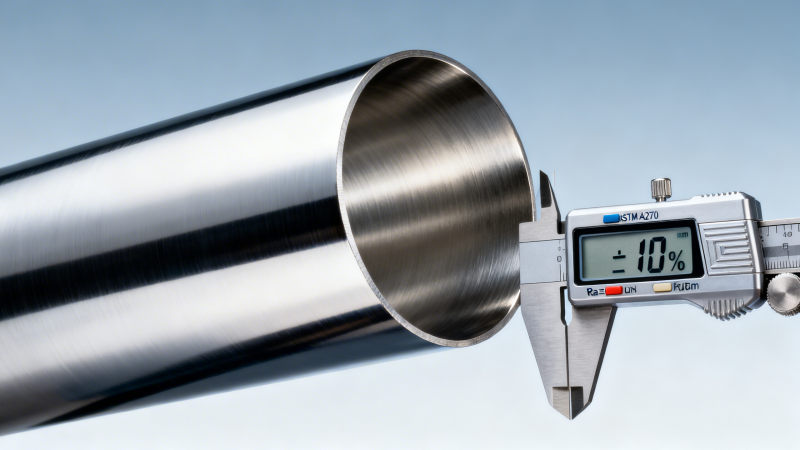
While all three cover austenitic stainless steel tubing, their scope, dimensional tolerances, and testing rigor differ significantly. ASTM A270 governs seamless and welded *sanitary* tubing—requiring minimum wall thickness tolerance of ±10%, surface finish Ra ≤ 0.6 µm (electropolished), and hydrostatic testing at 1.5× design pressure. ASTM A312 covers general-purpose pipe (including SS 304/316) with wall tolerance ±12.5% and no surface roughness mandate. ASTM A249 applies to welded *corrosion-resistant* tubing used in heat exchangers—not process lines—allowing higher weld reinforcement and less stringent cleanliness protocols.
The table highlights a critical procurement insight: ASTM A270 isn’t “premium” — it’s *mandatory* for product-contact applications. Choosing A312 to save 18–22% on unit cost risks $150k+ in retrofitting if an FDA pre-approval inspection identifies non-conformance. Hongteng Fengda provides third-party Mill Test Reports (MTRs) with every A270 shipment, including heat number traceability, surface roughness verification reports, and weld map documentation—fully aligned with 3-A SSI 3-A-74-03 requirements.
Material Compatibility & Structural Support Requirements
Process piping rarely stands alone. It requires structural support, seismic bracing, and thermal expansion management—all of which demand compatible materials. While SS 304 tubing handles caustic cleaning agents, its coefficient of thermal expansion (17.2 µm/m·°C) differs significantly from carbon steel (12.0 µm/m·°C). Using non-matching support structures without engineered isolation can induce cyclic stress fatigue at clamp points after ~14 months of daily CIP/SIP cycles.
That’s where Tube Carbon Steel plays a decisive role. Grades like S355J2H deliver high strength-to-weight ratio (yield strength ≥355 MPa), low cold-brittle transition temperature (–20°C), and excellent weldability—ideal for overhead pipe racks in breweries operating at 2–8°C ambient. Its elongation range (10–680%) allows controlled deformation under seismic loads up to 0.3g acceleration, meeting ASCE 7-22 Category IV requirements for critical infrastructure.
- Seamless carbon steel tubes: 1/4″–36″ OD, wall thickness 1.25–50 mm
- Welded carbon steel tubes: 21.3–3620 mm OD, wall thickness 1.65–65 mm
- Certified to ASTM A500 (structural tubing), EN 10219 (cold-formed hollow sections), and ASME B36.10M
Hongteng Fengda’s integrated production capability means clients receive coordinated delivery of ASTM A270 sanitary tubing *and* EN-certified carbon steel support tubes—reducing logistics coordination from 4–5 vendors to a single point of accountability. This cuts project timeline variance by up to 27% versus fragmented sourcing.
Procurement Checklist: 6 Non-Negotiable Verification Points
Before approving purchase orders for food-grade stainless piping, verify these six items—each backed by documented evidence:
- Mill Test Report (MTR) includes actual chemistry—not just “typical”—with Mo, Cr, Ni, and C content matching ASTM A270 Table 1 limits
- Surface finish report showing Ra ≤ 0.6 µm on inner diameter, verified via profilometer (not visual estimate)
- Weld map identifying each weld location, procedure qualification record (PQR), and welder ID
- Helium leak test results ≤ 1 × 10⁻⁹ mbar·L/s per weld joint
- Traceability: Heat number stamped on tube ends and cross-referenced in MTR
- Packaging: Vacuum-sealed, nitrogen-purged, and protected against fingerprint contamination
Hongteng Fengda embeds all six checks into its digital quality portal—accessible to buyers in real time. Clients report 41% faster QA sign-off compared to traditional paper-based MTR submission.
Conclusion: Precision Standards Enable Reliable Outcomes
Choosing the right ASTM standard isn’t about technical checkboxing—it’s about aligning material specifications with operational reality: cleaning frequency, thermal cycling, microbial control, and regulatory exposure. ASTM A270 is the baseline for food-grade piping; A312 serves supporting infrastructure; and properly engineered carbon steel—like S355J2H—ensures long-term structural integrity without compromising hygiene. With end-to-end compliance documentation, synchronized supply chains, and production lines certified to both ASTM and EN standards, Hongteng Fengda enables global project teams to eliminate specification ambiguity and accelerate time-to-operation.
Need a validated solution for your next food, beverage, or pharma piping system? Contact Hongteng Fengda today for ASTM A270 tubing quotations, carbon steel structural tube specifications, or full-system engineering support—including 3D BIM modeling and installation guidance tailored to ASME BPE or EHEDG guidelines.
- seamless carbon steel tube
- tube carbon steel
- carbon steel tube
- steel tubing
- ASTM standards
- ASTM standard
- structural steel
- Structural Steel
- stainless steel tubing
- mirror stainless sheet
- Stainless steel embossed plate
- Stainless steel corrugated sheet
- ss 304 tube price
- stainless pipe
- ss pipe
- pipe stainless
- carbon steel
- steel tube
- Stainless steel embossed plate for elevator decoration
- pipe stainless steel ASTM standard
- Stainless steel corrugated sheet lightweight
- ss 304 tube price quotation
- mirror stainless sheet for furniture
Related recommendations
 How to Judge if Steel Sheet for Construction Fits Roofing or Wall CladdingSteel sheet for construction: learn how to judge thickness, coating, profile, and load performance for roofing or wall cladding, and choose a durable, cost-effective fit.
 How to Choose SS Pipe for Water Supply in Corrosion-Prone BuildingsSS pipe for water supply selection guide for corrosion-prone buildings. Compare 304 vs 316 grades, water chemistry, specs, and lifecycle cost to choose a safer, longer-lasting system.
 Steel Wire Rope Manufacturer Standards That Matter in Lifting ApplicationsSteel wire rope manufacturer standards for lifting: learn how to assess traceability, testing, compliance, and real quality control before choosing a safer, more reliable supplier.
 When a Steel Channel Supplier Should Provide Mill Test CertificatesSteel Channel supplier guide on when mill test certificates should be provided for quality control, compliance, and safer procurement.
Please give us a message


Please enter what you want to find