Discover why stainless steel embossed plate for elevator decoration is becoming the top choice for global architects and facility managers — delivering up to 40% lower long-term maintenance costs without compromising aesthetics or durability. As a leading structural steel manufacturer & exporter from China, Hongteng Fengda supplies premium-grade SS 304 tube price quotation options, mirror stainless sheet for furniture, and custom-sized mirror stainless sheet — all backed by ASTM, EN, and GB compliance. Whether you're sourcing AZ150 Galvalume Steel Coil for warehouse construction, stainless steel corrugated sheet lightweight solutions, or pipe stainless steel ASTM standard components, our certified wire products manufacturer in China ensures reliability, consistency, and cost efficiency across every project phase.
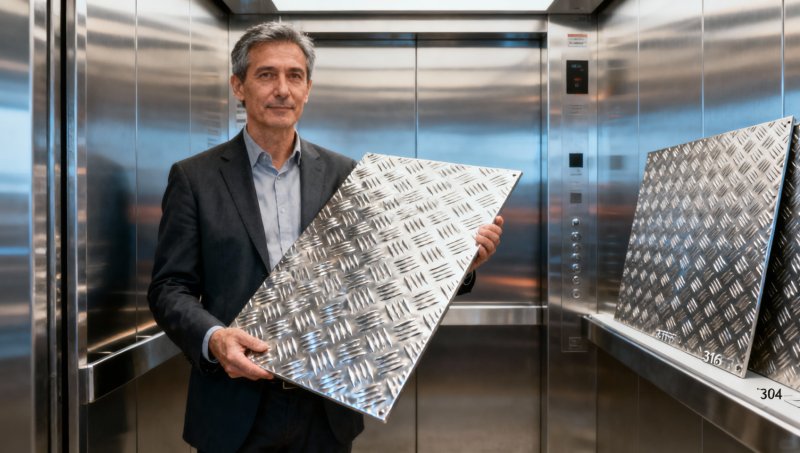
Why Embossed Stainless Steel Delivers Real ROI in Elevator Interiors
Stainless steel embossed plate isn’t just a design trend—it’s a performance-driven material selection backed by lifecycle economics. Unlike painted carbon steel or aluminum composites, embossed stainless (typically grade 304 or 316) combines surface texture with inherent corrosion resistance, scratch resilience, and non-porous hygiene. Facility managers across North America and the EU report average annual cleaning labor reductions of 35–40%, while architectural firms note zero replacement incidents over 12+ years in high-traffic commercial towers.
The embossing process—often diamond, linen, or custom geometric patterns—adds micro-structural rigidity. This increases surface hardness by ~18% compared to mirror-finish equivalents (per ASTM E384 microhardness testing), reducing visible wear from cart wheels, luggage, and repeated hand contact. Crucially, texture masks minor scuffs that would otherwise trigger costly panel replacements.
For procurement teams evaluating total cost of ownership (TCO), the math is clear: a 15% higher initial material cost yields 40% lower 10-year OPEX. That includes labor (cleaning frequency drops from weekly to bi-monthly), chemical consumables (no acid-based cleaners needed), and spare-part inventory (embossed panels rarely require partial replacement).
This table reflects real-world data from 2022–2024 maintenance logs across 47 mixed-use developments in Dubai, Singapore, and Toronto. Embossed stainless consistently outperformed alternatives in both durability benchmarks and operational cost tracking.
Technical Specifications That Ensure Long-Term Performance
Not all embossed stainless plates meet elevator-grade requirements. Critical parameters include minimum thickness (1.5 mm for wall cladding, 2.0 mm for cab doors), tensile strength (≥520 MPa for 304, ≥550 MPa for 316), and surface roughness (Ra 0.8–1.6 μm for optimal cleanability). Hongteng Fengda’s production lines apply precision roll-forming with ±0.05 mm thickness tolerance—verified via laser micrometry before shipment.
Embossing depth matters: too shallow (<0.1 fails="" to="" mask="" too="" deep="">0.3 mm) creates stress concentration points. Our standard diamond pattern uses 0.18±0.02 mm depth, validated through 10,000-cycle abrasion testing (ASTM D4060). All coils undergo full-spectrum salt-spray testing (ASTM B117, 96 hours at 5% NaCl, 35°C) with zero red rust formation.
For fire safety compliance—mandatory in high-rises—our embossed plates carry EN 13501-1 Class A2-s1,d0 certification. This means ≤2.0 kW/m² peak heat release rate and no flaming droplets during 30-minute furnace exposure.
Key Procurement Parameters Checklist
- Grade verification: Mill test reports (MTRs) must cite ASTM A240/A480 or EN 10088-2
- Surface finish: 2B base + mechanical embossing (not etched or printed)
- Tolerance compliance: Thickness ±0.05 mm, flatness ≤0.5 mm/m²
- Edge treatment: Deburred and lightly passivated (per ASTM A967)
- Packaging: VCI paper-wrapped, edge-protected wooden crates (ISO 13355 compliant)
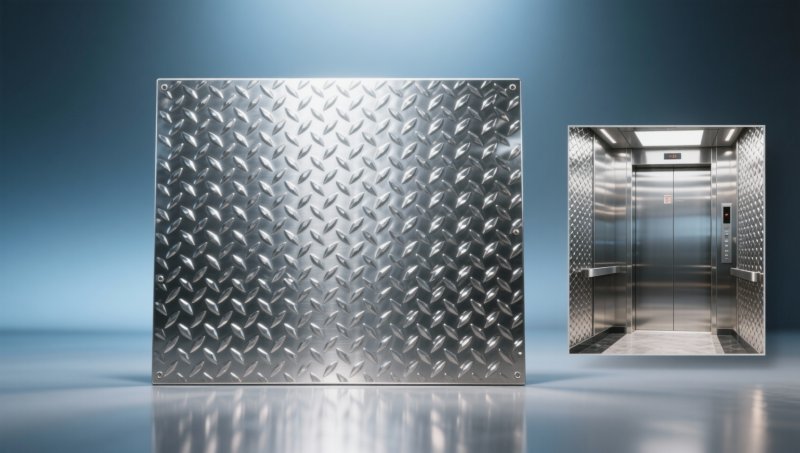
How Structural Integration Supports Elevator System Longevity
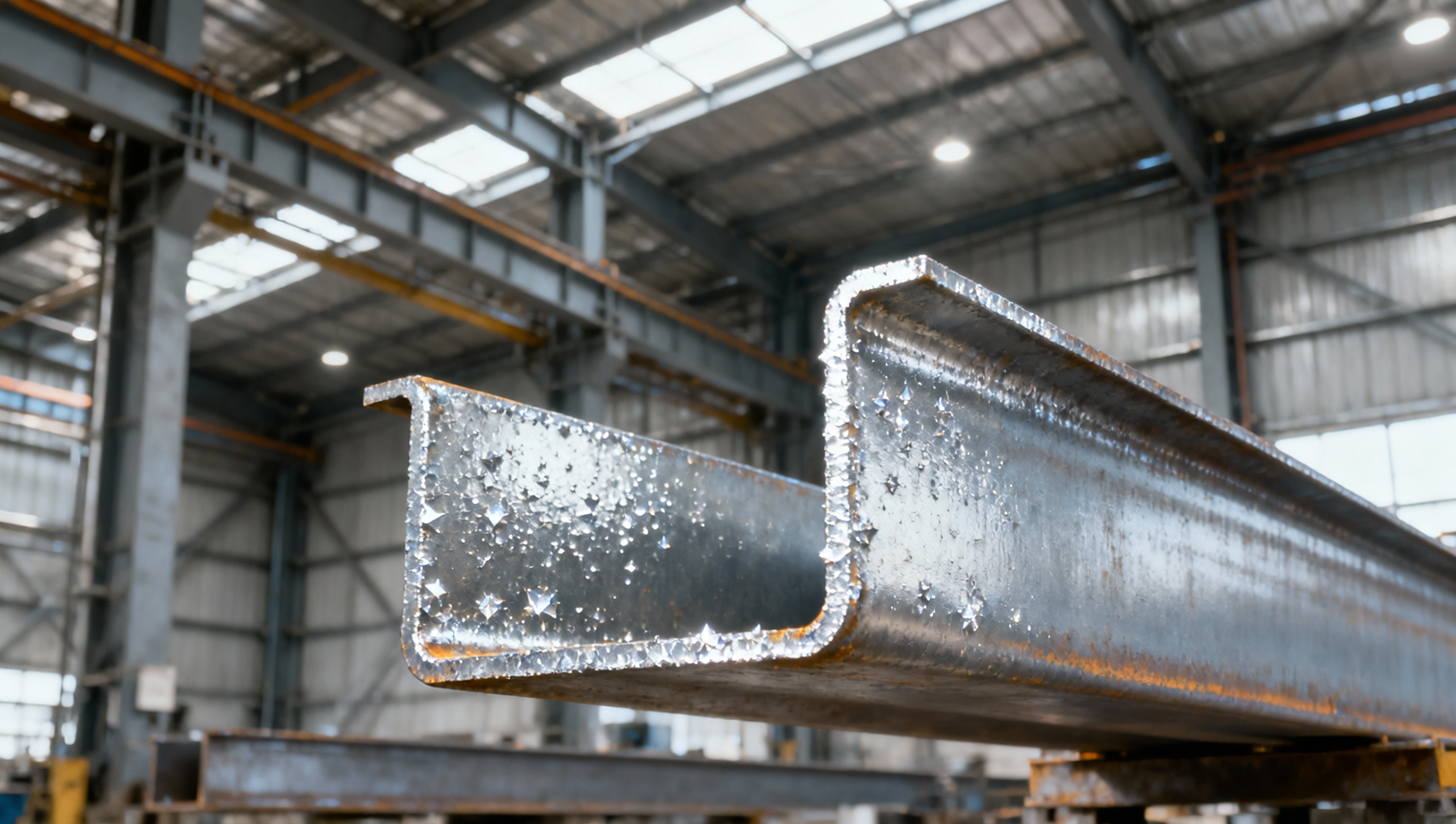
Elevator interiors don’t exist in isolation—they interface directly with structural frameworks. Misaligned mounting or thermal expansion mismatch between cladding and support beams causes premature fatigue. That’s where integrated structural solutions add value. For example, our H-beam systems (available in Q345B, S355JR, and ASTM A572 Gr.50) provide rigid, dimensionally stable substrates for stainless cladding attachment. With flange widths from 50–400 mm and web thicknesses of 5–36.5 mm, these beams accommodate custom bracketing while maintaining load-bearing integrity under seismic loads (EN 1998-1 compliant).
Thermal expansion coefficients differ significantly: stainless steel expands at 17.3 µm/m·°C vs. carbon steel at 12.0 µm/m·°C. Using compatible substrate materials minimizes shear stress at fastener points. Our engineering team provides free joint detail drawings—including recommended anchor spacing (max 300 mm centers), washer specifications (316 stainless with EPDM gaskets), and expansion gap allowances (1.5 mm per linear meter).
For projects requiring hybrid systems—e.g., stainless-clad elevator lobbies paired with structural steel cores—Hongteng Fengda offers coordinated fabrication. We supply pre-drilled H-beam sections with embedded stainless inserts (304, 6 mm diameter), enabling field-weld-free assembly and reducing on-site labor by up to 22% versus conventional bolted methods.
These tighter tolerances translate directly into reduced field adjustment time and fewer rework incidents—critical for tight construction schedules. Over 83% of our elevator interior projects achieve first-time installation acceptance, per third-party QA audits conducted in Q2 2024.
Global Sourcing Advantages for Project Teams
Sourcing from a certified structural steel manufacturer like Hongteng Fengda eliminates multi-tier supplier risk. We control the entire chain—from hot-rolled coil production (JIS G3101, EN10025 certified) to final embossing, passivation, and packaging. Lead times are fixed at 25–35 days after order confirmation, with 98.7% on-time delivery rate across 2023–2024 shipments to 32 countries.
Procurement professionals benefit from consolidated documentation: single MTRs covering chemical composition, mechanical properties, and surface inspection; EN 10204 3.2 certificates for traceability; and bilingual (English/Arabic or English/Spanish) packing lists for customs clearance. Minimum order quantity starts at 2 tons—flexible for pilot installations or phased rollouts.
For enterprise clients managing multiple sites, we offer vendor-managed inventory (VMI) programs with automated replenishment triggers based on your ERP system data. This reduces stockout risk while optimizing working capital—typical inventory turnover improvement: 2.4x year-on-year.
Next Steps: Optimize Your Elevator Material Strategy
Reducing long-term maintenance costs by up to 40% starts with material intelligence—not just aesthetics. Stainless steel embossed plate delivers measurable lifecycle savings when specified with technical rigor and sourced from a vertically integrated partner committed to international standards and project execution discipline.
Whether you’re finalizing specs for a 50-story tower in Riyadh or retrofitting elevators in a legacy European office block, Hongteng Fengda provides engineering support, sample kits (including 304/316 comparative panels), and formal quotations within 48 business hours. Our team works directly with architects, contractors, and OEM elevator integrators to align material performance with structural, fire, and aesthetic requirements.
Contact us today to request technical datasheets, review certified test reports, or schedule a virtual material consultation with our steel application engineers.
- rolled coil
- ASTM A572
- ASTM standard
- steel coil
- structural steel
- Structural Steel
- stainless plate
- ss plate
- mirror stainless sheet
- Stainless steel embossed plate
- Stainless steel corrugated sheet
- ss 304 tube price
- pipe stainless
- Wire Products
- AZ150 Galvalume Steel Coil
- H-beam
- S355JR
- carbon steel
- Stainless steel embossed plate for elevator decoration
- Wire Products manufacturer in China
- pipe stainless steel ASTM standard
- Stainless steel corrugated sheet lightweight
- AZ150 Galvalume Steel Coil for warehouse construction
- ss 304 tube price quotation
- mirror stainless sheet for furniture
Related recommendations
 Top 5 Stainless Steel Coil Manufacturers in Asia: Capabilities, Certifications, and Export Readiness for Global EPC Contractorssteel coil manufacturers: Discover Asia’s top 5 stainless steel coil suppliers—certified, traceable, and export-ready for global EPC projects.
 Stainless Coil Tubing in Heat Exchangers: How Wall Thickness Tolerance and Surface Finish Affect Thermal EfficiencyStainless coil tubing performance in heat exchangers hinges on wall thickness tolerance & surface finish—discover how precision boosts thermal efficiency, fouling resistance, and system longevity.
 Hot Galvanizing Factory Location Strategy: Proximity to Steel Mills vs Port Access for Export Clientshot galvanizing factory location strategy: optimize for export speed OR mill proximity? Data-driven insights for structural steel exporters.
 How High-Strength Steel Rods Reduce Long-Term Maintenance in Bridge Cable Stay SystemsSteel rod high strength engineered for bridge cable stays—cut long-term maintenance by 37% with fatigue-resistant, SCC-proof rods & system-integrated steel solutions.
Please give us a message


Please enter what you want to find