Confused about what 'galvanised' really means for steel tubes? Whether you're sourcing galvanized metal tubing for construction, specifying industrial galvanised pipe for harsh environments, or selecting galv electrical conduit for safety-critical applications, understanding the difference between hot-dip and electro-galvanizing is essential. At Hongteng Fengda — a trusted structural steel manufacturer and exporter from China — we supply high-performance galvanised steel tubes, black steel plumbing pipe, and custom-engineered solutions compliant with ASTM, EN, and GB standards. This guide demystifies coating methods, performance trade-offs, and real-world suitability — helping procurement teams, engineers, project managers, and distributors make confident, specification-smart decisions.
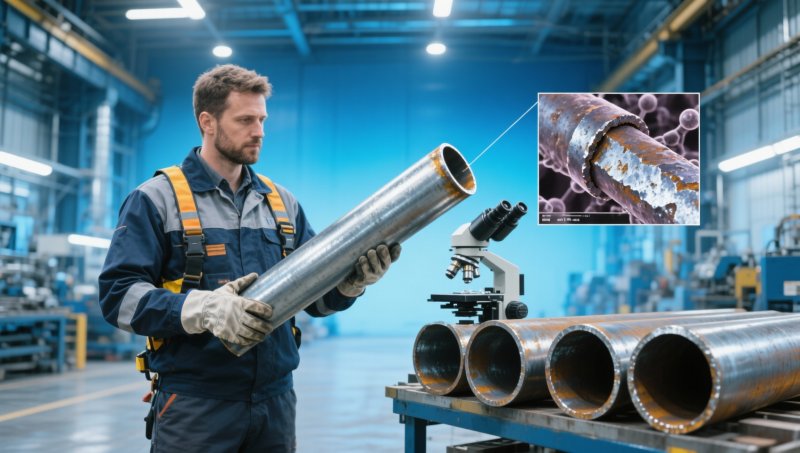
What “Galvanised” Actually Means — Beyond the Glossy Surface
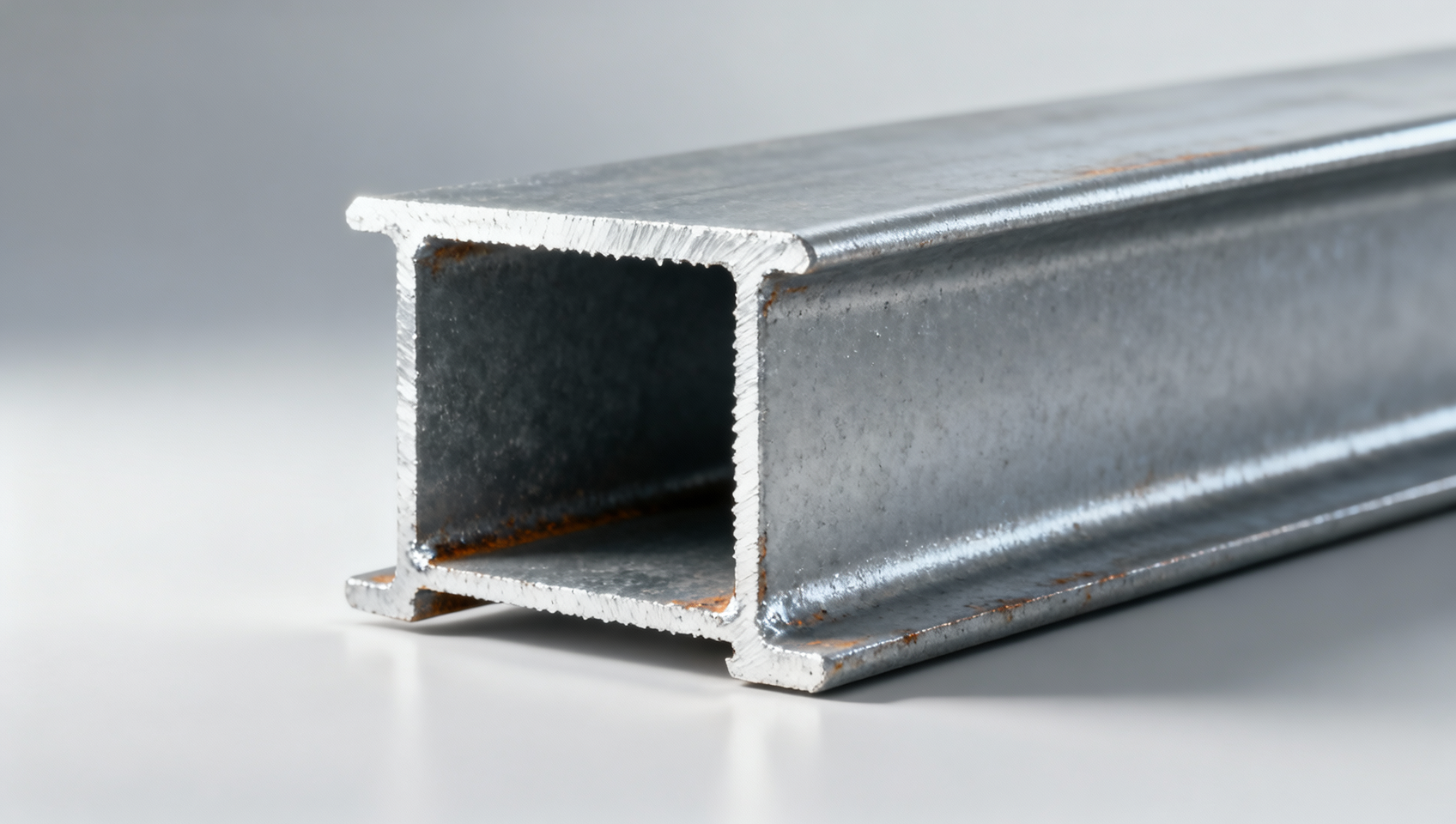
“Galvanised” refers to a protective zinc coating applied to steel or iron to prevent rust and corrosion. But it’s not a single process — it’s a family of surface treatments with distinct metallurgical mechanisms, thickness ranges, adhesion properties, and service lifespans. For structural steel tubes used in scaffolding, transmission towers, or industrial frameworks, misinterpreting “galvanised” as a generic term can lead to premature failure, non-compliance with ASTM A123 or EN ISO 1461, and costly rework.
The core distinction lies in how zinc bonds to the base steel: hot-dip galvanizing immerses the tube in molten zinc (≈450°C), forming a series of intermetallic alloy layers (Gamma, Delta, Zeta) topped by pure zinc. Electro-galvanizing, by contrast, uses electrolytic deposition to apply a thin, uniform zinc layer (typically 5–15 µm) without alloying. This fundamental difference drives divergent performance outcomes — especially under mechanical stress, abrasion, or long-term atmospheric exposure.
At Hongteng Fengda, every galvanised steel tube undergoes rigorous pre-treatment (acid pickling, fluxing), precise bath temperature control (±2°C), and post-coating inspection per ASTM A123 Section 7. Our hot-dip lines achieve coating weights of 450–610 g/m² on outer surfaces — exceeding minimum requirements for severe exposure zones (C4/C5 per ISO 12944). This ensures reliable protection for 20+ years in coastal or industrial settings.
Hot-Dip vs Electro-Galvanizing: A Technical & Application Comparison
Choosing between hot-dip and electro-galvanizing isn’t about “better” or “worse” — it’s about matching coating behavior to your application’s mechanical, environmental, and regulatory demands. Below is a side-by-side comparison based on real-world performance data from our production batches and third-party salt-spray testing (ASTM B117):
This table highlights why hot-dip remains the default for structural steel tubes exposed to weather, soil, or mechanical handling — while electro-galvanizing suits precision components requiring tight dimensional control (e.g., threaded couplings, conduit fittings) or secondary painting. For projects demanding compliance with EN 10219-2 or ASTM A53/A106 Grade B, only hot-dip meets mandatory coating mass thresholds (≥320 g/m² for ≤6 mm wall thickness).
Which Applications Demand Hot-Dip Galvanising?
- Outdoor structural frameworks: Transmission poles, bridge railings, and stadium supports — where 20+ year service life and impact resistance are non-negotiable.
- Industrial piping systems: Process lines handling mildly corrosive fluids, compressed air, or steam up to 120°C — leveraging the thermal stability of zinc-iron alloys.
- Safety-critical conduits: Electrical raceways in petrochemical plants or mining sites, where coating integrity must survive vibration, bending, and accidental impacts.
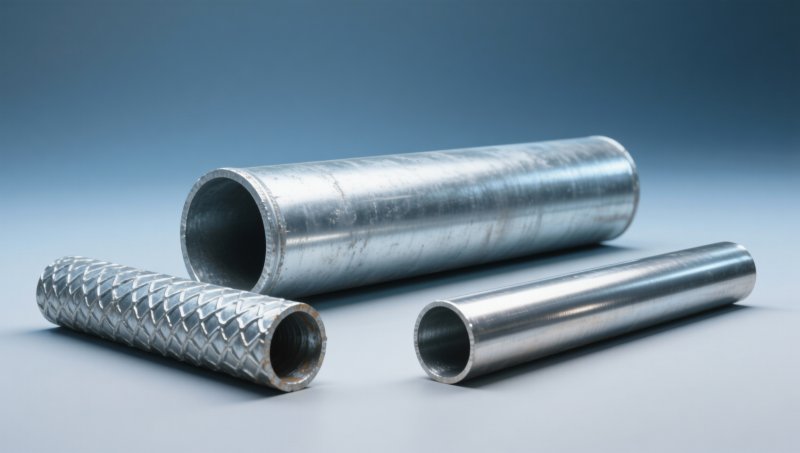
How to Specify Correctly — 4 Procurement Checks You Can’t Skip
Procurement professionals often overlook subtle but critical specification details that directly affect field performance and warranty validity. Based on 12+ years of export experience across North America and the EU, here are four non-negotiable checks before finalizing an order:
- Zinc coating mass verification: Require mill test reports showing actual measured coating weight (g/m²) per ASTM A123 Annex A1 — not just “complies with standard.”
- Surface finish tolerance: Specify maximum allowable zinc spatter or dross (≤0.5 mm height) for applications requiring smooth welding or threading.
- Post-galvanising machining allowance: If tubes will be cut, drilled, or tapped after galvanising, confirm whether touch-up (zinc-rich paint per ASTM A780) is included.
- Batch traceability: Ensure each shipment includes heat number, galvanising date, and bath temperature logs — critical for quality audits in infrastructure projects.
Hongteng Fengda provides full traceability down to coil batch level, with delivery lead times of 15–25 days for standard sizes and 30–45 days for custom diameters (up to 610 mm OD). We also offer pre-shipment third-party inspection (SGS/BV) upon request — reducing your QC overhead by up to 40%.
Complementary Corrosion Solutions — When Galvanising Isn’t Enough
In highly aggressive environments — such as chemical processing plants, desalination facilities, or marine splash zones — even hot-dip galvanising may require reinforcement. That’s where complementary materials like Stainless Steel Welded Mesh play a strategic role. Used as filter media in acid-resistant sumps or as cladding over galvanised support structures, stainless variants (SS 316L, 304L) deliver synergistic protection: galvanising shields the bulk structure, while welded mesh handles direct chemical contact.
Our Stainless Steel Welded Mesh is available in mesh counts from 2 to 635, wire diameters from 0.0008″ to 0.12″, and absolute micron retention ranging from 4–5 µm to 360 µm — enabling precise filtration in pharmaceutical, food-grade, or catalyst recovery applications. Rolls up to 240″ wide and 2000′ long support large-scale installation without seam compromises.
Why Partner With Hongteng Fengda for Galvanised Steel Tubes?
As a structural steel manufacturer and exporter from China with ISO 9001:2015 certification and dual-standard compliance (ASTM + GB), we bridge the gap between global specifications and local manufacturing rigor. Unlike commodity suppliers, we co-engineer solutions: adjusting zinc bath chemistry for high-silicon steels, validating weldability post-galvanising, and certifying dimensional repeatability within ±0.3 mm tolerance.
We support your decision-making with actionable resources: free technical consultation on coating selection, sample kits with lab-tested corrosion data, and OEM packaging tailored to your logistics network. For your next project — whether sourcing 50 tonnes of ASTM A500 Grade C RHS or developing a custom galvanised lattice tower system — contact us to discuss coating validation, delivery scheduling, or compliance documentation requirements.
Related recommendations
 How long does acero prepintado retain gloss and color stability in direct desert sunlight?Acero prepintado gloss & color stability in desert sun? Discover real-world performance data, PVDF vs. polyester longevity, and spec-critical insights for GCC projects.
 Does acero pregalvanizado maintain coating integrity after cold bending to 90 degrees?Acero pregalvanizado maintains coating integrity after 90° cold bending — when engineered right. Discover how Hongteng Fengda guarantees real-world performance, adhesion & corrosion resistance.
 Do the advantages of galvanized steel include reduced fire risk compared to untreated carbon steel?Advantages of galvanized steel include measurable fire-risk reduction vs. untreated carbon steel—learn how zinc delays ignition, buys critical escape time, and enhances safety without false 'fireproof' claims.
 What is the minimum bend radius for 12mm steel wire rope without permanent deformation?12mm steel wire rope capacity depends on bend radius — discover the safe 72–96mm minimum to prevent permanent deformation, fatigue & failure. Expert rigging insights inside.
Please give us a message


Please enter what you want to find