Selecting the right stainless round bar for automotive industry applications demands careful evaluation of mechanical performance versus manufacturing efficiency—especially when comparing high-strength 17-4PH and free-machining 416 stainless steels. As a trusted stainless round bar for construction projects and automotive OEMs, Hongteng Fengda delivers precision-engineered, ASTM/EN-compliant bars with full traceability. Whether you're sourcing flat plate stainless steel for architectural design, stainless steel metal plates for oil and gas industry, or stainless flat sheet for architectural use, our global supply chain ensures competitive ss sheets price per ton and reliable delivery across North America, Europe, the Middle East, and Southeast Asia.
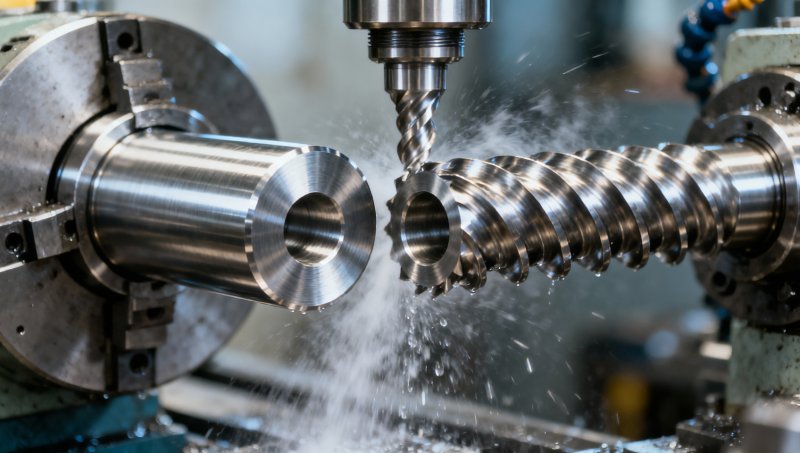
Why Tensile Strength and Machinability Define Automotive Component Viability
In modern automotive manufacturing, stainless round bar selection directly impacts part durability, production throughput, and total cost of ownership. Critical drivetrain, suspension, and safety-critical fasteners require minimum tensile strengths of 930–1,380 MPa (135–200 ksi), while maintaining dimensional stability under thermal cycling and fatigue loading. At the same time, high-volume machining operations demand tool life exceeding 300–500 parts per insert and surface finish consistency within Ra 0.4–0.8 µm. These dual requirements create a fundamental trade-off: materials optimized for strength often sacrifice chip-breaking behavior and lubricity, while free-machining grades may fall short in yield strength or corrosion resistance under under-hood conditions.
For Tier-1 suppliers and OEM engineering teams, this isn’t theoretical—it translates to real-world consequences. A 12% reduction in tool change frequency can cut labor and downtime costs by $18,000 annually per CNC cell. Conversely, premature fatigue failure in a control arm shaft could trigger field recalls costing over $2.3 million per incident. That’s why material selection must be grounded in empirical data—not just datasheet claims.
Hongteng Fengda supports this decision-making with full mill test reports, heat traceability down to batch-level chemistry (including S, Pb, and Cu residuals), and in-house tensile testing per ASTM A370. Our bars undergo 100% ultrasonic inspection for internal discontinuities and are supplied with certified EN 10204 3.1 documentation—ensuring compliance for both domestic and export-bound assemblies.
17-4PH vs 416 Stainless: Performance Comparison at a Glance
The choice between precipitation-hardened 17-4PH (ASTM A564 Grade 630) and martensitic free-machining 416 (ASTM A582) hinges on application-specific priorities. Below is a side-by-side comparison of key mechanical and processing attributes:
As shown, 17-4PH offers superior strength and hardness—ideal for high-load bearing pins, turbocharger shafts, and ABS sensor rings—but requires slower cutting speeds (40–60 m/min), rigid setups, and premium carbide inserts. In contrast, 416 enables faster feeds (0.25–0.35 mm/rev), higher spindle RPMs, and lower coolant consumption—making it optimal for non-structural bushings, brackets, and decorative trim components where strength above 700 MPa isn’t required.
Real-World Sourcing Considerations for Global Buyers
Procurement professionals face layered constraints beyond technical specs: lead time volatility, certification rigor, and supply chain resilience. Hongteng Fengda maintains a dedicated automotive-grade production line with 7–12 day standard lead times for stocked diameters (6–150 mm), backed by ISO/TS 16949-certified quality management systems. We support JIT deliveries to assembly plants in Mexico, Poland, and Thailand with weekly consolidated shipments and EN 10204 3.2 compliance for critical aerospace-adjacent components.
Unlike commodity mills, we offer pre-verification services—including sample tensile testing, machinability trials with customer tooling, and metallurgical review of heat treatment profiles. This reduces qualification cycles from 8–12 weeks to under 3 weeks for new part releases. For volume buyers, we provide MOQ flexibility: as low as 500 kg for prototype batches and scalable up to 120 MT/month for series production.
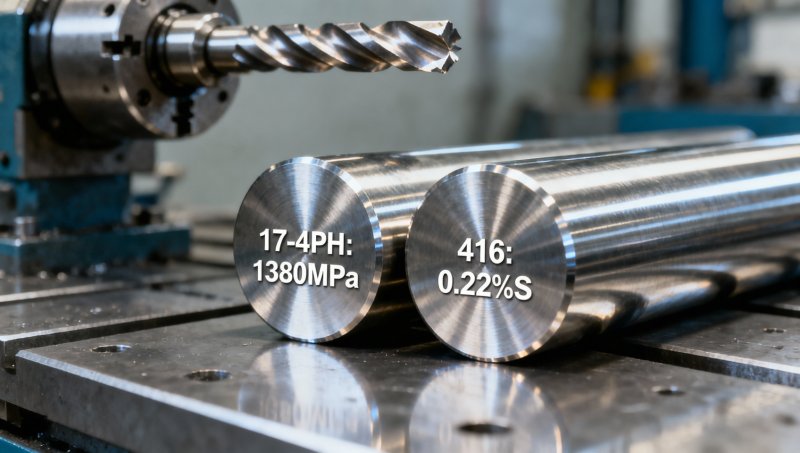
When evaluating alternatives, always verify sulfur content: 416 stainless requires 0.15–0.25% S for machinability—but excess (>0.30%) promotes hot cracking during welding. Our 416 bars are tightly controlled at 0.22±0.02%, balancing chip formation with post-machining weldability for hybrid assemblies.
Complementary Material Solutions for Integrated Systems
Automotive platforms increasingly integrate stainless components with carbon steel substrates—for example, stainless fasteners securing SPCC-grade chassis panels or 416 bushings mounted on SPCE-formed body-in-white structures. Hongteng Fengda supplies both categories under unified QC protocols, ensuring consistent surface preparation (e.g., pickling + passivation for stainless; phosphating + oiling for cold-rolled carbon steel) to prevent galvanic corrosion at interfaces.
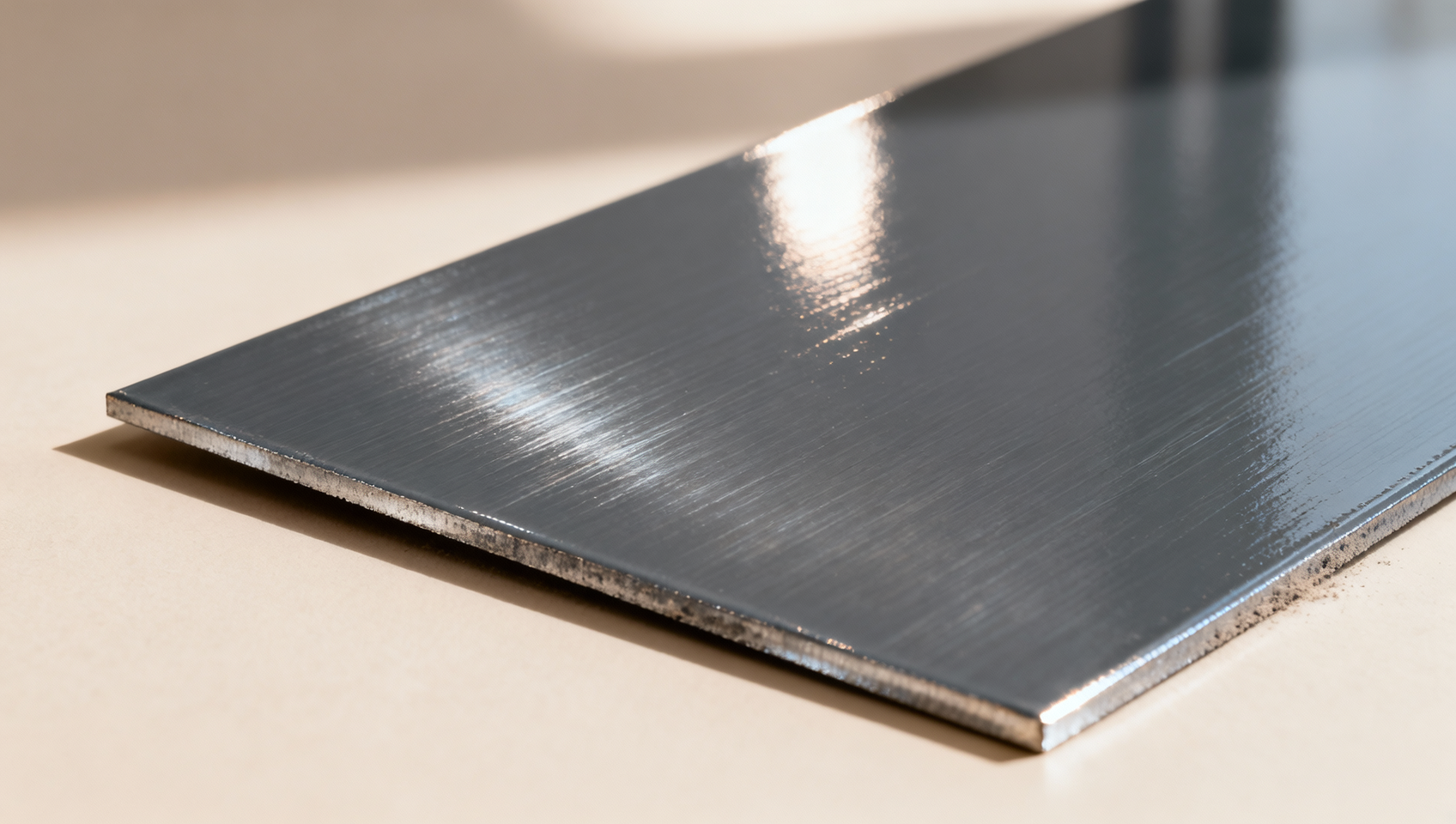
Our Carbon Steel Plate portfolio includes SPCC through SPCG grades, with thicknesses from 0.1 mm to 400 mm and widths up to 3,000 mm. Each grade meets strict chemical tolerances—for instance, SPCG limits carbon to ≤0.02% and sulfur to ≤0.020%, enabling deep-drawing of interior trim without surface defects. All plates undergo 100% eddy current inspection and are certified to ASTM A1008, EN 10131, and JIS G3141 standards.
This integrated material strategy helps Tier-2 suppliers reduce vendor count, simplify logistics, and align coating processes—cutting cross-material validation effort by up to 40%. It also ensures seamless transition between prototype and mass production, where material consistency directly affects stamping die wear rates and part repeatability.
Actionable Recommendations for Engineering & Procurement Teams
Based on 12+ years of automotive material supply experience, we recommend the following decision framework:
- Choose 17-4PH when tensile strength >1,100 MPa is required, operating temperatures exceed 300°C, or corrosion resistance in chloride-rich environments (e.g., brake caliper bolts) is critical.
- Opt for 416 stainless for high-volume, non-safety-critical parts where annual volumes exceed 250,000 units and machining cost per part must stay below $0.85.
- Validate with real-world trials: Request 50-kg sample lots with full chemistry reports and request in-house turning tests using your actual tooling and parameters.
- Lock in supply continuity: Secure blanket orders with 6-month rolling forecasts to access priority scheduling and fixed quarterly pricing—reducing cost variance by up to 9% year-over-year.
Hongteng Fengda provides dedicated technical support for material selection, including FEA-guided stress analysis for custom geometries and GD&T compliance reviews. Contact our automotive solutions team today to request a comparative machining trial report, obtain ASTM/EN-certified samples, or discuss OEM-specific packaging and labeling requirements.
- carbon steel plate
- stainless steel metal plates
- stainless flat sheet
- flat plate stainless steel
- stainless round
- ss sheets price
- steel plate
- Profile
- carbon steel
- stainless round bar for automotive industry
- stainless flat sheet for architectural use
- stainless steel metal plates for oil and gas industry
- ss sheets price per ton
- stainless round bar for construction projects
- flat plate stainless steel for architectural design
Related recommendations
 How long does acero prepintado retain gloss and color stability in direct desert sunlight?Acero prepintado gloss & color stability in desert sun? Discover real-world performance data, PVDF vs. polyester longevity, and spec-critical insights for GCC projects.
 Does acero pregalvanizado maintain coating integrity after cold bending to 90 degrees?Acero pregalvanizado maintains coating integrity after 90° cold bending — when engineered right. Discover how Hongteng Fengda guarantees real-world performance, adhesion & corrosion resistance.
 Do the advantages of galvanized steel include reduced fire risk compared to untreated carbon steel?Advantages of galvanized steel include measurable fire-risk reduction vs. untreated carbon steel—learn how zinc delays ignition, buys critical escape time, and enhances safety without false 'fireproof' claims.
 What is the minimum bend radius for 12mm steel wire rope without permanent deformation?12mm steel wire rope capacity depends on bend radius — discover the safe 72–96mm minimum to prevent permanent deformation, fatigue & failure. Expert rigging insights inside.
Please give us a message


Please enter what you want to find