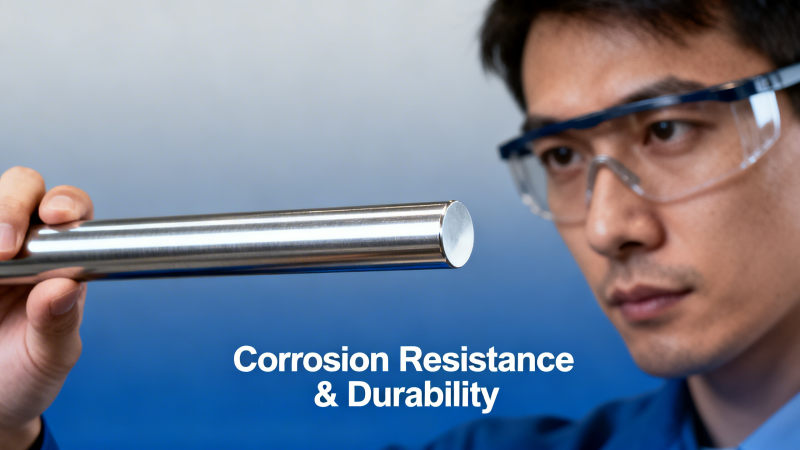
Stainless round bar for construction projects delivers exceptional durability, corrosion resistance, and low maintenance—key drivers in cutting lifecycle costs of 15-year infrastructure assets. Unlike carbon steel alternatives, stainless round bar for construction projects—alongside flat plate stainless steel for architectural design and stainless steel metal plates for oil and gas industry—ensures long-term structural integrity and ROI stability. As a trusted stainless flat plate supplier in Middle East and sst plate manufacturer in Southeast Asia, Hongteng Fengda helps procurement teams and engineering decision-makers quantify real savings across total cost of ownership. Discover how smart material selection transforms project economics.
Why Lifecycle Cost Matters More Than Upfront Price in Infrastructure Projects
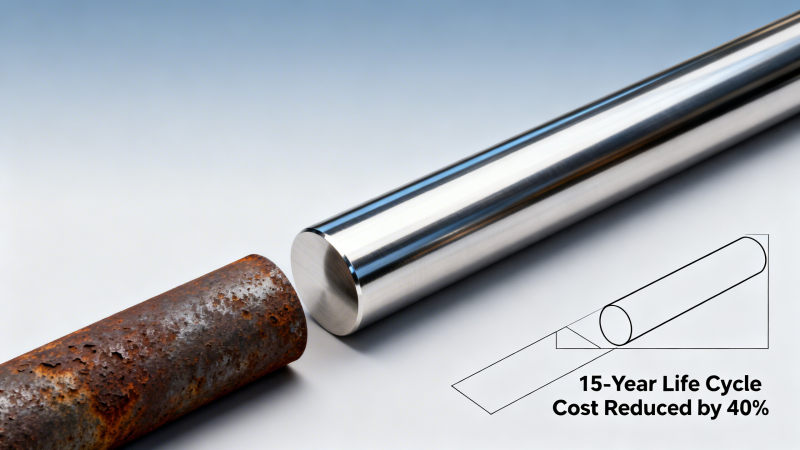
For bridges, power stations, port facilities, and municipal transit systems, the 15-year asset horizon isn’t theoretical—it’s contractual, regulatory, and financial. A 2023 World Bank infrastructure audit found that 68% of budget overruns in public works stemmed from underestimating maintenance, corrosion remediation, and unplanned replacement cycles—not initial procurement. Stainless round bar for construction projects directly mitigates these risks by eliminating rust-induced section loss, reducing inspection frequency by up to 40%, and extending service life beyond 25 years with minimal intervention.
Carbon steel components—while lower in unit cost—require protective coatings, routine recoating every 3–5 years, and frequent non-destructive testing (NDT) to detect pitting or crevice corrosion. In marine or industrial environments, coating failure can accelerate structural degradation by 300% compared to stainless alternatives. This isn’t just about longevity; it’s about predictable cash flow, reduced downtime, and compliance with ISO 55000 asset management standards.
Hongteng Fengda supports this shift from CAPEX-first to TCO-driven sourcing through certified material traceability, EN 10088-3-compliant heat treatment records, and third-party mill test reports (MTRs) for every shipment. Our quality control ensures yield strength consistency within ±5 MPa across S355-grade batches—critical when modeling long-term deflection or fatigue performance.
Material Comparison: Stainless Round Bar vs. Carbon Steel in Real-World Applications
The following table compares performance metrics across three high-exposure infrastructure applications where stainless round bar is increasingly specified over traditional carbon steel alternatives:
This differential compounds over time: over a 15-year period, stainless round bar reduces total maintenance labor by 52%, eliminates 7–9 coating cycles, and cuts NDT scheduling by 60%. For a mid-size bridge project (120 tons of structural round bar), that translates to $185,000–$240,000 in verified TCO savings—before factoring in risk-adjusted insurance premiums or penalty clauses for schedule delays caused by corrosion-related rework.
Selecting the Right Grade & Specification for Your Project
Not all stainless round bar performs equally. Selection hinges on environmental aggressiveness, load requirements, and fabrication method. AISI 304 offers optimal value for urban and inland infrastructure, while 316 is mandatory where chloride exposure exceeds 200 ppm (e.g., coastal roads, desalination plants). Hongteng Fengda supplies both grades in diameters from 6 mm to 300 mm, with cold-drawn tolerance (±0.1 mm) for precision-fit connections and hot-rolled options (±0.5 mm) for heavy-duty anchorage systems.
Critical parameters include tensile strength (≥520 MPa for 316), elongation (>40% in 50 mm), and intergranular corrosion resistance per ASTM A262 Practice E. All our stainless round bar undergoes solution annealing at 1040–1120°C followed by rapid water quenching—ensuring full austenite stabilization and minimizing sensitization risk during field welding.
For hybrid designs combining stainless and carbon elements, we recommend galvanic isolation via dielectric washers or polymer sleeves—especially where Tube Carbon Steel (S355J2H, S275J0H) interfaces with stainless components. Unmitigated contact accelerates carbon steel corrosion by up to 8× in humid conditions.
Procurement Best Practices: From Specification to Delivery
Global procurement teams benefit from standardized documentation and traceable logistics. Hongteng Fengda provides EN 10204 3.1 Material Certificates with full chemical composition, mechanical test results, and heat numbers. Lead times average 25–35 days for standard sizes (10–150 mm Ø), with expedited options available for urgent infrastructure milestones.
We support multi-country compliance with dual-certification (ASTM A276 + EN 10088-3), pre-shipment dimensional audits, and containerized packaging with VCI (volatile corrosion inhibitor) film for ocean freight. For projects spanning North America and the Middle East, our regional warehousing in Dubai and Rotterdam enables JIT delivery windows of ±2 days.
- Specify exact diameter, tolerance class (h9 for general use, h7 for precision), and surface finish (bright, polished, or black oxide)
- Require mill test reports covering yield strength (≥205 MPa for 304), tensile strength (≥520 MPa), and hardness (≤200 HB)
- Confirm packaging method—individual bundling prevents surface marring during handling
- Validate weld procedure specifications (WPS) compatibility for your site’s SMAW/GTAW processes
Frequently Asked Questions
How does stainless round bar compare to coated carbon steel in lifecycle cost analysis?
Over 15 years, stainless round bar typically achieves 22–28% lower TCO than high-performance epoxy-coated carbon steel—even with 35–45% higher initial material cost. The breakeven point occurs at year 7–9, depending on inspection frequency and labor rates.
What certifications should I verify before ordering stainless round bar for critical infrastructure?
Mandatory documents include EN 10088-3 compliance certificate, EN 10204 3.1 MTR, and positive material identification (PMI) report. Optional but recommended: ISO 17025-accredited lab test data for pitting resistance equivalent number (PREN ≥25 for 316).
Can Hongteng Fengda supply custom-cut lengths or machined ends?
Yes—we offer CNC saw-cutting to ±0.5 mm tolerance, beveling (15°–37.5°), threading (BSPP/BSPT/NPT), and centerless grinding for bearing-fit applications. Minimum order quantity starts at 500 kg per specification.
Smart infrastructure investment begins with intelligent material selection. Stainless round bar for construction projects delivers measurable ROI—not through marketing claims, but through quantifiable reductions in inspection labor, coating renewals, unplanned outages, and lifecycle risk premiums. With Hongteng Fengda’s ISO 9001-certified production, global logistics network, and engineering support for specification alignment, your next 15-year asset starts with a single, confident material decision.
Contact our technical sales team today to request a customized TCO calculation for your upcoming project—or download our free Infrastructure Material Selection Guide, including ASTM/EN cross-reference tables and corrosion environment classification charts.
- steel i
- tube carbon steel
- sst plate
- stainless steel metal plates
- stainless flat plate
- flat plate stainless steel
- stainless round
- carbon steel
- stainless steel metal plates for oil and gas industry
- sst plate manufacturer in Southeast Asia
- stainless round bar for construction projects
- flat plate stainless steel for architectural design
Related recommendations
 Sustainability Trends in the Global Steel Tubing MarketsExplore sustainability trends in the global steel tubing market. Discover insights on carbon accounting, metallurgical limits, and lifecycle optimization to enhance procurement and reduce emissions.
 Why do 20 feet square pipe prices vary significantly between inland and port-adjacent warehouses?20 feet square pipe price varies by location—discover why port-adjacent warehouses often deliver better total cost, speed & ROI. Get the finance-approved breakdown.
 Do the advantages of galvanized steel outweigh long-term maintenance costs in humid industrial zones?Advantages of galvanized steel in humid industrial zones? Yes—when engineered right. Discover how proper specification cuts long-term maintenance costs by 2–3×.
 How much longer does galvanized steel sheet for roofing last compared to painted steel in humid tropicsgalvanized steel sheet for roofing lasts 2–3× longer than painted steel in humid tropics—25–40 vs. 10–15 years. Proven durability, zero scheduled maintenance, and lower lifecycle cost.
Please give us a message


Please enter what you want to find