Influence of Steel Channel Dimensions on Structural Strength and Load Bearing Efficiency
Understanding how steel channel dimensions impact structural load bearing capacity is essential for engineers, project managers, and procurement specialists seeking optimal performance in construction and industrial applications. As a professional structural steel manufacturer and exporter from China, Hongteng Fengda provides high-quality steel products—ranging from steel bar, steel rebar, and steel profile to carbon steel and stainless steel bar—ensuring reliable load support and design flexibility. Learn how the right Steel Channel size can enhance structural stability and overall project efficiency.
In structural design, dimensional accuracy of a Steel Channel directly determines its capacity to sustain vertical and horizontal stresses. Each channel’s web thickness, flange width, and depth define its section modulus and moment of inertia, which are critical for resisting bending and shear forces. For instance, when engineering professionals select materials for an industrial warehouse or bridge frame, the channel depth-to-width ratio dictates how effectively loads are distributed. Improper dimension selection may lead to deformation, deflection, or even premature structural failure. Therefore, understanding this correlation between geometry and mechanical performance is not only a theoretical concern but a practical necessity for all technical evaluators and safety managers dealing with steel construction.
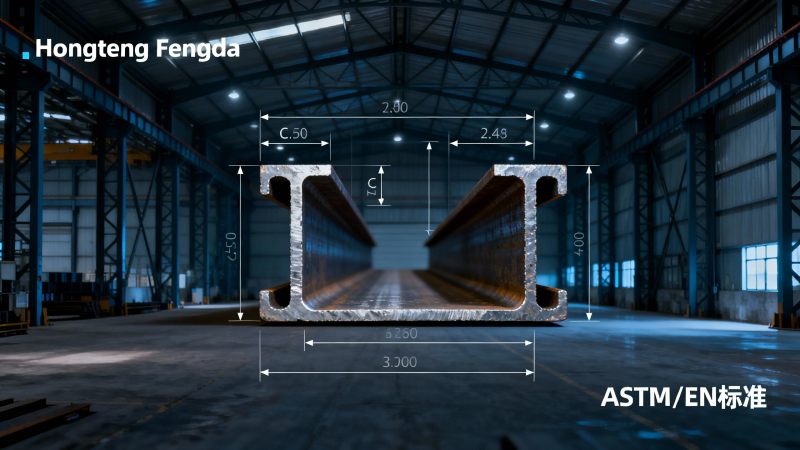
1. Structural Mechanics of Steel Channels and Key Dimension Parameters
The fundamental strength of a Steel Channel lies in its C-shaped cross-section, designed to provide excellent stiffness and support capacity while minimizing material weight. The web absorbs compressive forces, and the flanges provide lateral stability. Core parameters such as width, flange thickness, and web height significantly influence how the section resists both concentrated and distributed loads. For heavy-duty applications such as bridge girders or crane frames, engineers often choose deeper channels with thicker flanges to maximize the section modulus. Conversely, in lighter frameworks—like purlins or partition walls—smaller channels deliver sufficient strength while reducing overall material cost. Knowing the precise correlation between these parameters helps technical teams tune their designs effectively, improving both mechanical safety and cost efficiency.
Beyond geometry, material composition plays a crucial role. Carbon steel and stainless steel variants show different yield strengths and elongation rates. For example, Q235 or ASTM A36 carbon steel offers high strength-to-cost performance, whereas stainless steel bar or stainless steel square bar materials bring superior corrosion resistance for coastal or chemical environments. A well-balanced specification must account for these factors, alongside fabrication techniques like hot rolling, cold rolling, and heat treatment, which shape internal grain structures and ultimately influence mechanical properties. Properly selected Steel Channel dimensions not only enhance static resistance but also ensure flexibility under dynamic loads and temperature variations, which are vital for long-term structural safety.
2. Design Optimization and Engineering Selection of Steel Channel Profiles
Designing with Steel Channel sections requires balancing functionality, manufacturability, and compliance with international standards such as ASTM, EN, JIS, or GB. Engineers must calculate expected load paths, consider welding stresses, and verify that chosen profiles meet deflection limits stipulated by building codes. Advanced structural simulation tools frequently model channel geometries to predict bending stiffness, buckling resistance, and overall integrity under real-world conditions. For applications like high-rise reinforcement or heavy machine supports, pairing channels with steel pile or steel sheet sections can distribute stresses more uniformly. Integrating such methods allows project leaders to achieve enhanced stability while controlling total material costs, particularly in large-scale industrial designs.
For high-precision fabrication and consistent quality, manufacturers employ forming systems that automatically produce channels to given specifications. One such example is C Beam Steel, which is automatically formed by a C-shaped steel forming machine capable of bending, punching, and cutting. Manufactured from materials such as Q195, Q235, Q345, A36, SS400, and S235JR, these beams come with galvanized or powder-coated surfaces, ensuring high resistance against oxidation. This product type is often used in purlins and wall beams of steel structure buildings, columns and arms in mechanical light industry, and lightweight roof brackets. Its technical features like a thickness range of 1mm–12mm and lengths of 6m to 12m enable flexible customization under standards including AiSi, ASTM, BS, DIN, GB, and JIS. Leveraging such standardized yet customizable solutions helps construction managers obtain reliable supply consistency and simplify design coordination across multiple project phases.
3. Impact of Material Grade and Manufacturing Techniques on Load Bearing
Different grades of steel produce varying structural behavior under load. For instance, when comparing carbon steel with stainless steel bar series, the yield strength may differ by up to 40%. Similarly, evaluating the 201 vs 304 stainless steel cost and performance shows that although 304 stainless offers higher tensile strength and greater corrosion resistance, 201 can be more economical for interior or non-exposed environments. Selecting the right material-grade balance ensures economic efficiency without compromising safety. Hongteng Fengda emphasizes quality control through CE, SGS, BV, and ISO certifications, maintaining consistent chemical composition to guarantee stability in high-stress building projects.
The manufacturing process—whether hot rolled, cold rolled, or cold drawn—further refines surface finish and dimensional accuracy of a Steel Channel. Hot rolling enhances grain uniformity for heavy-duty strength, while cold forming increases precision and aesthetic appeal for visible architectural elements. Surface treatments like galvanization or black varnish provide long-term protection, reducing maintenance cycles in industrial environments. In practice, engineers consider both mechanical and environmental load factors: longitudinal stress from steel rebar frameworks, transverse loads distributed through steel pile foundations, and external vibration impacts from machinery or natural forces. By adjusting channel thickness and profile geometry, it is possible to optimize performance across all these conditions while extending service life.
4. Application Scenarios and Market Performance of Steel Channels
In the global construction market, Steel Channel components are integral to various systems—from curtain wall frames and mechanical platforms to modular buildings and transportation infrastructure. For example, modern factory plants utilize channels combined with steel sheet panels to form efficient skeleton structures capable of withstanding heavy machinery vibration and dynamic load shifts. Additionally, in mechanical light industry manufacturing, streamlined supports and frames often rely on channel steels due to their ease of assembly, high precision, and uniformity.
For distributors and procurement personnel, sourcing reliable channel products ensures consistent quality and delivery predictability. Hongteng Fengda’s well-established export network covers North America, Europe, the Middle East, and Southeast Asia. The company’s large-scale production capacity, along with strict dimensional tolerance control (±1%) and dynamic processing capabilities, enables partners to lower sourcing risk. A wide range of services—bending, welding, punching, decoiling, and cutting—supports tailor-made solutions that meet specific project requirements. These customized configurations, such as those of C Beam Steel, empower engineering companies to combine lightweight design with solid load performance, achieving energy-efficient and cost-effective developments.
5. Trends and Best Practices in Steel Channel Design for Future Projects
With global emphasis on sustainability and infrastructure modernization, the demand for advanced Steel Channel systems continues to grow. Engineers are increasingly adopting digital modeling and AI-assisted simulation to analyze structural behavior under variable loading. These models encourage the use of optimized geometries that minimize steel mass while maintaining desired stiffness. Industries are also seeing greater use of high-strength carbon steel and hybrid alloys that improve fatigue resistance. The integration of quality materials such as stainless steel square bar and high-grade steel profile components contributes to structure longevity and reduced maintenance cost.
To align with these trends, manufacturers invest in upgraded automation lines and precision control equipment. This ensures every steel bar or structural profile consistently meets specified dimensions and mechanical performance standards. Advanced galvanization and powder-coating treatments not only improve corrosion resistance but also enhance visual aesthetics for architectural applications. Moreover, as international building standards evolve, certified suppliers offering traceability and consistent documentation are becoming indispensable partners for project developers. Choosing a reputable exporter provides long-term value by securing supply stability, technical guidance, and after-sales assurance—factors that significantly influence total life-cycle cost.
Conclusion and Call to Action
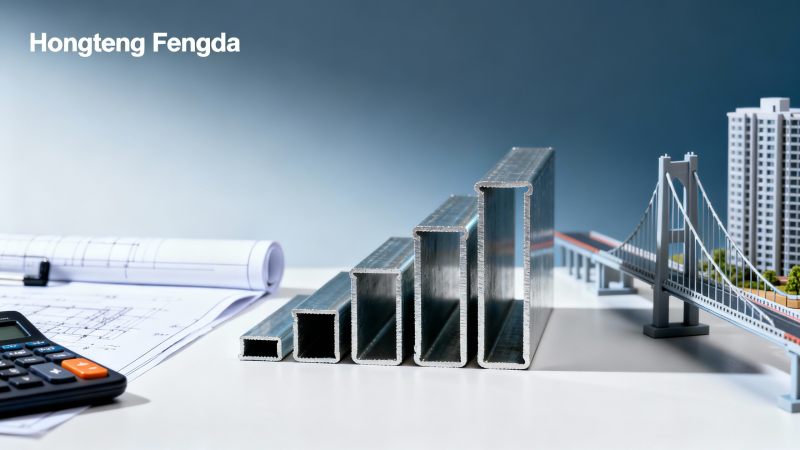
Steel Channel dimensions impact every aspect of structural engineering—from initial load distribution analysis to final project safety and cost-effectiveness. Accurate specification and reliable manufacturing lead directly to longer service life, lower maintenance costs, and reduced environmental stress. In today’s demanding construction environment, where each ton of steel must deliver precise performance, professional suppliers make a measurable difference. Hongteng Fengda stands as a trusted structural steel partner, offering diverse product ranges including steel bar, steel rebar, and steel profile, along with carbon steel and stainless steel bar solutions tailored for both heavy-duty industrial and lightweight architectural frameworks. Supported by CE, SGS, BV, and ISO certifications, the company ensures compliant production, advanced technology, and responsive customer support for global clients.
For project managers, engineers, and procurement teams seeking to enhance building performance through optimized Steel Channel configurations, contact Hongteng Fengda today to explore customized structural solutions that combine strength, precision, and economic efficiency. Let our professional team help you achieve greater stability in every project with quality steel you can trust.
- c beam steel
- steel channel sections
- channel steel
- steel construction
- ASTM A36
- structural steel
- C-shaped steel
- Structural Steel
- Profile
- Rebar
- Galvanized
- Steel Channel
- 201 vs 304 stainless steel cost
- stainless steel square bar
- stainless steel bar
- carbon steel
- steel sheet
- steel rebar
- steel profile
- steel pile
- steel bar
Related recommendations
 Key Structural Steel Properties That Affect Load Capacity and DurabilityStructural steel properties determine load capacity, deflection, fatigue resistance, and corrosion durability. Explore key factors for safer, longer-lasting steel designs.
 Choosing Structural Steel Cutting Methods for Clean Edges and Fast ThroughputStructural steel cutting guide: compare plasma, laser, oxy-fuel, and saw methods to achieve cleaner edges, better fit-up, and faster fabrication throughput.
 Structural Steel Drilling: Hole Tolerances That Protect Connection PerformanceStructural steel drilling guide: control hole tolerances, alignment, edge quality, and inspection to protect bolted connection performance and avoid costly site rework.
 What Makes Stainless Steel Plates Suitable for Heavy-Duty Industrial Equipment?Stainless steel plates deliver corrosion resistance, strength, and fabrication versatility for heavy-duty industrial equipment. Discover how to select the right grade, thickness, finish, and design.

Please give us a message


Please enter what you want to find