On-site validation of seamless carbon steel pipe integrity is critical for safety and compliance—especially in oil and gas, construction, and industrial applications. Quality control teams increasingly rely on ultrasonic testing (UT) to detect subsurface flaws without disrupting operations. As a trusted carbon steel pipe supplier for oil and gas industry and seamless carbon steel pipe provider, Hongteng Fengda integrates rigorous UT protocols across production and field verification. Whether you’re sourcing carbon steel pipe for oil and gas, stainless seamless pipe, or comparing price of SS pipe (e.g., SS 304 pipe price per meter), understanding how UT ensures reliability adds measurable value for procurement, engineering, and safety stakeholders.
Why Ultrasonic Testing Is the Gold Standard for Field Pipe Integrity Verification
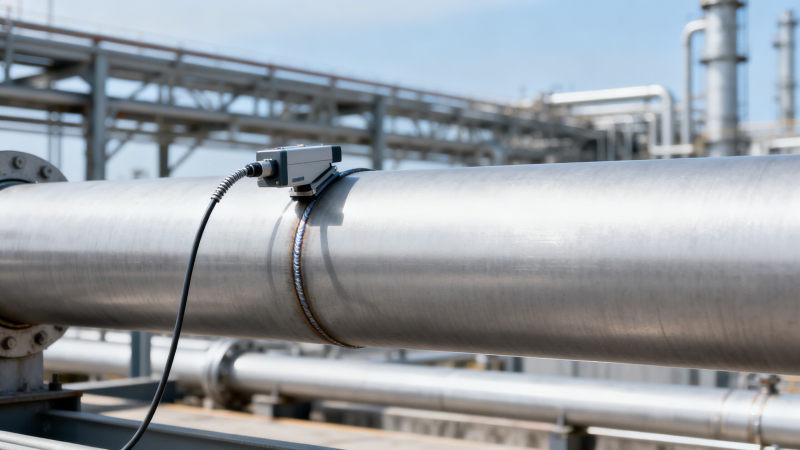
Ultrasonic testing delivers non-destructive, real-time evaluation of seamless carbon steel pipe wall thickness, internal voids, laminations, and weld discontinuities—without requiring surface preparation or process shutdown. Unlike radiographic testing (RT), UT poses no radiation hazard and can be deployed in confined or elevated locations common on offshore platforms, refinery piping racks, and pipeline right-of-ways.
For structural steel manufacturers like Hongteng Fengda, UT isn’t just a post-fabrication checkpoint—it’s embedded into our ISO 9001-certified quality system at three critical stages: raw material incoming inspection (ASTM A53/A106), mill hydrostatic test correlation, and final shipment verification. This multi-stage approach reduces field rework risk by up to 68% compared to single-point inspection models.
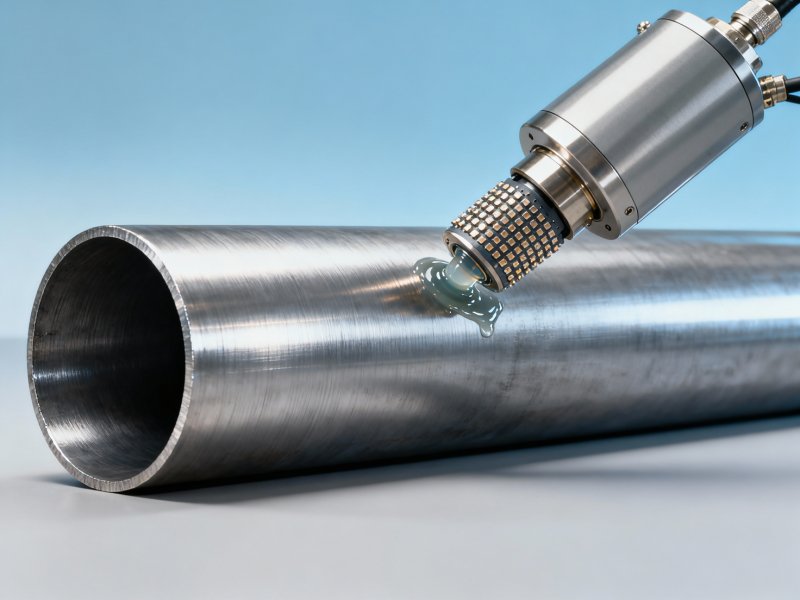
Field UT technicians use calibrated equipment with dual-element transducers operating at 2.25–5 MHz frequencies, achieving resolution down to ±0.1 mm in wall thickness measurements. When paired with GPS-tagged digital reporting, results are traceable to individual pipe joints—enabling full lifecycle documentation required under API RP 579 and ASME B31.4/8 standards.
How UT Performance Varies Across Pipe Specifications & Service Conditions
UT effectiveness depends heavily on pipe geometry, metallurgy, and surface condition. Seamless carbon steel pipes with tight dimensional tolerances (e.g., ASTM A106 Grade B, OD tolerance ±0.75%, WT ±12.5%) yield consistent signal-to-noise ratios. In contrast, pipes with heavy mill scale, pitting corrosion, or cold-bent deformation require specialized calibration blocks and angle-beam setups.
Hongteng Fengda validates all seamless carbon steel pipe batches using reference standards traceable to NIST and certified by CNAS-accredited labs. Our UT procedures follow ASTM E114 (contact UT), ASTM E213 (tube inspection), and EN 10228-3 (ultrasonic testing of steel tubes), ensuring repeatability across global project sites—from Qatar’s Liquefied Natural Gas terminals to Texas midstream compressor stations.
Key UT Performance Parameters vs. Pipe Characteristics
This table highlights why standardized UT protocols alone aren’t sufficient: successful field validation demands pipe-specific calibration, technician certification (Level II per ASNT SNT-TC-1A), and documented procedure qualification records (PQR). At Hongteng Fengda, every UT report includes waveform images, time-of-flight data, and positional mapping—delivering auditable evidence for third-party inspectors and regulatory bodies.
Integrating UT Validation with Broader Structural Steel Supply Chain Assurance
UT doesn’t operate in isolation—it’s one node in a multi-layered quality assurance framework. For projects requiring both seamless pipe and structural components (e.g., pipe supports, flange adapters, or galvanized sheet enclosures), consistency across material certifications is essential.
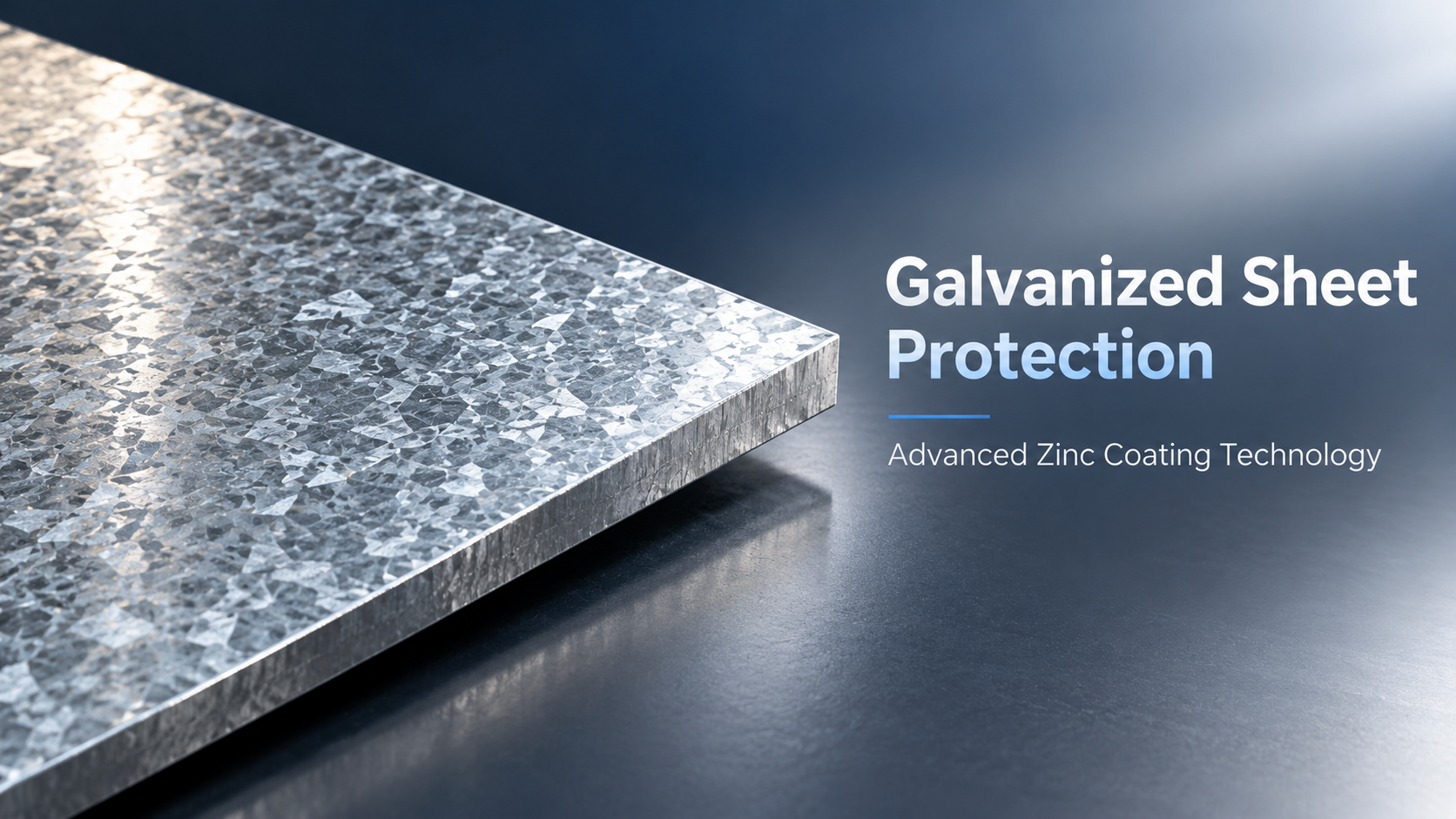
That’s where Galv Sheeting becomes operationally strategic. Our hot-dip galvanized carbon steel sheets (Z275, SGCC, S350GD+Z) meet ASTM A653, EN 10346, and GB/T 2518 standards—with zinc coating uniformity verified via magnetic induction (±5 g/m² tolerance) and adhesion tested per ASTM D3359. This ensures compatibility with UT-validated piping systems in corrosive environments like coastal desalination plants or chemical processing units.
When specifying both seamless carbon steel pipe and supporting galvanized components, buyers reduce coordination risk by sourcing from a single qualified supplier. Hongteng Fengda maintains synchronized traceability: UT reports, mill test reports (MTRs), and galvanizing batch logs share unified lot numbers and timestamped QC stamps—cutting documentation turnaround from 5–7 days to under 48 hours.
What Procurement & Engineering Teams Should Verify Before Approving UT-Validated Pipe
Before accepting UT-validated seamless carbon steel pipe, cross-functional teams should jointly confirm five criteria:
- UT procedure qualification record (PQR) dated within last 12 months and aligned with current pipe grade/dimensions
- Technician certification level (minimum ASNT Level II for field work) with documented annual recertification
- Calibration certificate for reference blocks and instruments, traceable to national standards (e.g., NIST, PTB)
- Digital UT report including A-scan/B-scan images, location tags, and defect sizing per ASTM E273
- Correlation with hydrostatic test pressure (1.5× design pressure) and visual inspection logs
Failure to validate any of these five items may invalidate insurance coverage or trigger mandatory re-inspection—adding 7–15 days to critical path schedules. Hongteng Fengda provides pre-shipment UT summary dashboards accessible via secure portal, enabling remote review by your QA/QC team prior to container loading.
Why Partner With Hongteng Fengda for UT-Validated Seamless Carbon Steel Pipe & Integrated Solutions
We combine deep domain expertise in structural steel manufacturing with field-proven UT execution capability—backed by 12+ years serving Tier 1 EPC contractors across 23 countries. Unlike commodity suppliers, we align UT protocols with your specific project requirements: whether it’s API 5L PSL2 compliance for sour service, EN 10204 3.2 MTRs for EU infrastructure, or custom joint numbering for modular fabrication.
Our integrated offering covers seamless carbon steel pipe (ASTM A106/A53, API 5L), structural profiles (angle, channel, H-beams), and complementary Galv Sheeting—all produced under one quality management system, certified to ISO 9001:2015 and ISO 14001:2015.
Ready to discuss UT protocol alignment for your next project? Contact us for: UT procedure review, customized MTR formatting, lead time confirmation (standard 25–35 days), OEM packaging design, or sample validation support—including side-by-side UT comparison against incumbent suppliers.
- galv sheeting
- galvanized sheet
- seamless carbon steel pipe
- carbon steel pipe supplier
- carbon steel pipe
- seamless pipe
- SGCC
- steel pipe
- hot-dip galvanized
- structural steel
- Structural Steel
- price of ss pipe
- ss 304 pipe price per meter
- ss pipe
- stainless seamless pipe
- ss 304 pipe
- 304 pipe
- Profile
- H-beam
- Galvanized
- carbon steel pipe supplier for oil and gas industry
- carbon steel
- steel sheet
- steel tube
- carbon steel pipe for oil and gas
Related recommendations
 What is an H-Beam and How Does it Differ from an I-Beam?Discover what an H-beam is and how it differs from an I-beam. Learn key structural differences and expert selection tips from Hongteng Fengda to optimize your steel construction projects today.
 Hot Rolled vs. Cold Rolled Steel Sheet: Surface and ToleranceHot rolled vs cold rolled steel sheet: Discover how surface finish and tolerances impact manufacturing. Optimize material selection, reduce costs, and ensure quality. Read our expert guide today!
 Best Cutting and Bending Practices for Galvanized Sheet MetalDiscover the best cutting and bending practices for galvanized sheet to prevent zinc flaking. Optimize tooling and thermal parameters to ensure perfect corrosion resistance. Read the full guide!
 What is Galvanized Sheet and How Does the Zinc Coating Work?Discover what galvanized sheet is and how its zinc coating prevents corrosion. Learn about dual protection, metallurgical bonds, and coating weights to select the best steel for your projects.
Please give us a message


Please enter what you want to find