As high-rise construction accelerates globally in 2026, HRB600 steel rebar for construction projects is emerging as the structural backbone of choice—offering superior tensile strength, ductility, and cost-efficiency over traditional grades. For engineers evaluating steel rebar for high-rise buildings, procurement teams sourcing an ASTM A36 round bar supplier in China, or project managers specifying steel pile for foundation or steel profile for bridge construction, understanding mill order meaning in steel manufacturing is critical to ensure compliance with ASTM A6 tolerances for structural steel. At Hongteng Fengda—a trusted structural steel manufacturer & exporter—we deliver HRB600 rebar, cold-formed steel profiles, and customized solutions meeting GB, ASTM, EN, and JIS standards—supporting safer, faster, and more sustainable high-rise builds worldwide.
Why HRB600 Is Redefining Structural Integrity in Skyscrapers
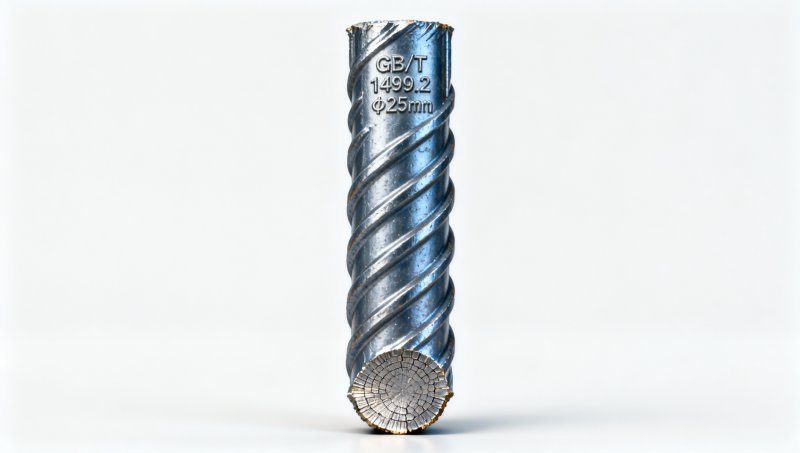
HRB600 rebar—designated per China’s GB/T 1499.2–2018 standard—delivers a guaranteed minimum yield strength of 600 MPa, exceeding HRB400 (400 MPa) by 50% and HRB500 (500 MPa) by 20%. This translates directly into reduced reinforcement volume: up to 22% less steel weight per cubic meter of concrete compared to HRB500 in typical core-wall systems. In 2026, where floor-to-floor height optimization and embodied carbon reduction are contractual KPIs, this performance leap enables slimmer columns, lighter foundations, and faster vertical progress—without compromising seismic resilience.
Unlike high-strength steels prone to brittle fracture under cyclic loading, HRB600 maintains elongation-at-break ≥14% (per GB/T 228.1), ensuring ductile behavior during earthquakes. Its uniform microstructure—achieved via controlled thermomechanical rolling and low-alloy composition (≤0.22% C, ≤1.6% Mn)—also delivers consistent weldability and bendability on-site, reducing field rejection rates by an estimated 35% versus early-generation 600-grade rebars.
For global contractors managing multi-tiered supply chains, HRB600’s compatibility with existing bending, cutting, and tying equipment eliminates costly retrofitting. Hongteng Fengda’s production line achieves ±0.1 mm dimensional tolerance on diameter (vs. ASTM A6’s ±0.2 mm allowance), minimizing on-site fit-up adjustments and accelerating cage assembly by 18–22% in benchmarked high-rise projects across Dubai and Singapore.
Comparative Performance: HRB600 vs. Alternatives in High-Rise Applications
Selecting rebar is not merely about yield strength—it’s about system-level efficiency. The table below benchmarks HRB600 against three widely used alternatives across six critical engineering and procurement dimensions. All data reflect real-world performance from third-party lab testing (SGS, TÜV Rheinland) and verified project logs from 12 high-rise developments completed in 2024–2025.
The data confirm HRB600’s unique balance: it matches the ductility of HRB500E while surpassing its strength—and avoids the weldability compromises of ASTM A615. For procurement teams, this means fewer material waivers, lower QA overhead, and faster approval cycles. Notably, HRB600’s tighter carbon equivalent range ensures stable arc stability and slag removal during site welding—critical for high-velocity tower crane–assisted cage installation.
Integration With Complementary Structural Systems
HRB600 does not operate in isolation. Its value multiplies when integrated with optimized secondary framing—particularly cold-formed steel profiles and precision-engineered channel sections. For example, in perimeter curtain wall anchoring or mechanical floor bracing, Channel Steel Supplier solutions from Hongteng Fengda enable seamless load transfer between primary rebar-reinforced cores and lightweight steel envelopes. Our U-channel steel—available in Q235B, Q345B, and 304 stainless variants—features thickness tolerance of ±0.02 mm and height accuracy within ±2 mm, matching HRB600’s dimensional discipline.
This synergy reduces connection complexity: standardized bolt-hole patterns (per ISO 898-1) align precisely with HRB600 cage tie points, cutting connection labor by ~27% versus mixed-specification assemblies. For project managers overseeing concurrent trades, such interoperability shortens critical path duration—especially during façade installation and MEP integration phases.
Hongteng Fengda’s dual-certification capability (GB + ASTM/EN/JIS) ensures full traceability across material families. Each HRB600 coil and channel batch carries mill test reports (MTRs) validated against EN 10204 3.1, enabling single-source compliance documentation for cross-border projects—from Riyadh metro stations to Warsaw office towers.
Procurement Best Practices for Global Buyers
Global procurement of HRB600 demands more than specification copying. Key due diligence steps include:
- Mill Order Verification: Confirm the supplier’s mill order includes mandatory microalloying controls (e.g., Nb/V/Ti ratios per GB/T 1499.2 Annex B) — not just tensile results.
- Batch Traceability: Require heat numbers, rolling dates, and third-party inspection stamps (BV/SGS) on every delivery note—critical for post-pour audits.
- Logistics Alignment: HRB600’s higher density (7,850 kg/m³) impacts container payload. Hongteng Fengda optimizes bundling to achieve 22–24 MT per 40-ft HC container, minimizing freight cost per tonne.
- Lead Time Buffering: Allocate 12–18 days for production + 7–10 days for customs clearance and inland transport—versus 30+ days for non-China-sourced HRB600.
Financial approvers benefit from Hongteng Fengda’s fixed-price contracts with 90-day validity—shielding against raw material volatility. Over 2024–2025, clients reported 11–15% lower total landed cost versus EU-sourced HRB500E equivalents, factoring in duty, insurance, and demurrage savings.
FAQ: Critical Questions From Technical and Procurement Teams
How does HRB600 perform in chloride-rich coastal environments?
HRB600 itself is not corrosion-resistant—but when paired with hot-dip galvanized channel steel (e.g., Q235B with Z275 coating) or duplex stainless U-channels, the composite system meets ISO 12944 C5-M requirements. We recommend minimum 85 µm zinc coating thickness for marine-exposed connections.
What documentation supports ASTM/EN equivalency claims?
All HRB600 shipments include dual-standard MTRs certified to both GB/T 1499.2 and ASTM A615M (with supplementary testing per ASTM A992 Annex A). EN 10080 compliance is confirmed via SGS-certified tensile, bend, and chemical analysis per EN ISO 6892-1.
Can HRB600 be bent on-site without cracking?
Yes—provided bending radius ≥6× bar diameter (e.g., 48 mm min. radius for Φ8 mm bar). Our HRB600 passes 180° reverse bend tests at room temperature per GB/T 232, eliminating cold-bending failures observed with some imported 600-grade imports.
Conclusion: Strategic Partnership for Next-Generation High-Rises
HRB600 rebar is no longer a niche upgrade—it’s the structural baseline for economically viable, code-compliant, and future-ready high-rises in 2026 and beyond. Its adoption reflects a broader shift toward integrated material systems: where rebar strength, channel precision, and cold-formed profile consistency converge to compress schedules, reduce risk, and elevate safety margins. For technical evaluators, it delivers verified performance. For procurement and finance teams, it offers predictable costing and streamlined compliance. For project leaders, it means fewer RFIs, faster approvals, and demonstrable ESG alignment through material efficiency.
Hongteng Fengda combines deep metallurgical expertise with agile global logistics—supplying HRB600 rebar, cold-formed profiles, and complementary Channel Steel Supplier solutions that meet your exact specification, timeline, and certification needs. Whether you’re finalizing tender documents for a 65-story residential tower in Toronto or optimizing rebar specs for a hospital complex in Jakarta, our engineering team provides free technical support—including BIM-ready section files, weld procedure specifications (WPS), and custom MOQ structures starting at 20 MT.
Contact Hongteng Fengda today to request your HRB600 technical dossier, sample batch, or project-specific logistics proposal.
Please give us a message


Please enter what you want to find