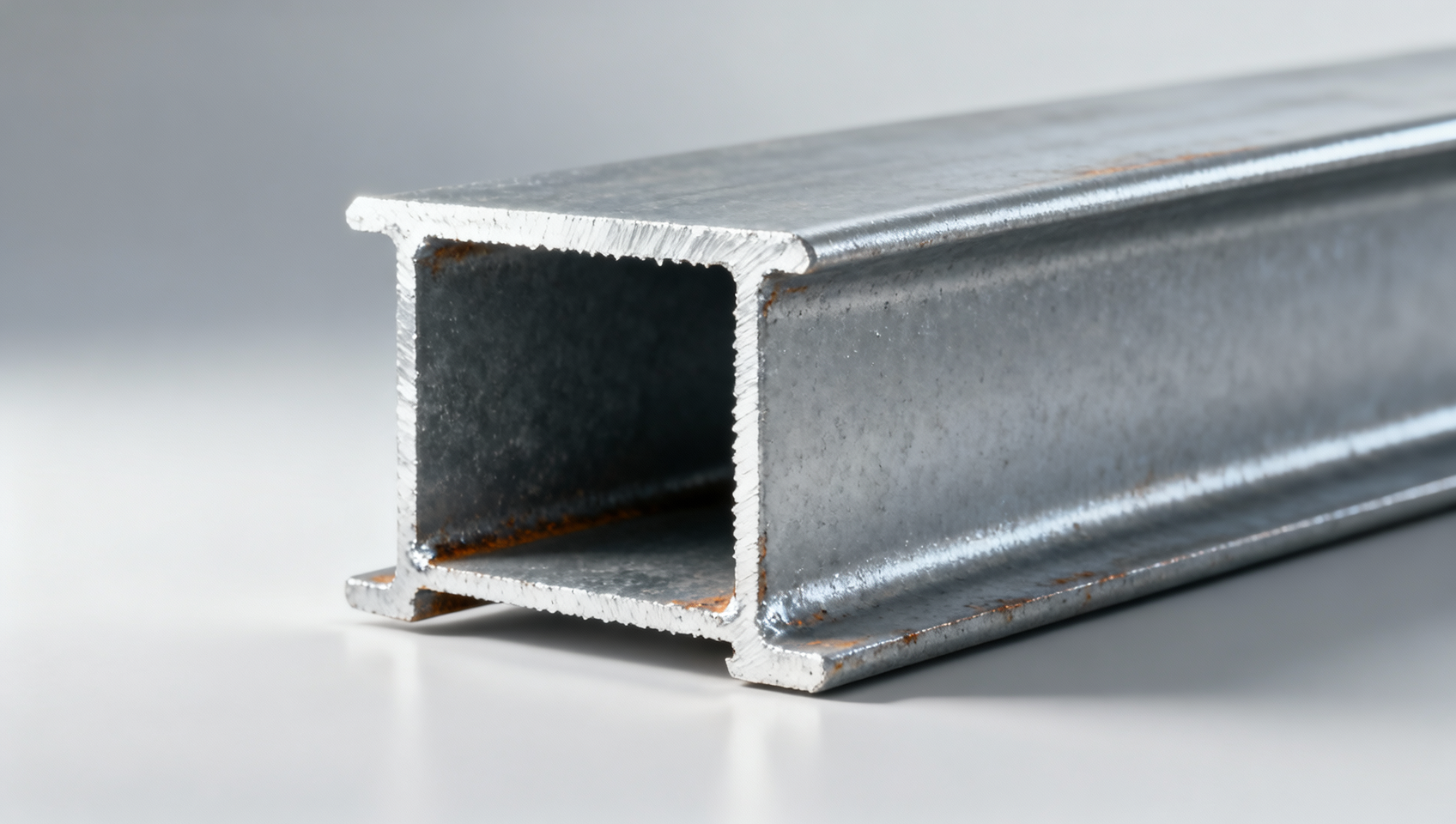
When selecting Hanwu Steel for construction machinery, global engineers and procurement teams increasingly prioritize compliance with ISO 12100’s rigorous risk assessment criteria—especially for load-bearing weld joints critical to safety and longevity. As a trusted structural steel manufacturer and exporter from China, Hongteng Fengda ensures that its Hot Rolled I Beam for heavy equipment and Z150 steel sheet for shipbuilding meet not only mechanical performance standards but also systematic hazard identification, risk estimation, and mitigation requirements outlined in ISO 12100. This integration of safety-by-design supports project managers, safety officers, and OEMs seeking certified, traceable, and failure-resistant steel solutions.
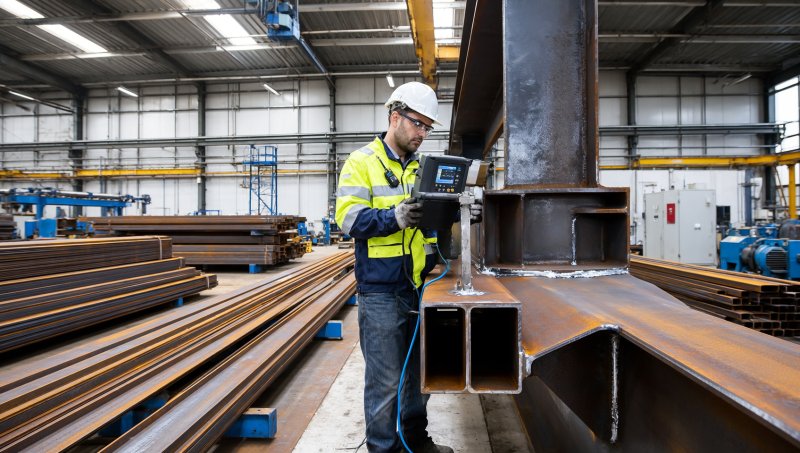
Why ISO 12100 Compliance Matters for Load-Bearing Weld Joints in Construction Machinery
ISO 12100 defines a structured methodology for risk assessment across three phases: hazard identification, risk estimation, and risk evaluation. For construction machinery—where dynamic loads, vibration, fatigue cycles, and environmental exposure converge—load-bearing weld joints represent high-consequence failure points. A single non-compliant joint can compromise structural integrity, trigger cascading failures, and expose operators to severe injury risks.
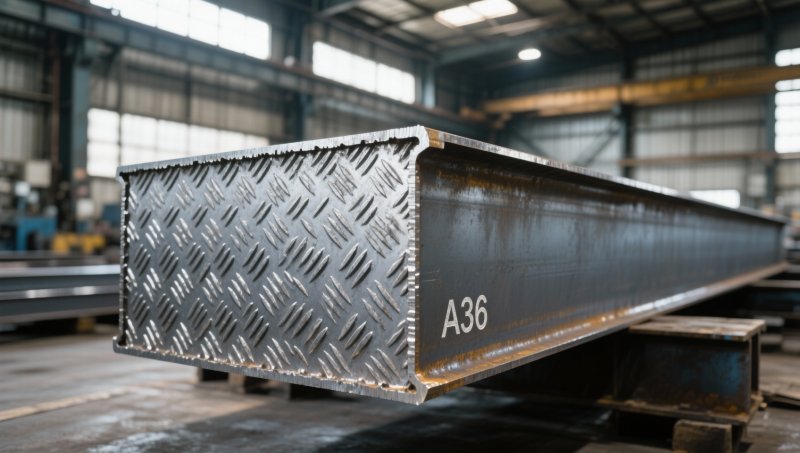
Hongteng Fengda embeds ISO 12100 principles into its manufacturing workflow—not as a post-production audit, but as an integrated design control. From material selection (e.g., A36 Patterned steel plate) to welding procedure qualification (WPQ), every step undergoes documented hazard analysis aligned with Annex A of ISO 12100. This ensures traceability from raw material certification (ASTM A36, EN 10025-2 S335JR) through final NDT validation.
For procurement personnel and safety managers, this means reduced due diligence overhead: no need to revalidate weld procedure specifications (WPS) or conduct independent fracture mechanics modeling. Hongteng Fengda delivers pre-assessed, risk-mitigated components—including cold-formed structural profiles and custom-fabricated brackets—backed by full documentation packages compliant with ISO 12100 Clause 6.3 (risk reduction measures).
Key Risk Reduction Measures Applied to Weld Joints
- Pre-weld joint geometry optimization to minimize stress concentration (Kt ≤ 1.8 per EN 1993-1-9)
- Controlled heat input during SMAW/GMAW (12–22 kJ/cm range) to limit HAZ hardness & avoid brittle fracture
- Post-weld heat treatment (PWHT) for thick-section joints (>25 mm) per ASME BPVC Section IX
- Ultrasonic testing (UT) coverage ≥ 100% on all Category B/C welds per ISO 5817 Class B
How Hongteng Fengda Aligns Material Specifications with ISO 12100 Requirements
Material choice directly influences hazard severity and probability. Hongteng Fengda selects base metals based on tensile strength consistency, Charpy V-notch impact energy (≥27 J at –20°C), and through-thickness ductility (Z15 grade minimum for plates >40 mm). These parameters are verified per ASTM A6/A6M and EN 10025-2, ensuring predictable behavior under cyclic loading—a core requirement of ISO 12100’s risk estimation process.
The A36 Patterned steel plate, for example, is manufactured with strict thickness tolerance (+/−0.02 mm) and controlled surface pattern height (≥0.2 × substrate thickness). This precision enables accurate finite element modeling (FEM) inputs—critical for validating load distribution across anti-skid surfaces used in machinery walkways and access platforms.
This table demonstrates how abstract ISO 12100 clauses translate into measurable, auditable practices—enabling procurement teams to verify compliance without third-party retesting. Each parameter reflects real-world production data from Hongteng Fengda’s ISO 9001-certified facility in Jiangsu Province.
Procurement Decision Framework: What to Verify Before Sourcing
For buyers evaluating structural steel suppliers against ISO 12100, focus on four verifiable dimensions—not just certificates, but implementation evidence:
- Design Integration: Does the supplier provide FEM-ready material properties (e.g., true stress-strain curves, fracture toughness KIc) for your specific joint configuration?
- Process Control: Are welding procedures qualified per ISO 15614-1 with documented heat input ranges and interpass temperature logs?
- Traceability Scope: Can you trace each delivered component back to its original heat number, chemical composition, and mechanical test report?
- Risk Documentation: Is there a formal risk assessment report referencing ISO 12100 Annex A, including residual risk statements after mitigation?
Hongteng Fengda delivers all four elements standard with orders exceeding 5 metric tons. Smaller batches include abbreviated documentation packages, with full dossiers available upon request—typically within 48 hours of order confirmation.
Why Global Buyers Choose Hongteng Fengda for ISO 12100-Aligned Structural Steel
Beyond technical compliance, Hongteng Fengda reduces procurement complexity through three operational advantages:
- Lead Time Certainty: 92% on-time delivery rate for export orders (2023 data), with standard lead times of 15–25 days for hot-rolled sections and 20–30 days for customized cold-formed profiles
- Multi-Standard Flexibility: Single-order capability covering ASTM, EN, JIS, GB, and ISO standards—with seamless conversion between yield strength grades (e.g., A36 ↔ S235JR ↔ Q235B)
- Customization Without Penalty: Minimum order quantity (MOQ) of 3 tons for OEM-specific dimensions, with no tooling fees for profile modifications within ±15% of existing dies
Whether you’re specifying load-bearing weld joints for excavator booms, crane jibs, or offshore platform ladders—Hongteng Fengda provides engineered steel solutions backed by ISO 12100-aligned risk management, not just material conformity.
Ready to validate your next structural steel specification? Contact our engineering team for free weld joint design review, material substitution analysis, or ISO 12100 documentation package preview. We support urgent RFQs with preliminary technical feedback within 4 business hours.
Related recommendations
 How long does acero prepintado retain gloss and color stability in direct desert sunlight?Acero prepintado gloss & color stability in desert sun? Discover real-world performance data, PVDF vs. polyester longevity, and spec-critical insights for GCC projects.
 Does acero pregalvanizado maintain coating integrity after cold bending to 90 degrees?Acero pregalvanizado maintains coating integrity after 90° cold bending — when engineered right. Discover how Hongteng Fengda guarantees real-world performance, adhesion & corrosion resistance.
 Do the advantages of galvanized steel include reduced fire risk compared to untreated carbon steel?Advantages of galvanized steel include measurable fire-risk reduction vs. untreated carbon steel—learn how zinc delays ignition, buys critical escape time, and enhances safety without false 'fireproof' claims.
 What is the minimum bend radius for 12mm steel wire rope without permanent deformation?12mm steel wire rope capacity depends on bend radius — discover the safe 72–96mm minimum to prevent permanent deformation, fatigue & failure. Expert rigging insights inside.
Please give us a message


Please enter what you want to find