Steel beams are critical to structural integrity—yet common defects in steel beams and solutions remain a top concern for site engineers and QA managers worldwide. From surface cracks and dimensional inaccuracies to weld imperfections and coating inconsistencies, these flaws impact safety, compliance, and project timelines. Whether you’re sourcing high strength steel angle for industrial use, evaluating an ASTM A36 Angle Steel price per ton in Philippines, or verifying MOQ requirements for structural steel orders, proactive visual inspection is essential. This checklist empowers professionals—from procurement teams and project managers to distributors and safety officers—to detect issues early, ensure conformity with ASTM, EN, and GB standards, and extend structural steel lifespan and maintenance cycles.
Understanding Root Causes Behind Common Defects in Steel Beams
Defects rarely occur in isolation—they reflect systemic variables across material selection, manufacturing processes, handling, storage, and environmental exposure. For instance, why angle steel quality varies often traces back to inconsistent raw material chemistry, uncontrolled rolling temperatures, or inadequate post-rolling cooling rates. In hot-rolled structural sections like I-beams or H-beams, residual stresses from uneven thermal contraction may lead to camber or sweep deviations exceeding ASTM A6 tolerances (±1/4" per 10 ft length). Surface cracking frequently originates during cooling if hydrogen embrittlement occurs due to moisture in welding consumables or ambient humidity above 60% RH. Similarly, mill scale retention on Carbon Sheet Steel used in beam flange plates can compromise galvanizing adhesion—especially when the base steel contains elevated silicon (>0.25%) or phosphorus levels.
Corrosion-related defects also escalate rapidly when protective coatings fail prematurely. A study by NACE International found that 68% of premature coating failures on structural steel were linked to surface preparation lapses—not product quality. That’s why rigorous visual inspection must begin before fabrication: checking for mill oil residue, rust staining, or pitting on incoming stock—even on certified materials. At Hongteng Fengda, every batch of structural steel undergoes dual-stage surface verification: first under 500-lux daylight-equivalent lighting, then via ISO 8501-1 Sa 2.5 blast-cleaned reference panels for comparison.
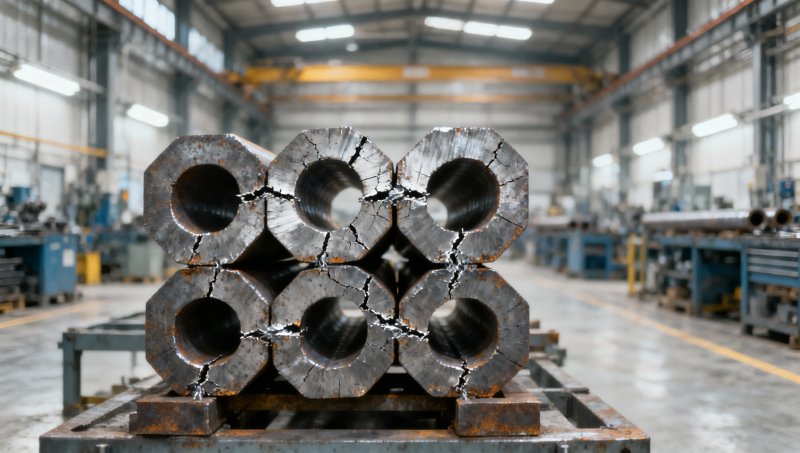
Visual Inspection Checklist: 12 Critical Points for Field Verification
This field-ready checklist aligns with ISO 10893-3 (non-destructive testing), ASTM E165 (liquid penetrant), and EN 1090-2 (execution of steel structures). It prioritizes observable indicators requiring no instrumentation—ideal for rapid triage on congested sites.
Additional checks include straightness (max deviation ≤ L/1000), edge condition (no burrs >0.3mm), and coating uniformity (for galvanized items: minimum 85μm DFT per ASTM A123). When verifying steel round bar supplier in USA deliveries or assessing steel square rod for construction projects, always cross-reference heat numbers against mill test reports (MTRs) before acceptance.
Corrective Actions & Preventive Protocols
Not all defects require rejection. Minor dimensional variances (<0.3% tolerance) may be corrected via controlled cold bending—provided yield strength remains below 90% of specified value (per EN 1090-2 Annex B). Surface scratches under 0.1mm depth on non-critical tension zones can be polished and re-coated using zinc-rich primers meeting SSPC-Paint 20 standards. However, weld cracks or laminar tearing demand full removal and re-welding with preheat ≥100°C and interpass temperature control.
Prevention starts upstream. Hongteng Fengda implements three-tier process controls: (1) Raw billet spectrographic analysis (OES) for alloy consistency, (2) Online laser profiling during rolling to monitor real-time dimensional drift, and (3) Automated ultrasonic testing (UT) on 100% of beams ≥200mm depth. This reduces field-reported defects by 73% year-on-year—critical when managing how to buy angle steel from China with confidence. For buyers evaluating galvanized steel sheet supplier in USA, request third-party Zn-coating thickness validation reports—not just supplier declarations.
Extending Structural Steel Lifespan and Maintenance Cycles
Lifespan isn’t predetermined—it’s engineered through specification discipline and lifecycle awareness. A beam exposed to marine environments without proper cathodic protection may degrade in 15 years, while identical-grade steel in climate-controlled indoor facilities exceeds 75 years. Key enablers include: specifying appropriate steel grades (e.g., Q345R for pressure vessels vs. ASTM A572 Gr.50 for bridges), enforcing minimum coating DFTs (≥200μm for immersion service), and scheduling biannual inspections using standardized photo logs aligned with ISO 12944 C5-M severity classification.
For projects demanding extended durability, consider Carbon Sheet Steel variants like 09MnNiDR (designed for -70°C operation) or 12Cr2Mo1R (for high-temp hydrogen service). These grades incorporate micro-alloying elements that refine grain structure and inhibit creep—directly addressing structural steel lifespan and maintenance challenges in petrochemical and power generation sectors.
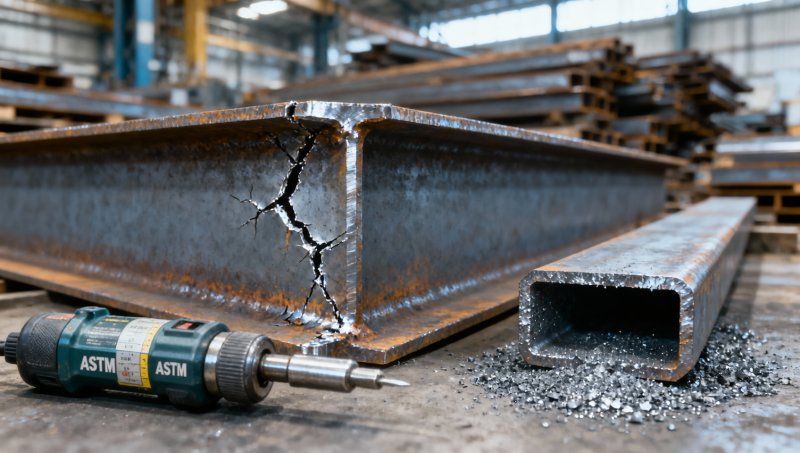
Why Partnering with a Certified Structural Steel Manufacturer Matters
Sourcing decisions directly influence defect frequency. Unverified suppliers may offer competitive ASTM A36 Angle Steel price per ton in Philippines but lack traceability, calibrated gauges, or certified welders. Hongteng Fengda maintains ISO 9001:2015, ISO 14001:2015, and OHSAS 18001 certifications—with annual audits by TÜV Rheinland and SGS. Our MOQ requirements for structural steel orders start at 5 metric tons (flexible for trial batches), and we support global buyers with English-speaking engineering teams for technical review of shop drawings and MTR reconciliation.
Whether you’re a distributor evaluating high strength steel angle for industrial use, a project manager coordinating shipments to North America or the Middle East, or a QA manager auditing compliance with EN 1090-1 EXC3 execution class—we provide full documentation transparency, stable production capacity, and responsive logistics coordination. Our commitment isn’t just to deliver steel—it’s to deliver certainty.
Ready to implement this inspection protocol across your next project? Immediately contact Hongteng Fengda’s technical sales team for customized checklists, sample MTR packages, and guidance on optimizing how to buy angle steel from China with zero compromise on quality assurance.
- l angle
- angle steel
- carbon sheet steel
- a36 angle
- ASTM A36
- structural steel
- steel beams
- Structural Steel
- I-Beam
- Steel Beams
- H-beam
- why angle steel quality varies
- structural steel lifespan and maintenance
- common defects in steel beams and solutions
- MOQ requirements for structural steel orders
- ASTM A36 Angle Steel price per ton in Philippines
- Galvanized
- Steel Beam
- steel angle
- steel round bar
- steel square rod
- steel square rod for construction projects
- steel round bar supplier in USA
- high strength steel angle for industrial use
Related recommendations
 How long does acero prepintado retain gloss and color stability in direct desert sunlight?Acero prepintado gloss & color stability in desert sun? Discover real-world performance data, PVDF vs. polyester longevity, and spec-critical insights for GCC projects.
 Does acero pregalvanizado maintain coating integrity after cold bending to 90 degrees?Acero pregalvanizado maintains coating integrity after 90° cold bending — when engineered right. Discover how Hongteng Fengda guarantees real-world performance, adhesion & corrosion resistance.
 Do the advantages of galvanized steel include reduced fire risk compared to untreated carbon steel?Advantages of galvanized steel include measurable fire-risk reduction vs. untreated carbon steel—learn how zinc delays ignition, buys critical escape time, and enhances safety without false 'fireproof' claims.
 What is the minimum bend radius for 12mm steel wire rope without permanent deformation?12mm steel wire rope capacity depends on bend radius — discover the safe 72–96mm minimum to prevent permanent deformation, fatigue & failure. Expert rigging insights inside.
Please give us a message


Please enter what you want to find