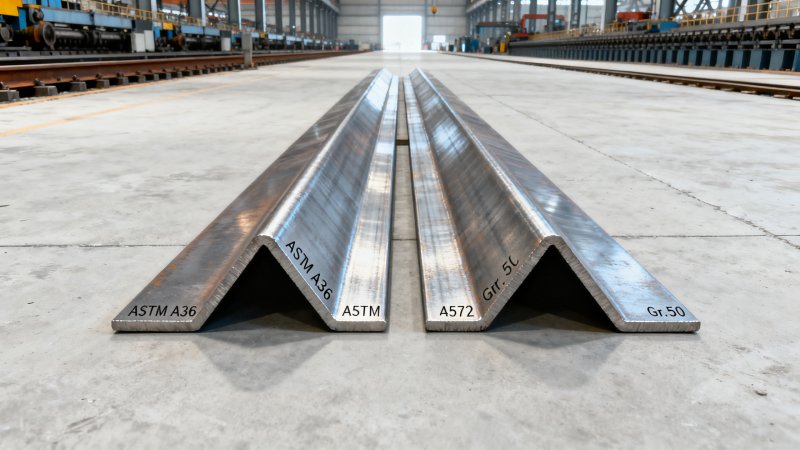
When specifying angle plate steel for critical structural applications—such as bracing angle in steel structure or l shaped metal bars—material grade directly governs bolt shear capacity and system safety. This engineering brief compares ASTM A36 vs. A572 Gr.50, clarifying how yield strength, ductility, and weldability impact performance of l shape angles, galv angle, and angle galvanized components. Whether you're a project manager evaluating l shaped metal sheet for seismic bracing, a procurement specialist sourcing 316 angle or ASTM stainless steel, or a quality engineer validating compliance, understanding this distinction prevents under-design, cost overruns, and field failures. Hongteng Fengda delivers certified angle steel—including custom l shape steel—to global standards (ASTM, EN, GB), ensuring reliability from design to installation.
Definition & Structural Role of Angle Plate Steel
Angle plate steel—commonly referred to as l shape angles, l shaped metal bars, or l shaped metal sheet—is a fundamental structural profile formed by two legs intersecting at a 90° angle. Its geometry provides high torsional rigidity and efficient load transfer in tension, compression, and shear—making it indispensable for bracing angle in steel structure, column stiffening, truss members, and connection framing. Unlike flat plates or hollow sections, the “L” configuration maximizes moment of inertia per unit weight, delivering superior stiffness-to-mass ratio. In corrosion-prone environments, galv angle and angle galvanized variants extend service life without sacrificing mechanical integrity.
From a metallurgical standpoint, angle plate steel is not defined solely by shape—but by chemical composition, thermal history, and mechanical response. ASTM A36 and A572 Gr.50 represent two widely adopted carbon steel grades with distinct yield behaviors. Their selection influences not only member sizing but also bolted joint design—particularly the allowable shear capacity of bolts anchored into the leg thickness. Misapplication can lead to premature yielding at connections, even when the angle itself remains within elastic limits.
Technical Performance: Yield Strength, Ductility & Bolt Shear Implications
Bolt shear capacity in angle connections depends on both the fastener’s properties *and* the bearing resistance of the connected material. Per AISC 360-22, nominal shear strength φRn for bolts in single shear is governed by the lesser of bolt shear strength and bearing strength on the connected part. Bearing strength, in turn, is proportional to the base metal’s tensile strength (Fu) and thickness (t). While A36 and A572 Gr.50 share similar elongation values (~20–23%), their yield strengths differ significantly—directly affecting plastic hinge formation and energy absorption during overload events.
The following table summarizes key mechanical parameters relevant to bolted joint performance:
Application Scenarios: Where Grade Choice Becomes Critical
In low-rise commercial buildings using standard l shape steel for perimeter bracing, ASTM A36 often suffices—offering cost efficiency and ease of field welding. However, high-rise façade anchoring systems, seismic retrofit bracing angle in steel structure, and industrial crane rails demand higher reserve strength. Here, A572 Gr.50 reduces section size while maintaining bolt shear margin—critical where spatial constraints limit leg depth or thickness.
For marine or coastal infrastructure, galv angle and angle galvanized products are frequently specified alongside 316 angle or ASTM stainless steel components for enhanced corrosion resistance. While stainless grades like 316 offer superior pitting resistance, they exhibit lower yield strength (~30 ksi) than A572 Gr.50—requiring careful recalibration of bolt spacing and edge distances. Notably, Stainless Steel Welded Mesh is often integrated into cladding or erosion control layers adjacent to these structural angles—leveraging its acid, alkali, and heat resistance across architecture and chemical industry applications.
End users—including project managers and safety personnel—must recognize that substituting A36 for A572 Gr.50 without rechecking connection design violates AISC provisions and may void insurance coverage. Conversely, specifying A572 Gr.50 for non-critical secondary framing adds unnecessary cost and fabrication complexity.
Why Choose Hongteng Fengda for Your Angle Steel Needs?
As a certified structural steel manufacturer & exporter from China, Hongteng Fengda bridges global specification requirements with agile local production. We supply precision-rolled angle plate steel—from standard l shape angles to fully customized l shaped metal bars—with mill test reports traceable to ASTM, EN, JIS, and GB standards. Our cold-formed and hot-rolled lines support tight tolerances (±0.5 mm on leg dimensions), consistent galvanizing adherence (ASTM A123), and full weld procedure qualification for both A36 and A572 Gr.50.
Procurement teams benefit from transparent lead times (typically 4–6 weeks for bulk orders), dual QC checkpoints (in-process + final inspection), and documentation packages including MTRs, dimensional reports, and coating thickness verification. For distributors and EPC contractors, we offer just-in-time delivery scheduling, consolidated container loading, and bilingual technical support—reducing sourcing risks and accelerating project handover.
Whether you require galv angle for outdoor transmission towers, 316 angle for pharmaceutical cleanrooms, or ASTM stainless steel for aggressive chemical exposure zones—Hongteng Fengda ensures compliance, consistency, and continuity. Contact us today to request mill-certified samples, review OEM drawings, or discuss your next shipment of l shaped metal sheet or bracing angle in steel structure.
- steel i
- l angle
- angle steel
- angle galvanized
- galv angle
- l shaped metal sheet
- l shape steel
- bracing angle in steel structure
- l shaped metal bars
- angle plate steel
- 316 angle
- l shape angles
- ASTM stainless steel
- ASTM A572
- ASTM A36
- structural steel
- Structural Steel
- Profile
- Stainless Steel Welded Mesh
- Galvanized
- carbon steel
Related recommendations
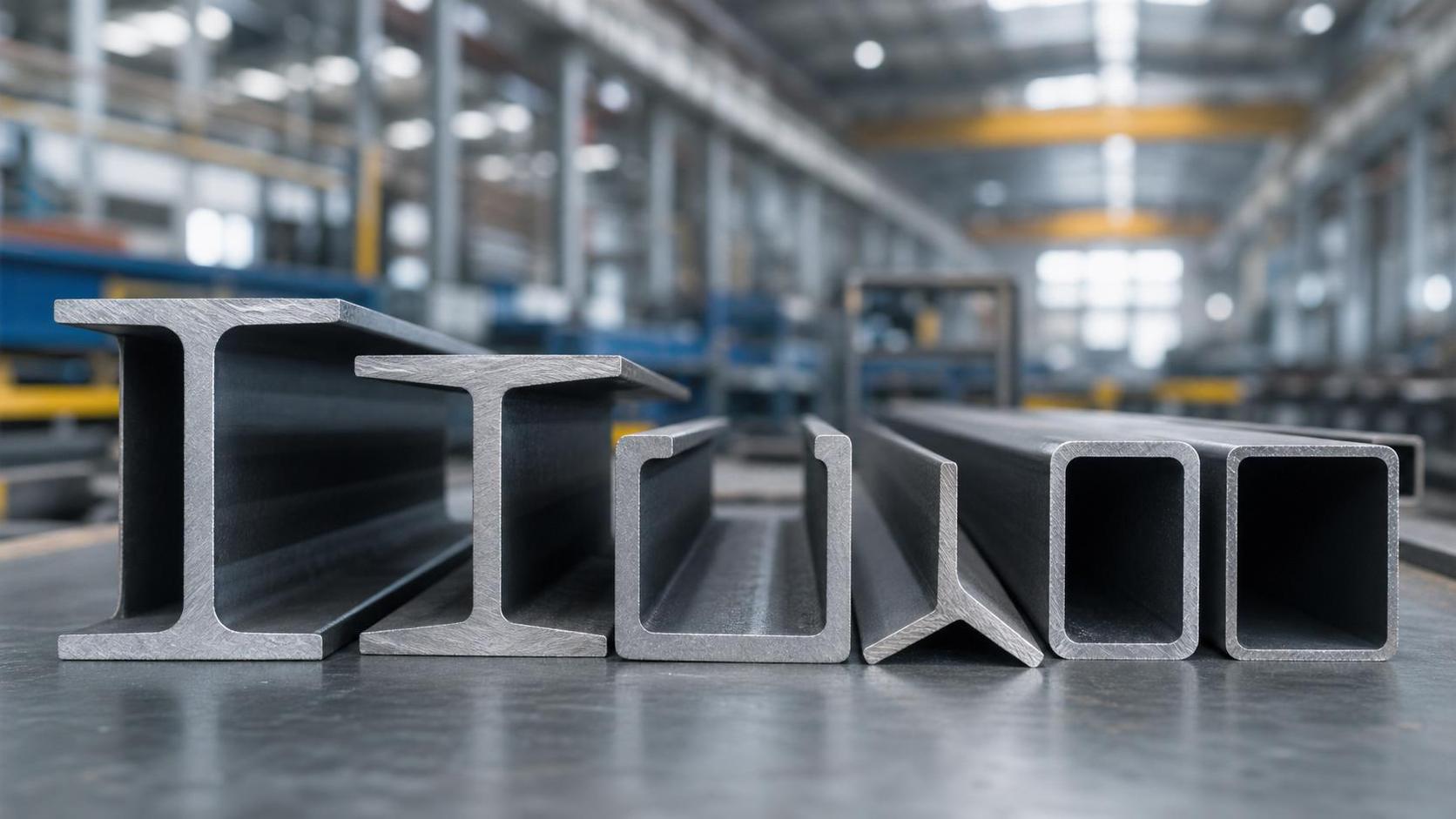
 What Is a Steel Profile? Common Shapes, Uses, and Selection BasicsProfile selection starts with shape, but performance depends on load, fabrication, and standards. Learn common steel profile types, uses, and smart selection basics.
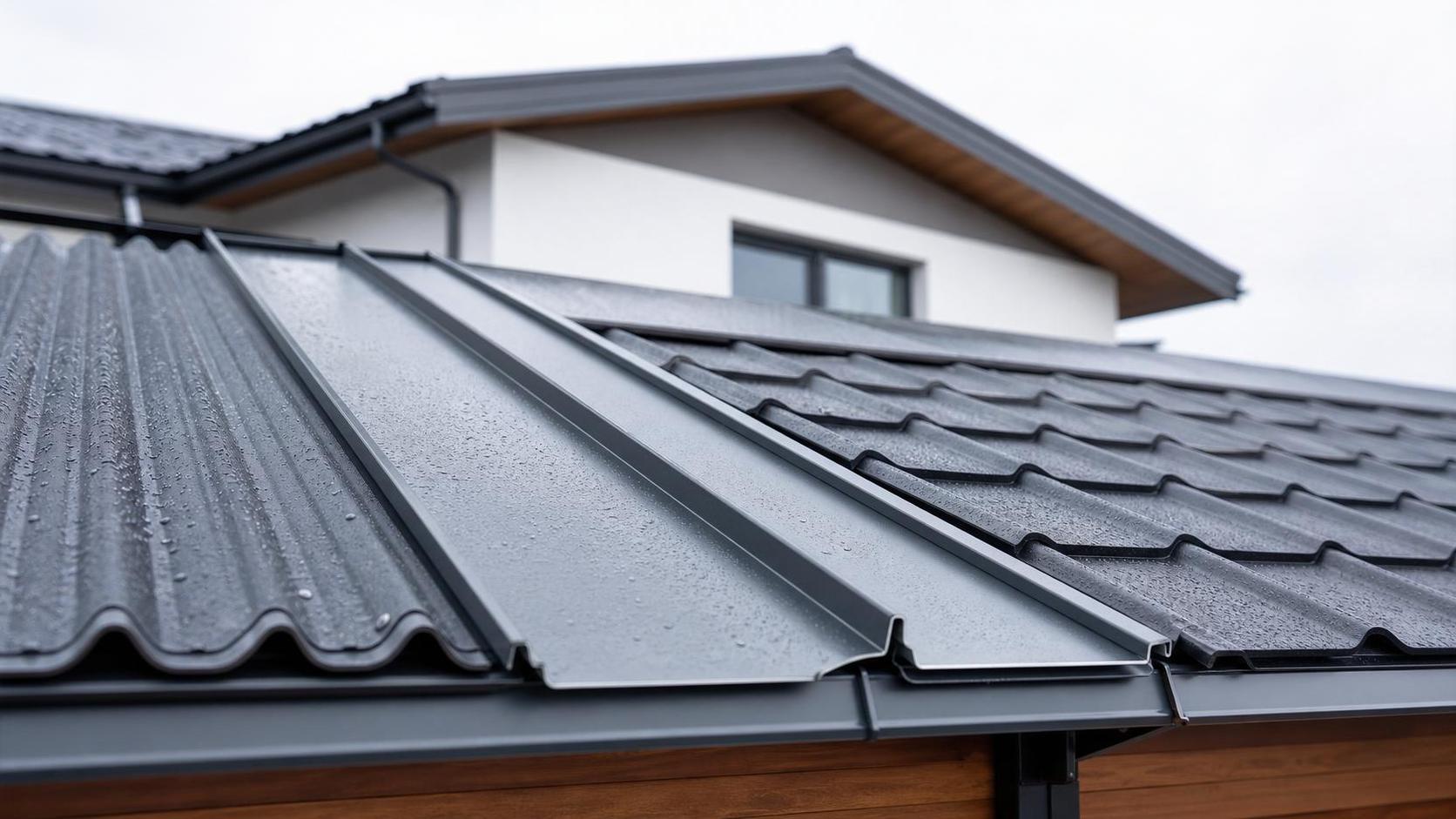
 Steel Roofing Types Explained: Corrugated, Standing Seam, and Metal ShinglesSteel Roofing guide comparing corrugated panels, standing seam, and metal shingles. Discover costs, durability, weather performance, and how to choose the best roof for your home.
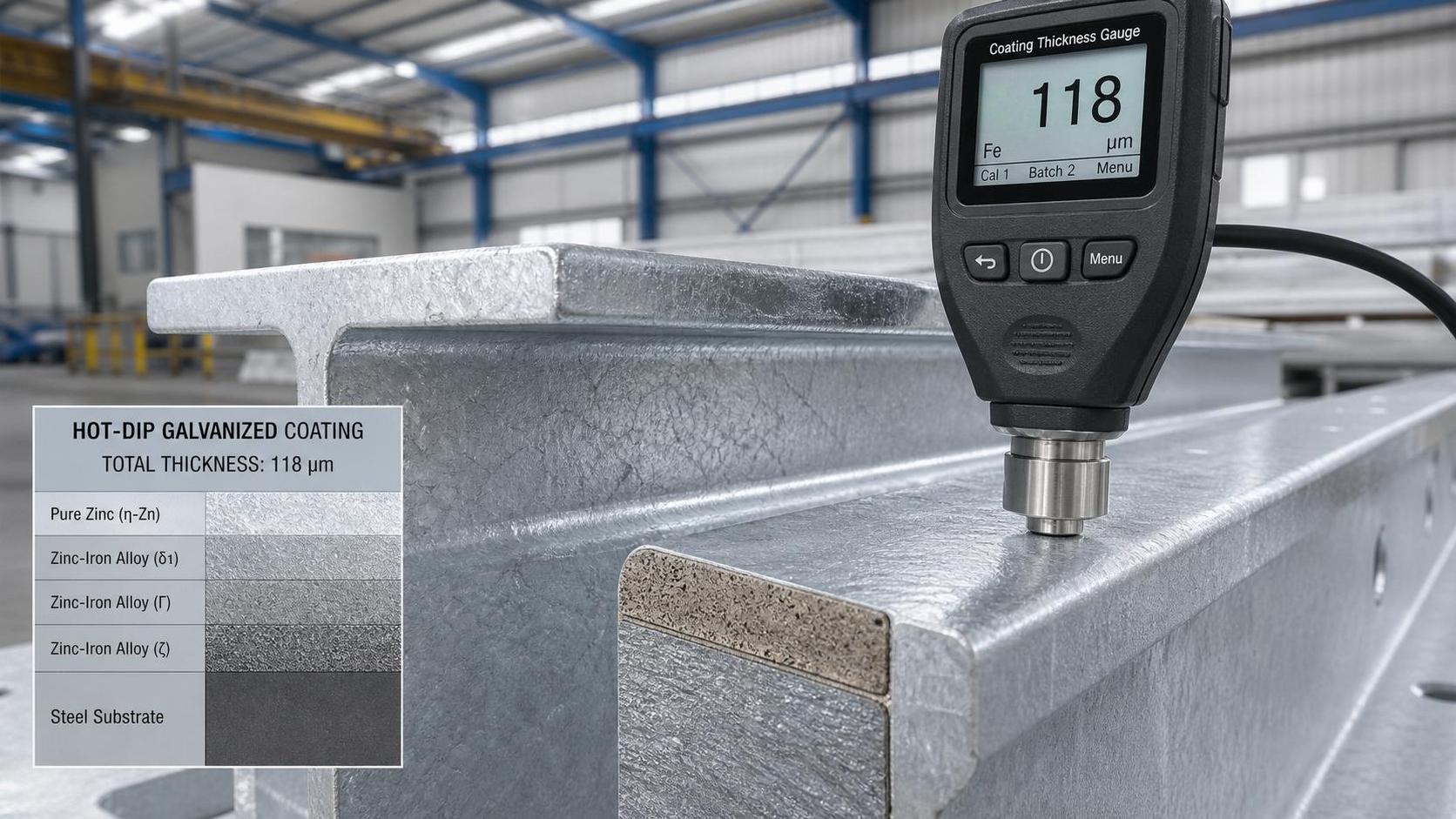
 How Hot-Dip Galvanized Coating Thickness Affects Service LifeHot-dip galvanized coating thickness directly affects steel service life. Learn how the right zinc layer improves corrosion protection, controls cost, and supports smarter project decisions.
 Pipe Stainless Grades Explained: 304 vs 316 for Corrosion ResistancePipe stainless grades explained: compare 304 vs 316 for corrosion resistance, cost, and service life. Learn which stainless pipe grade fits marine, chemical, and water system applications.
Please give us a message


Please enter what you want to find